 Bellingham
 Siding That Has to Work Through a Lynden Winter, Not Just Look Good in June
Lynden sits inland from Bellingham Bay in the Nooksack Valley, but it still lives inside the same wet Pacific Northwest weather system as the rest of Whatcom County. Homes here go through long stretches of driving rain, heavy fog off the valley floor, and a moss season that can run from October well into spring. Add in the humidity that comes with being surrounded by farmland and river bottomland, and siding on a Lynden home is doing real work every single day, not just providing curb appeal.
Marine air off the Puget Sound region reaches into Whatcom County even at Lynden's distance from the water, contributing to the same slow corrosion and moisture cycling that coastal homes deal with, just at a slightly reduced level. Combine that with agricultural dust and moisture from surrounding fields, and you get a set of conditions that punishes cheap or poorly installed siding faster than a drier climate would. This page covers what that means specifically for James Hardie fiber cement siding installed on a Lynden home, and why the installation details matter as much as the product itself.
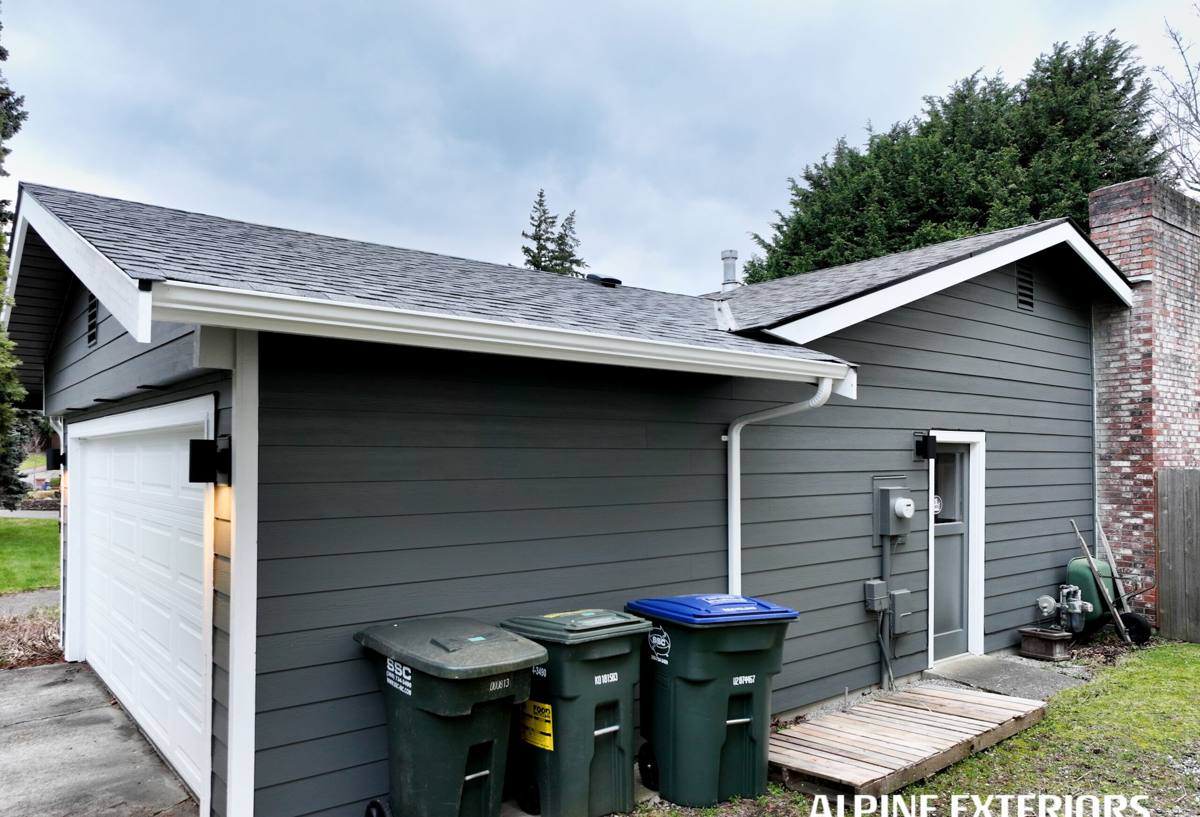
What This Climate Actually Does to a Wall System
Moss and Sustained Moisture
Moss doesn't just grow on roofs. Given a shaded north-facing wall, a fence line, or overhanging trees common on Lynden properties, moss and algae will colonize siding that stays damp for extended periods. On wood-based products this can trap moisture against the substrate. On correctly installed James Hardie siding, the fiber cement itself doesn't feed the growth or absorb the moisture the way wood-based sidings can, but drainage and ventilation behind the panel still matter for keeping the wall assembly dry.
Driving Rain and Wind-Driven Water
Whatcom County storms regularly push rain sideways, which means water is testing every seam, every piece of trim, and every penetration in a wall, not just the field of the siding. This is where installation quality separates a siding job that lasts decades from one that fails in five to ten years, regardless of which product went up.
Temperature Swings and Material Movement
Lynden sees a wider daily temperature swing than immediate waterfront areas, especially in the valley during clear winter nights and summer days. Siding materials expand and contract with those swings. Products that aren't dimensionally stable can telegraph that movement as cracking, popped fasteners, or open joints over time.
What Correct James Hardie Installation Actually Involves
James Hardie makes a good product, but the difference between siding that performs for 30-plus years and siding that causes problems in year six almost always comes down to installation details that are invisible once the job is finished. This is the part of the job most homeowners never get to see.
Clearances and Flashing
Hardie's own installation instructions specify minimum clearances from grade, roof lines, decks, and other transitions, along with specific flashing at every window, door, and horizontal trim piece. In a climate that pushes rain sideways, flashing details at these transitions are what actually keep water out of the wall assembly, not the siding surface itself.
Fastening Pattern and Cut-Edge Sealing
Fiber cement needs to be fastened per the manufacturer's pattern for the specific plank width and exposure, and every field-cut edge needs to be primed or sealed before installation. Skipping this step is one of the most common shortcuts in the industry, and it's also one of the most common causes of edge deterioration on homes that otherwise look fine.
Rainscreen and Drainage Plane
A drainage gap behind the siding lets any moisture that does get past the surface find its way back out instead of sitting against the house wrap or sheathing. In a county with as much annual rainfall as Whatcom, this detail has an outsized effect on how a wall assembly ages.
Joint and Seam Treatment
Butt joints, corner boards, and trim-to-panel seams all need to be treated correctly, whether that's caulked per Hardie's specification or shielded with proper flashing and overlap. Loose or skipped seam work is invisible from the street and shows up as staining or rot years later.
Choosing the Right Hardie Line for the Nooksack Valley
James Hardie engineers its products by climate zone under its HZ5 and HZ10 system, which accounts for regional moisture, temperature, and freeze-thaw exposure. Western Washington, including Whatcom County and Lynden, falls into the moisture-driven end of that spectrum, which is exactly what Hardie's HZ5 formulation is built to handle. We spec products for Lynden homes based on that engineering rather than defaulting to whatever a distributor happens to have on hand.
Within that line, homeowners typically choose between lap siding, board-and-batten vertical profiles (common on farmhouse-style homes that fit Lynden's rural and agricultural character), and shingle-style accents for gables or feature walls. The right profile is as much about matching the home's existing architecture as it is about performance, since all of them use the same engineered fiber cement base.
ColorPlus Factory Finish vs. Field Painting
James Hardie's ColorPlus finish is baked on at the factory under controlled conditions, which produces a more consistent, UV- and moisture-resistant top coat than siding painted on site after installation. In a climate where siding stays damp for long stretches, that factory bond matters, because a field-applied paint job is only as good as the weather conditions and prep work on the day it was sprayed. ColorPlus finishes also carry their own dedicated finish warranty, separate from the substrate warranty on the fiber cement itself, which gives homeowners a clearer picture of what's actually covered and for how long.
Our Process for a Lynden Siding Project
1. On-Site Assessment
We look at the existing siding and sheathing, check for hidden moisture damage around windows and trim, and evaluate drainage, grading, and any moss or algae patterns that point to chronic damp areas on the exterior.
2. Tear-Off and Substrate Check
Once old siding is off, we inspect the sheathing and framing underneath for rot before anything new goes up. Covering damaged sheathing with new siding just hides a problem that will resurface.
3. Weather Barrier and Drainage Plane
We install house wrap and a drainage gap correctly at every penetration, corner, and transition, which is the step most responsible for how the wall performs during a Whatcom County winter.
4. Installation to Manufacturer Specification
Panels are fastened, flashed, and sealed to James Hardie's published installation instructions, including sealed cut edges and correct clearances at grade, roofs, and decks.
5. Final Walkthrough and Warranty Registration
We walk the finished exterior with the homeowner, and we register the installation so the manufacturer's product warranty is properly on file and transferable if the home is sold.
Cost Factors for a Lynden James Hardie Project
| Factor | Why It Matters | Relative Cost Impact |
|---|---|---|
| Home size and wall complexity | More corners, gables, and dormers mean more cutting, flashing, and labor time | Medium to High |
| Tear-off condition | Rotted sheathing found during tear-off requires repair before new siding goes up | Variable |
| Siding profile chosen | Board-and-batten and shingle accents take more labor than straight lap siding | Medium |
| ColorPlus color selection | Factory-finished color is included in panel pricing but affects material cost tier | Low to Medium |
| Trim and accessory work | Corner boards, window trim, and fascia detailing add labor beyond the flat wall area | Medium |
| Access and site conditions | Rural lots, fencing, landscaping, or outbuildings can affect staging and scaffolding time | Low to Medium |
Signs a Lynden Home Needs New Siding Soon
- Persistent moss or algae staining that returns shortly after cleaning
- Soft spots or give when you press on the siding, especially near the bottom courses
- Paint that's peeling, bubbling, or chalking heavily between repaints
- Visible warping, cupping, or gaps opening up at seams and corners
- Rot or staining at trim, window corners, or where siding meets the roofline
- Rising heating bills that point to a wall assembly no longer sealing properly
- Siding installed more than 20-25 years ago on the original wall assembly
Why Hire a Crew That Already Works in Lynden
Installation quality is the single biggest variable in how James Hardie siding performs, and that quality depends on crews who understand this specific climate rather than generic installation habits picked up somewhere drier. A crew that regularly works Whatcom County and the Nooksack Valley already knows where moisture problems tend to hide on local homes, how local moss and algae patterns behave, and how to detail flashing for the kind of driving rain this area sees every winter. That local pattern recognition, combined with strict adherence to Hardie's published specifications, is what keeps a siding job performing for decades instead of needing attention within the first several years.
We install James Hardie fiber cement siding exclusively, which means every estimate, every product recommendation, and every installation detail on this page reflects one system we know thoroughly rather than a menu of products we're each moderately familiar with. If your Lynden home needs new siding or you're planning ahead for a project, we're happy to walk the exterior with you and put together a straightforward, no-pressure estimate using the form below.