 Bellingham
 Decks Built for Happy Valley's Ground and Weather
Happy Valley is one of Bellingham's older, tree-shaded residential neighborhoods, and that shade is a mixed blessing when it comes to outdoor structures. The same mature trees that make the streets pleasant also mean decks here get less direct sun, hold moisture longer after a storm, and collect organic debris in the gaps between boards. Add in Whatcom County's long wet season, the salt-laden air that drifts in off Bellingham Bay, and the moss that seems to grow on anything that sits still for more than a few weeks, and you've got a climate that is genuinely harder on a deck than most homeowners realize until they're dealing with soft boards or rusted hardware a few years in.
A deck built correctly for this neighborhood isn't dramatically different in appearance from a deck anywhere else — but it's different underneath, in the fastener choices, the drainage details, and the way the structure handles water that has nowhere fast to go. That's the part of the job that doesn't show up in a photo but determines whether the deck is still solid in fifteen years or needs major repair in five.
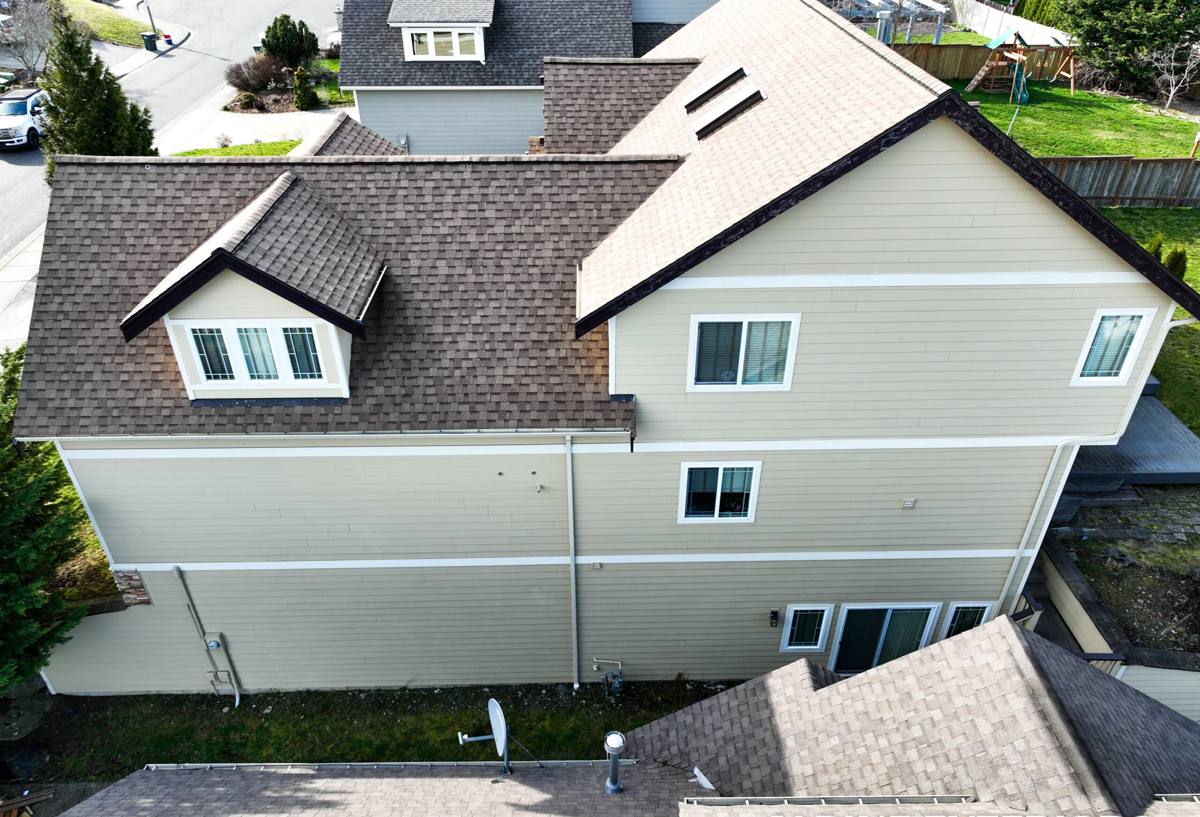
What Bellingham's Climate Actually Does to a Deck
Three regional factors matter more here than in drier parts of the country:
Moss and Organic Growth
Whatcom County's mild, wet winters are ideal moss conditions — cool, damp, and shaded for months at a time. Moss holds moisture directly against decking material, and on wood surfaces that constant dampness is what drives rot, not the rain itself. Composite and PVC boards resist rot but can still grow moss on the surface if debris and shade go unmanaged, and moss makes any surface slick and dangerous on stairs and landings.
Driving Rain and Standing Water
Storms off the Sound often come with wind-driven rain that gets pushed sideways into ledger boards, rail posts, and any gap where water can collect instead of shed. A deck with poor drainage detailing doesn't fail all at once — it fails slowly, at the connection points, over several wet seasons.
Salt Air
Bellingham's proximity to the bay means homes throughout the area, including inland neighborhoods like Happy Valley, see more airborne salt than a truly landlocked town would. Salt accelerates corrosion in fasteners, brackets, and any exposed metal hardware. Using the wrong grade of screw or a bare structural connector is a common shortcut that looks fine for a year or two and then starts staining, weakening, or failing outright.
Choosing Decking Material for a Happy Valley Lot
There's no single "best" decking material — the right choice depends on budget, how much upkeep you're willing to do, and how much direct sun versus shade your particular lot gets. Here's how the common options actually perform under Bellingham conditions:
| Material | Moisture & Moss Behavior | Maintenance | Typical Lifespan |
|---|---|---|---|
| Pressure-treated wood | Absorbs water; needs sealing to resist moss and rot | Annual cleaning and re-sealing recommended | 10-15 years with upkeep |
| Cedar | Naturally rot-resistant but still needs finish to prevent graying and moss buildup | Periodic cleaning and refinishing | 15-20 years with upkeep |
| Capped composite | Does not absorb water into the core; surface can still hold moss if not cleaned | Occasional washing, no sealing or staining | 25-30+ years |
| PVC decking | Fully synthetic, most resistant to moisture and rot | Occasional washing | 25-30+ years |
Wood is a reasonable choice for homeowners who like the natural look and don't mind maintaining it, but it demands the most consistent attention in a climate like this — skip a season of sealing and you're playing catch-up. We don't push every client toward composite; we tell you honestly what each material will cost you in time versus money over the life of the deck, and let you decide what trade-off fits your household.
What's Under the Boards Matters More Than What's On Top
The visible decking gets all the attention, but the framing, footings, and flashing are what determine whether a deck actually lasts in this climate.
Footings and Ground Contact
Whatcom County's clay-heavy, often saturated soils require footings sized and set to local frost and load requirements — not guessed at. On sloped or uneven Happy Valley lots, footing depth and placement also have to account for grade, which is one reason a generic deck kit or a rough estimate over the phone rarely fits the actual site.
Ledger Board Flashing
Where a deck attaches to the house is the single most common failure point in this region, because it's the one spot where water is guaranteed to run down the wall and hit the connection. Proper flashing — installed in the right order relative to the house's weather barrier — keeps that water out of the wall framing. Skipping or shortcutting this step is invisible on installation day and expensive to discover later.
Joist Protection
Even with composite or PVC decking on top, the framing underneath is almost always wood. Joist tape or a comparable moisture barrier over the top edge of each joist keeps rainwater from soaking into the wood through screw holes and cut ends — a small material cost that meaningfully extends the life of the structure.
Fasteners and Hardware
Given the salt air discussed above, we use fasteners and structural connectors rated for the exposure they'll actually face, not the cheapest option that meets minimum code. This is one of the areas where corners get cut on lower-bid jobs, and it's also one of the hardest things for a homeowner to inspect after the fact.
Railings, Stairs, and Code Requirements
Bellingham and Whatcom County permitting follows the state building code for deck structures, which sets specific requirements for railing height, baluster spacing, guard strength, and stair geometry on any elevated deck. These aren't optional style choices — they're safety minimums, and they're what a permit inspector checks. On a hillside or split-level lot, stair and landing details also need to account for grade changes safely, which takes more planning than a flat-yard deck.
We handle the permit application and inspection scheduling as part of the build, so you're not the one tracking down what the county requires.
Our Process, Start to Finish
Site Visit and Design
We walk the actual lot, check drainage patterns, sun exposure, tree cover, and how the deck will tie into the house, then put together a design and material recommendation based on what your yard and budget actually call for — not a one-size-fits-all layout.
Permitting
We prepare and submit the permit paperwork required by the local jurisdiction and schedule inspections at the appropriate build stages, so the finished deck is fully compliant and documented.
Construction
Footings and framing go in first, with the flashing, joist protection, and fastener choices covered above built in from the start rather than treated as upgrades. Decking, railings, and stairs are installed to the design, and every connection is checked before we move to the next stage.
Final Walkthrough
Before we consider the job done, we walk the finished deck with you, point out anything you should know for maintenance, and make sure it matches what was agreed to at the start.
Living With a Deck in a Moss-Prone Climate
Whatever material you choose, a little seasonal attention goes a long way toward avoiding early repairs. A simple maintenance rhythm for this climate looks like:
- Sweep leaves and debris off the deck surface regularly through fall, especially between boards where moisture collects
- Rinse or lightly scrub moss off the surface each spring before it has a chance to establish
- Keep gutters and downspouts near the deck clear so runoff isn't dumping directly onto it
- Check railing posts and stair connections annually for movement, soft wood, or rust staining
- For wood decks, plan on cleaning and re-sealing on a regular cycle rather than waiting until it visibly needs it
- Trim back overhanging branches where practical to improve sun exposure and airflow
None of this is difficult, but skipping it is exactly how a well-built deck ends up looking neglected — or developing real problems — well before it should.
Cost Factors for a Happy Valley Deck
Every deck project is priced around the specifics of the site and the material chosen, but the main cost drivers are consistent:
- Overall deck size and shape, including multi-level or wraparound designs
- Decking material — wood, cedar, capped composite, or PVC
- Site conditions, including slope, soil, and access for equipment and materials
- Railing style and stair complexity, especially on graded lots
- Structural work required to tie into the existing house safely and correctly
We give straightforward, itemized pricing based on your actual lot and material choice — not a generic per-square-foot number that changes once we see the site.
Why a Crew That Already Works Happy Valley Makes a Difference
A contractor who has already built and repaired decks in this neighborhood knows how the local soil drains, how much shade a given street sees through the winter, and which framing and fastener choices hold up against the moss and salt air here versus what a manufacturer's spec sheet assumes for a generic climate. That familiarity shows up in fewer surprises during construction and a deck that's built for the conditions it will actually face, not just for a passing inspection.
If you're weighing a new deck, a rebuild of an aging one, or just want an honest read on whether your current deck's framing is still sound, we're happy to take a look. Reach out for a free, no-pressure estimate using the form below.