 Bellingham
 Siding Repair Built Around Ferndale's Climate
Ferndale sits close to Bellingham Bay and the open water of Whatcom County, which means homes here take on a different kind of weather stress than siding built for a drier inland climate. Salt-laden air moves in off the water, driving rain comes in sideways during fall and winter storms, and the region's long, damp moss season keeps north-facing walls and shaded siding wet for weeks at a time. Siding that isn't detailed, flashed, and finished correctly for this environment fails faster here than it would almost anywhere else in the state.
We do siding repair work throughout Ferndale and the surrounding Bellingham area, and the calls we get tend to follow a pattern: soft spots low on the wall, staining and streaking under gutters and downspouts, moss holding moisture against panels in shaded corners, and caulk joints that have opened up after a few winters of freeze-thaw cycling. This page walks through what actually causes that damage, what a correct repair looks like, and why it matters to hire a crew that already understands how Ferndale's climate treats a house.
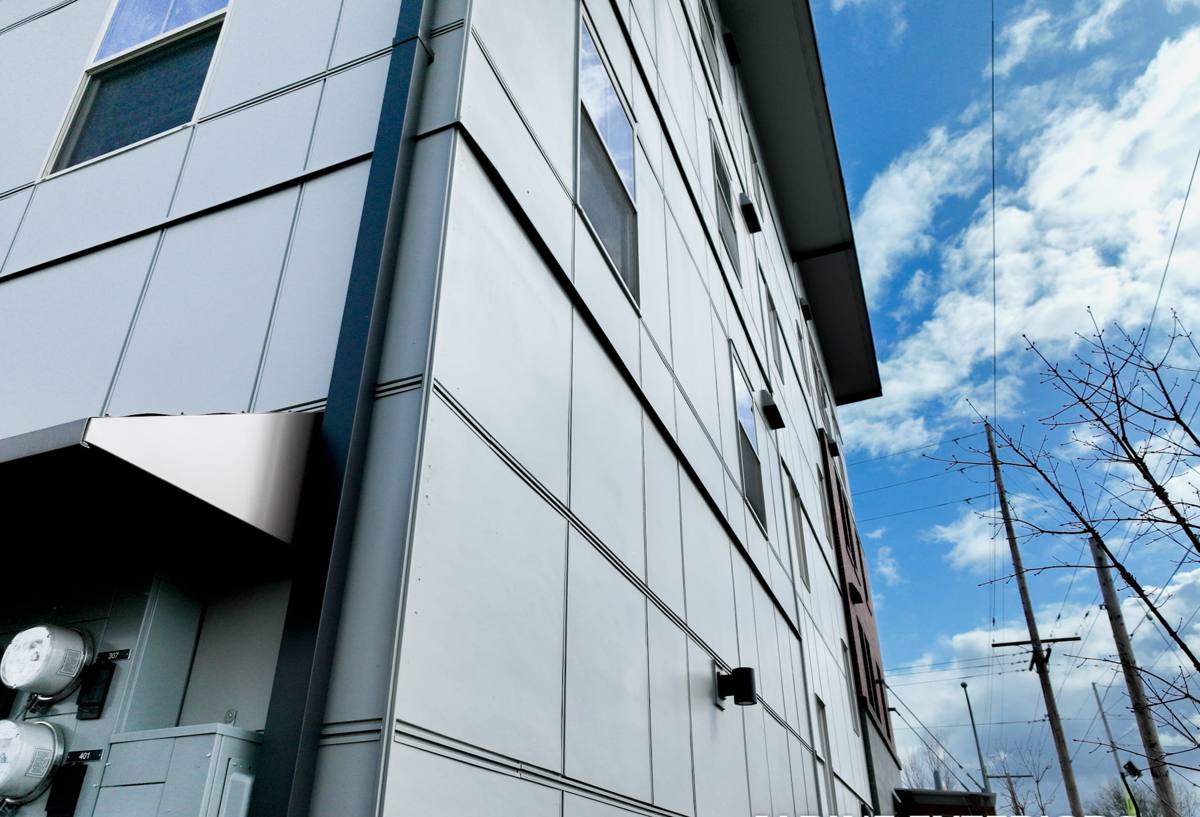
What Salt Air, Driving Rain, and Moss Actually Do to Siding
Salt Air
Proximity to Bellingham Bay means a steady low-level exposure to salt-carrying moisture in the air, especially on west- and south-facing walls that catch wind off the water. Salt accelerates corrosion on fasteners, flashing, and any exposed metal trim. Once a nail head or a piece of flashing starts to corrode, it stops doing its job — water finds that failure point and starts working its way behind the siding.
Driving Rain
Whatcom County storms often come with real wind behind them, which pushes rain sideways into laps, seams, and butt joints instead of letting it run straight down and off the wall. Siding systems that rely on gravity alone to shed water — thin caulk lines, loose lap spacing, unsealed cut ends — get overwhelmed during these events. Water intrusion from driving rain is one of the most common root causes we find behind soft or discolored siding in this area.
Moss and Prolonged Dampness
Ferndale's tree cover and marine humidity keep shaded walls, north elevations, and anything under an overhang damp for extended stretches, especially from late fall through spring. Moss and algae take hold in that environment, and once established they hold moisture directly against the siding surface far longer than open air would. That constant dampness is exactly the condition that breaks down absorbent or poorly sealed siding materials over time.
Common Repair Issues We See in Ferndale Homes
- Soft or spongy panels near the base of walls, under windows, or around old deck ledger connections, usually from long-term moisture intrusion behind the cladding.
- Open or cracked caulk joints at trim, corners, and butt seams that let wind-driven rain track behind the siding.
- Rust streaking and popped fasteners where corroded nails or staples have started to fail.
- Moss and algae staining on shaded or north-facing walls that signals prolonged dampness rather than just a cosmetic issue.
- Warped, cupped, or delaminating panels on older wood-based or engineered siding that has absorbed moisture repeatedly over several wet seasons.
- Gaps at penetrations — vents, hose bibs, light fixtures — where the original seal has shrunk or failed.
Individually, most of these look minor. Left alone through another Whatcom County winter, they tend to compound, because each entry point gives the next storm a head start.
What a Correct Siding Repair Actually Involves
A proper repair is not just pulling off a damaged board and nailing up a new one. It starts with figuring out why that section failed in the first place — otherwise the replacement piece is on the same clock as the one it's replacing.
- Diagnose the moisture path. We trace water back to its actual entry point — often a failed flashing detail, an open joint, or a grading issue — rather than just addressing the visible damage.
- Open up and inspect behind the siding. Damaged siding often means damaged sheathing or house wrap underneath. We check for rot and compromised weather-resistive barrier before closing anything back up.
- Correct the underlying detail. That might mean re-flashing a window head, re-sloping a sill, adding proper kick-out flashing at a roof-wall intersection, or fixing the drainage plane so water has somewhere to go.
- Replace with matched, properly finished material. Repair panels need to match existing coursing, reveal, and finish — and be installed with the correct fastening pattern and clearances, not just tacked in place.
- Reseal and detail penetrations. Any trim, vent, or fixture disturbed during the repair gets properly sealed and flashed before we leave.
Skipping the diagnosis step is the single biggest reason siding repairs fail again within a season or two — the new material looks fine, but the moisture path that caused the original damage is still there.
Repair or Replace? How We Help You Decide
Not every damaged section needs a full re-side, and not every repair is worth doing on siding that's already near the end of its service life. We look at the extent of damage, the age and condition of the material, and how much of the wall's structure has been affected.
| Factor | Favors Repair | Favors Full Replacement |
|---|---|---|
| Extent of damage | Isolated to one or two wall sections | Recurring across multiple elevations |
| Sheathing condition | Dry, sound structure underneath | Rot or soft sheathing found in multiple areas |
| Siding age | Relatively young, matching material available | Original material near or past its expected life |
| Material type | Durable material with an isolated failure point | Moisture-prone material with a pattern of repeat failures |
| Cost over time | Lower cost now, low likelihood of recurrence | Repeated repairs would exceed the value of replacing |
We'll give you a straight answer either way. If a targeted repair solves the problem, that's what we'll recommend — a full re-side only makes sense when the damage or the material's condition actually calls for it.
Why We Only Repair and Re-Side With James Hardie Fiber Cement
When a repair does turn into a larger project, or when a home's existing siding has failed to the point that patching no longer makes sense, we install James Hardie fiber cement exclusively. We don't install vinyl, LP SmartSide, or other engineered wood products, and that's a deliberate standard, not a sales preference.
In a climate like Ferndale's — salt air, driving rain, and a long moss season — fiber cement's resistance to moisture absorption and its non-combustible composition hold up in ways that wood-based and vinyl products often don't over the long run. James Hardie's ColorPlus factory finish is engineered to resist the fading and cracking that comes from repeated wet-dry cycling, and the HZ5 product line is formulated specifically for cold, wet climates like ours. When we do replace a section or a full wall, we're installing material we're confident will still be sound the next time we're back in the neighborhood.
Our Ferndale Siding Repair Process
- On-site inspection. We walk the exterior, check suspect areas, and probe any soft spots to understand how deep the damage goes.
- Honest assessment. You get a clear explanation of what's causing the damage, what repair options exist, and what each involves.
- Written scope and estimate. No vague verbal quotes — you get a specific plan for what will be repaired and how.
- Correct-detail repair work. We fix the underlying moisture path, not just the visible board.
- Final walk-through. We confirm the repair with you before calling the job done.
Signs Your Ferndale Home May Need Siding Repair
- Soft, spongy, or bouncy siding when pressed near the base of a wall
- Visible moss or algae buildup on shaded or north-facing siding
- Streaking or staining below gutters, downspouts, or roof valleys
- Bubbling, peeling, or cracking paint or finish on siding surfaces
- Gaps or cracked caulk at trim boards, corners, and window/door edges
- Musty smell or visible staining on interior walls that share an exterior wall with damaged siding
If any of these sound familiar, it's worth getting the wall opened up and inspected before another wet season adds to the damage.
Why a Local Ferndale Crew Makes a Difference
Siding repair done right depends on understanding how a specific area's weather actually behaves against a wall — which elevations take the worst of the wind-driven rain, which corners hold moss the longest, and how salt exposure changes near the water compared to further inland. A crew that already works in Ferndale and the greater Bellingham area brings that pattern recognition to the first inspection, instead of learning it on your house. We're not guessing at what Whatcom County winters do to siding — we see it on a regular basis and build our repairs to hold up against it.
If you're dealing with damaged, aging, or failing siding on a Ferndale home, we're happy to take a look and give you a straightforward, no-pressure assessment of what's going on and what it would take to fix it right. Use the form below to request a free estimate.