 Bellingham
 Why Ferndale Roofs Wear Differently Than Roofs Inland
Ferndale sits close enough to the water that homes here deal with a mix of weather most inland Washington roofs never see. Salt-laden marine air moves through the area regularly, driving rain comes in sideways during winter storms, and the region's mild, wet climate creates a moss and algae season that can run most of the year. None of this is unusual for Whatcom County, but it does mean a roof installed with generic, one-size-fits-all methods often underperforms here — sometimes within just a few years.
A new roof installation in Ferndale isn't just about covering the house. It's about choosing materials and installation details that hold up against constant moisture exposure, resist the corrosive effect of salt air on metal fasteners and flashing, and shed water fast enough that it never gets the chance to sit, soak, or freeze.
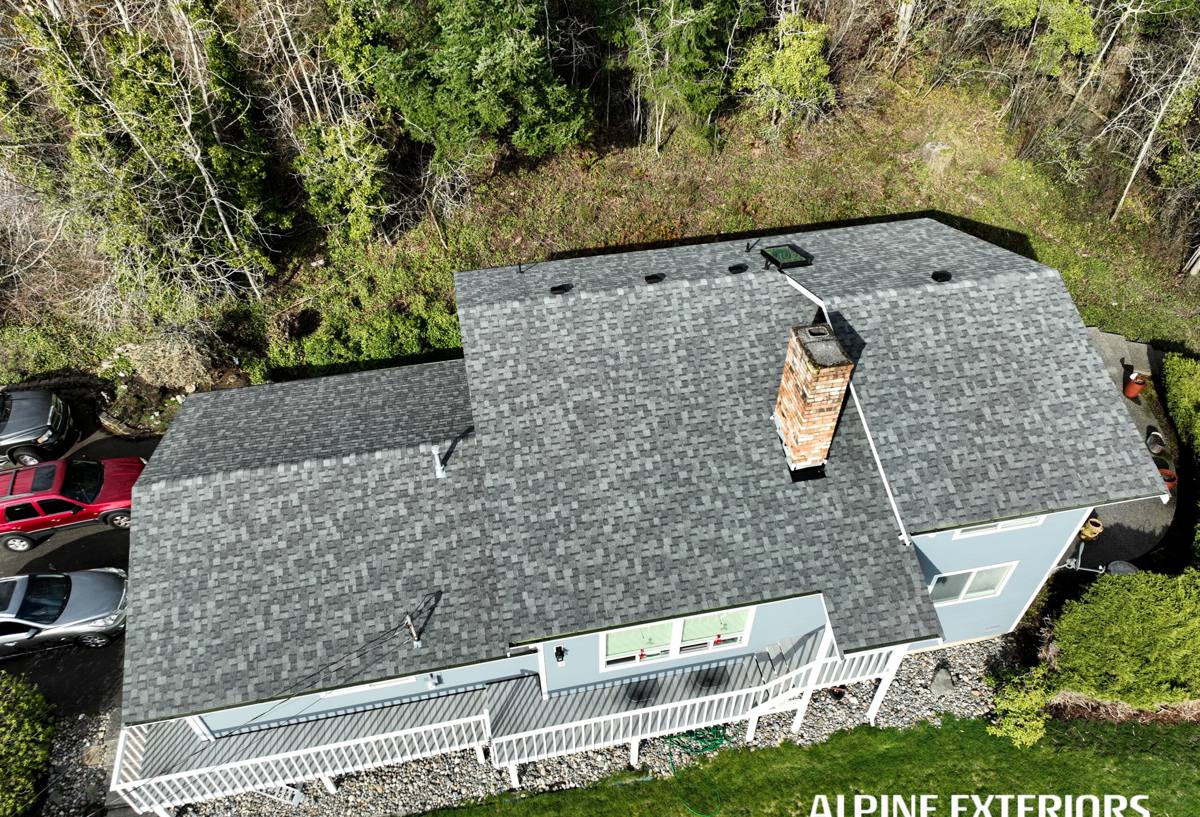
What a Correct New Roof Installation Actually Involves
A roof is a system, not a single layer of shingles. When any one part of that system is skipped or done cheaply, the whole roof's lifespan shrinks — even if the shingles themselves are a good product. A properly installed roof in this climate includes:
- Full tear-off of the old roofing material, not an overlay, so the deck can actually be inspected
- Deck inspection and repair — rot, soft spots, and delaminated sheathing get replaced, not covered up
- Ice-and-water shield at eaves, valleys, and penetrations, where wind-driven rain is most likely to force its way under shingles
- Synthetic underlayment across the full roof for a secondary moisture barrier
- Properly lapped, corrosion-resistant flashing at every chimney, wall, skylight, and vent
- Balanced intake and exhaust ventilation so the attic can actually dry out between storms
- Correct nailing pattern and shingle exposure per manufacturer specs — not just "close enough"
Skipping any one of these is how a roof that looks fine on installation day starts leaking, staining, or growing moss within a couple of seasons.
Choosing a Roofing System That Fits Ferndale's Climate
There's no single "best" roofing material for every home — it depends on budget, roof pitch, and how much long-term maintenance a homeowner wants to take on. What matters is matching the material's real-world behavior in wet, salt-exposed conditions to what the home actually needs.
| Material | Moisture & Moss Behavior | Typical Lifespan Here | Maintenance Load |
|---|---|---|---|
| Architectural asphalt shingles | Good drainage design, algae-resistant granules available | 25–30 years | Moderate — periodic moss removal recommended |
| Standing seam metal | Sheds water fast, minimal moss growth on smooth panels | 40–50+ years | Low, but fasteners and coatings must be salt-air rated |
| Cedar shake | Attractive but holds moisture longer, prone to moss/rot without upkeep | 20–30 years with diligent care | High — regular treatment and inspection needed |
| Composite/synthetic shingle | Engineered for moisture resistance, less organic material for moss to grip | 30–50 years | Low to moderate |
We don't push every homeowner toward the same product. Cedar shake, for example, can be a great look for the right home, but we're upfront that it demands more ongoing care in a climate this wet — that's a maintenance conversation, not a knock on the material itself. Metal and quality architectural asphalt tend to be the lowest-maintenance choices for Ferndale's conditions, which is why we install both regularly.
A Note on Fasteners and Flashing
In coastal and near-coastal areas, standard fasteners and flashing can corrode faster than they would twenty miles inland. We spec corrosion-resistant fasteners and flashing on Ferndale installs as standard practice, not an upsell — it's a small cost difference upfront that prevents rust streaking and premature flashing failure down the road.
Our New Roof Installation Process, Step by Step
- On-site inspection and estimate. We walk the roof, check the attic, and talk through material options based on your home's pitch, exposure, and budget — no pressure, no scare tactics.
- Material selection and scheduling. Once you've picked a system, we order materials and schedule around the weather window — timing matters more here than in drier climates.
- Full tear-off and deck inspection. Old roofing comes off completely so we can see the actual condition of the deck before anything new goes down.
- Repair and prep. Any damaged sheathing is replaced, and the deck is prepped for underlayment.
- Underlayment and ice-and-water shield installation. This is the moisture barrier that protects the home even before a single shingle is on.
- Flashing, then roofing material installation. Flashing goes in first at every vulnerable point, followed by the roofing material itself per manufacturer spec.
- Ventilation check and adjustment. Intake and exhaust are verified and corrected if the existing setup is inadequate.
- Final walkthrough and cleanup. We inspect the finished roof with you and make sure the property is cleared of debris and nails.
Ventilation and Moisture Control: The Part Homeowners Don't See
A new roof can look perfect from the ground and still fail early if the attic underneath it can't breathe. Poor ventilation traps moisture, which leads to sheathing rot, mold, and shortened shingle life — problems that show up from the inside out, often long after installation. In a climate with as much sustained humidity and rainfall as Whatcom County's, ventilation isn't optional. We check intake (usually soffit vents) and exhaust (ridge or roof vents) on every new roof installation and correct imbalances as part of the job, not as a separate line item discovered later.
Moss, Algae, and Long-Term Roof Health
Ferndale's long moss season is one of the most common reasons homeowners end up replacing a roof earlier than they should. Moss holds moisture against the roofing material, works its way under shingle edges, and lifts them over time — which is exactly the kind of slow damage that isn't obvious until a leak shows up. A correct new roof installation reduces how quickly moss takes hold through material choice, proper flashing, and design details like drip edges that keep water and debris moving off the roof instead of pooling. No roof in this climate is permanently moss-proof, but the right system paired with occasional maintenance goes a long way.
What a New Roof Costs in Ferndale — and What Actually Drives the Price
Every roof is priced individually based on size, pitch, material, and complexity, so we won't quote a number without seeing the roof. What we can tell you honestly is what tends to move the price up or down:
| Cost Factor | Why It Matters |
|---|---|
| Roof pitch and complexity | Steep, multi-plane roofs take longer and require more safety equipment |
| Material choice | Asphalt is generally the most affordable; metal and cedar cost more upfront |
| Deck condition | Rot or soft sheathing found during tear-off adds repair cost, but skipping it costs far more later |
| Number of penetrations | Chimneys, skylights, and vents each require additional flashing work |
| Tear-off layers | Removing multiple old roofing layers takes more labor than a single-layer tear-off |
We'd rather walk a homeowner through these factors honestly during an estimate than throw out a lowball number that grows once the tear-off starts.
Why Hiring a Crew That Already Works Ferndale Matters
Roofing crews who work Whatcom County's coastal communities regularly know things a general contractor passing through doesn't: which flashing details actually hold up to this area's rain patterns, how much ventilation a given attic style really needs given local humidity, and where moss tends to establish first on a given roof design. That familiarity shows up in fewer callbacks and a roof that performs the way it's supposed to for its full expected lifespan — not just on a sunny installation day, but through years of Ferndale winters.
Signs Your Roof Needs Replacement, Not Just Repair
- Shingles that are cracked, curling, or missing granules across large sections
- Daylight visible through the roof deck from inside the attic
- Soft or spongy spots when walking the roof
- Recurring leaks in the same area despite prior repairs
- Heavy moss or algae growth that returns quickly after cleaning
- A roof approaching or past its material's expected lifespan
If your roof shows one or two of these signs, a targeted repair may still make sense. Several at once usually means the roof's underlying protection is compromised and full replacement is the more cost-effective path.
If you're weighing a new roof for your Ferndale home, we're happy to take a look and give you a straight answer about what your roof actually needs — no pressure, no inflated urgency. Use the form below to request a free estimate.