 Bellingham
 New-Construction Windows in Fairhaven: What "Doing It Right" Actually Means
Fairhaven sits close enough to the water that its homes take a different kind of weathering than houses further inland in Whatcom County. Salt-laden air off Bellingham Bay, driving rain that comes in sideways during winter storms, and a moss season that can run eight months out of the year all put extra stress on window openings. When we talk about "new-construction windows," we mean windows installed with a nailing flange into a fully open stud bay — not a replacement window slipped into an existing frame. That distinction matters a lot in a neighborhood like Fairhaven, because it's the difference between a window that's genuinely sealed into the wall assembly and one that's just sitting inside an older opening hoping the old flashing still works.
New-construction installs are the right call for ground-up builds, additions, and any remodel where the wall is opened down to the studs. They give us access to the rough opening itself, which means we control every layer of the water management system — not just the window.
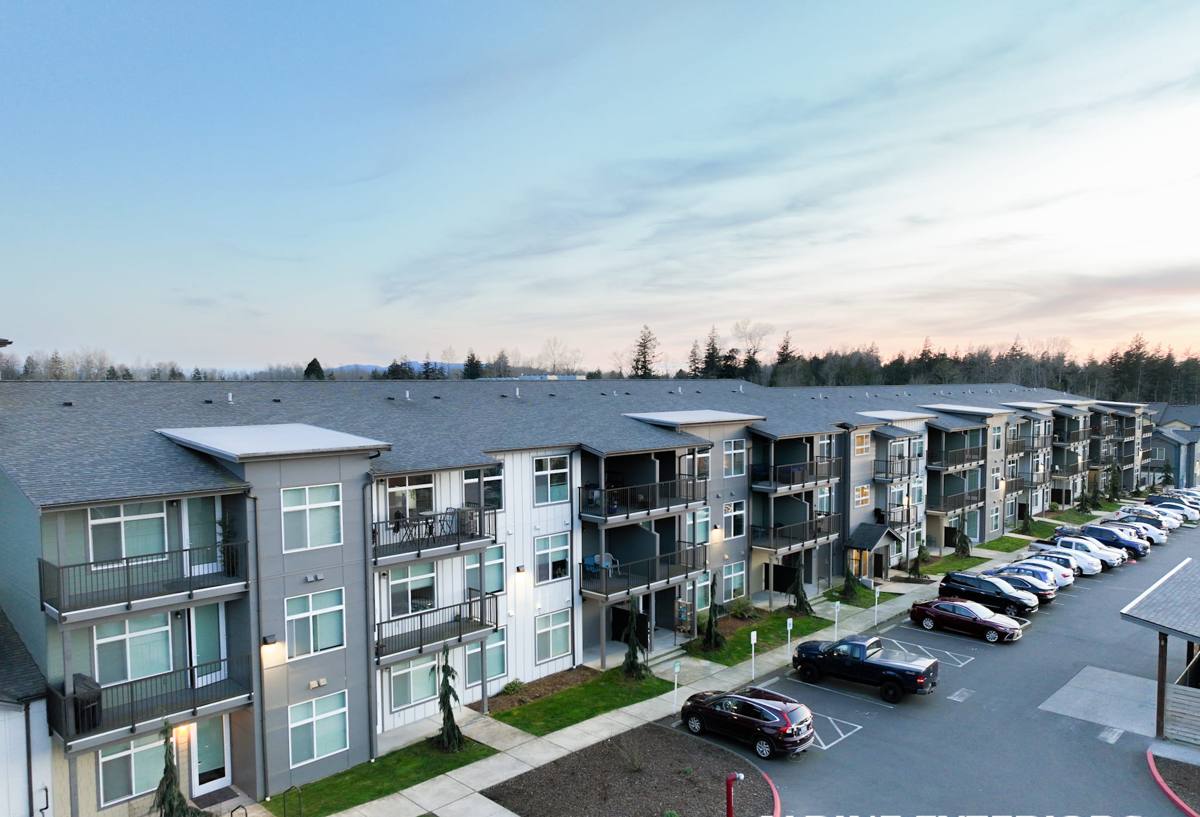
Why Fairhaven's Climate Changes the Job
Salt air and coastal moisture
Homes within a mile or so of the water deal with airborne salt that accelerates corrosion on hardware, fasteners, and lower-grade aluminum components. It doesn't ruin a window outright, but it shortens the life of anything not rated for coastal exposure. We factor this into hardware and fastener selection on every Fairhaven job, not just the ones directly on the waterfront.
Driving rain, not just rain
Bellingham gets a lot of rain, but the bigger issue for windows is wind-driven rain during fall and winter storms, when water gets pushed sideways and upward against the wall instead of just running down it. A window that's watertight in a light drizzle can still leak under wind-driven conditions if the flashing details weren't built for it. This is where most window leaks actually originate — not the window unit itself, but the flashing and sealant work around it.
Long moss and mildew season
Whatcom County's damp, mild climate keeps moss and mildew active for most of the year. Around windows, that shows up as black streaking on sills, moss creep on horizontal trim, and slow degradation of unprotected wood. It's mostly a maintenance and material issue rather than a structural one, but it's a big part of why we steer Fairhaven clients toward low-maintenance cladding and trim details up front.
What a Correct New-Construction Window Install Involves
A window is only as good as the four or five layers of material working together around it. In order, from the framing out, a correct install includes:
- A sloped sill pan flashing at the bottom of the rough opening, so any water that does get past the window drains back out instead of pooling on the sill
- Proper integration with the weather-resistive barrier (housewrap or building paper), shingle-lapped so upper layers always overlap lower ones
- Flashing tape or flexible flashing at the jambs and head, tied into the WRB in the correct sequence — head flashing last, over everything below it
- A window unit set level, plumb, and square, shimmed correctly so it isn't relying on fasteners to hold its shape
- Backer rod and exterior sealant at the perimeter, sized and installed so the sealant can flex without tearing
- Interior air sealing with low-expansion foam or sealant, which does more for energy performance than most homeowners expect
Skip or rush any one of these steps and the window can still look fine for a year or two before a leak shows up inside a wall cavity where it's expensive to find and fix. This is the core reason we don't treat window installation as a quick add-on to siding or framing work — it's its own trade discipline.
Choosing a Window Product for a Fairhaven Home
There's no single "best" window brand or material — the right choice depends on the home's style, budget, and how close it sits to the water. Here's how the common frame materials generally compare for this area:
| Frame Material | Coastal/Salt Air Performance | Maintenance | Typical Use Case |
|---|---|---|---|
| Vinyl | Good — won't corrode, but color/frame life varies by manufacturer | Low | Budget-conscious new builds, additions |
| Fiberglass | Very good — dimensionally stable, resists moisture and salt exposure well | Low | Homes wanting long service life without repainting |
| Aluminum-clad wood | Good if cladding is intact; wood core needs protection at joints | Moderate | Historic-style or higher-end Fairhaven homes |
| Bare wood | Weakest in coastal, wet conditions without diligent upkeep | High | Restoration work where matching original character is the priority |
For a lot of Fairhaven properties — where the neighborhood's older, character-driven look matters — clients often land on fiberglass or aluminum-clad wood to get a traditional appearance without taking on bare wood's maintenance schedule. We'll walk through the trade-offs honestly rather than pushing one product line; the right answer depends on what you're building and how much upkeep you want to sign up for.
Our Process for a New-Construction Window Job
1. Walkthrough and rough opening review
We look at the framing plan or existing rough openings, confirm sizes, and flag anything — like an opening that's out of square or framed too tight — before ordering windows.
2. Product selection
We go over frame material, glass package, and hardware options based on the home's exposure, your budget, and how the openings will be used (fixed, operable, egress requirements for bedrooms, etc.).
3. Flashing and prep
Before a single window goes in, we prep the rough openings with sill pan flashing and confirm the WRB is properly lapped. This step gets rushed on a lot of jobs; it's the one we won't shortcut.
4. Installation
Windows are set, shimmed, and fastened to manufacturer specs, then flashed at the jambs and head in the correct shingle-lap sequence.
5. Sealing and finish
Exterior sealant, interior air sealing, and trim work close out the install. We check operation on every unit — swing, slide, or crank — before we call it done.
6. Final walkthrough
We go through the finished openings with you, confirm everything operates correctly, and explain what maintenance (if any) the specific product you chose will need going forward.
Why a Crew That Already Works Fairhaven Matters
Fairhaven is a mix of older character homes, in-fill new construction, and additions on lots that weren't originally built for modern window sizes. A crew that regularly works this specific area already knows the kind of framing quirks and exposure conditions common to these properties — which openings tend to need extra flashing attention because of prevailing wind and rain direction, and which product lines hold up better against salt air over time. That local pattern recognition doesn't replace doing the flashing details correctly on every single job, but it does mean fewer surprises and fewer change orders once the wall is open.
It also means we're not guessing at permitting or code requirements specific to Bellingham and Whatcom County. Egress sizing for bedrooms, energy code glazing requirements, and inspection sequencing are all things a local crew handles as routine rather than research.
A Practical Checklist Before You Sign a Window Contract
- Confirm whether the quote is for new-construction (nailing flange) or replacement (pocket) windows — they're not interchangeable and the wrong one on an open wall is a real problem
- Ask specifically how sill pan flashing and head flashing will be handled, not just "we'll flash it"
- Get frame material and glass package specifics in writing, not just a brand name
- Ask how the WRB (housewrap/building paper) will be integrated with the window flashing
- Confirm who pulls permits and handles inspections if required
- Ask what maintenance the specific product will need in a coastal, high-moss environment
Cost Factors to Expect
Pricing for new-construction window work depends on unit count, size, frame material, glass upgrades, and how much flashing and trim work is involved. Rather than quote a number that won't fit your project, we walk every Fairhaven job in person, look at the actual openings and framing, and put together a written estimate based on what your home needs — not a generic per-window rate that ignores site conditions.
If you're planning new construction, an addition, or a full remodel in Fairhaven and want windows installed the way this climate actually requires, we're happy to take a look and put together a straightforward, no-pressure estimate. Use the form below to get started.