 Bellingham
 Windows Built for Fairhaven's Weather, Not a Catalog Average
Fairhaven sits close enough to the water that its homes take a different kind of weather beating than houses further inland in Whatcom County. Salt-laden air off Bellingham Bay works on metal hardware and exposed fasteners year-round. Driving rain off the water finds every gap in a window's flashing during the fall and winter storm cycles. And the long, damp moss season that defines a Pacific Northwest year keeps wood trim and sills wet for weeks at a stretch. A window that's fine in a dry inland climate can fail early here if it wasn't chosen and installed with those specific conditions in mind.
Custom windows for a Fairhaven property aren't just about matching an odd-sized opening or getting a period-correct look for an older home, though that matters too. They're about picking materials, glazing, and flashing details that hold up to sustained moisture exposure without turning into a maintenance chore. This page covers what that actually looks like — what to ask for, what a correct installation involves, and how we handle the job from first look to final walkthrough.
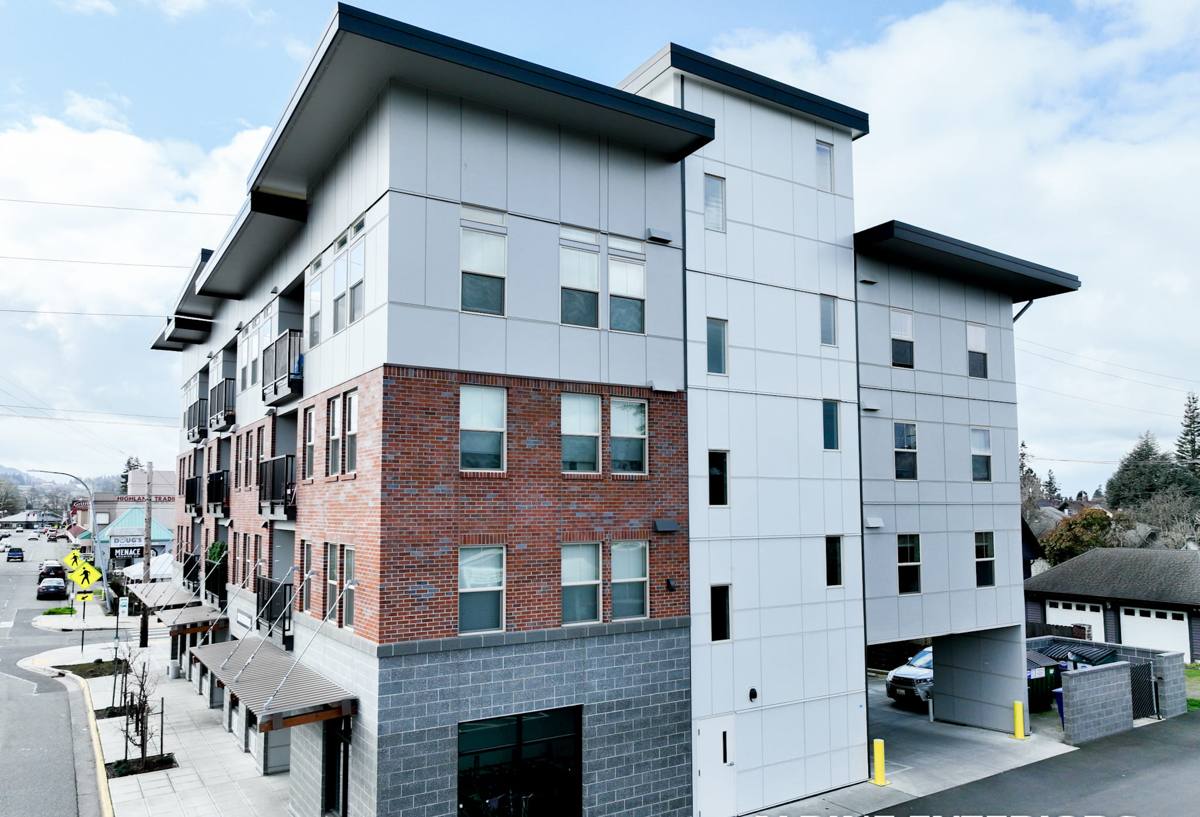
What Bellingham's Coastal Climate Does to Windows Over Time
Salt Air and Hardware
Even a few miles from open saltwater, airborne salt accelerates corrosion on window hardware — hinges, locks, cranks, and especially any exposed steel fasteners. Aluminum-clad and vinyl frames handle this better than raw wood or bare metal, but the hardware inside any window is still vulnerable if it's not rated for coastal exposure. This is one of the first things we check on a replacement job: what's failing first, the frame or the hardware, because the answer changes the recommendation.
Driving Rain and Wind-Driven Moisture
Storms coming off the water don't just fall straight down — wind pushes rain sideways into wall assemblies, and windows are the weakest point in that assembly. A window can be perfectly sealed on a calm day and still leak during a wind-driven rain event if the flashing behind the trim wasn't done correctly. This is a flashing and installation issue far more often than it's a product defect, which is why installation technique matters as much as the window brand.
Moss Season and Sustained Dampness
Whatcom County's moss season isn't a single event — it's months of low sun, high humidity, and surfaces that rarely fully dry out. Wood sills and trim that stay damp for extended periods are where rot starts, and it usually starts quietly, behind paint or caulk that looks fine from the outside. Custom window work in Fairhaven has to account for this by using materials and detailing that shed water fast and don't give moss and mildew a place to sit.
What "Custom" Actually Means for a Fairhaven Home
Custom doesn't automatically mean expensive or elaborate — it means the window is specified to fit the actual opening, the actual house style, and the actual exposure, rather than pulled off a shelf in a standard size. Fairhaven has a real mix of housing stock, from older homes with non-standard rough openings to newer construction, and a custom approach handles both without forcing a compromise.
- Exact-fit sizing for openings that don't match modern standard dimensions — common in older Bellingham-area homes
- Frame material matched to exposure level (how much direct weather and salt air the specific wall faces)
- Glazing package selected for energy performance and condensation control in a marine climate
- Trim and casing profiles that match the home's existing exterior detailing
- Flashing and water management detailing appropriate for wind-driven rain exposure
- Hardware finish rated for coastal/salt-air conditions, not just standard-grade hardware
Frame Material: The Trade-Offs for This Climate
There's no single "best" window material for every situation — it depends on the home's style, the specific exposure, and how much upkeep the homeowner wants to take on. Here's how the common options actually compare for a coastal Whatcom County property.
| Material | Moisture Behavior | Maintenance | Best Fit |
|---|---|---|---|
| Vinyl | Won't rot; handles sustained dampness well | Low — occasional cleaning | Budget-conscious replacements, rental or investment properties |
| Fiberglass | Very stable, minimal expansion/contraction, resists moisture well | Low | Homeowners wanting durability and paintable finish flexibility |
| Aluminum-clad wood | Exterior sheds water well; interior wood needs the seal maintained | Moderate — watch seams and caulking | Homes wanting real wood interior look with weather-resistant exterior |
| All-wood | Most vulnerable to sustained moisture and moss-season dampness | High — regular repainting/sealing required | Historic restoration where original material must be preserved |
For most Fairhaven replacement projects, we steer homeowners toward vinyl, fiberglass, or aluminum-clad wood because they hold up to the marine climate with far less upkeep than solid wood frames. We'll still install all-wood windows when a historic restoration calls for it — we just make sure the homeowner understands the maintenance commitment that comes with it, and we detail the flashing and sealant work extra carefully to compensate for wood's higher moisture sensitivity.
Glazing and Glass Package Considerations
The glass itself matters as much as the frame in this climate. Double-pane units with argon gas fill and low-E coatings are the baseline we recommend for Bellingham's marine, moderate-temperature climate — they manage both heat loss and condensation better than single-pane or older double-pane units without gas fill. Condensation between panes is one of the most common signs of seal failure we see on older windows in this area, caused by years of temperature swings and humidity cycling through the seal.
Triple-pane glazing is available and does offer a marginal energy improvement, but for most Fairhaven homes the added cost doesn't pencil out against a quality double-pane low-E unit — we'll walk through that math honestly rather than upselling it by default. Where triple-pane does make sense is on a wall with unusually high wind or noise exposure close to the water.
Condensation and Ventilation
New, tightly sealed windows sometimes reveal a ventilation issue that older, leakier windows had been masking — interior humidity with nowhere to go can show up as condensation on the glass. This is common enough in our marine climate that we flag it during the estimate: if a home has bathroom or kitchen exhaust fans that aren't venting properly, we'll point it out before installation, because a great window can still fog up if the house isn't managing indoor humidity.
How We Handle the Installation
The window unit itself is only part of the job — the flashing, sealant, and trim work around it are what actually keep water out during a driving rain event. Here's the process we follow on Fairhaven jobs.
- On-site assessment: We measure the actual opening, check the condition of the existing sill and framing for hidden rot or moisture damage, and evaluate the wall's exposure to wind-driven rain and salt air.
- Material and glazing selection: Based on that exposure level and the home's style, we recommend frame material and glass package options with honest trade-offs explained, not just the highest-margin option.
- Removal and opening prep: Old windows come out carefully to avoid damaging surrounding siding or trim; any rot or damaged sheathing found underneath gets addressed before the new window goes in, not covered up.
- Flashing installation: Proper sill pan flashing and weather-resistant barrier integration are installed to direct water out and away from the wall assembly — this step is where most long-term leak problems are prevented or created.
- Window setting and sealing: The unit is set level and plumb, shimmed correctly, and sealed with sealants rated for our climate's temperature and moisture range.
- Trim and finish: Interior and exterior trim is fitted to match the home's existing profiles, and exterior caulking is finished to shed water cleanly.
- Final walkthrough: We check operation, seal integrity, and finish quality with the homeowner before calling the job done.
Signs a Fairhaven Home May Need Custom Window Work
- Visible condensation or fogging between glass panes (a sign the seal has failed)
- Drafts or noticeable temperature difference near the window frame
- Soft or discolored wood on the sill, jamb, or surrounding trim
- Difficulty opening, closing, or locking the window smoothly
- Visible moss, algae, or persistent green staining around the frame or sill
- Peeling paint or bubbling finish on wood trim near the window
- Water staining on interior walls or ceiling below or beside a window during heavy rain
Any one of these on its own might be minor. Several showing up together, especially on a wall that takes direct wind-driven rain, usually means it's time for a real assessment rather than another round of caulk and paint.
Why a Crew That Already Works Fairhaven Matters
Window installation looks straightforward until the flashing detail is wrong for the specific exposure a wall actually gets — and that's where local, hands-on experience with Bellingham's coastal weather patterns pays off. A crew that's worked houses in and around Fairhaven has already seen how salt air ages hardware, how wind off the water drives rain into gaps a standard install would miss, and how moss-season dampness finds the weak points in trim and sealant work. That's not something a generic install crew from outside the region necessarily accounts for by default.
We also know the practical side of working in this neighborhood — older housing stock with non-standard openings, mixed architectural styles, and the general expectation that exterior work here needs to actually perform through a wet Pacific Northwest winter, not just look good on installation day. That local familiarity shortens the assessment phase and reduces the chance of a callback for a problem that should have been caught up front.
What a Fair Estimate Should Include
When you're comparing quotes for custom window work, make sure each one is actually pricing the same job. A low number that skips flashing detail or uses standard hardware instead of coastal-rated hardware isn't really a lower price — it's a different, lower-quality job.
| Cost Factor | Why It Varies |
|---|---|
| Frame material | Vinyl is typically the most budget-friendly; fiberglass and aluminum-clad wood cost more upfront but carry lower long-term maintenance in this climate |
| Opening condition | Hidden rot or framing damage found during removal adds repair cost that a straightforward swap wouldn't need |
| Glazing package | Standard double-pane low-E vs. upgraded coatings or triple-pane changes the per-unit cost |
| Number and size of openings | Larger or custom-shaped openings require more precise fabrication than standard sizes |
| Trim and finish work | Matching existing historic or custom trim profiles takes more labor than standard trim |
| Access and site conditions | Second-story or hard-to-access windows add labor time and equipment needs |
Ask any contractor you're considering to walk through these factors specifically for your home rather than giving a flat per-window number sight unseen. A real assessment should look at your walls' actual exposure, not just measure the glass.
Questions Worth Asking Before You Hire
- Will you inspect for hidden rot or moisture damage before quoting the final price, or only after the old window is out?
- What flashing method do you use, and how does it account for wind-driven rain on this specific wall?
- What hardware finish is rated for salt-air exposure, and is that what's included by default?
- What's the warranty structure — on the window unit itself versus on your installation labor?
- Can you match existing trim profiles, or will the new windows look visibly different from the rest of the house?
If you're seeing early signs of window trouble on a Fairhaven property, or you're planning ahead of the next wet season, we're happy to take a look and give you a straight answer on what your home actually needs. Reach out for a free, no-pressure estimate using the form below.