 Bellingham
 Why Edgemoor Decks Take More Punishment Than Most
Edgemoor sits close enough to Bellingham Bay and the Salish Sea that salt-laden air is a daily fact of life, not an occasional coastal event. Combine that with the wooded, bluff-and-canopy character of the neighborhood — mature conifers and big-leaf maples shading many lots — and you get a microclimate that's harder on outdoor structures than a typical inland Whatcom County yard. Salt air accelerates corrosion on anything metal. Tree cover keeps decks damp longer after every rain, which in Bellingham's climate means most of the year. And that shade, combined with our long, mild, wet winters, produces one of the more aggressive moss seasons on the West Coast.
None of that means a deck can't last decades in Edgemoor. It means the deck has to be built by someone who designs for those specific conditions from the footings up, not someone applying a generic build plan and hoping the finish coat covers for it.
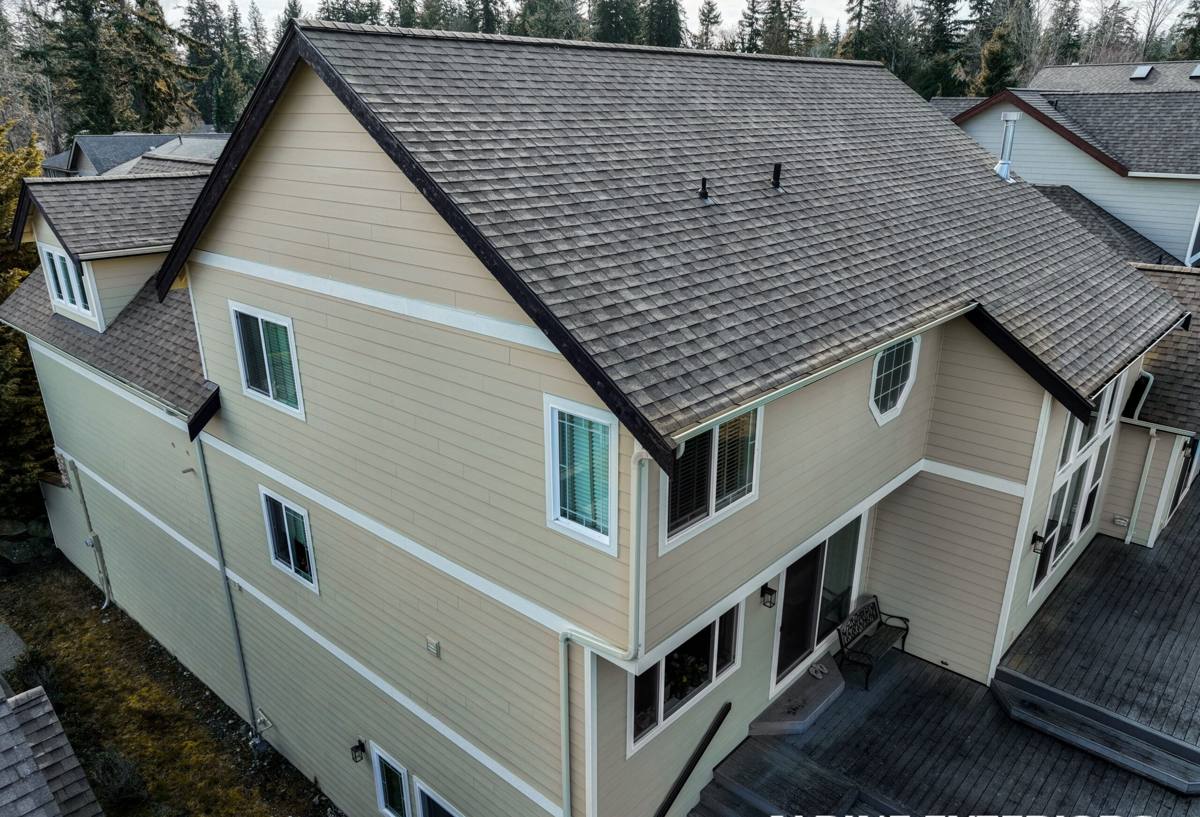
What a Correctly Built Deck Needs Here
Drainage and airflow first, decoration second
The single biggest driver of deck failure in this area isn't the decking material — it's trapped moisture underneath and behind it. A deck built tight to grade, with poor slope away from the house or no gap for airflow under the joists, will hold moisture through the fall and winter and start growing moss and soft rot in places you can't see until it's a real repair. Correct grading, proper joist spacing for ventilation, and a ledger board that's flashed and sealed against the house are non-negotiable in a wooded, wet lot like Edgemoor.
Hardware that can handle salt air
Standard galvanized fasteners corrode faster this close to the water, especially where they're in constant contact with wet wood. We spec stainless steel or high-grade coated fasteners and connectors rated for coastal exposure, because a deck is only as strong as its weakest bracket, and a rusted-out joist hanger is a hidden safety problem, not just a cosmetic one.
A decking surface chosen for shade, not just looks
Shaded, moisture-heavy lots are exactly where the wrong decking choice shows its problems fastest — algae film, moss in the grain, and surfaces that stay slick well after the rain stops. The right material for an Edgemoor lot depends on how much direct sun the deck actually gets, how the household wants to spend its maintenance time, and the look they're after. We walk every site before recommending a material rather than defaulting to one option for every yard.
Comparing Deck Materials for a Shaded, Salt-Air Lot
| Material | Moss/algae resistance | Salt air performance | Maintenance | Typical lifespan |
|---|---|---|---|---|
| Pressure-treated wood | Fair — needs regular cleaning in shade | Good if fasteners/hardware are corrosion-rated | Annual cleaning, re-staining every 2-3 years | 15-20 years with upkeep |
| Cedar | Fair to good — natural oils help, but shade still promotes growth | Good; naturally rot-resistant species | Cleaning plus oil/sealant every 1-2 years | 15-20 years with upkeep |
| Composite decking | Good — dense surface resists staining and moss root-in | Very good; no wood grain for salt residue to settle into | Periodic washing, no staining or sealing | 25-30 years |
| PVC/capped polymer | Very good — fully synthetic, non-porous surface | Excellent | Low; occasional wash | 25-30+ years |
Composite and PVC decking cost more upfront but remove most of the moss and staining battle for shaded Edgemoor lots. Wood costs less to install and has a warmer, more traditional look many owners in this neighborhood prefer — the trade-off is a real, ongoing maintenance commitment. We'll walk you through the honest math for your specific site rather than push whichever product carries the best margin.
Our Process for an Edgemoor Deck Build
- Site visit and design. We look at sun exposure, tree canopy, slope, and how the deck will tie into the house before drawing anything up.
- Permitting. Most new decks and significant rebuilds in Bellingham and unincorporated Whatcom County require a permit, especially where structural footings, guardrails, or attachment to the house are involved. We handle that paperwork so you don't have to chase it down.
- Footings and framing. Footings are set below frost depth and sized to the soil conditions on your lot — bluff and wooded lots in this area can have variable soil that a generic footing spec doesn't account for.
- Ledger flashing and waterproofing. Where the deck meets the house is the single most common source of long-term water damage, so this gets full flashing and sealing, not a quick caulk bead.
- Decking, railing, and hardware installation. Installed with corrosion-rated fasteners and connectors suited to salt air exposure.
- Final walkthrough. We go over care and maintenance specific to your material choice and your lot's shade and moisture pattern before we consider the job done.
Railings, Stairs, and the Small Details That Matter Most
Guardrails and stair stringers see constant weather exposure and constant hand contact, which makes them a common weak point if corrosion-resistant hardware wasn't used from the start. In a salt-air neighborhood like Edgemoor, we treat railing posts, baluster connectors, and stair hardware with the same coastal-grade fastener standard as the deck frame itself — a railing post that loosens because of a rusted-out lag bolt is both a repair and a safety issue. Stair treads also deserve a second look in shaded lots: moss and algae build up fastest on horizontal surfaces that don't get direct sun, so tread material and surface texture matter more here than they would on an open, sun-exposed lot.
Lighting and finish touches
Low-voltage deck lighting is popular in wooded lots like Edgemoor where natural light fades early under the canopy. If you're considering it, it's worth planning the wiring during the build rather than retrofitting later — it's cheaper, cleaner, and avoids drilling into a finished structure.
Living With Moss and Salt Air: A Maintenance Checklist
Whatever material you choose, a few habits go a long way toward protecting the investment in Bellingham's wet, shaded conditions:
- Sweep leaves and needles off the deck regularly through fall — trapped organic debris holds moisture and feeds moss growth.
- Clean the surface at least once or twice a year with a deck-safe cleaner, more often in heavily shaded spots.
- Check and clear any gaps between boards where debris collects, since blocked drainage gaps are a common moss starting point.
- Inspect fasteners, hinges, and railing hardware yearly for early signs of rust, especially after winter storms.
- Re-stain or re-oil wood decking on schedule — don't wait until the finish has already failed and the wood is exposed.
- Keep nearby shrubs and low branches trimmed back to let in as much air and light as the lot allows.
Permits and Code Considerations in Bellingham and Whatcom County
Deck permitting requirements depend on size, height above grade, and whether the structure attaches to the house, and requirements can differ slightly between the City of Bellingham and unincorporated Whatcom County. Edgemoor includes both city and county-adjacent parcels, so confirming which jurisdiction applies to a given lot is one of the first things we check before design work starts. Guardrail height, stair rise and run, and footing depth all have code minimums that matter both for safety and for passing inspection — getting these right the first time avoids delays and rework.
Why It Matters to Hire a Crew That Already Works in Edgemoor
A deck built by a crew unfamiliar with this specific stretch of coastline tends to make the same avoidable mistakes: standard fasteners that weren't spec'd for salt air, decking chosen without accounting for tree shade, or footings placed without accounting for the area's mixed soil conditions. A crew that regularly works Edgemoor lots has already seen how the salt air, the rain patterns, and the tree canopy interact on decks in this exact area — and builds accordingly instead of learning on your project.
There's also a practical side to local experience: navigating narrow or wooded driveways for equipment access, protecting root zones of mature trees during construction, and working around the site constraints that come with bluff and wooded lots. These aren't things you can plan for from a generic spec sheet — they come from having done the work here before.
Get a Straight Answer on Your Deck
Every lot in Edgemoor handles sun, shade, and moisture a little differently, so a real recommendation starts with seeing your specific site — not a phone estimate. If you're planning a new deck or replacing one that's showing its age, we're happy to walk the property, talk through material options honestly, and put together a clear, no-pressure estimate using the form below.