 Bellingham
 Decks in Puget Face a Different Set of Problems
Puget sits close enough to the water that salt air is a daily fact of life, not an occasional nuisance. Add Whatcom County's long wet season and the shade that comes with mature trees on many lots, and you get a deck-building environment that's tougher on lumber, fasteners, and finishes than most manufacturers' warranty language assumes. A deck built the way it would be built inland, or built to a national-average spec, tends to show its age fast here — soft spots at the ledger, rusted fastener heads bleeding through decking, and a green film that comes back within weeks of being scrubbed off.
Building decks for Puget homes for years has meant paying attention to which details actually matter in this climate and which ones are just upsell. This page covers what a deck in this neighborhood actually needs, what a correct build looks like from the ground up, and how we run the project from first estimate to final walk-through.
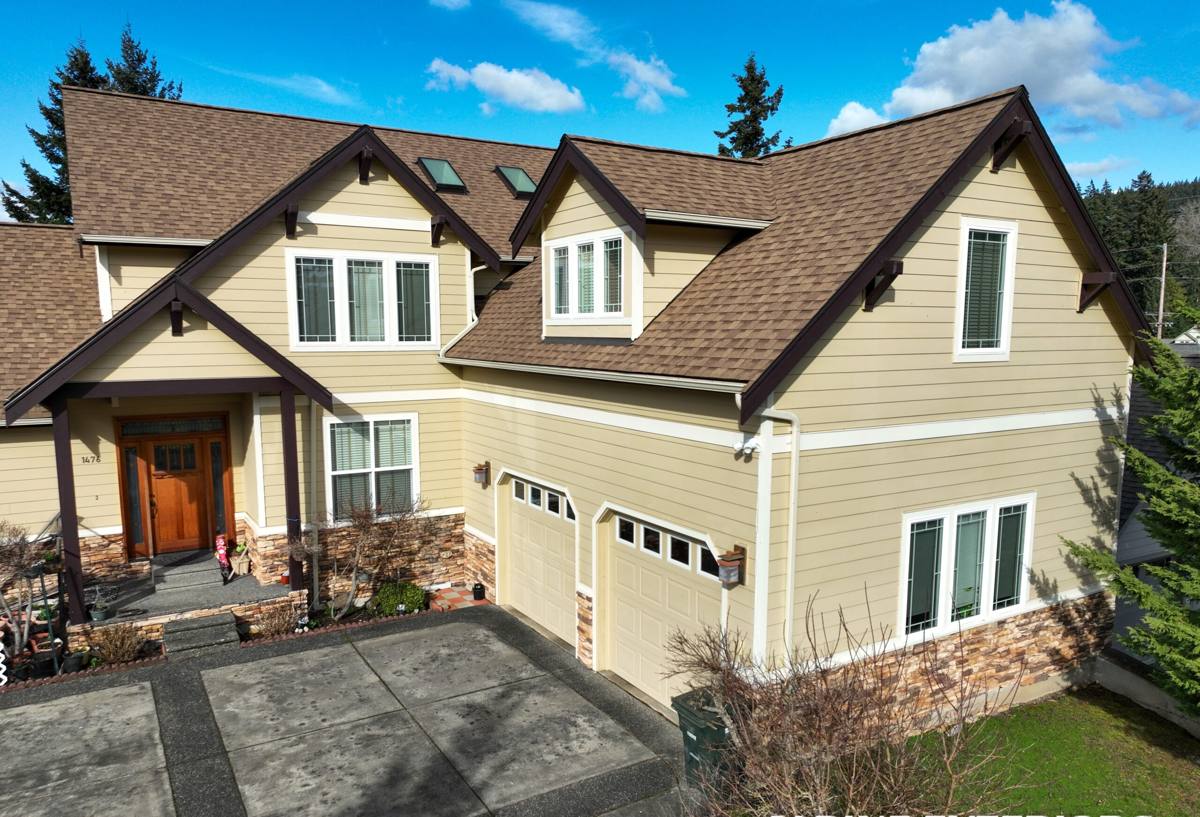
What Salt Air, Rain, and Moss Actually Do to a Deck
Salt air and metal
Airborne salt accelerates corrosion on anything metal — fasteners, post bases, joist hangers, railing hardware. Standard galvanized coatings that hold up fine forty miles inland can start showing rust bleed within a couple of seasons this close to Puget Sound. Once a fastener starts corroding, it's not just cosmetic — the head weakens, the hold loosens, and boards start to work themselves loose underfoot.
Driving rain and end grain
Bellingham doesn't just get rain, it gets wind-driven rain that finds its way into joints, board ends, and anywhere water can sit rather than shed. Board ends and cut edges are where untreated wood soaks up moisture fastest, and it's usually the first place rot starts — often at the board ends near the house or at stair stringers where water collects and doesn't fully dry between storms.
Moss and shade
Long stretches of overcast, damp weather plus shade from trees create ideal conditions for moss and algae growth on deck surfaces. Beyond looking bad, moss holds moisture against the decking surface far longer than open air would, which speeds up whatever rot or fastener corrosion is already underway. A deck surface that can't shed water and dry out between rains is fighting the climate instead of working with it.
What a Correct Deck Build Looks Like Here
None of this is exotic engineering — it's a matter of choosing the right materials and details for the specific conditions on this side of the county, rather than defaulting to whatever's cheapest or fastest to install.
- Structural framing rated for exterior exposure, with all cuts and drilled holes field-treated before assembly — not just the factory-treated faces
- Corrosion-resistant fasteners and structural hardware rated for coastal or high-moisture exposure, not standard interior-grade galvanized
- A properly flashed ledger connection where the deck meets the house, so water is directed away from the band joist and rim rather than trapped against it
- Joist spacing and blocking that match the decking manufacturer's spec for the actual span and board material being used
- Post bases set above grade and away from standing water, with proper drainage beneath the structure
- Gapping between boards sized correctly for the decking material, allowing water to shed rather than pool
- Railing and stair hardware matched to the same corrosion-resistant standard as the structural fasteners
Choosing the Right Decking Material for This Climate
There's no single "best" decking material — there's a best fit for the site, the budget, and how much upkeep the homeowner wants to take on. Here's how the common options actually perform under Puget's conditions:
| Material | Moisture Behavior | Maintenance | Moss Resistance |
|---|---|---|---|
| Pressure-treated wood | Good if properly sealed and re-sealed on schedule | Annual cleaning and re-sealing recommended | Needs regular cleaning in shaded spots |
| Cedar | Naturally moisture-resistant, but surface still needs upkeep | Periodic cleaning and staining | Better than treated pine, still needs attention in shade |
| Composite (capped) | Excellent — doesn't absorb water or rot | Occasional washing, no sealing | Can still grow surface moss in deep shade; washes off easily |
| Composite (uncapped) | Good, though edges are more absorbent than capped versions | Low, but more attention to edges over time | Similar to capped, slightly more surface texture to hold moisture |
In shaded, damp yards, capped composite tends to be the lowest-maintenance choice long-term, but it costs more up front. Cedar and pressure-treated wood are legitimate choices too, especially for homeowners who don't mind a yearly cleaning and refinishing routine and prefer the look and feel of real wood. We'll walk through the real trade-offs for your specific site rather than push whatever has the best margin.
Framing and Fasteners: Where Most Deck Failures Actually Start
The decking surface is what everyone notices, but the framing underneath is what determines whether a deck lasts fifteen years or forty. In our experience, the majority of deck problems we get called out to inspect in this area trace back to two things: fastener corrosion and inadequate ledger flashing — both directly tied to the salt air and rain this region deals with.
Standard interior or basic galvanized fasteners are not built for this environment. We use fasteners and structural connectors rated for corrosive, high-moisture exposure throughout the frame, not just on the visible decking screws. It costs more than a big-box hardware bill, but it's the difference between a railing post that's still solid in year twelve and one that's wobbling by year five.
Ledger flashing gets the same attention. Where the deck attaches to the house is the single most common point of hidden rot on any deck in a wet climate, because it's a joint that's exposed to water constantly but rarely inspected. Correct flashing — installed in the right order relative to the house's own weather barrier — keeps water moving down and away instead of pooling behind the band joist.
Moss and Drainage: Designing the Deck to Fight Back
You can't eliminate moss risk in a shaded, damp Puget yard, but you can design a deck that resists it far better than a flat, tightly-gapped surface with no airflow underneath. A few details that make a real difference:
- Board spacing sized to let water shed quickly rather than sit on the surface
- Adequate clearance and airflow beneath the deck so the underside can dry out between storms
- Grading and drainage around and under the deck footprint so water doesn't pool against posts or framing
- Material choice matched to how much shade the deck actually gets, not just what looks good in a showroom
We'll also talk through a realistic cleaning schedule for whatever material you choose — moss control is partly a design problem and partly a maintenance habit, and being upfront about both up front saves a lot of frustration later.
Our Process, Start to Finish
1. On-site assessment
We walk the site, look at sun exposure, tree cover, drainage, and how the deck will tie into the house. If it's a rebuild, we assess what's salvageable in the existing structure and what isn't.
2. Honest material and design conversation
We go over decking and framing options with real trade-offs — cost, maintenance, and how each performs in a shaded, damp, salt-air environment like Puget's — so the decision fits your budget and how much upkeep you actually want to do.
3. Permitting
Most deck projects in Whatcom County require a permit depending on size and height. We handle that process as part of the job so it's not left to the homeowner to sort out.
4. Construction
Framing first, with corrosion-resistant hardware and correct ledger flashing, then decking, then railing. We don't skip steps to save a day on the schedule.
5. Final walk-through
We go over the finished deck together, including basic maintenance guidance specific to the material you chose, so you know what upkeep actually looks like going into your first wet season.
New Build vs. Rebuild: What to Consider
Not every deck problem means starting from scratch. Here's a quick way to think about it:
| Situation | Likely Path |
|---|---|
| Solid framing, worn or rotting decking boards | Deck resurfacing — replace boards and railing, keep the structure |
| Soft or spongy spots near the ledger or posts | Rebuild needed — hidden rot usually means the frame is compromised |
| Rust bleed and loose fasteners throughout | Rebuild with corrosion-resistant hardware, even if the wood looks fine |
| No existing deck | New build, designed for the specific site conditions from the start |
An honest inspection tells us which category a given deck falls into. We'd rather tell you a resurface will do the job than talk you into a full rebuild you don't need.
A Quick Checklist Before You Hire Anyone
- Ask what fastener and hardware grade they use, and whether it's rated for coastal or high-moisture exposure
- Ask how they handle ledger flashing where the deck meets the house
- Ask whether they pull the required permit or expect you to handle it
- Ask about drainage and airflow under the deck, especially if your yard is shaded
- Ask for a written estimate that breaks out materials and labor, not a single lump number
- Confirm they're licensed, bonded, and insured to work in Washington
Why Local Experience in Puget Matters
A crew that builds decks across a wide range of climates will default to generic specs. A crew that regularly works Puget and the rest of the Bellingham area knows which yards get hit hardest by moss, which lots catch the most driving rain off the Sound, and which fastener grades actually hold up here instead of just on paper. That's not a marketing point — it's the difference between a deck that needs real repair work in year six and one that's still solid well past year twenty.
If you're planning a new deck or need an honest look at one that's showing its age, we're happy to come take a look. There's no pressure and no obligation — just a straight assessment of what your deck actually needs, using the form below to get started.