 Bellingham
 Windows Built for Birchwood's Marine Climate
Birchwood sits close enough to Bellingham Bay and the Salish Sea that homes here take on a specific kind of weathering that inland neighborhoods don't deal with as much. Salt-laden air corrodes hardware and finishes faster, wind-driven rain off the water finds every weak seam in a window frame, and Whatcom County's long, damp winters keep moss and mildew active on north-facing walls for months at a stretch. A window that's "good enough" in a drier climate can fail early here — not because the product is bad, but because it was never matched to this specific environment.
Custom windows for a Birchwood home aren't about upgrading to something fancier. They're about matching frame material, glazing, and installation detail to what this neighborhood's weather actually does to a house, year after year.
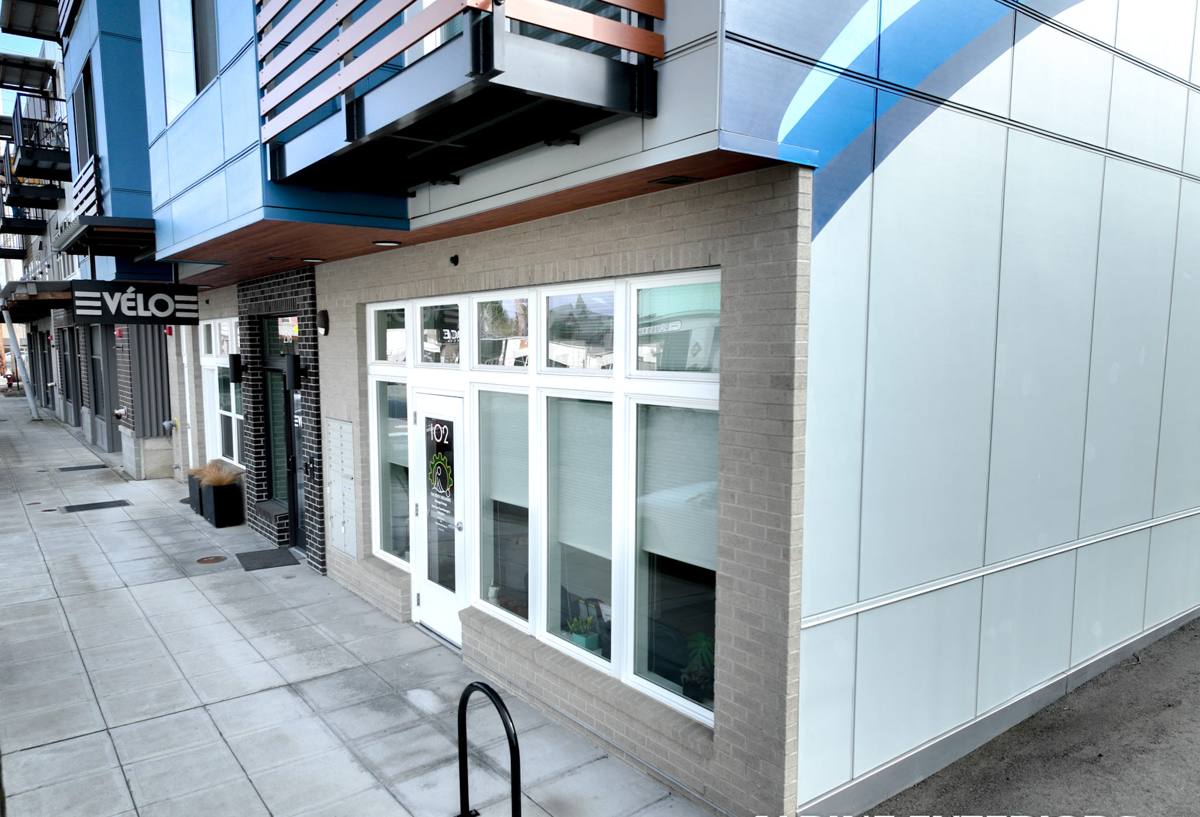
What Bellingham's Climate Does to Ordinary Windows
Salt Air and Corrosion
Proximity to the bay means airborne salt settles on exterior surfaces, including window hardware, screen frames, and metal flashing. Over years, this accelerates corrosion on lower-grade fasteners, hinges, and cranks — especially on older aluminum-frame windows that were never rated for a coastal-adjacent environment. It also degrades cheaper paint and finish systems, leading to chalking and pitting well before a window's expected service life is up.
Driving Rain and Wind Pressure
Storms coming off the water don't just fall straight down — they push rain sideways into siding and window openings. A window that relies only on caulk at the exterior trim, without proper flashing and a sloped sill pan underneath, will eventually let water behind the frame. That's when homeowners start seeing soft trim, bubbling paint, or stains on interior drywall below a window, sometimes years after the original install.
Moss, Mildew, and the Long Wet Season
Whatcom County's moss season runs long — shaded and north-facing walls in Birchwood can stay damp for weeks without direct sun to dry them out. Wood window components in constant contact with that moisture are prone to rot at joints and sills if they aren't detailed and finished correctly. Even quality wood-clad windows need the right exterior detailing to shed water instead of holding it against end grain.
What a Correct Window Installation Actually Involves
A lot of window problems in this area trace back to installation shortcuts, not the window unit itself. A correct job includes several steps that aren't optional in a wet coastal climate:
- Removal and inspection of the old opening — checking the rough opening, sill, and surrounding sheathing for existing rot or water damage before anything new goes in
- Sloped sill pan flashing — so any water that does get past the window drains back out instead of pooling at the bottom of the frame
- Proper weather-resistive barrier integration — flashing tape and house wrap layered correctly (upper layers over lower layers) so water sheds down and out, not into the wall cavity
- Air sealing at the interior side — a continuous seal that stops warm, moist indoor air from reaching cold glass and framing, which is what drives interior condensation and mold at the sash corners
- Correct shimming and squaring — a window that's out of square binds, doesn't seal fully when closed, and wears out its own weatherstripping early
- Exterior trim and caulk as the last line of defense, not the first — caulk should back up good flashing, never substitute for it
Skipping any one of these steps might not show a problem for a year or two. In Birchwood's climate, it usually shows up eventually — often as a repair bill that costs more than doing it right the first time would have.
Choosing Frame Material for a Salt-Air, High-Rain Environment
There's no single "best" window material for every home — it depends on the home's style, budget, and how much upkeep the owner wants to take on. Here's how the common options hold up specifically under Bellingham's coastal-adjacent conditions:
| Frame Material | Performance in Salt Air & Rain | Maintenance | Best Fit |
|---|---|---|---|
| Vinyl | Good — won't rust or corrode; seams need quality welding to stay watertight | Low — occasional cleaning, no repainting | Budget-conscious replacements, rental properties |
| Fiberglass | Very good — dimensionally stable, resists warping from moisture cycling | Low — durable factory finish | Homes wanting long-term durability with minimal upkeep |
| Wood-clad (exterior clad, wood interior) | Good if detailing is correct — cladding protects wood from direct weather | Moderate — interior wood finish needs periodic attention | Historic or craftsman-style Birchwood homes wanting a wood interior look |
| Bare aluminum | Poor near the bay unless marine-grade — prone to corrosion and thermal issues | High — refinishing, hardware replacement over time | Generally not recommended for this location |
For most Birchwood homes, we steer owners toward vinyl or fiberglass for straightforward replacements, and wood-clad when the home's architecture calls for a traditional wood interior. We don't recommend bare aluminum replacements in this neighborhood — not because aluminum is a bad material everywhere, but because standard-grade aluminum's thermal and corrosion performance isn't well matched to salt air and constant condensation risk, and the long-term maintenance burden usually outweighs the upfront savings.
Glazing and Energy Performance for This Climate
Bellingham's mild but persistently damp and often overcast climate puts less emphasis on extreme heat performance than you'd see in a hotter region, and more on moisture control and steady insulation. A few things matter most for Birchwood homes specifically:
- Double or triple pane with a warm-edge spacer — reduces the cold glass edge that condensation forms on first, especially in bathrooms and bedrooms with less air movement
- Low-E coatings — help retain interior heat through the long, overcast winter months without needing reflective coatings tuned for intense summer sun
- Properly sealed insulated glass units (IGUs) — a failed seal shows up as fog or moisture between the panes; this happens faster in coastal climates with constant humidity swings
- Weatherstripping rated for the exposure — a window on a wind-exposed, water-facing wall benefits from a more robust seal than one on a sheltered side of the house
Signs Your Current Windows Are Already Failing
Because window failure is often gradual, homeowners in Birchwood sometimes live with a slowly worsening problem for years before addressing it. Watch for:
- Fogging or a permanent haze between panes (failed seal on an insulated glass unit)
- Soft, discolored, or bubbling trim and sill wood around the frame
- Drafts you can feel with a hand near the sash edge on a windy day
- Difficulty opening, closing, or locking — often a sign the frame has shifted out of square
- Visible corrosion on hardware, cranks, or screen frames
- Condensation forming on the interior glass regularly, especially at the corners
- A musty smell near the window, which can indicate hidden moisture in the wall cavity
Any one of these on its own isn't necessarily urgent. Several at once, or wood damage that's spreading, usually means it's time for a real inspection rather than another round of caulk.
How Our Process Works
1. On-Site Assessment
We look at each window opening individually — not every window on a Birchwood home fails the same way or needs the same fix. Sun exposure, wind exposure, and existing water damage vary wall to wall.
2. Honest Recommendation
We'll tell you plainly if a window needs full replacement, if the surrounding trim and sheathing need repair first, or if a less expensive fix is genuinely appropriate. We're not incentivized to upsell a full replacement when a repair will hold.
3. Custom Measurement and Ordering
Older Bellingham-area homes rarely have perfectly standard rough openings. We measure each opening precisely so the replacement window fits correctly rather than being forced or shimmed excessively, which compromises the seal.
4. Installation with Full Flashing Detail
Every install includes sill pan flashing, correctly layered weather barrier integration, and proper air sealing — the same steps outlined above, applied consistently, not as an upgrade option.
5. Final Walkthrough
We check operation, seal, and finish on every window before calling the job done, and walk the homeowner through anything they should know about care going forward.
What Affects the Cost of a Custom Window Job
| Factor | Why It Matters |
|---|---|
| Number and size of openings | More or larger windows means more material and labor |
| Frame material chosen | Vinyl, fiberglass, and wood-clad have different unit costs |
| Existing damage found during removal | Rotted sheathing or framing behind an old window adds repair scope |
| Custom shapes or non-standard sizes | Older or architecturally distinct homes often need windows built to a specific opening rather than a stock size |
| Trim and finish work | Matching existing interior or exterior trim profiles adds labor |
| Access and height | Second-story or hard-to-reach windows take more time and equipment |
We don't quote broad numbers without seeing the actual openings — a single-window repair project and a whole-house replacement are very different jobs, and pricing should reflect what your home specifically needs.
Maintaining Custom Windows in a Coastal-Adjacent Climate
Even a well-installed window benefits from a little seasonal attention in this environment:
- Rinse salt residue and grime off exterior frames periodically, especially after storms
- Check and clear weep holes at the bottom of the frame so water can drain out
- Inspect exterior caulk lines once a year and touch up any cracked or separated sections before winter rains set in
- Keep gutters and downspouts clear so runoff isn't sheeting directly across window openings
- Wipe down interior sills if condensation collects, to prevent mildew from taking hold
Why Local Experience in Birchwood Matters
A crew that regularly works Birchwood and the surrounding Bellingham neighborhoods has already seen how this specific stretch of Whatcom County weather behaves against real houses — which walls take the worst of the wind-driven rain, how fast moss builds up on shaded siding, and where salt air tends to do the most damage to hardware and finishes first. That experience shows up in the details: where extra flashing attention matters most, which materials hold up without excessive upkeep, and how to sequence a job around the region's wet season instead of fighting it.
If you're noticing drafts, fogged glass, or soft trim around your windows, or you're simply ready to replace aging windows with something built for how this neighborhood actually weathers, we're happy to take a look. Reach out for a free, no-pressure estimate using the form below — we'll assess your windows honestly and let you know what your home actually needs.