 Bellingham
 Cordata's Climate Puts Real Demands on Siding
Cordata sits in the marine climate belt that defines Whatcom County living: mild temperatures, heavy annual rainfall, salt-tinged air moving in off the Puget Sound region, and long stretches of gray, damp weather that give moss and algae months to establish themselves on anything that stays wet. That combination is exactly what breaks down siding that wasn't built for it. Wood fibers swell and rot. Vinyl goes brittle and fades unevenly. Caulk joints fail years before the manufacturer's marketing suggests they will.
None of this is dramatic on its own. It's cumulative. A siding system in Cordata doesn't fail because of one storm — it fails because of a few hundred wet-dry cycles a year, repeated for a decade or two, working on whatever weak points the material and the installation left behind. That's the lens we use when we talk about siding here: not "what looks good on day one," but "what still looks and performs correctly in year fifteen."
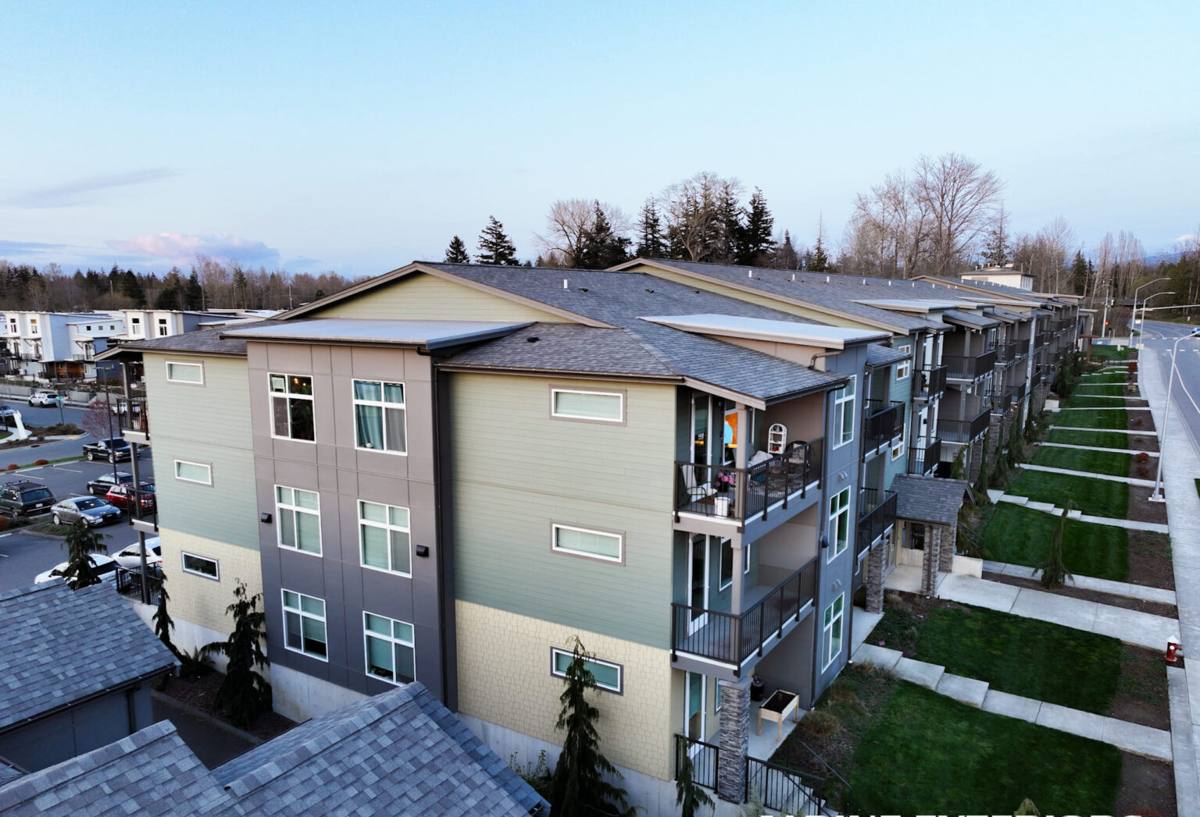
Why We Install James Hardie Fiber Cement — and Nothing Else
We are a Hardie-exclusive contractor. We don't install vinyl, LP SmartSide, primed spruce, cedar, or other fiber cement brands, and that's a deliberate professional standard, not a sales gimmick. Every one of those products has legitimate uses somewhere. In Cordata's climate, they each carry a trade-off we're not willing to build a house around: wood needs paint maintenance and is vulnerable to moisture intrusion at every joint and fastener; vinyl expands and contracts with temperature swings and can crack in cold snaps; engineered wood products depend heavily on perfect edge-sealing to resist the swelling that our rainfall pattern practically guarantees over time.
James Hardie fiber cement is engineered from cement, sand, and cellulose fibers. It doesn't rot, it isn't attractive to insects, it holds paint and factory finish far longer than wood, and it doesn't warp or buckle the way vinyl can in a heat event. It's also non-combustible, which matters more each fire season even on the west side of the state. For a marine climate with salt air and near-constant moisture exposure, it's the product that holds up with the least amount of homeowner babysitting.
ColorPlus Finish Matters Here Specifically
Standard field-painted siding is only as good as its weakest coat, and in a climate with this much rain and UV cycling, field paint degrades faster than most homeowners expect. Hardie's ColorPlus finish is baked on at the factory in multiple coats under controlled conditions, and it comes with its own finish warranty separate from the substrate warranty. For a house exposed to salt air and near-daily moisture, that factory-cured finish is doing real work that a job-site paint job can't match.
What "Correct" Installation Actually Involves
James Hardie siding is only as good as the installation underneath it. Most of the siding failures we get called out to inspect in this region aren't material failures at all — they're installation shortcuts that let moisture behind a product that was never designed to be a moisture barrier by itself. A correct Hardie job on a Cordata home includes:
- A proper water-resistive barrier (weather barrier) installed and lapped correctly, with all penetrations flashed before a single board goes up
- Correct fastener type, spacing, and placement per Hardie's published installation specs — not generic siding nail patterns
- Minimum clearance gaps at grade, roofline, decks, and patios so the bottom edge of the siding never sits in standing water or trapped moisture
- Properly caulked and back-primed cut ends, since a factory-finished board with an exposed, unsealed cut edge is a weak point the factory warranty doesn't fully cover
- Flashing integrated at every window, door, and roof-to-wall transition — the majority of moisture intrusion happens at these junctions, not through the field of the siding itself
- Ventilation behind the cladding where the wall assembly calls for it, so incidental moisture can dry out instead of getting trapped
Skip any one of these steps and you can still end up with a wall that looks like a correct Hardie installation for a few years — until moisture that had no way to escape starts causing damage from the inside out, hidden behind siding that appears fine from the curb.
Our Process on a Cordata Job
We approach every Cordata project the same structured way, because the climate doesn't reward improvisation:
1. On-Site Assessment
We look at the existing wall assembly, not just the siding. Age of the house, current cladding, any signs of trapped moisture or rot at trim and penetrations, and how the roofline, gutters, and grading are directing water around the structure. Siding decisions get made in the context of the whole envelope, not in isolation.
2. Product and Line Selection
We walk through which Hardie product line and profile fits the home — lap siding, panel systems, or shingle-style accents — along with color and texture options, factoring in sun exposure, wind exposure, and how the home sits relative to prevailing weather.
3. Tear-Off and Barrier Work
Old siding comes off, the sheathing gets inspected for hidden damage before anything new goes on, and the weather-resistive barrier and flashing details get installed correctly — this stage is where most long-term performance is actually decided.
4. Installation to Manufacturer Spec
Boards, fasteners, gaps, and caulking follow Hardie's published installation guidelines, which is also what keeps the manufacturer's product warranty intact. Cutting corners here can quietly void coverage the homeowner is counting on.
5. Final Walkthrough
We review the completed work with the homeowner, cover basic care, and make sure everything lines up with what was scoped and quoted.
Choosing the Right Line and Finish
Hardie's HZ product lines are engineered for different climate zones, and Whatcom County sits solidly in the zone built for wetter, cooler conditions. That affects which specific formulation and moisture-resistance engineering we recommend, separate from the visual choice of lap width or texture. On the appearance side, most Cordata homeowners choose between traditional lap siding for a classic Pacific Northwest look, panel systems for a more modern profile, or a mix of lap siding with shingle-style or board-and-batten accents on gables and entries. Darker ColorPlus finishes hold up well here since UV exposure is moderate compared to drier climates, but any color choice benefits from the factory finish's consistency over a field-painted alternative.
Moss, Algae, and Long-Term Maintenance
Moss and algae growth is a fact of life on Whatcom County exteriors, and siding material doesn't eliminate that — it changes how much damage it causes. On wood or engineered wood, trapped organic growth holds moisture against the substrate and accelerates rot. On fiber cement, the same growth is a cosmetic issue that rinses off without compromising the material underneath. Realistic maintenance on a Hardie exterior in Cordata looks like:
- An annual rinse-down (garden hose and soft brush, not a pressure washer aimed directly at seams) to keep moss and algae from building up
- Periodic visual checks at caulked joints, trim, and penetrations for cracking or separation
- Keeping gutters clear and grading water away from the base of the walls
- Trimming back vegetation and tree cover that keeps sections of siding shaded and damp longer than the rest of the house
That's a meaningfully lighter maintenance load than wood siding requires, and it's part of why the total cost of ownership favors fiber cement even when the upfront installed cost is higher than vinyl.
What Drives Cost on a Cordata Siding Project
| Cost Factor | Why It Matters Here |
|---|---|
| Tear-off and disposal of existing siding | Older homes may have wood or vinyl with hidden damage that adds scope once walls are opened up |
| Sheathing repair | Moisture-damaged sheathing found during tear-off needs replacement before new siding and barrier go on |
| Product line and profile | Lap width, panel systems, and shingle-style accents carry different material and labor costs |
| Trim and flashing detail | Homes with more windows, gables, and rooflines require more flashing and cut work |
| Color and finish | Factory ColorPlus finishes vary in cost by color depth and line, but reduce long-term repainting cost |
| Access and site conditions | Lot slope, landscaping, and structure height affect staging and labor time |
We provide a written, itemized quote after the on-site assessment rather than a rough estimate, since the tear-off and sheathing condition can't be fully known until the old siding comes off.
Why a Crew That Already Works in Cordata Is Worth Choosing
Siding installation quality depends on judgment calls — how much clearance to leave at a deck ledger, how to flash an odd roof-to-wall intersection, which fastener pattern actually holds in Whatcom County's wind and moisture conditions. A crew that has already worked through those decisions on other homes in this area isn't guessing. They know how local grading, roof pitches, and moisture patterns tend to show up here, and they've already made the mistakes that come with learning a climate the hard way — on someone else's schedule, not yours.
It also matters for accountability. A local, established Hardie installer is around for warranty follow-through, not just the install date. Correct installation is what keeps both the Hardie product warranty and any workmanship warranty valid, so hiring a crew that treats the manufacturer's specs as the floor, not a suggestion, protects that coverage from day one.
If you're weighing a siding replacement for a Cordata home, we're happy to take a look and give you a straightforward, no-pressure estimate — what we'd recommend, why, and what it would cost. Use the form below to get started.