 Bellingham
 Columbia's Siding Problem: Salt Air, Driving Rain, and a Long Moss Season
Homes in Bellingham's Columbia area sit close enough to the water that salt-laden air is a daily fact of life, not an occasional weather event. Add in Whatcom County's long wet season, wind-driven rain off Bellingham Bay, and a climate that barely gives siding a chance to dry out between storms, and you've got a recipe that punishes the wrong exterior material fast. Moss and algae don't just grow on roofs here — they colonize north-facing walls, behind gutters, and anywhere siding stays damp for weeks at a stretch.
Siding in this neighborhood isn't just cosmetic. It's the first line of defense against moisture intrusion, and it has to hold up to a combination of salt exposure and sustained dampness that a lot of siding products simply weren't engineered for. That's the lens we bring to every fiber cement job we do in Columbia.
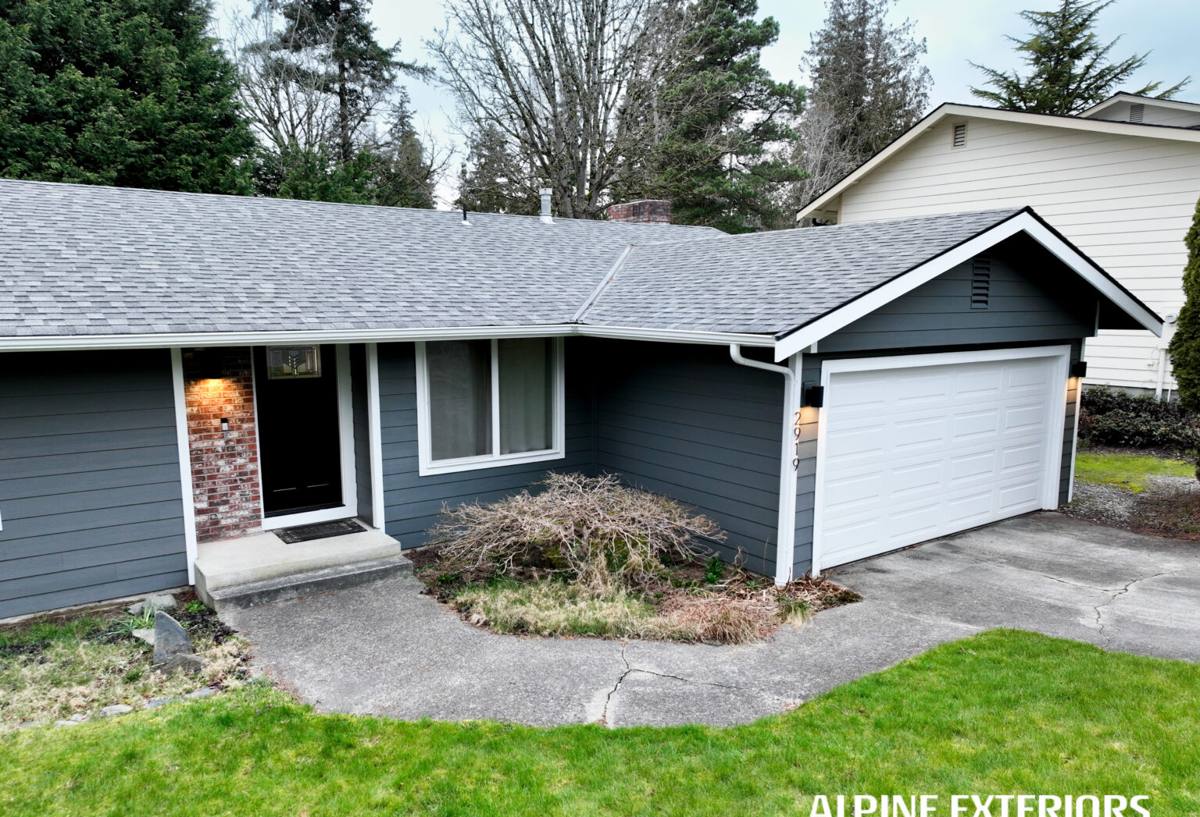
Why Fiber Cement Is the Right Material for This Neighborhood
Fiber cement siding is a mix of cement, sand, and cellulose fibers, pressed and cured into planks and panels. It doesn't rot, it doesn't feed insects, and it doesn't warp the way wood-based products can when they take on repeated moisture cycles. For a neighborhood like Columbia — where the air itself carries salt and the wet season runs long — that combination of dimensional stability and moisture resistance matters more than it would in a drier climate.
What Salt Air Does to Siding Over Time
Salt air accelerates corrosion on exposed fasteners and metal trim, and it can speed up the breakdown of coatings that aren't formulated to handle it. Fiber cement itself isn't vulnerable to salt corrosion the way metal is, but the fasteners, flashing, and finish used with it absolutely matter — which is part of why we're specific about the hardware and coating system we use on every job this close to the water.
Moss, Algae, and Trapped Moisture
Moss needs three things to take hold on a wall: moisture, shade, and a surface it can grip. Rough-sawn or absorbent siding surfaces give moss and algae something to hold onto; a properly finished fiber cement surface gives them far less to work with. But the bigger factor is what's happening behind the siding — if moisture gets trapped against the sheathing, no surface finish will save you from rot underneath, which is why installation detail matters as much as the material choice itself.
James Hardie Is the Only Siding We Install
We install James Hardie fiber cement exclusively — no vinyl, no LP SmartSide, no cedar, no other fiber cement brands. That's a deliberate standard, not a limitation of what we're capable of installing. Hardie's HZ5 product line is engineered specifically for climates like ours, with moisture and freeze-thaw performance built into the formulation rather than added on. The factory-applied ColorPlus finish is baked on under controlled conditions, which gives it more consistent adhesion and weathering performance than field-applied paint, especially in a climate where a fresh paint job doesn't get much of a chance to cure before the next rain arrives.
We'd rather stand behind one system we know inside and out — the fastening patterns, the gap tolerances, the trim details — than juggle multiple brands and installation standards. On a house in Columbia, that consistency is what keeps a siding job performing for decades instead of years.
Fiber Cement vs. Other Siding Materials in This Climate
| Material | Moisture Behavior | Maintenance Burden | Fit for Salt Air / Long Wet Season |
|---|---|---|---|
| James Hardie Fiber Cement | Won't rot or swell; dimensionally stable when installed to spec | Low — factory finish, no repainting cycle needed | Strong — engineered HZ5 line for wet coastal climates |
| Vinyl | Doesn't absorb water but can warp and gap under temperature swings | Low, but seams and gaps trap moss debris | Mixed — softens and distorts over time near salt air |
| Cedar / Primed Spruce | Absorbs moisture; prone to swelling, cupping, rot at joints | High — periodic refinishing and caulk maintenance | Weak — moss and rot risk is elevated in this climate |
| Engineered Wood (LP-type) | Moisture-resistant coating but vulnerable if the coating is compromised | Moderate — edge and seam inspection needed | Moderate — performance depends heavily on install quality |
What a Correct Fiber Cement Installation Actually Involves
The material is only half the equation. A lot of the siding problems we get called out to inspect in this area trace back to installation shortcuts, not product failure. Here's what we consider non-negotiable on every Columbia project.
Moisture Barrier and Rainscreen Gap
A weather-resistive barrier goes over the sheathing first, with all seams and penetrations properly lapped and sealed. Behind the siding itself, a rainscreen gap — a small air space that lets any moisture that does get past the cladding drain and dry out — is what keeps a wet climate from turning into a rot problem over time. Skipping this gap is one of the most common shortcuts we see on older installs.
Fasteners, Gaps, and Flashing
Hardie specifies fastener type, spacing, and how far in from panel edges each fastener needs to sit. Panel-to-panel and panel-to-trim gaps need to be sized correctly and caulked with a product rated for the movement and exposure involved — not just whatever's on the truck. Flashing at windows, doors, and any horizontal trim needs to direct water out and away from the wall assembly, not just cover the joint.
Factory Finish and Field Details
ColorPlus panels come finished from the factory, but cut edges exposed during installation need to be sealed with the matching edge treatment. Left raw, a cut edge is the one place on the wall where the fiber cement can take on moisture directly — a small detail that makes a real difference over the life of the siding.
Our Process for Columbia Siding Projects
- On-site assessment of your current siding, sheathing condition, and any moisture or moss issues already present
- A written scope covering tear-off, sheathing repair (if needed), weather barrier, and the specific Hardie products and colors for your home
- Removal of old siding and inspection of the sheathing underneath before anything new goes up
- Installation of the weather-resistive barrier, rainscreen furring, and flashing details at every penetration
- Fastening and finishing of Hardie panels or lap siding to manufacturer spec, including sealed cut edges and trim
- A final walk-through so you can see the completed work and ask questions before we call the job done
Signs Your Columbia Home's Siding Needs Attention
- Soft or spongy spots when you press on the siding, especially near the bottom of walls or below windows
- Visible moss or algae growth that comes back quickly after cleaning
- Peeling, bubbling, or chalky paint on wood-based siding that won't hold a fresh coat
- Gaps, warping, or buckling panels, particularly after a stretch of heavy weather
- Rust streaks running down from fasteners or trim
- Rising energy bills that could point to a compromised weather barrier behind the siding
Why a Crew That Already Works in Columbia Makes a Difference
A contractor who already works homes in this part of Bellingham has a working sense of how exposed a given wall is to prevailing wind and rain, where moss tends to establish first, and how the wet season here actually behaves on a job site — not just in a manual. That local familiarity shapes small but real decisions: how much drying time to plan around, where extra flashing attention is worth it, and how to sequence a tear-off so exposed sheathing isn't left open to the weather longer than necessary.
It also means we're not learning Whatcom County's permitting and inspection expectations on your project. We show up already knowing what a correct job looks like in this specific climate, which shortens the learning curve that can otherwise show up as callbacks and rework.
Warranty and Long-Term Value
James Hardie backs its fiber cement products with a manufacturer's limited warranty, and the ColorPlus finish carries its own separate coverage against fading and wear. On top of that, our own workmanship is covered under our installation warranty. Together, that gives you protection on both the product and the labor — which matters on a coastal job where a poor install can undermine even the best material.
Fiber cement siding, installed correctly, is a long-term investment rather than a recurring maintenance line item. In a climate that's hard on exterior surfaces, that difference between "correctly installed" and "installed" is where most of the long-term value either shows up or disappears.
If your Columbia-area home is due for new siding, or you're not sure whether what you have is holding up the way it should, we're happy to take a look. Reach out for a free, no-pressure estimate — we'll walk the exterior with you, answer your questions honestly, and give you a straight read on what your home actually needs.