 Bellingham
 Board & Batten Siding in Puget: A Look That Has to Earn Its Keep
Board and batten has a long history along the Puget Sound shoreline, and it's easy to see why homeowners in the Puget area of Bellingham keep asking for it. The vertical lines suit the region's older farmhouses and newer craftsman-style builds alike, and it reads as a step up from flat lap siding without looking flashy. But in this part of Whatcom County, a board and batten wall isn't just a design choice — it's a wall that has to hold up against salt-laden air off the Sound, sideways rain that gets driven into every seam by wind, and a moss season that can stretch from October into May. We install board and batten siding in Puget the way it needs to be built for this specific stretch of coastline, not the way a catalog photo makes it look.
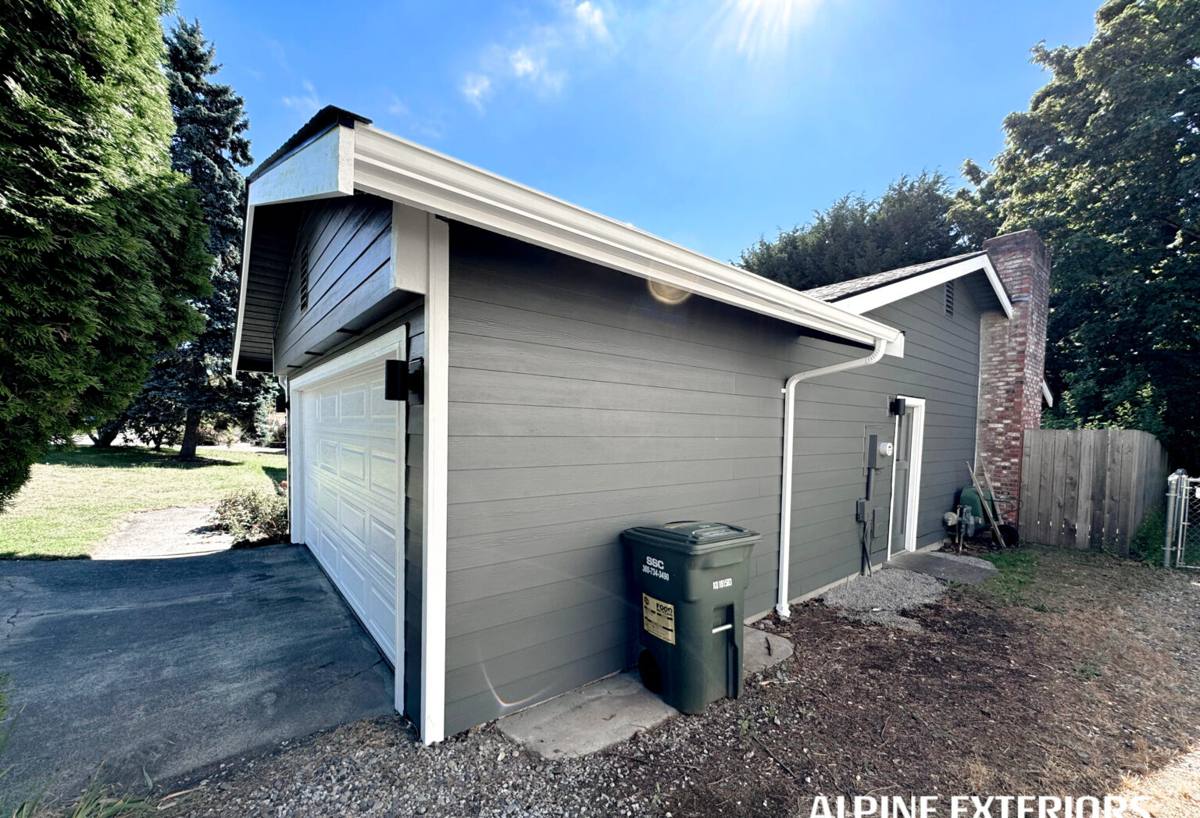
What Puget's Microclimate Does to Vertical Siding
Bellingham as a whole gets a marine climate, but neighborhoods sitting closer to the water — Puget included — deal with a sharper version of it. Salt air accelerates corrosion on exposed fasteners and metal trim. Driving rain, especially in the fall and winter storm cycles, doesn't just hit a wall — it gets pushed sideways into vertical seams and batten joints where lesser materials trap moisture instead of shedding it. And because sun exposure is limited for long stretches of the year, north- and west-facing walls stay damp longer, which is exactly what moss and algae need to take hold.
Where board and batten siding is most exposed
- Battens running vertically create hundreds of linear feet of seams per elevation — each one is a potential water entry point if not detailed correctly
- Lower wall sections near grade or landscaping stay wet longer and see the most splash-back
- North and west elevations get the least drying time between rain events
- Fastener heads and exposed trim corrode faster this close to salt air
- Areas under roof overhangs with poor gutter runoff take repeated soaking in the same spot
None of this means board and batten is a bad choice for Puget homes. It means the material and the installation both have to be built for these conditions, not for a drier inland climate.
Why We Don't Install Board & Batten in Vinyl, LP SmartSide, or Cedar
Board and batten shows up in a lot of materials, and each one has a real trade-off worth knowing before you commit.
Vinyl board and batten
Vinyl is affordable and low-maintenance in the sense that it doesn't need painting, but it's a poor match for coastal wind exposure. It expands and contracts with temperature swings, and in driving rain the overlapping panel joints common to vinyl systems are more prone to wind-driven water intrusion than a properly detailed fiber cement wall. It also doesn't hold up as well cosmetically — UV exposure and salt air can leave it looking chalky and faded well before the home is due for a refresh.
LP SmartSide and other engineered wood
Engineered wood products are strand-based and rely on a factory-applied coating to keep moisture out. That coating is only as good as the installation — any cut edge, fastener hole, or seam that isn't properly sealed becomes a place where the wood substrate can absorb water and swell. In a climate with this much sustained moisture exposure, that's a maintenance burden we don't think is worth taking on for our customers.
Cedar and primed spruce
Real wood board and batten looks beautiful, and there's no faking that. But wood is organic material in a climate that stays damp for months at a time — it needs regular refinishing, it's a food source for the mold and moss that already thrive here, and it's combustible. It can be done well, but it requires an ongoing maintenance commitment that most homeowners underestimate when they choose it.
Because of these trade-offs, we standardized on James Hardie fiber cement for every siding job we do, board and batten included. It's not that the alternatives don't have a place — it's that we've chosen not to install products where we know the long-term moisture and maintenance story doesn't hold up in this specific climate.
The James Hardie Board & Batten System
James Hardie's board and batten look is typically built using HardiePanel vertical siding with Hardie's batten trim installed over the panel joints, or a true board and batten profile depending on the look you want. Both are fiber cement — a mix of cement, sand, and cellulose fibers — which means it doesn't absorb water the way wood or wood composites do, and it won't rot, delaminate, or become an insect food source.
Why the material itself matters here
- Non-combustible — fiber cement doesn't burn, which matters increasingly for insurance and wildfire-adjacent building codes even on the wet side of the state
- Engineered for the climate — Hardie's HZ5 product line is formulated for regions with freeze-thaw cycling and sustained moisture, which describes Whatcom County's winters accurately
- ColorPlus factory finish — a baked-on finish applied under controlled conditions, which resists fading and chipping far better than a field-applied paint job on wood or engineered wood
- Dimensionally stable — it doesn't expand and contract with humidity the way wood-based products do, so seams and joints stay tighter over time
The warranty backing this is also transferable to a new owner, which matters if a Puget-area home changes hands — it's one less thing an inspection turns up as a concern.
What a Correct Board & Batten Installation Actually Involves
Board and batten fails prematurely almost never because of the material — it fails because of how it was hung. This is a detail-heavy siding profile, and in a high-moisture coastal climate, skipping steps shows up as problems within a few years instead of a few decades.
The non-negotiables on every job we run
- A drainable rain screen or properly furred-out gap behind the siding so any water that does get past the surface can drain and the wall can dry
- Correct fastener type, spacing, and embedment depth per Hardie's published installation specs — this is also what keeps the manufacturer's warranty intact
- Flashing at every horizontal transition, window and door head, and roof-to-wall intersection, installed shingle-style so water is always directed outward and down
- Proper clearance at the bottom of the wall — grade, decks, and roof lines all need the specified gap so splash-back and standing water don't sit against the siding
- Caulking only where Hardie specifies it — over-caulking traps moisture just as badly as under-caulking lets it in
- Battens fastened so they allow for the panel's stability without over-compressing the joint
This is also where hiring a crew unfamiliar with coastal installation gets expensive later. A board and batten wall that looks identical to a correctly built one on installation day can behave completely differently five winters in, once the driving rain and moss season have had a few cycles to find the gaps.
Our Process for Puget-Area Homes
We approach every board and batten project in Puget the same structured way:
Assessment and planning
We start by looking at the home's actual exposure — which elevations take the most wind-driven rain, where moss and staining are already showing on the existing siding or roof, and what the current wall assembly looks like underneath. That tells us where extra flashing attention or drainage detailing is worth prioritizing.
Tear-off and sheathing check
Once the old siding is off, we check the sheathing and house wrap for hidden moisture damage. This is often where problems from a prior installation surface — and it's much cheaper to address before new siding goes up than after.
Installation to spec
Rain screen, flashing, fastening, and batten spacing are all done to Hardie's published specifications, not shortcuts learned from a different siding brand. This is what keeps the warranty valid and the wall performing as designed.
Final walkthrough
We walk the finished job with the homeowner, point out anything worth knowing about maintenance, and make sure every elevation was finished to the same standard — not just the street-facing side.
Cost Factors for Board & Batten in Puget
Every home is different, but these are the variables that actually move the price on a board and batten job in this area:
| Factor | Why It Matters |
|---|---|
| Home size and wall complexity | More corners, dormers, and roof lines mean more flashing detail and labor time |
| Tear-off scope | Removing old vinyl, wood, or engineered siding down to sheathing takes longer than a straightforward re-side |
| Sheathing or framing repairs | Hidden moisture damage found during tear-off adds cost but has to be fixed before new siding goes on |
| Batten spacing and pattern | Tighter batten spacing looks great but uses more material and labor than wider spacing |
| ColorPlus vs. field-painted finish | Factory-applied color adds upfront cost but removes a repainting cycle down the road |
| Access and site conditions | Tight lots, slopes, and limited staging area near the water can add setup time |
We give straight numbers based on the actual home, not a generic per-square-foot rule that ignores what's really going on with the walls.
Maintaining Board & Batten Through a Whatcom County Winter
Even the right material and installation benefit from a little ongoing attention. Here's what we tell Puget-area homeowners to keep on their radar:
- Rinse off visible moss or algae buildup on shaded elevations once or twice a year — a garden hose and soft brush is enough, no pressure washing directly into seams
- Keep gutters clear so overflow isn't running down the wall face repeatedly
- Trim back landscaping and vegetation that keeps a section of wall shaded and damp longer than the rest of the house
- Have caulking at trim and penetrations checked every few years — this is a five-minute inspection that prevents bigger repairs
- Watch for any staining or discoloration at the base of the wall, which usually means grade or drainage needs attention, not the siding itself
Why a Crew That Already Works in Puget Matters
Board and batten installed to spec in a dry inland climate and board and batten installed to spec on the Puget Sound waterfront aren't the same job, even though the material list looks identical on paper. A crew that already works this area knows which elevations of a Puget home take the worst of the winter storms, how moss behaves on shaded roof-to-wall transitions here, and where salt air does the most damage to exposed hardware. That local knowledge shows up in small decisions — where to add an extra flashing detail, how tight to run a batten joint, which corners need the most attention — that a generic installation crew wouldn't think to prioritize.
If you're weighing board and batten for a home in the Puget area, we're happy to take a look and give you a straight assessment — no pressure, no inflated scope, just an honest read on what your home actually needs. Reach out below for a free estimate.