 Bellingham
 Board & Batten in Fairhaven's Marine Climate: Why This Job Is Different Here
Fairhaven sits close to Bellingham Bay, and that proximity to the water shapes almost everything about how siding performs there. Salt-laden air, driving rain that comes in sideways off the Salish Sea, and long stretches of shade under mature tree canopy all put more stress on exterior walls than most homeowners expect. Board and batten is a striking look — bold vertical lines, deep shadow reveals, a classic farmhouse or craftsman feel that suits a lot of the older and newer homes in this part of Bellingham. But the same vertical seams and batten strips that make the style attractive also create more opportunities for water to find a way behind the cladding if the installation isn't done correctly. In Whatcom County's climate, that detail matters more than the finished look does.
Salt Air and Fastener Corrosion
Homes within a mile or two of the water deal with airborne salt that speeds up corrosion on unprotected metal — fasteners, flashing, trim caps, and any exposed hardware. Over years, corroding fasteners loosen, streak, and eventually fail, which is a much bigger problem on a vertical board and batten wall than on lap siding, because the fasteners are doing more structural work holding both the field boards and the battens flat and tight.
Driving Rain and Vertical Seams
Wind-driven rain off the bay doesn't just fall straight down — it gets pushed sideways and upward against a wall, which is exactly the direction vertical board and batten seams are most vulnerable to if the drainage plane behind them isn't built correctly. A well-built system sheds that water before it ever reaches the sheathing. A poorly built one traps it behind the battens, where it has nowhere to go.
Moss, Shade, and Trapped Moisture
Many Fairhaven properties sit under tree cover or on north-facing slopes that stay shaded and damp for weeks at a stretch during the wet season. That's the environment moss and mildew favor, and it's also the environment where any weak point in a siding system — a poorly sealed batten joint, a missing kick-out flashing, a fastener that's backed out — turns into a slow moisture problem instead of a fast, obvious one. By the time staining or soft spots show up on the surface, there's often been moisture sitting behind the wall for a while.
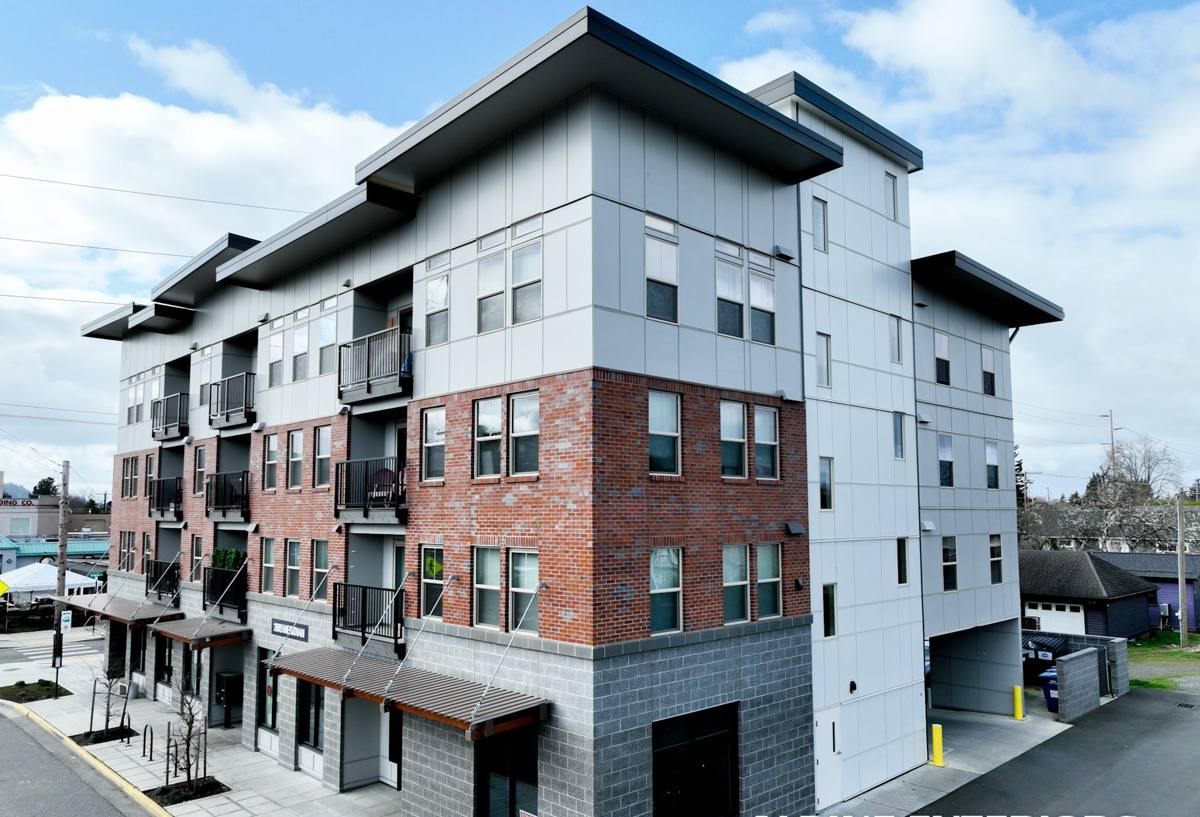
What a Correct Board & Batten Installation Actually Involves
Board and batten looks simple from the street, but it's one of the less forgiving siding profiles to install correctly. The wide, flat field boards and narrow battens create more seams per square foot of wall than horizontal lap siding, and every one of those seams needs to be managed, not just caulked over.
Weather-Resistive Barrier and Drainage Plane
Behind the visible siding, a continuous weather-resistive barrier has to be installed correctly — properly lapped, taped at seams, and integrated with window and door flashing so water is directed out and down, never trapped. On a lot of Fairhaven homes, particularly those exposed to direct weather off the bay, we'll also recommend a rainscreen gap (vertical furring strips behind the siding) so any moisture that does get past the cladding has a path to drain and dry instead of sitting against the sheathing.
Fastening and Batten Spacing
Field boards need to be fastened into solid framing at a consistent spacing that matches the manufacturer's engineering specs, not just "close enough." Battens then need to land over the board joints with enough width to cover them fully and enough fastener penetration to stay tight through decades of wind and temperature swings. Get the spacing or fastening wrong and you end up with boards that cup, battens that pull loose, or joints that open up just enough to let water behind the wall.
Flashing Details That Get Skipped
Every window, door, outside corner, and roof-to-wall transition on a board and batten wall is a place where water wants to get behind the siding. Correct step flashing, head flashing, and kick-out flashing at roof lines aren't optional extras — they're the difference between a wall that sheds water for decades and one that develops hidden rot in five to ten years. This is the part of the job that's invisible once the siding goes up, and it's also the part most likely to be rushed by a crew that isn't used to doing it right.
Why We Install James Hardie Vertical Siding — Not Wood, Vinyl, or Engineered Wood Board & Batten
Board and batten can be built out of several different materials, and we get asked regularly why we only offer it in James Hardie fiber cement. Here's the honest comparison, including what the alternatives get right.
| Material | What it gets right | Why it's a harder sell in Fairhaven's climate |
|---|---|---|
| Real cedar board & batten | Authentic look and texture, long tradition in the Pacific Northwest | Absorbs moisture, needs regular refinishing, and is a preferred food source for moss and mildew in a wet, shaded climate |
| Vinyl board & batten | Low upfront cost, minimal maintenance in dry climates | Can warp or crack with temperature swings, seams and profile depth don't hold up as well to close inspection, limited color permanence |
| Engineered wood (LP-style) board & batten | Lighter weight, easier to install than fiber cement | Wood-based core is vulnerable to swelling and edge deterioration if any moisture gets past a compromised seam or fastener |
| James Hardie fiber cement | Non-combustible, engineered for Pacific Northwest moisture exposure, factory-applied finish, strong transferable warranty | Heavier material and less forgiving of a rushed install — but that's a labor consideration, not a durability one |
The Product We Use
For board and batten walls, we install James Hardie's vertical siding systems, engineered as part of Hardie's HZ5 product line built specifically for climates like ours — sustained moisture, temperature swings, and coastal exposure. The fiber cement core doesn't absorb water the way wood-based products do, and it won't feed moss and mildew the way real wood siding can. Finished with Hardie's factory-applied ColorPlus coating, the color is baked on and warrantied against fading and peeling, which matters on a style like board and batten where flat, wide surfaces show fading unevenly if the finish isn't consistent. It's also non-combustible, which is a meaningful consideration anywhere in Washington given wildfire smoke and ember exposure during dry summer stretches.
Our Process for a Fairhaven Board & Batten Project
- On-site assessment. We look at sun and shade exposure, tree cover, wind exposure off the water, and the current condition of the wall assembly — not just the visible siding.
- Tear-off and sheathing check. Old siding comes off and we inspect the sheathing underneath for any existing rot or moisture damage before anything new goes up.
- Weather-resistive barrier and flashing. Barrier installed and lapped correctly, flashing integrated at every window, door, and roofline intersection.
- Rainscreen furring where called for. Added on more exposed walls to give the assembly a drainage and drying path.
- Board and batten installation. Field boards fastened to spec, battens set with correct coverage and spacing, joints sealed with the right products for a coastal climate.
- Final inspection and walkthrough. We check every seam, corner, and flashing detail before calling the job done, and walk the homeowner through what to expect over time.
Living With Board & Batten Siding in Fairhaven
James Hardie fiber cement is genuinely low-maintenance compared to wood, but "low-maintenance" doesn't mean "no maintenance" in a climate like this one. A little regular attention goes a long way toward keeping a board and batten wall looking sharp for decades.
- Rinse the siding down once or twice a year, more often on walls that stay shaded and damp
- Keep gutters clear so overflow doesn't run down and pool at the top of the siding
- Trim back tree branches and shrubs that keep a wall section shaded and slow to dry
- Check caulking at batten joints and trim every couple of years and touch up as needed
- Watch for staining or discoloration at the base of the wall, which usually points to a drainage or grading issue rather than the siding itself
- Have any impact damage or loose boards addressed promptly rather than waiting
Cost Factors for Board & Batten Siding in Fairhaven
Every project is different, but the same handful of factors drive most of the cost variation we see on Fairhaven board and batten jobs.
| Factor | How it affects the project |
|---|---|
| Existing wall condition | Hidden rot or moisture damage found during tear-off adds repair scope before new siding can go up |
| Wall exposure | Walls facing prevailing wind and rain off the bay often warrant a rainscreen assembly, which adds labor |
| Home height and access | Multi-story walls, steep or narrow lots, and limited staging space affect scaffolding and labor time |
| Trim and detail complexity | Corners, window surrounds, and roofline transitions all add flashing and finish work |
| Board width and reveal choice | Wider boards and deeper battens change material quantities and the visual result |
Why Local Experience in Fairhaven Matters
Fairhaven isn't a generic subdivision — it's a mix of hillside lots, tree-shaded streets, older homes with real character, and newer construction, all within close range of the water. A crew that's worked this neighborhood before already knows to check for rainscreen needs on the most exposed walls, to plan around steep or narrow access on some lots, and to watch for the specific moss and moisture patterns that show up under heavy tree cover here. If a home falls within an area of Fairhaven with recognized historic character, it's also worth checking with the City of Bellingham on any exterior guidelines before work begins — something a crew unfamiliar with the neighborhood might not think to flag. None of this is complicated, but it's the kind of local knowledge that prevents costly surprises mid-project.
If you're weighing board and batten siding for a home in Fairhaven, we're happy to take a look and give you a straightforward, no-pressure estimate — what your walls need, what it would involve, and what it would cost. Use the form below to get started.