 Bellingham
 Asphalt Shingle Roofing Built for Blaine's Coastal Climate
Blaine sits close enough to the Strait of Georgia and Semiahmoo Bay that salt-laden air is a normal part of the weather, not an occasional event. Combine that with the driving, sideways rain that rolls in off the water and the long gray stretch from fall through spring when moisture rarely lets up, and you get a climate that is genuinely harder on a roof than most manufacturers' warranty language assumes. An asphalt shingle roof installed the same way it would be in a dry inland town will not perform the same way here. It needs to be built for wind-driven water, for near-constant humidity, and for the moss and algae growth that thrives in shaded, damp conditions across Whatcom County.
That doesn't mean asphalt shingles are the wrong choice for Blaine. They remain one of the most practical, cost-effective roofing materials available, and a properly installed and maintained shingle roof can hold up well against this coastal climate for decades. The key word is "properly" — the underlayment, flashing details, ventilation, and shingle selection all matter more here than they would in a milder environment.
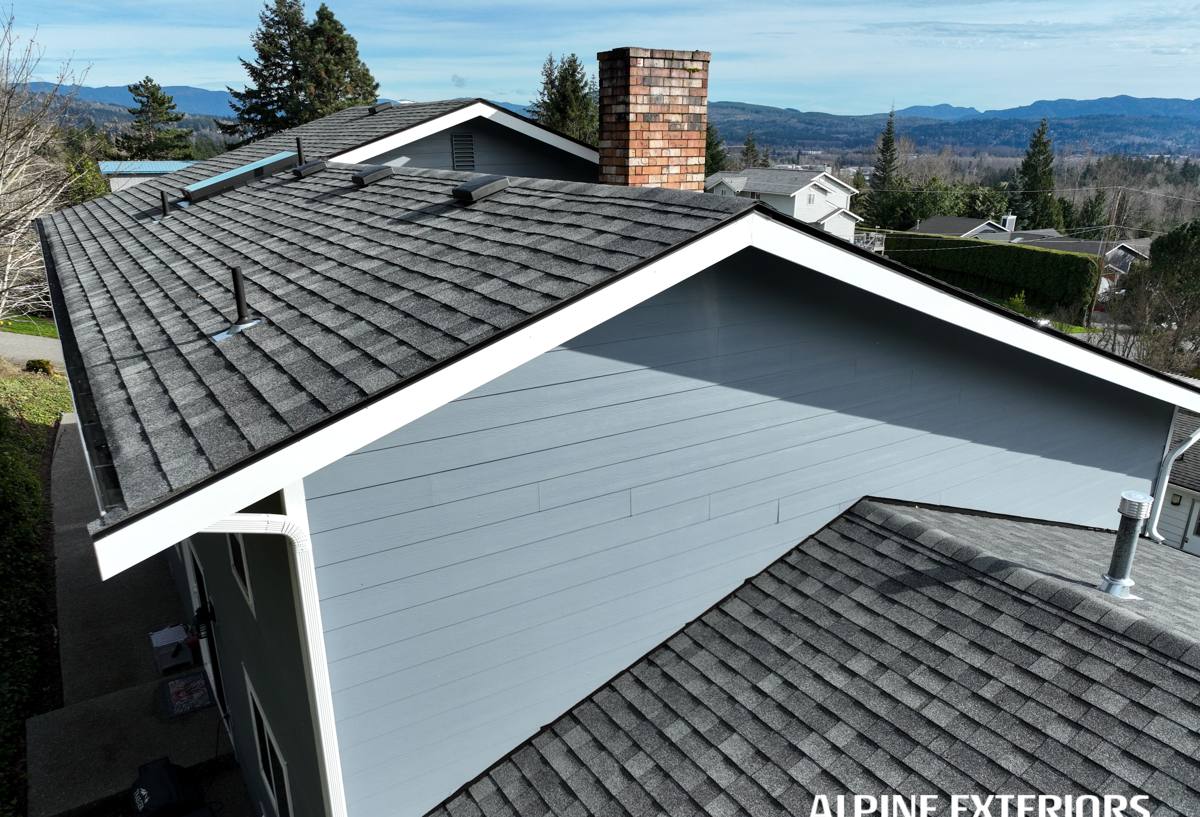
What the Coastal Environment Actually Does to a Shingle Roof
Salt Air and Metal Components
Salt air accelerates corrosion on any exposed metal — nail heads, flashing, vents, and gutter hardware. Standard fasteners and lower-grade flashing can start showing rust streaks and pinhole leaks years before they would inland. This is why fastener and flashing quality matter as much as the shingle itself on a Blaine roof.
Driving Rain and Wind-Driven Water
Rain that falls straight down is easy for a roof to shed. Rain that's pushed sideways by wind off the water finds every gap in flashing, every under-lapped shingle course, and every place where underlayment was cut short. Roofs near Blaine and along the Bellingham waterfront need extra attention at valleys, roof-to-wall transitions, and any penetration where water can be driven upward under normal shingle overlap.
Moss and Algae Growth
Whatcom County's long wet season, combined with shaded lots and mature tree cover common in this area, creates ideal conditions for moss and algae. Moss doesn't just look bad — it holds moisture against the shingle surface, works its way under shingle edges, and can lift tabs enough to let water in. Untreated, it shortens the useful life of an otherwise sound roof.
What a Correctly Built Shingle Roof Includes Here
A roof built for this specific climate isn't just "shingles on plywood." The details underneath and around the shingles do most of the actual water-shedding work.
- A synthetic or ice-and-water underlayment at eaves, valleys, and vulnerable areas — not just the minimum felt layer
- Properly lapped and sealed step flashing and counter-flashing at every wall intersection, chimney, and skylight
- Balanced intake and exhaust ventilation so the attic doesn't trap moisture that condenses back into the roof deck
- Corrosion-resistant fasteners and flashing metals appropriate for a coastal environment
- Shingles rated for the wind exposure of the specific lot — open, wind-exposed sites near the water need a higher wind rating than sheltered inland lots
- Algae-resistant shingle granules where moss and algae pressure is high
Skipping any one of these doesn't necessarily cause an immediate problem — it just moves the failure point up by years, usually right around the time a homeowner assumed they had another decade left.
Signs a Blaine Roof Needs Repair or Replacement
Because damage from wind-driven rain and moss tends to be gradual, many homeowners don't notice a problem until there's an active leak. A few earlier warning signs worth acting on:
- Granules collecting in gutters or at downspout outlets, indicating the shingle surface is wearing thin
- Shingle tabs that are curling, cupping, or lifting at the edges
- Visible moss or dark streaking, especially on north-facing or shaded slopes
- Rust stains around vent pipes, flashing, or exposed nail heads
- Soft spots, sagging, or staining on interior ceilings near exterior walls
- Daylight visible through the roof deck from inside the attic
Catching these early usually means a repair. Waiting until there's active interior water damage almost always means a full section, or the whole roof, needs replacing.
Our Process for Asphalt Shingle Roofing in Blaine
Inspection and Assessment
We start by getting on the roof, not just looking at it from the ground. We check the deck condition, existing flashing, ventilation setup, and how many layers of roofing are already there — all of which affect scope and cost.
Tear-Off and Deck Repair
For a full replacement, we remove existing roofing down to the deck. This is the only way to actually see and fix hidden problems — soft or rotted sheathing, especially around valleys and penetrations, which is common on older Whatcom County homes that have taken decades of wet weather.
Underlayment and Flashing
Given the local rain patterns, we don't treat underlayment as a formality. Eaves, valleys, and any area exposed to wind-driven water get upgraded protection, and flashing is replaced or properly integrated rather than reused or caulked over.
Shingle Installation
Shingles go down according to manufacturer specifications for nailing pattern and exposure — details that directly affect the wind rating and warranty validity, and that are easy to shortcut on a rushed job.
Ventilation Check
We confirm intake and exhaust ventilation is balanced. Poor attic ventilation is one of the most common causes of premature shingle failure and hidden deck rot in this climate, and it's often overlooked because it's invisible from the ground.
Cleanup and Final Walkthrough
We clear debris and nails from the property and walk the finished roof with you so you know what was done and why.
Choosing the Right Asphalt Shingle for This Area
Not all asphalt shingles are built the same, and the right choice depends on how exposed the specific property is to wind and how much shade and moisture pressure it deals with.
| Shingle Type | Wind Resistance | Algae/Moss Resistance | Best Suited For |
|---|---|---|---|
| 3-Tab | Lower — typically rated for more moderate wind exposure | Varies; often lower-tier unless upgraded | Budget-conscious projects on sheltered, less wind-exposed lots |
| Architectural / Dimensional | Higher wind ratings available, better performance in gusty coastal wind | Commonly available with algae-resistant granules | Most Blaine and Bellingham homes, especially open or waterside lots |
| Impact-Resistant / Class 4 | High, with reinforced construction | Typically includes algae resistance | Homes prioritizing long-term durability and insurance considerations |
For most properties in and around Blaine, we lean toward architectural shingles with algae-resistant granules as the practical baseline — they hold up better to wind-driven rain and resist moss growth longer than basic 3-tab options, without the premium cost of impact-rated products that aren't always necessary here.
What Affects the Cost of a Shingle Roof in Blaine
Every roof is different, so exact pricing depends on a site visit — but the main cost drivers are consistent across most projects in this area.
| Cost Factor | Why It Matters |
|---|---|
| Roof size and pitch | Steeper roofs take longer to work safely and use more material per square foot of coverage |
| Number of existing layers | Tear-off of multiple old layers adds labor and disposal cost |
| Deck condition | Rotted or soft sheathing found during tear-off needs repair before new roofing goes on |
| Shingle grade selected | 3-tab, architectural, and impact-rated products carry different material costs |
| Flashing and ventilation upgrades | Bringing older flashing and ventilation up to current standards adds cost but protects the investment |
| Roof complexity | Valleys, dormers, chimneys, and skylights add labor at every transition point |
As a broad reference point, homeowners in this region typically see asphalt shingle roofing projects land somewhere in the range of several hundred to a few thousand dollars per roofing "square" depending on the factors above — we can only give you a real number after seeing the roof in person.
Maintaining a Shingle Roof in Whatcom County's Wet Climate
A well-installed roof still needs some upkeep to reach its full lifespan in a climate like this one. A simple annual checklist:
- Clear moss and debris from the roof surface before it spreads or holds moisture against shingles
- Keep gutters and downspouts free of granules, needles, and leaf buildup so water actually drains
- Trim back overhanging branches to reduce shade and debris that feed moss growth
- Check flashing around chimneys, vents, and skylights for rust or separation
- Look inside the attic occasionally for signs of moisture, staining, or poor airflow
- Address small leaks or lifted shingles promptly rather than waiting for the next dry spell
None of this requires climbing on the roof yourself — it's the kind of thing worth having checked during a routine inspection, especially heading into the wetter months.
Why It Matters to Hire a Crew That Already Works in Blaine
A roofing crew that regularly works Blaine and the surrounding Bellingham area already knows how differently this coastal stretch of Whatcom County behaves compared to inland jobs. They know which details actually earn their keep here — the flashing at a wall transition facing prevailing wind, the extra underlayment at a north-facing valley that never fully dries out, the ventilation balance that keeps moisture from condensing inside the attic through a wet winter. That local pattern recognition is hard to replace with a generic install, and it's usually the difference between a roof that needs attention again in eight years and one that goes the full distance.
If you're weighing a repair against a full replacement, or just want an honest read on where your current roof stands, we're happy to take a look. Use the form below to request a free, no-pressure estimate for your asphalt shingle roofing project in Blaine or the greater Bellingham area.