 Bellingham
 Birchwood's Roofs Work Harder Than the Brochure Suggests
Birchwood sits close enough to the water and the tree line that its roofs deal with a specific combination of stresses most manufacturers' installation guides don't fully account for: salt-laden air moving in off the Sound, long stretches of driving rain, and a moss season that can run eight months out of the year under the right shade cover. An asphalt shingle roof installed the same way you'd install one in a dry inland climate will underperform here — sometimes by years. A roof installed correctly for this specific setting will get the full service life the shingle manufacturer promises, or close to it.
This page is about one thing: asphalt shingle roofing, done right, for Birchwood homes. Not a general overview of every roofing material we offer — just what this neighborhood's houses actually need from a shingle roof and how we deliver it.
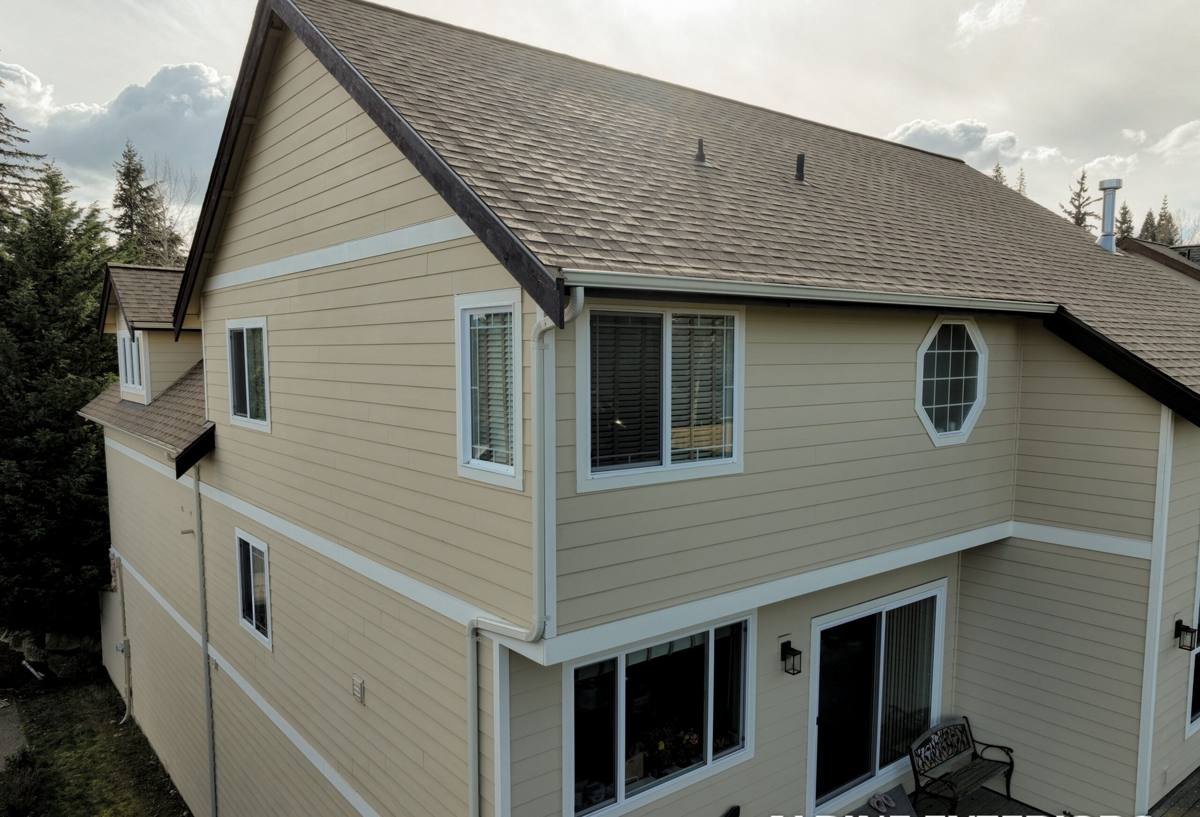
What Bellingham's Climate Actually Does to a Shingle Roof
Whatcom County's marine climate isn't dramatic in the way a hailstorm or a wildfire is dramatic. It's slow and cumulative, which is exactly why it gets underestimated.
Salt Air
Airborne salt accelerates corrosion on any exposed metal component — nail heads, flashing, vent housings, gutter hardware. On a shingle roof, the metal details are often where problems start, not the shingles themselves. Fasteners and flashing rated for a dry climate corrode faster here, and once a flashing seam starts to fail, water finds its way under the shingle field long before the shingles look worn.
Driving Rain
Rain in this region doesn't just fall straight down — wind pushes it sideways and up under shingle tabs, into valleys, and around penetrations at flatter pitches. A roof that's watertight in a light, vertical rain can still leak in a wind-driven storm if the underlayment, valley work, and flashing details weren't built for lateral water intrusion.
Moss and Shade
Birchwood's tree cover keeps a lot of roof surfaces damp and shaded well after a storm passes. That's the exact condition moss needs to establish. Moss isn't just cosmetic — it lifts shingle edges, holds moisture against the roof deck, and works its way into fastener lines over time, which shortens the roof's actual service life even if it still looks intact from the ground.
What a Correctly Installed Shingle Roof Includes
A shingle roof is a system, not a single product. Skipping or shortcutting any one layer undermines the whole thing, especially in a wet climate.
Underlayment
We use a synthetic or self-adhering underlayment appropriate to the roof's pitch and exposure, with extra ice-and-water-shield-style membrane at eaves, valleys, and any low-slope transitions — the spots where wind-driven rain is most likely to get under the shingle field.
Flashing
Step flashing at wall intersections, proper valley metal, and corrosion-resistant flashing at every penetration (vents, chimneys, skylights) are non-negotiable. This is the detail work that separates a roof that lasts from one that leaks within a few winters, and it's the part most likely to get rushed on a fast, cheap install.
Ventilation
Balanced intake and exhaust ventilation keeps the underside of the roof deck dry and temperature-stable. In a shaded, damp climate like Birchwood's, poor ventilation traps moisture in the attic, which can rot decking from the inside even while the shingles above look fine.
Fastening
Shingles nailed too high, at the wrong count, or with the wrong nail type will blow off or lift in a wind event — and Whatcom County gets enough winter wind events that this isn't a theoretical concern. We follow the manufacturer's nailing pattern exactly, every time, because that's also what keeps the warranty valid.
Shingle Options for This Climate
Most Birchwood homes land on one of a few shingle categories. The right choice depends on budget, roof pitch, exposure, and how long you plan to stay in the house.
| Shingle Type | Typical Lifespan | Best Fit For Birchwood |
|---|---|---|
| 3-tab asphalt | 15–20 years | Budget-conscious projects, simpler rooflines, less wind exposure |
| Architectural (laminate) asphalt | 25–30 years | Most homes here — better wind resistance and thicker profile handles driving rain better |
| Impact-rated / heavier architectural | 30+ years | Higher-exposure sites, homes near open water or ridgelines with more direct wind |
We steer most Birchwood clients toward architectural shingles rather than 3-tab. It's not that 3-tab is a bad product — it's that the added wind rating and thicker laminate structure earns its cost back here, given how often this area sees sustained wind-driven rain rather than isolated storms.
Our Process, Start to Finish
1. Inspection and Honest Scope
We start on the roof, not just from photos. We check the deck condition, existing ventilation, flashing condition, and how much moss or moisture damage is already present. You get a straight answer on whether the roof needs full replacement, a partial section repair, or just maintenance.
2. Tear-Off vs. Overlay
We tear off down to the deck on almost every project we recommend. Overlaying new shingles over old ones traps moisture between layers and hides deck problems — a bad trade-off in a climate where deck rot from trapped moisture is already a real risk. Tear-off also lets us inspect and repair the decking itself before anything new goes down.
3. Install Day
Deck repairs first, then underlayment, then flashing, then the shingle field, then ridge and hip caps, then ventilation components. We work in a sequence that keeps the roof weather-tight at the end of each day — no house left exposed overnight if a job runs longer than expected.
4. Final Walkthrough
We walk the roof and the property with you at the end, check gutters and downspouts for debris from the job, and confirm ventilation and flashing details before we call it done.
Moss and Long-Term Maintenance
No shingle roof in Bellingham's climate is truly "maintenance-free," and any contractor who tells you otherwise isn't being straight with you. What we can control is how much maintenance a roof needs and how easy that maintenance is.
- Zinc or copper control strips near the ridge reduce moss growth over time using normal rainfall runoff
- Keeping nearby branches trimmed back reduces shade and debris buildup, which are moss's two favorite conditions
- Gutters clear of debris prevent water backing up under the eave edge of the shingles
- Periodic soft washing (not pressure washing, which can strip granules) removes existing moss without damaging the shingle surface
What Drives the Cost of a Shingle Roof
| Factor | Why It Matters |
|---|---|
| Roof pitch and complexity | Steep or cut-up rooflines take longer and need more flashing detail work |
| Deck condition | Rotten or soft decking found at tear-off adds material and labor to repair before shingles go on |
| Shingle grade | 3-tab vs. architectural vs. impact-rated shingles carry different material costs and labor time |
| Ventilation upgrades | Adding or correcting intake/exhaust venting is often worth doing during a full replacement |
| Access and site conditions | Steep lots, limited driveway access, or tight tree cover around the house affect setup and disposal |
We give a written, itemized estimate before any work starts, and we'll tell you plainly if we think a repair makes more sense than a full replacement — that's not always the more profitable answer for us, but it's the honest one.
Signs a Birchwood Roof Needs a Closer Look
- Granules collecting in gutters or at downspout outlets
- Shingle edges curling, cupping, or lifting
- Dark streaking or thick moss patches, especially on shaded slopes
- Daylight visible through the attic roof deck
- Soft or spongy spots when walking the roof
- Water stains on interior ceilings after a windy rainstorm
Any one of these on its own isn't necessarily an emergency, but they're worth a professional look before the next wet season rather than after a leak shows up indoors.
Why a Crew That Already Works This Area Matters
A roofing crew that works Birchwood regularly already knows which details matter most here: how much flashing and underlayment margin to build in for wind-driven rain, which slopes and orientations tend to hold moss longest, and how local moisture patterns actually behave over a full year rather than a single storm. That's not something you can fully substitute with a generic install checklist written for a different climate. It shows up in fewer callbacks, fewer surprise leaks two winters later, and a roof that actually reaches the lifespan the shingle manufacturer advertises.
If you're weighing repair versus replacement, or just want an honest read on where your current roof stands, we're glad to come take a look. The estimate is free, there's no pressure, and you'll get a straight answer either way — just fill out the form below to get started.