 Bellingham
 Birch Bay sits right on the water, which means the wind that pushes rain sideways into a window also pushes cold, damp marine air straight through any gap an old window has stopped sealing. In a lot of homes here, "the windows are drafty" and "the heating bill went up again" are the same problem described two different ways. Energy-efficient window work in this neighborhood isn't really about chasing a rating number — it's about closing the gap between what a window is supposed to do and what it's actually doing, in a climate that doesn't forgive shortcuts.
We treat energy-efficient window replacement as its own category of work in Birch Bay, distinct from a straightforward like-for-like swap somewhere calmer inland. The glass package, the frame material, and — just as much — the installation and sealing details all change what "efficient" actually means once wind-driven rain, salt air, and a long wet season are part of the daily load on a house.
Why Birch Bay Windows Underperform Faster Than Inland Homes
A window's energy performance isn't fixed the day it's installed — it degrades, and how fast it degrades depends heavily on exposure. Birch Bay sits in one of the more demanding stretches of coastline in Whatcom County, and that shows up directly in window performance over time. Salt-laden air corrodes weatherstripping hardware, hinges, and lower-grade seals faster than a drier inland setting would, and a compromised seal is exactly what lets conditioned air leak out and cold, damp air leak in. Wind-driven rain tests seals and flashing details that would rarely get stressed somewhere calmer, finding any gap that isn't sealed correctly. And the shade and dampness common along this stretch of coastline support a moss and mildew season that can run most of the year on north-facing walls, which keeps trim and sills wetter, longer, than homes set back from the water.
None of that means efficient windows don't work here — it means the products and the installation both have to account for a harsher-than-average load, or the efficiency gains a homeowner is paying for erode faster than they should.
The Gap Between "New" and "Efficient"
Not every window replacement is actually an efficiency upgrade. A new window installed without proper air sealing around the rough opening can still leak air at the frame-to-wall junction even if the glass itself is high-performing. We've seen this on homes where a previous replacement improved the look of the house without meaningfully improving the heating bill, because the installation, not the window unit, was where the performance was lost.
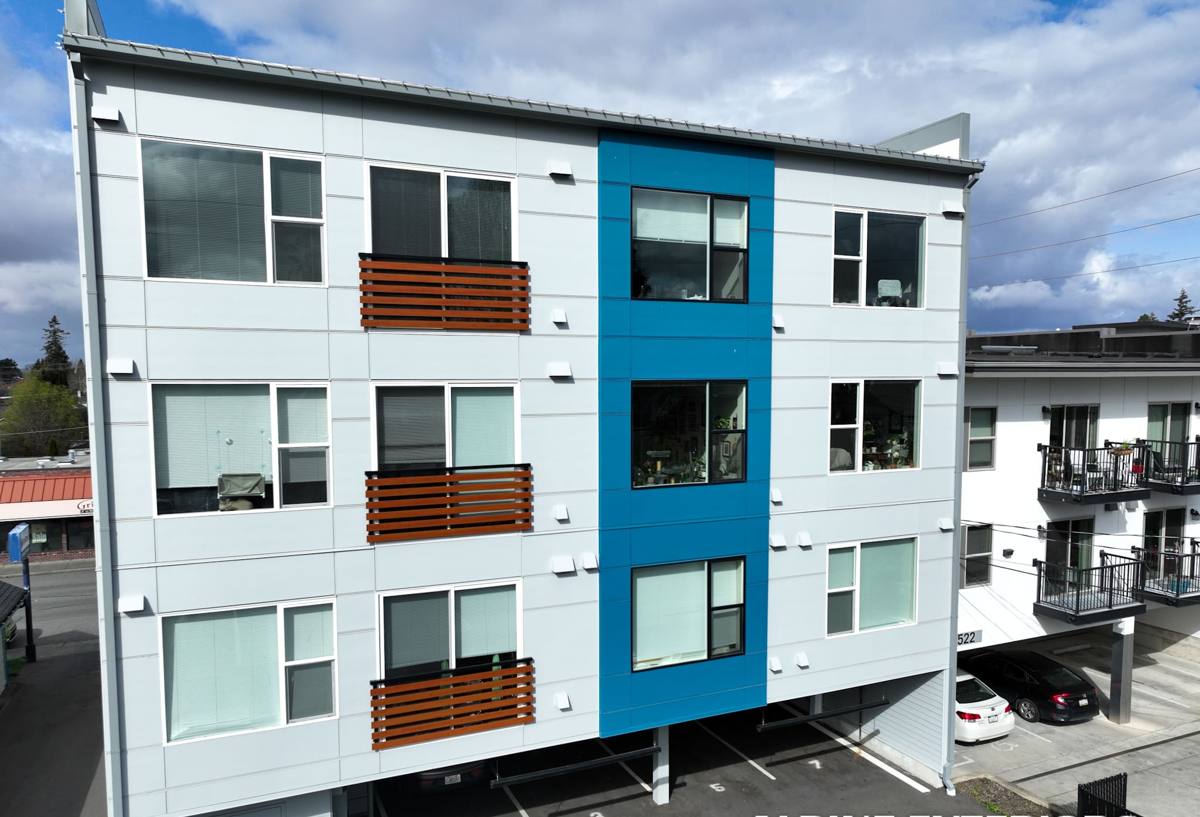
What Actually Makes a Window Energy Efficient
"Energy efficient" gets used loosely in window marketing, but a handful of measurable factors actually determine how a window performs, and they matter differently depending on which direction a window faces and how exposed it is.
| Factor | What It Measures | Why It Matters in Birch Bay |
|---|---|---|
| U-factor | How well the window resists heat flow — lower is better | Directly tied to heating cost in a climate with a long cool, damp season |
| Solar Heat Gain Coefficient (SHGC) | How much solar heat passes through the glass | Matters most on south- and west-facing windows; less critical on shaded or north-facing walls |
| Air infiltration rate | How much air leaks through the window assembly under wind pressure | Directly affected by wind-driven rain and sustained coastal wind loading |
| Condensation resistance | How well the window resists interior condensation in cold, humid conditions | Relevant given the sustained dampness and humidity along this part of the coast |
| Visible transmittance | How much daylight passes through the glass | A trade-off consideration, not a pass/fail metric, when choosing coatings |
None of these numbers exist in isolation. A window with an excellent U-factor but a poor air infiltration rating, or one installed without proper sealing at the rough opening, won't perform the way its rating suggests once it's actually in a wall facing Birch Bay weather. We look at the whole package — glass, frame, and installation — rather than selling off one number on a spec sheet.
Glass Packages and Coatings Worth Understanding
Double-Pane vs. Triple-Pane
Double-pane glass with a quality low-e coating and gas fill covers most homes in this area well and remains the more common, more budget-friendly choice. Triple-pane glass improves insulation and sound dampening further and can be worth the added cost on rooms facing prevailing wind and weather, or for homeowners prioritizing comfort and noise reduction over the lowest upfront cost. It's a real trade-off, not an automatic upgrade — the added weight and cost of triple-pane isn't justified on every elevation of every house.
Low-E Coatings
Low-emissivity coatings are thin, virtually invisible layers that reduce heat transfer through the glass without meaningfully darkening it. Different low-e coatings are tuned for different priorities — some are built to keep more solar heat out on sun-exposed walls, others are built to retain more interior heat on shaded, cooler-facing walls. Because Birch Bay homes often have a clear split between a water-facing side that takes more sun and wind, and a landward side that stays shaded and damp, the right coating can genuinely differ window to window on the same house.
Gas Fills and Spacers
Argon or krypton gas between panes improves insulating performance over plain air, and the spacer system holding the panes apart affects both insulation and how well the seal holds up over the window's life. In a marine climate, spacer and seal quality has an outsized effect on long-term performance, since a failed seal shows up as fogging between panes — a sign the insulating gas has escaped and the unit needs replacing, not just a cosmetic issue.
Frame Materials in a Coastal Climate
Frame material affects energy performance directly — through its own insulating value — and indirectly, through how well it holds a seal over years of salt air and moisture exposure. We'll walk through the honest trade-offs for a specific home rather than defaulting to whatever installs fastest.
- Vinyl — good insulating value, low maintenance, and reasonable cost; a common, solid choice for straightforward replacements in this climate
- Fiberglass — excellent insulating value, holds paint and finishes well, and handles the expansion and contraction of temperature swings with less long-term seal stress than some alternatives
- Wood — strong insulating value and traditional appearance, but requires ongoing maintenance to hold up to sustained coastal moisture; a real option when the look matters and upkeep is part of the plan
- Aluminum — durable and low-maintenance, but conducts heat and cold more readily than the alternatives unless it has a proper thermal break, which we factor into the recommendation whenever aluminum comes up
For most fully weather-exposed replacements in Birch Bay, we lead with vinyl or fiberglass because they hold their seal and insulating performance with less ongoing upkeep than an all-wood exterior finish in this specific environment. That's a maintenance and moisture-behavior judgment on our part, not a claim that wood windows are a bad product generally — they can be the right call when a homeowner wants that look and is prepared to keep up with the finish.
Installation: Where Most Efficiency Gains Are Actually Won or Lost
A high-performing window installed poorly will underperform a mid-grade window installed correctly. That's true everywhere, but it matters more in Birch Bay because wind-driven rain and sustained air pressure against the wall will find and exploit a sealing shortcut that might go unnoticed in a calmer climate for years.
Air Sealing at the Rough Opening
The gap between the window frame and the surrounding wall framing needs continuous, correctly detailed air sealing — not just insulation stuffed in loosely. This is one of the most common places we find performance lost on previous installations: insulation without a proper air barrier still allows air movement, which shows up as a draft even though the window itself is rated well.
Flashing Integration
Flashing has to be sequenced so water sheds outward and downward at every layer, tying cleanly into the existing wall's water-resistive barrier. Done correctly, this keeps wind-driven rain out of the wall assembly entirely, rather than relying on caulk as the only line of defense. Caulk fails; a correctly lapped flashing detail doesn't rely on it to do the whole job.
Interior and Exterior Sealant
Both the interior air seal and the exterior weather seal matter, and they do different jobs — the interior seal stops conditioned air and moisture-laden indoor air from reaching the wall cavity, and the exterior seal sheds bulk water. Skipping either one, or treating them as the same step, is a common shortcut that costs efficiency and, eventually, causes moisture problems.
Practical Checklist for a Correct Installation
- Confirm the installer air-seals the rough opening with a proper air barrier, not just loose insulation
- Ask how flashing is sequenced and how it ties into the existing wall's water-resistive barrier
- Confirm both interior and exterior sealant details are addressed, not just one
- Ask which low-e coating and gas fill are recommended for each elevation of the house, not a single default for every window
- Get the U-factor, SHGC, and air infiltration ratings in writing for the specific units being quoted
- Confirm what's covered under warranty — the glass unit, the frame, and the installation labor are often separate
Signs Your Current Windows Are Costing You Money
Homeowners in Birch Bay often notice these signs individually without connecting them to window performance. Taken together, they usually point to windows that have stopped doing their job, whether from age, seal failure, or an installation that was never sealed correctly in the first place.
- Noticeable draft near the window frame, especially during wind events off the water
- Fogging or moisture visible between panes on double- or triple-pane units — a sign the seal has failed
- Condensation forming on the interior glass or frame during cold, damp stretches
- Rooms near exterior windows feeling noticeably colder than the rest of the house
- Rising heating costs without a clear cause elsewhere in the home
- Visible gaps, soft or discolored trim, or paint failure around the window frame
Our Process, Start to Finish
- On-site assessment — we look at each window individually, noting orientation, exposure, and current condition rather than treating the whole house as one line item
- Honest recommendation — glass package, frame material, and coating choices explained per elevation, with the reasoning behind each one
- Written quote — U-factor, SHGC, and air infiltration ratings included for the specific units proposed, along with a realistic timeline
- Removal and opening prep — the old unit comes out carefully, and any hidden framing, insulation, or flashing issues get addressed before the new window goes in
- Installation, air sealing, and flashing — the new unit is set, shimmed, air-sealed, and flashed to a sequence built for coastal exposure
- Interior and exterior finish — trim and sealant work completed and checked before we consider the job done
Cost Factors and Trade-Offs
| Factor | Lower Cost | Higher Cost, Higher Performance |
|---|---|---|
| Pane configuration | Double-pane with standard low-e coating | Triple-pane, or double-pane with a performance-tuned coating and premium gas fill |
| Frame material | Vinyl | Fiberglass or wood-clad options |
| Coating selection | Single default coating across the whole house | Elevation-specific coatings matched to sun and wind exposure |
| Installation scope | Insert replacement within the existing frame | Full-frame replacement with new flashing integration |
| Number of units | Whole-house projects typically lower the per-window cost | Single or few-window projects carry a higher per-unit cost |
What actually moves price on an energy-efficiency window project is fairly consistent: glass package and pane count, frame material, whether the job is a simpler insert replacement or a full-frame replacement with new flashing, and how many units are being done together. Insert replacements can be less expensive but only make sense when the existing frame and flashing are in good condition — on an older Birch Bay home with any sign of past water intrusion, a full-frame replacement is usually the more honest recommendation even though it costs more upfront. We won't quote a number without seeing the windows in person, but we'll walk through which of these factors apply to your project before you commit to anything.
Utility Incentives and Rebates
Washington utilities and state programs periodically offer rebates or incentives tied to qualifying energy-efficient window upgrades, and eligibility and amounts change over time. We won't quote a specific rebate figure here since programs shift, but we're glad to point you toward current options worth checking when you're planning the project, and we'll make sure the glass and frame specs we recommend are documented clearly enough to support a rebate application if one applies.
Why a Local Birch Bay Crew Matters
Manufacturer performance ratings are tested under standardized lab conditions, not under sustained wind-driven rain off the Salish Sea. A crew that has actually installed and sealed windows on this specific stretch of Whatcom County coastline knows which parts of a manufacturer's installation guidance are non-negotiable here — how much lap a flashing course needs given the wind exposure, when a sill needs a sloped detail instead of relying on sealant alone, which coatings actually hold up to the salt air over years rather than just performing well on a spec sheet.
That local experience shows up in decisions that rarely come up in a sales conversation: how a window's air seal interacts with the rest of the wall assembly on an older home, which frame materials are holding up on other Birch Bay projects years later versus which ones are showing seal fatigue, and where it's worth spending more on installation detail even when it isn't strictly required by code. Those are the decisions that determine whether an energy-efficient window is still cutting the heating bill and staying draft-free in fifteen years, or drafting and fogging again in five.
If your Birch Bay home has drafty windows, rising heating costs, or you're planning ahead for a full-house window upgrade, it's worth having someone look at the actual windows and their exposure before you start comparing quotes. We offer free, no-pressure estimates for energy-efficient window projects in Birch Bay and the surrounding area — use the form below to get a time on the schedule.