 Bellingham
 Decking Built for Birch Bay's Waterfront Climate
Birch Bay sits right on the water, and that changes what a deck has to deal with. Salt-laden air, near-constant onshore moisture, and a moss season that stretches from fall through spring put more stress on outdoor structures here than in inland Whatcom County neighborhoods just a few miles away. A deck that would be fine in a drier, more sheltered yard can fail early on a Birch Bay lot if it wasn't built with that exposure in mind.
Composite decking exists largely to solve this kind of problem. It doesn't rot, doesn't need annual staining, and doesn't give moss the same foothold that bare wood grain does. But composite isn't automatically maintenance-free in a salt-air environment — the substructure underneath it, the fasteners holding it down, and the way the boards are spaced and ventilated still matter enormously. Get those details wrong and even a good composite board can trap moisture, grow algae, or loosen over a few winters.
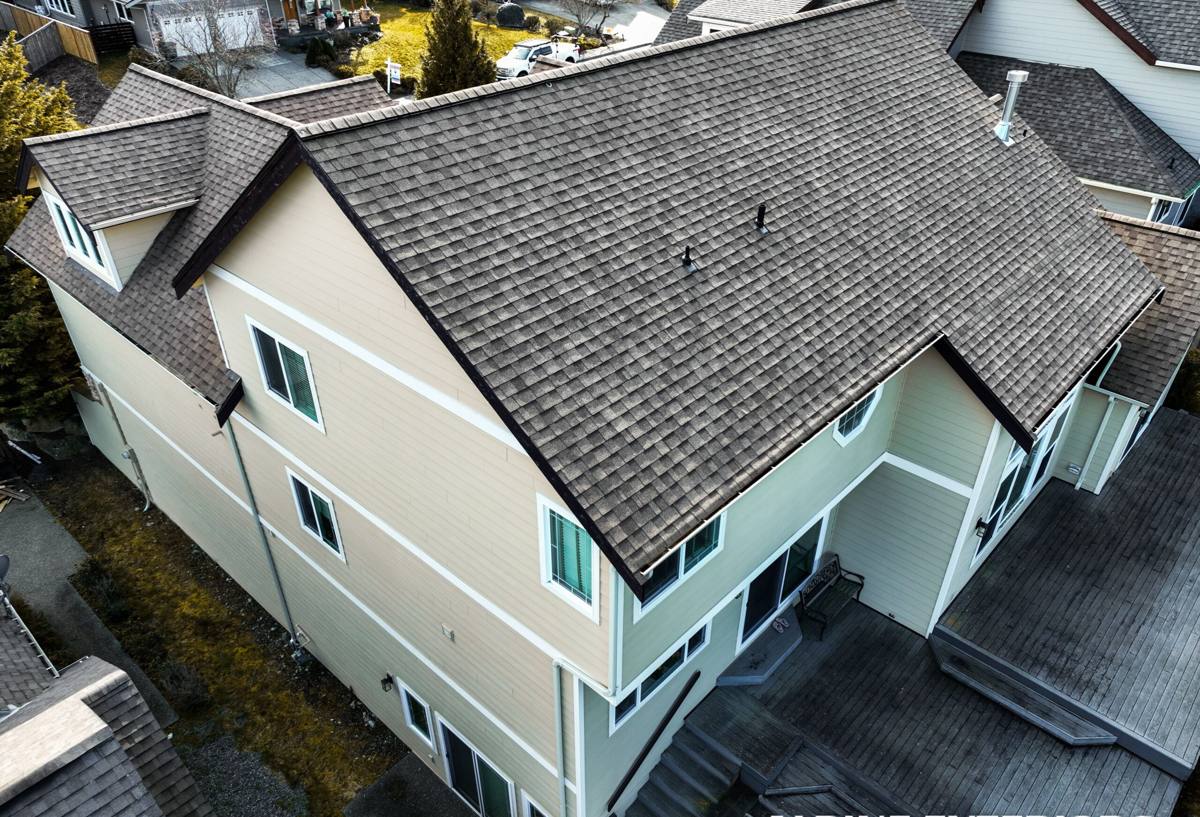
What Salt Air and Moss Actually Do to a Deck
Salt Air
Airborne salt from Birch Bay doesn't just sit on the surface — it works into any exposed metal fastener, hinge, or bracket and accelerates corrosion. Standard galvanized hardware that would last two decades inland can start showing rust streaks and pitting much sooner this close to the water. Once a fastener starts to corrode, it weakens, and that's how you end up with squeaky boards, popped screw heads, or a railing post that's gone soft at the base.
Driving Rain
Wind off the water pushes rain sideways, which means water gets driven up under boards, into end grain, and behind ledger boards and rim joists in a way that straight-down rain never would. Any gap in flashing or a poorly sealed ledger connection becomes a slow, ongoing water source rather than an occasional splash.
Moss and Algae
Bellingham's long wet season gives moss and algae months to establish themselves on any surface that stays damp and shaded. On a deck, that usually means the north side, areas under overhangs, and anywhere board spacing is too tight for airflow. Moss holds moisture against the surface, and on wood that means rot; on composite it mostly means a slippery, dingy-looking surface that needs periodic cleaning to stay attractive and safe underfoot.
Why Composite Makes Sense for This Location
We recommend composite decking in Birch Bay more often than we recommend traditional wood, and it's not because wood is a bad product — it's because composite handles this specific climate with less upkeep. Capped composite boards resist moisture absorption into the board itself, don't need re-staining, and hold their color and surface texture longer under UV and salt exposure than most wood species do without regular maintenance.
That said, composite isn't a install-and-forget material. The framing underneath still needs to be wood or a wood-alternative structural product rated for ground contact and moisture exposure, the fasteners need to be corrosion-resistant hardware rated for coastal use, and the board layout needs enough gap and airflow to keep moss from taking hold between boards. A composite deck installed without those details is still vulnerable to the same salt and moisture problems as a wood deck — it just shows the damage differently, usually underneath rather than on the surface.
Composite vs. Wood in a Birch Bay Environment
| Factor | Composite Decking | Traditional Wood |
|---|---|---|
| Moisture absorption | Minimal in the board surface; capped boards shed water | Absorbs moisture readily, especially at cut ends and fastener holes |
| Moss/algae resistance | Resists staining better; surface can still grow algae if shaded and damp | Provides more texture for moss to grip; can hide rot underneath |
| Maintenance routine | Periodic washing to remove salt film and algae | Regular sealing/staining, plus inspection for soft spots |
| Fastener/hardware needs | Corrosion-resistant hardware still essential | Corrosion-resistant hardware still essential |
| Long-term cost | Higher upfront, lower recurring maintenance cost | Lower upfront, higher recurring maintenance cost |
What a Correct Composite Deck Install Involves Here
Framing and Substructure
The joists, beams, and posts underneath a composite deck do the structural work, and in a salt-air environment they need to be treated lumber (or an approved structural composite) rated for ground contact, with connections made using stainless or coated hardware built for coastal exposure. We also pay close attention to joist spacing — composite boards have manufacturer-specified span limits, and going wider than spec leads to bounce and premature sagging.
Flashing and Ledger Attachment
Where the deck attaches to the house, proper ledger flashing is what keeps driving rain from working its way behind the siding and into the rim joist. This is one of the most common places we find problems on older decks in this area — a ledger board bolted directly to the house with no flashing, or flashing that was installed but not properly lapped with the house's water-resistive barrier.
Board Spacing and Ventilation
Composite boards need consistent gapping, both between boards and at the perimeter, to let air move underneath the deck surface. Good airflow is one of the simplest ways to reduce moss and algae buildup, because it lets the deck dry out between rain events instead of staying damp for days.
Fasteners and Fastening System
We use hidden fastener systems or coated screws rated for the specific composite product being installed, matched to the manufacturer's requirements to keep the warranty intact. Mixing generic hardware into a composite install is a common shortcut that causes visible corrosion streaking on the board surface within a few years.
Our Process
- On-site assessment of the yard, sun/shade exposure, drainage, and existing structure (if replacing an old deck)
- Discussion of composite brand and board style options, with honest pros and cons for your specific site
- Structural plan for framing, ledger attachment, and footing placement suited to Birch Bay soil and moisture conditions
- Installation following manufacturer specifications for spacing, fastening, and ventilation
- Final walkthrough covering care and cleaning specific to a salt-air, high-moss environment
Cost Factors to Expect
Every deck project is priced around its own specifics, but a few factors consistently move the number in Birch Bay:
| Factor | Why It Affects Cost |
|---|---|
| Deck size and shape | More square footage and complex angles mean more material and labor |
| Height off grade | Taller decks need more substantial framing, railing, and often stairs |
| Existing structure condition | Replacing rotted framing or a poorly flashed ledger adds scope beyond surface boards |
| Board and railing selection | Composite lines vary in price by capping type, color, and texture |
| Site access | Waterfront lots with limited access can add setup time and material handling |
Generally, homeowners in this area should expect composite decking projects to run from the mid four figures for a small, simple deck up into the tens of thousands for larger, multi-level, or waterfront-facing structures. We provide a specific number after seeing the site, not before.
Maintenance Checklist for a Composite Deck in This Climate
- Rinse or wash the deck surface periodically to remove salt film buildup, especially after storms
- Sweep debris out from between boards so it doesn't trap moisture against the edges
- Inspect railing posts and fastener heads once or twice a year for early corrosion signs
- Keep shaded, north-facing areas clear of standing leaves or debris where moss is most likely to start
- Check the ledger flashing area at the house connection annually for any sign of water staining
Why Local Experience with Birch Bay Conditions Matters
A crew that mostly builds decks in drier, inland parts of Whatcom County isn't necessarily thinking about salt-rated hardware or ledger flashing built for wind-driven rain as a default — because most of their projects don't need it as urgently. Working regularly in Birch Bay and along Bellingham's coastal areas means we've seen what actually fails first in this environment, and we build to prevent those specific problems rather than applying a generic decking approach and hoping it holds up.
That local pattern recognition shows up in small decisions: which hardware grade we default to, how much gap we leave between boards, where we pay extra attention to flashing details, and what we tell homeowners to watch for in their first year of ownership. None of it is complicated, but skipping any of it is exactly how decks in this climate end up needing early repairs.
Get a Free Estimate
If you're planning a new composite deck or replacing an aging one in Birch Bay, we're happy to walk the site, talk through board options, and give you a straightforward estimate with no pressure attached. Use the form below to get started.