 Bellingham
 Roof Repair Built for Puget's Conditions
Puget sits close enough to the water that its homes take on a different set of roofing problems than a house a few miles inland in Bellingham. The combination of salt-tinged air, driving rain off the Sound, and a moss season that can run most of the year wears on roofing materials in ways that show up as small, easy-to-miss issues long before they turn into a leak. Roof repair here isn't just patching a hole — it's understanding how this specific stretch of Whatcom County beats up a roof and fixing the actual cause, not just the symptom.
We work on homes throughout this part of Bellingham regularly, which means we're not guessing at what's happening under the shingles. We've seen how quickly moss takes hold on north-facing slopes near the water, how wind-driven rain finds its way under flashing that would hold up fine somewhere drier, and which repair shortcuts fail first in this environment. That local pattern recognition is a big part of what makes a repair last instead of becoming a callback.
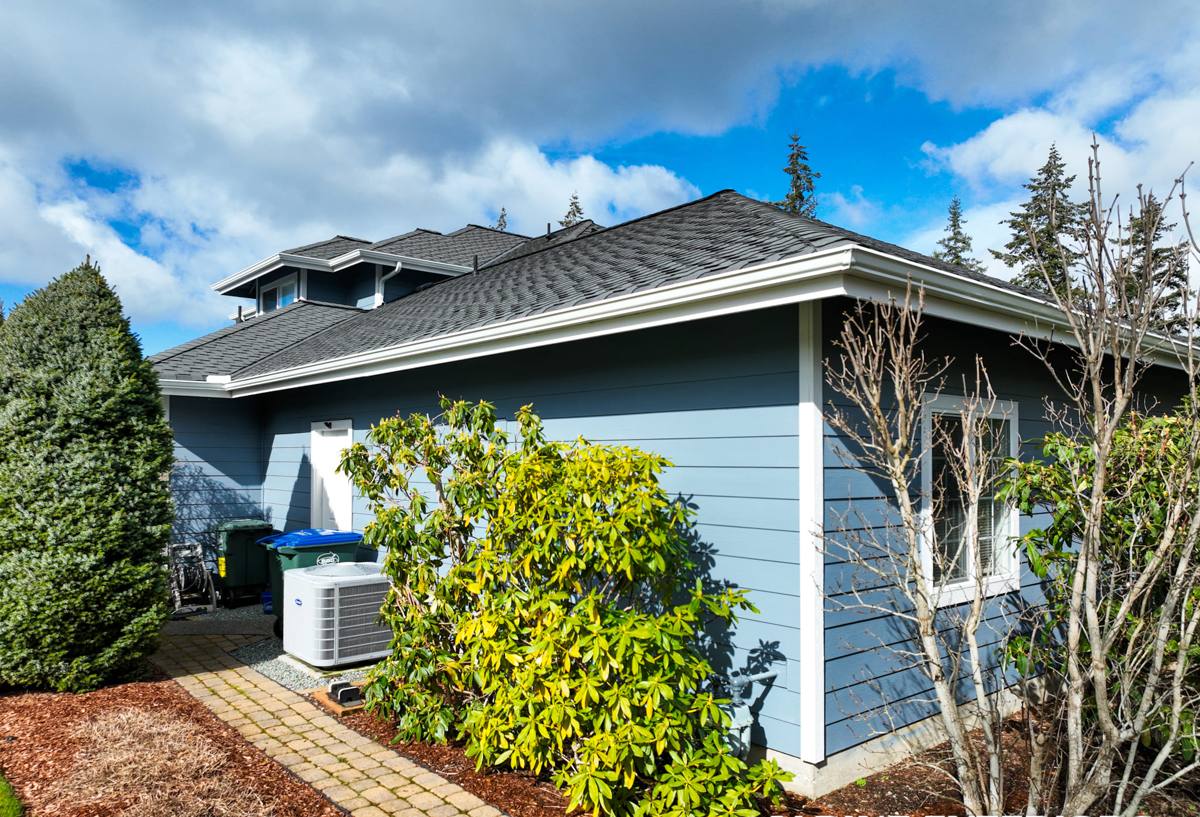
Why Puget Roofs Wear Differently
Salt Air and Metal Fatigue
Salt-laden air accelerates corrosion on exposed metal — flashing, fasteners, vent caps, and gutter hardware all age faster this close to the water. A fastener that would last two decades inland can start weeping rust streaks in half that time here. Once a fastener corrodes, its seal weakens, and that's an entry point for water even if the shingle above it looks fine.
Driving Rain and Wind Exposure
Storms coming off the Sound don't just drop rain straight down — wind pushes it sideways and up under laps, ridge caps, and flashing edges that are designed for vertical water flow. Roofs here need details that account for wind-driven moisture, not just standard shingle overlap.
A Long Moss Season
Bellingham's mild, wet climate keeps moss and algae growing for most of the year, and shaded or north-facing roof sections near Puget tend to stay damp longer after a storm. Moss isn't just a cosmetic problem — its root structure lifts shingle edges, holds moisture against the roof deck, and accelerates granule loss, all of which shorten the life of an otherwise sound roof.
Signs a Puget Roof Needs Repair, Not Just a Look
Because damage here tends to start small and hidden, homeowners often don't notice a problem until it's already reached the interior. Watch for these signs:
- Dark streaking or thick moss growth, especially on shaded or north-facing slopes
- Granules collecting in gutters or at downspout outlets
- Rusty streaks below flashing, vent boots, or exposed fasteners
- Soft or spongy spots underfoot on a walkable roof section
- Water stains on interior ceilings, especially after a windy rainstorm
- Lifted, curled, or missing shingles along ridges and roof edges
- Daylight visible through the attic roof deck
- Gutters pulling away from the fascia or overflowing during heavy rain
Any one of these on its own might be minor. Several together usually mean water has already found a path in, and the sooner it's addressed the less it costs to fix.
What a Correct Repair Actually Involves
A repair that only addresses the visible symptom — say, replacing a few shingles where a stain appeared — often misses the actual point of entry, which may be several feet upslope where wind-driven rain pushed water under a lap. A correct repair starts with tracing the water, not just patching where it showed up.
Inspection First
We check the obvious repair area, but also the flashing around any penetrations nearby, the condition of the underlayment where it's exposed, and the state of fasteners and metal components. Salt air corrosion in particular is easy to miss if you're only looking at the shingles.
Matching Materials and Methods
Repairs should use materials compatible with what's already on the roof — mismatched shingle profiles or incompatible flashing metals can create new problems, including galvanic corrosion between dissimilar metals in a salt-air environment.
Sealing for Wind-Driven Moisture
Given how much wind pushes rain sideways here, we pay close attention to how laps, flashing edges, and ridge details are sealed, not just how they look from the ground.
Moss and Debris Removal Done Carefully
Moss removal has to be done without damaging granules or lifting shingle edges further. Pressure washing a roof is a common shortcut that strips protective granules and shortens shingle life — we treat moss removal as a separate, careful step, not an afterthought to the repair.
Repair vs. Replacement: How We Decide
Not every roof in Puget's tougher conditions needs full replacement, but salt air and long moss exposure do shorten the window where repair makes sense. Here's how we generally think about it:
| Situation | Repair usually makes sense | Replacement usually makes sense |
|---|---|---|
| Age of roof | Under 15-18 years, good overall condition | Nearing or past expected lifespan for its material |
| Extent of damage | Isolated to one section or penetration | Widespread granule loss, multiple leak points |
| Moss/algae staining | Surface growth, deck still sound underneath | Moss has been present for years, deck shows soft spots |
| Flashing and metal condition | Localized corrosion, easily replaced | Corrosion widespread across multiple penetrations |
| Interior signs | No interior staining or minor, contained staining | Recurring interior leaks in different spots each storm |
We'll always give you a straight answer on which category your roof falls into, and why — including if that means recommending you hold off on any work at all this season.
Our Repair Process
- On-site inspection — we look at the repair area plus surrounding flashing, fasteners, and any visible attic access points.
- Honest assessment — you get a plain explanation of what's actually wrong, what caused it, and what fixing it involves.
- Written estimate — clear scope of work, so there's no ambiguity about what's being done.
- The repair itself — matched materials, proper flashing technique, and attention to wind and moisture exposure specific to this location.
- Cleanup and check — debris and old material removed, work area checked before we consider the job done.
What Drives the Cost of a Roof Repair
| Factor | Why it matters |
|---|---|
| Size and location of the damaged area | Steep or hard-to-access sections take longer and require more safety setup |
| Extent of hidden water damage | Rotted decking or sheathing found during the repair adds material and labor |
| Flashing and metal replacement needed | Corroded flashing from salt air often needs full replacement, not patching |
| Moss and debris removal required | Heavier moss growth takes more careful, time-intensive removal |
| Roofing material | Composition shingle, cedar, and metal repairs each require different materials and techniques |
We don't quote a number over the phone without seeing the roof — too many of these factors only become clear on-site — but we'll always explain what's driving your specific estimate line by line.
Why It Matters to Hire a Crew That Already Works Puget
A roofer who mostly works drier, inland areas of Whatcom County may not immediately recognize how far wind-driven rain travels under a lap near the water, or how much faster corrosion sets in on exposed metal this close to the Sound. Experience specific to this environment shows up in small decisions — how tight a flashing seal needs to be, which fastener coatings hold up, how aggressively to schedule moss treatment — that add years to a repair's lifespan.
It also matters for something simpler: knowing what's normal weathering for a Puget roof versus what's an early warning sign. That judgment only comes from working on roofs in this specific setting repeatedly, not from a general knowledge of roofing.
Maintaining a Puget Roof Between Repairs
A repair holds up longer with a little regular attention, especially given the moss season here. A simple maintenance routine goes a long way:
- Clear gutters and downspouts at least twice a year, more often under overhanging trees
- Trim back branches that keep roof sections shaded and damp
- Check for moss growth each fall before the wet season sets in
- Have flashing and fasteners visually checked every couple of years, given how salt air accelerates corrosion
- Address small leaks or stains promptly rather than waiting for the next dry stretch
None of this replaces a professional inspection, but it does reduce how often a small issue becomes a repair call in the first place.
Get an Honest Look at Your Puget Roof
If you're seeing moss buildup, rust streaks, a stain on the ceiling, or you just want a second opinion before storm season, we're happy to take a look. We'll give you a straightforward assessment of what's going on and what it would take to fix it — no pressure, no upsell, just an honest estimate you can use to make your own decision. Reach out using the form below to schedule a free roof repair estimate for your Puget-area home.