 Bellingham
 Building a Deck That Actually Holds Up in Sehome
Sehome sits close enough to Bellingham Bay that salt-laden air is a real factor in how fast metal corrodes and finishes fail, and close enough to Sehome Hill that afternoon shade lingers on a lot of lots longer than homeowners expect. Add in Whatcom County's long, wet fall-through-spring stretch and you have a neighborhood where a deck built to a generic national spec often starts showing problems within a few years — soft spots, green film underfoot, rusted fasteners, boards that cup or crown. A deck built correctly for this specific climate looks and performs differently than one built for a dry inland market, starting from the framing up.
What Makes Sehome Different From a "Standard" Deck Job
Most decking products sold nationally are engineered and warrantied assuming periods of real drying time between rain events. In Sehome, a deck can go weeks in the winter without a full dry-out. That changes which fastener coatings hold up, how much drainage gap a builder needs to leave between boards, and how aggressively ventilation needs to be built into the substructure underneath. It's not a different deck, but it is a different set of decisions made at every stage of the build.
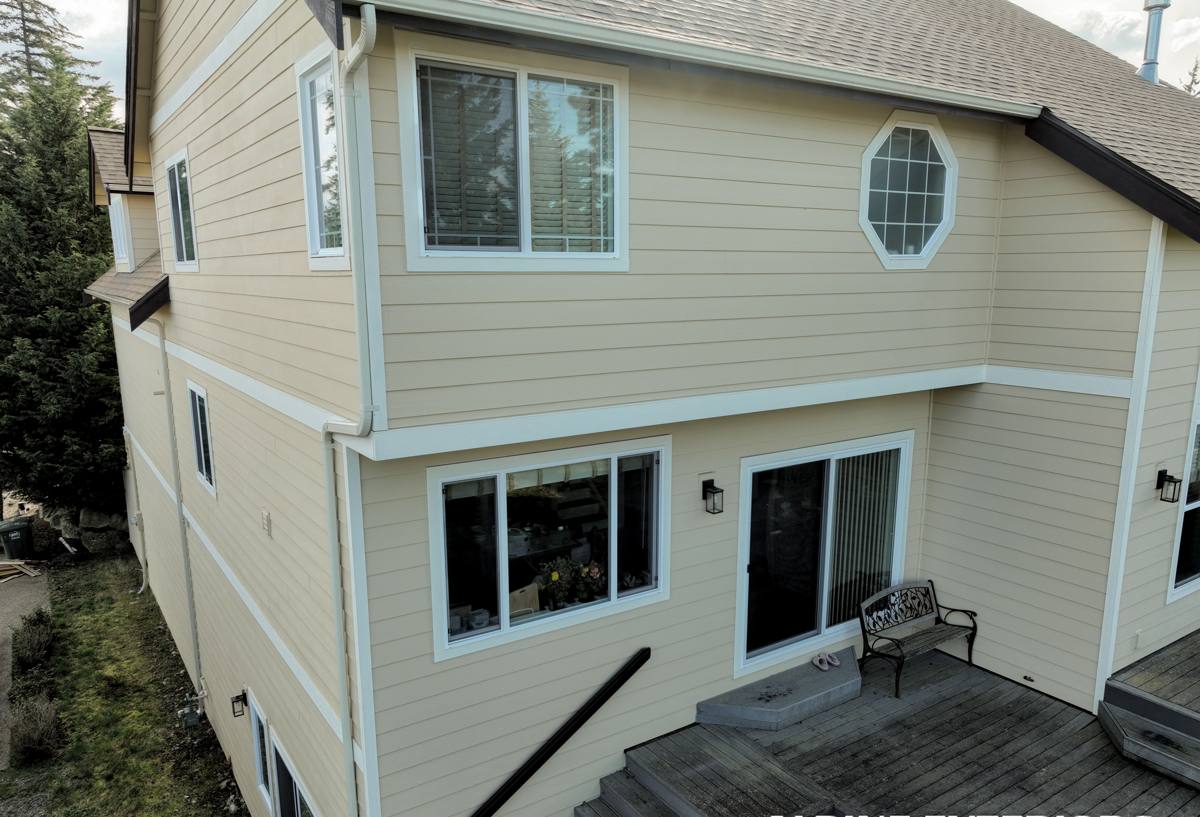
What Bellingham's Climate Does to an Outdoor Deck Over Time
Three things do most of the damage to decks in this part of Whatcom County, and Sehome gets all three:
- Driving rain — wind-driven rain off the water pushes moisture sideways into ledger connections, stair stringers, and any gap where end-grain is exposed, not just straight down onto the surface.
- Moss and algae season — shaded, north-facing, or tree-covered sections of a deck can stay damp for months, which is exactly the environment moss and algae need to take hold. Once established, moss holds moisture against the wood surface even longer, accelerating rot underneath the growth.
- Salt air — proximity to Bellingham Bay means airborne salt reaches fasteners, brackets, and any exposed metal hardware faster than it would further inland, speeding up corrosion on anything not rated for a coastal-adjacent environment.
None of these are dramatic, one-time events. They're slow, cumulative exposure — which is exactly why a deck's problems usually show up as "why does this feel spongy" a few years in, rather than any single failure anyone notices at the time.
Choosing Decking Material for a Sehome Lot
There's no universally "best" decking material — there's a best fit for the specific lot, the amount of shade it gets, and how much upkeep the homeowner actually wants to do. Here's how the common options compare under this neighborhood's conditions:
| Material | Moisture behavior here | Maintenance | Realistic lifespan |
|---|---|---|---|
| Pressure-treated lumber | Handles wet exposure well when properly sealed; end cuts need re-treatment | Needs re-staining/sealing every 1-3 years, especially in shaded sections | 15-20+ years with upkeep |
| Cedar | Naturally rot- and insect-resistant, but softens faster in constant damp/shade | Regular oiling or staining to prevent graying and moss uptake | 15-20 years, less in heavy shade |
| Composite decking | Doesn't absorb water like wood, but can still host surface algae/moss film that needs cleaning | Occasional washing; no staining or sealing required | 25-30+ years per most manufacturer warranties |
Composite tends to be the lower-maintenance choice for shaded Sehome yards where moss is a recurring fight, but it costs more upfront and still needs periodic cleaning — it resists rot, it doesn't resist grime. Wood costs less initially and can look better to homeowners who want that natural look, but it demands a real maintenance commitment in this climate or it will show weathering faster than the same product would in a drier market.
Framing and Structure: The Part That Determines Whether the Deck Lasts
The decking boards are the part everyone sees, but the framing underneath is what actually determines whether a deck lasts 10 years or 30. In a wet climate like this, a few structural details matter more than they would elsewhere:
Ledger Board Attachment
The ledger board — where the deck attaches to the house — is the single most common failure point on older decks, because it's the hardest spot for water to escape once it gets behind the flashing. Correct flashing detail here, sloped and layered so water sheds outward instead of pooling against the house band, is non-negotiable in a climate with this much sustained rain.
Joist Protection and Fastener Choice
Joist tops should be protected with a proper flashing tape, not just left as raw cut lumber, since that's where standing water sits longest after a storm. Given the salt air exposure this close to the bay, we use fasteners and hardware rated for coastal/corrosive environments rather than standard-grade hardware — it costs a bit more upfront and avoids rust streaks and weakened connections a few years down the line.
Footings and Ground Contact
Whatcom County soil holds moisture longer into the season than drier regions, so footing depth and post-to-concrete connections need to account for a longer wet period each year, not just meet the bare minimum.
Drainage and Airflow: The Difference Between a Deck That Dries Out and One That Doesn't
A deck that can't shed water and dry out between storms is a deck that's slowly rotting from underneath, even if the surface looks fine. Two things matter most:
- Board spacing — proper gapping between deck boards lets water drain through instead of sitting on the surface, which matters even more under tree cover or on the shadier sides of a lot.
- Under-deck ventilation — the substructure needs airflow so the wood underneath can actually dry between rain events instead of staying damp for months straight, which is the exact condition that breeds rot and moss.
These aren't upgrades — they're baseline requirements for a deck that's going to hold up through a normal Whatcom County winter, let alone several of them.
How We Build a Deck in Sehome
- Site walk and design conversation — we look at sun exposure, tree cover, drainage slope, and how the deck ties into the house before talking materials.
- Material selection based on the actual lot — shaded, moss-prone sections get a different recommendation than a sunnier, more exposed part of the same yard.
- Permitting — we handle the City of Bellingham permit process for the project rather than leaving that to the homeowner.
- Framing built for this climate — proper ledger flashing, corrosion-resistant hardware, joist protection, and footings sized for extended wet-season exposure.
- Decking installation — correct board spacing and fastening for the chosen material, with attention to how each section will drain.
- Final walkthrough — we go over basic care specific to the material chosen so the homeowner knows what upkeep, if any, is expected.
Permits and Code in Bellingham and Whatcom County
Most new decks and significant deck rebuilds in Bellingham require a building permit, and inspections check things like footing depth, ledger attachment, guardrail height, and stair geometry. Skipping this step, or hiring a crew that skips it, isn't just a paperwork risk — those code minimums exist because they're the same structural details that determine whether a deck stays safe and dry over time. We pull the required permits as part of the job rather than treating it as optional.
Deck Maintenance Checklist for Sehome Homeowners
- Sweep debris and fallen leaves off the deck surface regularly in fall, especially in shaded or tree-covered spots where moisture collects
- Check for moss or algae film at the start of the wet season and clean it before it builds up and holds moisture against the surface
- Inspect fasteners and metal hardware periodically for early rust, given the salt air exposure in this part of Bellingham
- Re-stain or re-seal wood decking on the schedule appropriate for the product — don't wait until it looks obviously weathered
- Confirm gaps between boards and under-deck vents aren't clogged with leaves, dirt, or plant growth that traps moisture
- Have the structure checked every few years, particularly the ledger connection, if the deck is more than 10-15 years old
Why It Matters to Hire a Crew That Already Works in Sehome
A contractor who mostly builds decks in drier climates, or who treats every job with the same generic spec regardless of location, will often under-build for what this neighborhood actually needs — lighter flashing details, standard hardware instead of corrosion-resistant fasteners, or board spacing that doesn't account for how long things stay wet here. A crew that already works in Sehome and the surrounding Bellingham area has seen firsthand which details cause callbacks in this specific climate, and builds to avoid them from the start rather than learning it the hard way on someone else's deck.
If you're planning a new deck or need to replace one that's showing its age, we're happy to take a look and walk through honest options for your specific lot. There's a free, no-pressure estimate available through the form below.