 Bellingham
 Metal Roofing for York Homes in Bellingham
The York neighborhood sits close enough to the water and to mature tree cover that its roofs take a specific kind of beating. Salt-laden air drifts in off the Salish Sea, driving rain comes in sideways during fall and winter storms, and the deep shade from big conifers and older street trees keeps moss growing on north-facing slopes almost year-round. A roof in this part of Bellingham isn't judged by how it looks the day it's installed — it's judged by how it holds up through fifteen or twenty Whatcom County winters. Metal roofing, installed correctly, is one of the few systems built to take that kind of long-term abuse without constant babysitting.
This page is about metal roofing specifically for York — what the local conditions actually demand from a metal roof, what a correct installation looks like, and why hiring a crew that already knows this neighborhood's houses matters more than most homeowners expect.
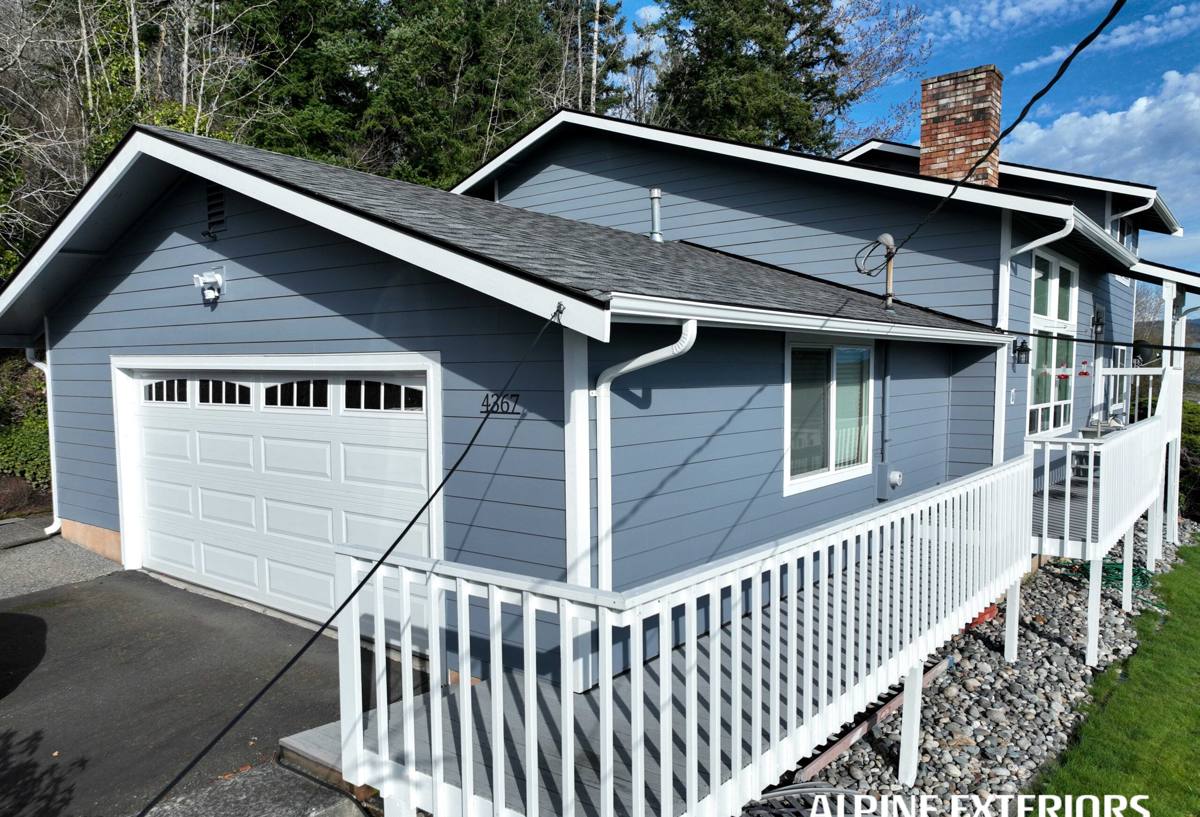
What York's Climate Actually Does to a Roof
Three things drive almost every roofing problem we see in this part of Bellingham:
- Salt air: Proximity to Bellingham Bay means airborne salt settles on exposed metal, fasteners, and flashing. Untreated or poorly coated steel corrodes faster here than it would ten or twenty miles inland.
- Driving rain: Storms off the water often come in at an angle rather than straight down, which pushes water sideways under laps, around penetrations, and into any flashing detail that was cut corners on.
- Moss and shade: Tree cover in and around York keeps some roof faces damp for days after a storm passes. Moss doesn't just look bad — its root structure lifts shingle edges and holds moisture against the roof deck. On metal, the concern shifts to keeping panels clean enough that moisture and organic debris don't sit in the seams.
None of this is unique to one street or one style of house — it's a neighborhood-wide condition. But it means a roofing system that works fine in a drier, more open part of the county can underperform here if it wasn't specified with salt exposure and heavy shade in mind.
Why Metal Makes Sense for This Area
Metal roofing isn't the right fit for every home or every budget, and we'll say so honestly during an estimate. But for York's conditions specifically, it has real advantages over other roofing materials:
- Sheds driving rain instead of relying on gravity alone. Standing seam and properly lapped panel systems handle wind-driven rain far better than a system that depends on shingles staying flat under gusts.
- Moss has a much harder time gaining a foothold. A smooth, sealed metal surface doesn't give moss the texture and moisture-holding ability it needs the way a granular or wood surface does.
- Long service life against a corrosive coastal environment — when the coating and fastener package are matched to salt exposure, not a generic inland spec.
- Snow and rain sluice off faster, which reduces the freeze-thaw cycling that stresses roofing materials during Whatcom County's colder snaps.
Panel and Coating Options
"Metal roofing" covers a range of products, and the right choice depends on the home's roofline, budget, and how much visual change the homeowner wants. Here's how the common options compare for a York-area installation:
| Panel Type | Best For | Trade-Offs |
|---|---|---|
| Standing seam (concealed fastener) | Long-term, low-maintenance roofs; homes with simple to moderately complex rooflines | Higher upfront cost; requires skilled installation for correct seam engagement |
| Exposed-fastener panel | Budget-conscious projects, outbuildings, simpler roof geometry | Fasteners need periodic inspection and eventual re-torquing or replacement |
| Stone-coated steel | Homeowners who want a traditional shingle or tile look with metal's durability | More surface texture, which needs a closer eye during moss-prevention maintenance |
| Aluminum panel systems | Homes closest to the water with the highest salt exposure | Costs more than steel; doesn't rust, which is the main reason to choose it here |
For homes closer to the bay, we lean toward coatings and fastener hardware rated for coastal/marine exposure rather than a standard inland package — the material cost difference is modest, and it's the single biggest factor in how the roof looks and performs after a decade of salt air.
What a Correct Installation Actually Involves
Metal roofing fails prematurely almost exclusively because of installation shortcuts, not because the material itself wore out. A correct job on a York home includes:
Deck and Underlayment
The roof deck gets inspected for soft spots or rot before anything goes down — common on older homes where past leaks went unnoticed. A high-temperature, self-adhered underlayment goes over the deck, with extra attention at eaves and valleys where wind-driven rain concentrates.
Flashing Details
Flashing is where the vast majority of roof leaks actually originate — not in the field of the roof itself. Chimneys, skylights, sidewalls, and valleys all need custom-formed flashing that's integrated with the underlayment, not just caulked on top of it. This is the single most skill-dependent part of a metal roof installation.
Fastening and Panel Engagement
Standing seam panels need correct clip spacing and seam engagement to handle wind uplift and thermal expansion — metal expands and contracts more than shingles do across our seasonal temperature swings. Exposed-fastener systems need corrosion-resistant screws with proper washers, driven to the right torque — overdriven or underdriven fasteners are a common source of leaks and premature wear.
Ventilation
Proper ridge and soffit ventilation keeps moisture from condensing under the panels from the inside, which matters as much in our humid, tree-shaded microclimate as keeping rain out from the outside.
Our Process for a York Metal Roof
- On-site assessment. We walk the roof, check the deck condition, note shade patterns and moss history, and identify any flashing or ventilation issues from the current roof.
- Honest scope and material recommendation. We'll tell you if standard-grade materials are sufficient or if the home's exposure calls for coastal-rated hardware and coatings — and explain the cost difference plainly.
- Tear-off or overlay decision. In most cases we recommend a full tear-off so the deck can be inspected and repaired if needed; overlay is only appropriate in limited situations and we'll say so if it applies.
- Installation. Deck repair, underlayment, custom flashing fabrication, panel installation, and ventilation work, done in that order so nothing gets covered up before it's checked.
- Final walkthrough and cleanup. We review the finished roof with you, including how to keep an eye on moss and debris buildup going forward, and clear the site of all old material and fasteners.
Cost Factors for a York Metal Roof
Every roof is different, but the main variables that move the price on a metal roofing project in this neighborhood are:
| Factor | Why It Matters |
|---|---|
| Roof complexity (valleys, dormers, penetrations) | More flashing detail work means more labor hours per square |
| Panel type and coating | Standing seam and coastal-rated coatings cost more than exposed-fastener panels with standard coatings |
| Deck condition | Rot or soft decking found during tear-off adds repair costs not visible from the ground |
| Tear-off vs. overlay | Full tear-off costs more upfront but avoids trapping moisture or hiding structural issues |
| Access and roof pitch | Steeper roofs and tighter lot access affect staging, safety setup, and labor time |
We give straightforward, itemized estimates rather than a single number with no explanation — you should know what you're paying for and why.
Living with Salt Air, Rain, and Moss Long-Term
A well-installed metal roof still benefits from basic upkeep in this environment. A short, practical checklist for York homeowners:
- Clear debris from valleys and gutters at least twice a year — accumulated leaves and needles hold moisture against panels and fasteners.
- Do a visual check after major windstorms for lifted panels, loose fasteners, or flashing that's pulled away.
- Keep overhanging branches trimmed back where practical to reduce shade-driven moss growth and debris accumulation.
- Rinse heavily shaded, moss-prone sections periodically rather than letting organic buildup sit through the wet season.
- Have flashing and seams inspected every few years, especially around chimneys and skylights, since these are the most common leak points over time.
Why Hiring a Crew That Already Works in York Matters
York's mix of older homes, mature tree canopy, and proximity to the bay creates conditions that are genuinely different from roofing a new-construction home on the open, drier east side of Whatcom County. A crew that regularly works in this neighborhood already knows which roof faces hold moss longest, how local wind patterns drive rain into valleys and flashing, and which deck conditions are common on houses of this area's typical age. That familiarity shows up in the small decisions during installation — where to add extra underlayment, which flashing details need reinforcing, how ventilation should be handled given the tree cover — decisions that a generic, one-size-fits-all approach can miss.
It also means faster, more accurate estimates, because we're not guessing at how the local climate has already affected a similar roof — we've likely already worked on one nearby.
Get a Free, No-Pressure Estimate
If you're weighing a metal roof for your York-area home, we're happy to take a look, walk you through what your specific roof needs, and give you a straightforward estimate with no pressure to commit on the spot. Use the form below to get started.