 Bellingham
 Why Barkley Roofs Take a Different Kind of Beating
Barkley sits close enough to Bellingham Bay and the Strait of Georgia that its homes catch a combination of weather most inland neighborhoods don't have to deal with all at once. You've got salt-laden air working on exposed metal, wind events that come off the water and funnel down through the lowland corridors of Whatcom County, and a wet season that runs long enough for moss to get a real foothold on north-facing slopes and shaded roof planes. None of these things alone is unusual for Western Washington. Together, on the same roof, year after year, they add up faster than most homeowners expect.
Barkley itself is a mix of newer construction and more established homes, with plenty of mature trees lining the streets — trees that shed limbs and needles in windstorms and keep roofs shaded and damp longer than a roof out in the open. That combination of tree cover, coastal exposure, and a genuinely long moss season is why storm damage here doesn't always show up the way people expect. It's rarely one dramatic event. It's usually a windstorm finding a weak spot that moss and moisture had already been working on for a year or two.
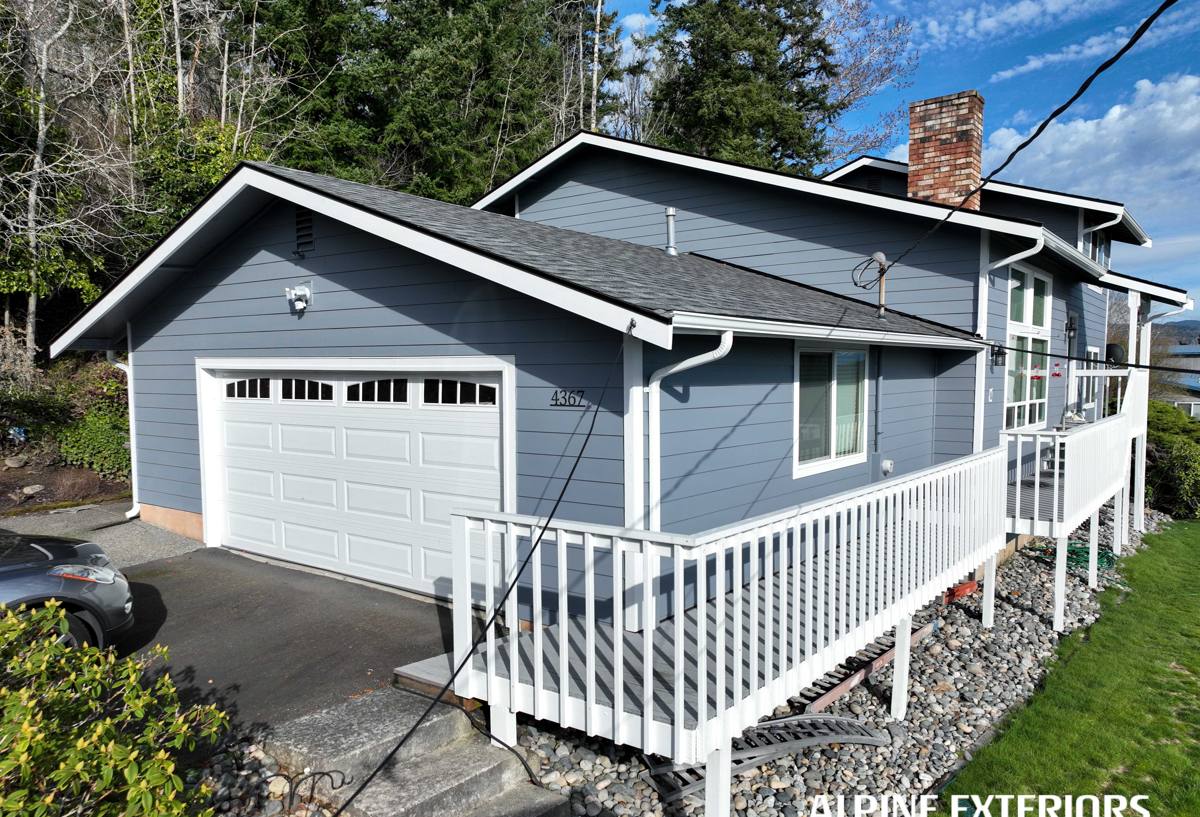
What Storm Damage Actually Looks Like on a Barkley Roof
When people think "storm damage" they picture missing shingles or a tree branch through the roof. Sometimes that's exactly it. But most of the storm-related repair calls we get in this neighborhood involve damage that's easy to miss from the ground.
Wind Damage
Wind doesn't have to be a named storm to do damage. A sustained gust event can lift the tab edge of a shingle just enough to break its seal without tearing it off. The shingle looks fine from the driveway, but the seal is broken, and the next rain gets underneath it. This is one of the most common things we find after a windy stretch — damage that's invisible until it's caused a leak.
Moss and Debris-Related Damage
Moss holds water against the shingle surface and, over time, lifts granules and shortens the life of the roofing material underneath it. During a storm, moss mats and trapped debris can dam water at valleys and behind ridge caps, forcing it sideways under the shingles instead of down and off the roof. A storm doesn't create this problem — it exposes one that was already there.
Flashing, Fasteners, and Metal Fatigue
Salt air accelerates corrosion on exposed metal — flashing around chimneys and skylights, drip edge, gutters, and even the fasteners holding everything down. A flashing joint that's been quietly corroding for a few years is far more likely to fail during a wind-driven rain event than one that's still in good shape. This is the kind of damage that causes the most confusion for homeowners, because the leak often shows up in a different spot inside the house than where the actual failure is on the roof.
What a Correct Storm Damage Repair Involves
A storm repair done right isn't just "replace what's obviously missing." It's a process that confirms the damage is fully addressed, not just patched over the visible part of it.
Full Roof Inspection, Not a Spot Check
We inspect the whole roof, not just the area you're worried about. Wind and rain rarely damage a roof in one isolated spot — if one section took a hit, it's worth checking the rest for related wear, especially on the side of the house that faces the prevailing weather.
Checking the Decking, Not Just the Shingles
If water has been getting under the roofing material for any length of time, the plywood or OSB decking underneath can be soft, delaminated, or rotted. Replacing shingles over compromised decking doesn't fix anything — it just covers the problem back up. Any legitimate repair includes checking the decking wherever there's been active water intrusion.
Matching Materials Correctly
Shingle repairs on an older roof need to account for color fade, granule wear, and the specific product line originally installed, so the patch doesn't stand out and doesn't create a mismatched wear pattern that ages differently than the rest of the roof. This matters more on a roof that still has years of life left in it — it's not worth doing a sloppy patch on a roof you're trying to get another decade out of.
Flashing and Transition Detail Work
Most leaks that get blamed on "the roof" are actually flashing failures at chimneys, skylights, valleys, and wall transitions. A proper storm repair re-seats or replaces failed flashing rather than just caulking over it. Caulk is a short-term fix at best on a flashing problem — it typically fails again within a season or two, especially with the freeze-thaw cycles Whatcom County gets in winter.
Our Process for Barkley Storm Repairs
- Call and describe what you're seeing. Even a rough description — a stain on the ceiling, a shingle in the yard, water at a light fixture — helps us know what to look for first.
- On-site inspection. We walk the roof (weather permitting) and check the attic or interior where accessible, since attic staining often tells us more than the roof surface does.
- Written estimate. You get a clear explanation of what's damaged, what caused it, and what the repair involves — no vague line items.
- Repair. We do the work, including any decking replacement or flashing correction identified during inspection, not just the original visible damage.
- Cleanup and final check. Site cleared of debris and fasteners, and we confirm the repair area sheds water correctly before we consider the job done.
Repair vs. Replacement: How We Make That Call
Not every storm-damaged roof needs to be replaced, and not every roof can be responsibly repaired. The right call depends on a handful of factors we walk through with you honestly.
| Factor | Leans Toward Repair | Leans Toward Replacement |
|---|---|---|
| Roof age | Under 15 years, or recently replaced | Already near or past expected lifespan |
| Extent of damage | Isolated to one section or slope | Widespread across multiple slopes |
| Decking condition | Solid, no rot found | Soft or delaminated decking in multiple areas |
| Moss/moisture history | Minimal prior moss buildup | Long-term moss damage across large areas |
| Material availability | Matching shingle still available | Discontinued product, poor match likely |
We'd rather tell you a repair will hold for years than sell you a replacement you don't need — and we'll also tell you plainly when a repair is just delaying an inevitable and more expensive failure.
Insurance and Storm Damage Claims
Many storm-related roof repairs in this area are covered under homeowner's insurance, particularly when there's a clear wind event or falling debris involved. We're not your insurance adjuster and won't promise a claim outcome, but we can provide a written, photo-documented damage assessment that you can submit with your claim. If you suspect storm damage after a windstorm, it's worth having that documentation on file before you decide whether to file — some damage is easy to overlook until a professional points it out.
Preventing the Next Storm from Doing the Same Damage
A repair fixes what already happened. A few maintenance habits go a long way toward keeping the next storm season from causing a repeat visit.
- Have moss treated and physically removed before it builds up a thick mat, not just after it's visible from the street
- Keep gutters and valleys clear of needles and leaf debris before the rainy season sets in
- Trim back branches that overhang the roof, since limb strikes are one of the most common causes of storm damage locally
- Get flashing checked every few years, especially around chimneys and skylights, since corrosion from salt air is gradual and easy to miss
- After any significant windstorm, do a visual check from the ground for lifted or missing shingles rather than waiting for a leak to show up inside
Why Hire a Crew That Already Works in Barkley
A roofer who works this neighborhood regularly already knows what Barkley homes tend to run into — the moss patterns on shaded, tree-lined lots, the flashing wear that shows up from salt air this close to the water, and the roof ages and material types common to the area's mix of newer and established construction. That familiarity means less time spent diagnosing and more time spent fixing the actual problem. It also means we're not learning Bellingham's weather patterns on your roof — we already know how driving rain and wind off the bay tends to expose the weak points in a roofing system, because we've seen it on the house down the street.
If you've had storm damage — or you're just not sure whether that shingle in the yard means anything — we're happy to take a look. Reach out for a free, no-pressure estimate using the form below, and we'll give you a straight answer about what your roof actually needs.