 Bellingham
 Siding Replacement in Barkley: What Bellingham's Climate Demands
Barkley sits close enough to Bellingham Bay and the surrounding wetlands that its homes take on a specific combination of weather stress: salt-tinged air moving in off the water, long stretches of driving rain through the fall and winter, and a moss season that can run half the year in shaded, north-facing spots. None of that is unusual for Whatcom County, but it adds up differently depending on what's actually nailed to the wall of your house. Siding that holds up fine in a drier inland climate can start showing problems here years ahead of schedule.
When we replace siding in Barkley, we're not just swapping old material for new — we're accounting for how water moves around the house, how much shade the walls get, and how much wind-driven rain a given elevation actually takes on. That's the difference between a replacement that looks good for a season and one that holds up for decades.
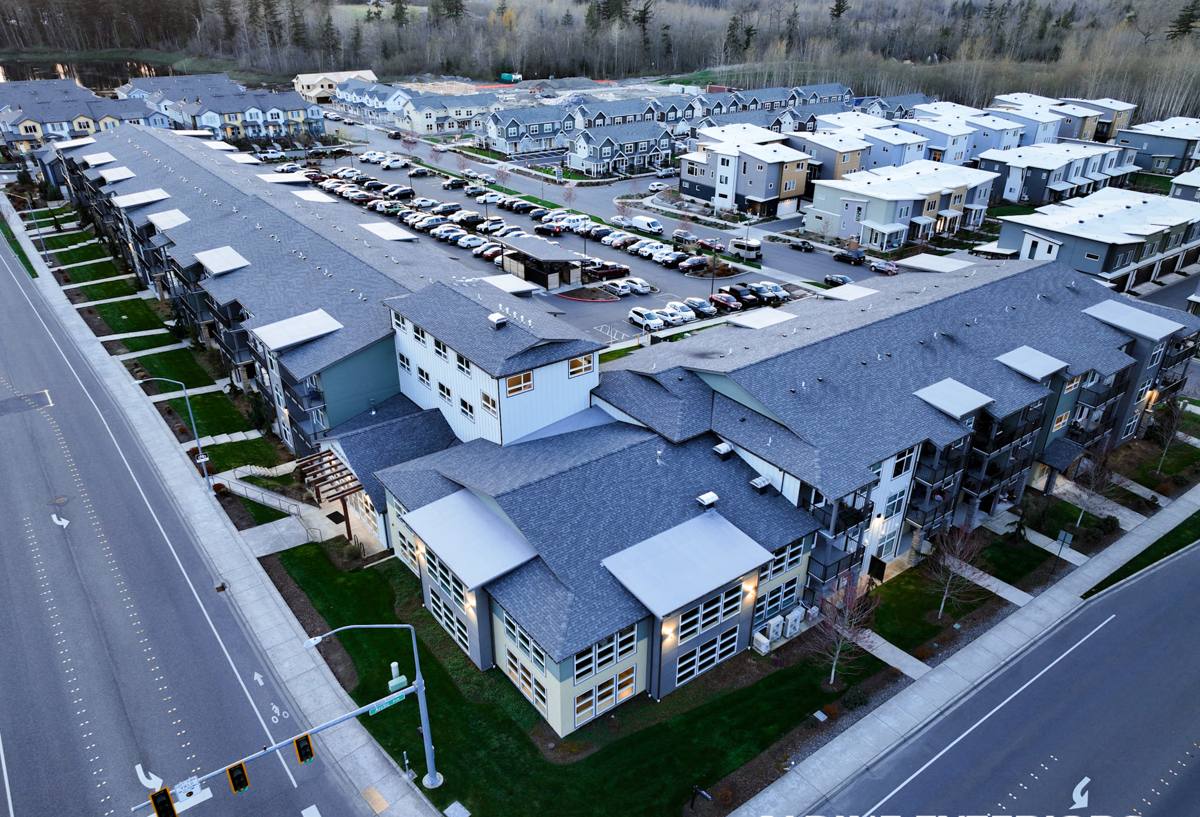
Why Siding Fails Faster in This Part of Bellingham
Salt Air and Moisture
Proximity to the bay means airborne moisture carries a light salt content, which accelerates corrosion on fasteners, flashing, and any exposed metal trim. It also means humidity levels stay elevated longer after a storm passes, which matters a lot for siding materials that absorb moisture rather than shed it.
Driving Rain
Bellingham doesn't just get rain — it gets wind-driven rain that hits siding at an angle instead of falling straight down. That pushes water into seams, laps, and butt joints that would stay dry in a calmer climate. Poorly sealed or poorly lapped siding is where driving rain finds its way behind the cladding and into the wall assembly.
Moss and Shade
Mature trees and overcast stretches keep a lot of Barkley's north- and east-facing walls shaded and damp for long periods. Moss and algae take hold on surfaces that stay wet, and once established they hold moisture against the siding surface, which shortens the life of anything that isn't dimensionally stable or properly finished.
What a Correct Siding Replacement Involves
Replacing siding well isn't just removing old boards and hanging new ones. A correct job addresses everything the siding is supposed to work with, not just the visible surface.
- Full removal of old siding and inspection of the sheathing underneath for rot, soft spots, or prior water damage
- Repair or replacement of any compromised sheathing before new material goes up
- Installation of a weather-resistive barrier (house wrap) with correctly lapped and taped seams
- Proper flashing at windows, doors, and any wall penetrations — this is where most leaks originate
- Rainscreen or furring strategy where wall conditions call for it, to let moisture drain and the wall breathe
- Correct fastener type and placement per manufacturer spec, not shortcuts
- Proper caulking and sealing at joints, with attention to expansion gaps where material requires them
- Final inspection of all trim, corners, and transitions before the crew leaves the site
Skip any one of these steps and the siding itself becomes almost irrelevant — water will find the gap. This is why we treat the tear-off and prep work as seriously as the siding install itself.
Why We Only Install James Hardie Fiber Cement
We don't install vinyl, LP SmartSide, primed wood, cedar, or other fiber cement brands. That's a deliberate standard, not a sales pitch, and it comes down to what actually performs in a climate like this one.
James Hardie fiber cement is non-combustible, dimensionally stable, and engineered specifically for climate zones like the Pacific Northwest through its HZ5 product line. It doesn't swell, warp, or rot the way wood-based products can when they take on repeated moisture exposure. The factory-applied ColorPlus finish is baked on under controlled conditions, which gives it far better resistance to fading and moisture intrusion at the surface than field-applied paint — an important detail in a climate where paint has to fight both UV and constant damp.
Vinyl siding can work loose, warp in heat, and crack in cold, and it relies heavily on trim and J-channel details that are common leak points if not installed with care. Wood and primed spruce products need consistent maintenance — recaulking, repainting, moss treatment — to keep water out, and in a shaded, damp neighborhood like Barkley that maintenance schedule gets demanding fast. We'd rather put a product on your home that doesn't ask for that level of upkeep to perform as intended.
Hardie also carries a strong transferable warranty, which matters if you sell the home — a real asset in a market where buyers are increasingly asking what the siding is and how old it is.
Material Comparison at a Glance
| Factor | James Hardie Fiber Cement | Vinyl | Wood / Primed Spruce |
|---|---|---|---|
| Moisture resistance | Excellent, engineered for wet climates | Good, but seams are vulnerable | Poor without ongoing maintenance |
| Moss/algae resistance | High, dense non-organic material | Moderate | Low, organic surface feeds growth |
| Fire rating | Non-combustible | Combustible | Combustible |
| Finish durability | Factory-baked ColorPlus finish | Molded-in color, can fade/chalk | Field-applied paint, needs recoating |
| Maintenance | Low — periodic wash | Low, but repairs are visible | High — regular paint/caulk/treatment |
| Warranty | Strong, transferable | Varies by manufacturer | Limited or none on material |
Our Process for a Barkley Siding Replacement
Every project starts with an on-site assessment, not a phone estimate. We want to see the specific exposure your home has — how much sun and shade it gets, which walls take the worst of the driving rain, and whether there's any existing moisture damage behind the current siding. From there:
- On-site inspection and measurement, including a look at sheathing condition where accessible
- A written estimate that lays out material, prep work, and timeline — no vague allowances
- Scheduling built around Bellingham's wet season, so tear-off and dry-in happen efficiently
- Full tear-off, sheathing repair as needed, and correct weather barrier and flashing installation
- James Hardie installation to manufacturer spec, including fastener schedule and clearances
- Final walkthrough so you know exactly what was done and what to expect from the material going forward
Why a Crew That Already Works Barkley Matters
Barkley isn't a generic subdivision — it has its own mix of tree cover, elevation, and exposure that varies block to block. A crew that's already worked in this neighborhood knows which walls tend to hold moss, which lots sit in more wind, and how the local moisture patterns actually play out over a year, not just on the day of the estimate. That local knowledge shapes decisions like where extra flashing attention is warranted or whether a rainscreen approach makes sense for a particular elevation.
It also means faster, more accurate estimates. We're not guessing at what Whatcom County weather does to a wall assembly — we've seen it firsthand on homes near yours.
Signs Your Siding Needs Replacing, Not Patching
- Soft or spongy spots when you press on the siding
- Visible warping, buckling, or gaps between boards or panels
- Persistent moss or algae that returns quickly after cleaning
- Paint that's peeling or bubbling rather than just fading
- Interior signs of moisture — musty smell, staining, or soft drywall near exterior walls
- Siding that's original to a home built before modern weather-resistive barrier standards were common
If you're seeing one or two of these, a repair might still make sense. If you're seeing several at once, or the siding is original and decades old, replacement is usually the more cost-effective path — patching aging material rarely stops the underlying moisture problem.
What Affects the Cost of a Siding Replacement
| Cost Factor | Why It Matters |
|---|---|
| Home size and wall complexity | More corners, dormers, and trim details mean more labor and material cuts |
| Sheathing condition | Rot or water damage found during tear-off adds repair scope before siding can go up |
| Siding profile and accessories | Lap width, trim style, and corner details affect material cost |
| Access and site conditions | Tight lots, tree cover, or multi-story sections affect labor time |
| Existing moisture barrier | Homes needing a full new weather-resistive barrier take longer than those with a sound existing layer |
We won't know your specific numbers until we've actually looked at the house — anyone quoting a firm price without an on-site visit is guessing, and guesses tend to turn into change orders later.
If your Barkley home is due for a siding replacement, we'll come take a look, walk you through what we find, and put together a straightforward estimate — no pressure, no obligation. The form below is the easiest way to get started.