 Bellingham
 Siding Built for Barkley's Particular Kind of Wet
Barkley sits close enough to Bellingham Bay and the surrounding wetlands that its homes deal with a specific combination of weather stresses: salt-tinged air drifting in off the water, long stretches of driving rain that come sideways off Pacific storms, and a moss season that can run eight or nine months out of the year on shaded north- and east-facing walls. None of these things alone is unusual for Western Washington. Together, over years, they're hard on a house's exterior in ways that show up slowly — a soft spot behind a downspout, a paint film that's failed on the shady side of the garage, a bottom course of siding that's swollen even though the rest of the wall looks fine.
We install James Hardie fiber cement siding exclusively, and we've done enough work in and around Barkley to know which walls on a typical lot take the brunt of it. This page is about what that actually means for a siding job here — not a general pitch for Hardie, but the specifics of doing it right on a home in this neighborhood.
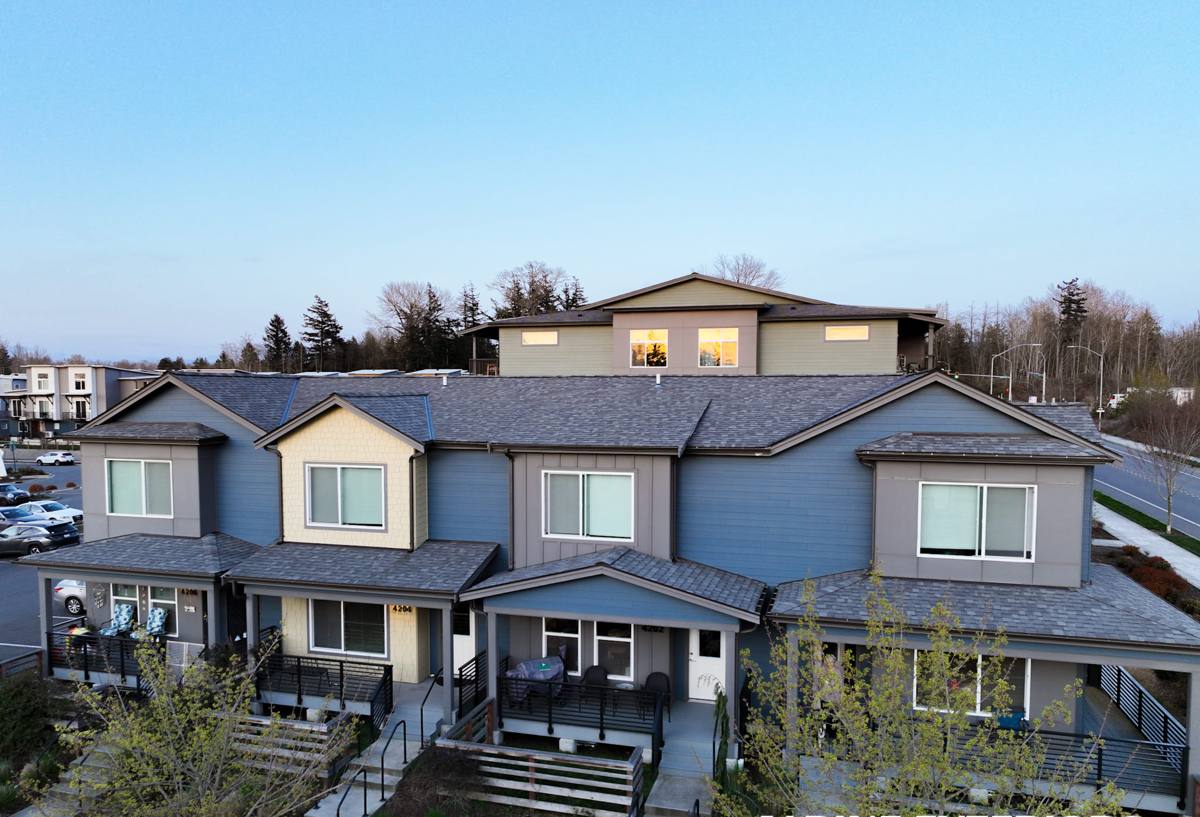
What Whatcom County Weather Actually Does to Siding
Salt Air and Slow Corrosion
Bellingham isn't a heavy salt-fog environment the way some outer-coast towns are, but Barkley's proximity to the Bay still means a measurable amount of salt-laden moisture reaches exterior surfaces over time, especially on west- and southwest-facing elevations that catch weather coming off the water. Salt air accelerates corrosion on fasteners, flashing, and any exposed metal trim. It also has a way of finding weak points in paint films faster than dry inland air does, which is part of why we care so much about factory-applied finishes rather than field-painted ones.
Driving Rain and Wall Assemblies
Storms here don't just drop rain straight down — wind-driven rain hits walls at an angle, which means water works its way behind trim, into laps, and around penetrations if the assembly underneath isn't detailed correctly. A siding product can be excellent and still fail on a home if the water-resistive barrier, flashing, and drainage plane behind it are wrong. This is a bigger factor in how long a siding job lasts than most homeowners realize, and it's independent of which brand of siding goes on top.
Moss and Shaded Elevations
Barkley's mature landscaping and tree cover are part of what makes the neighborhood attractive, but the same shade that keeps a yard cool also keeps north and east walls damp for days after a storm. Moss and algae take hold on any surface that stays wet, and once established they hold moisture against the wall surface, which is exactly the condition that rots wood-based siding and delaminates lower-grade composites from the inside out.
Why We Only Install James Hardie
We made a decision as a company to stop installing wood-based and composite sidings — cedar, primed spruce, LP SmartSide, vinyl, and other fiber cement brands like Cemplank or Allura — and install James Hardie exclusively. That's not a marketing position, it's a practical one built on what we've seen happen to those products in exactly this climate.
- Cedar and primed spruce are wood. Wood absorbs moisture, and in a climate with this much sustained dampness, that means ongoing maintenance — repainting, caulking, and eventually board replacement — on a schedule most homeowners underestimate when they buy.
- LP SmartSide is an engineered wood product with real strengths, but it's still wood-based at its core, which means it shares wood's sensitivity to sustained moisture exposure at cut edges and butt joints if installation isn't precise.
- Vinyl siding is affordable and low-maintenance in some climates, but it's a thin plastic product that can warp in temperature swings, doesn't hold paint if you ever want a different color, and doesn't offer the impact resistance or fire performance of fiber cement.
- Other fiber cement brands use the same basic cement-and-cellulose chemistry as Hardie, but James Hardie engineers its HZ5 product line specifically for the Pacific Northwest's moisture-heavy climate, and backs it with a warranty structure and factory finish system we trust more than the alternatives.
James Hardie is non-combustible fiber cement — it won't ignite, warp from heat, or provide fuel in a wildfire ember exposure, which matters more each year as regional fire seasons intensify. It holds paint (or in most cases never needs painting at all, thanks to the factory finish) far better than wood over the long run, and it's engineered specifically to resist the moisture cycling that defines a Bellingham winter.
ColorPlus Finish: Why It Matters More Here Than Elsewhere
James Hardie's ColorPlus Technology is a factory-applied, baked-on finish rather than a coat of paint applied on site or in the field after installation. In a climate with this much cumulative rain exposure, that distinction is significant. Field-applied paint has to cure in whatever weather window is available, and it bonds to a cut or textured board face that isn't always ideal for adhesion. A factory finish is cured under controlled conditions before the boards ever leave the plant, which gives it a more consistent, durable bond — and it comes with its own dedicated finish warranty separate from the product warranty. For a home in Barkley that's going to face nine months of damp weather a year, that finish integrity is one of the biggest practical differences between a fiber cement job that looks good for five years and one that looks good for twenty-five.
Choosing the Right Hardie Product Line for a Barkley Home
James Hardie makes several distinct siding profiles, and the right choice depends on the home's style and exposure, not just personal taste.
| Product | Profile | Best fit for Barkley homes |
|---|---|---|
| HardiePlank | Horizontal lap siding | Most common choice — traditional look, wide color range, works on nearly every home style in the neighborhood |
| HardieShingle | Staggered or straight-edge shingle panels | Good for homes wanting a Craftsman or cottage look without the moisture risk of real cedar shingles |
| HardiePanel | Vertical panel siding | Common as an accent on gables or modern-style homes; often paired with lap siding below |
| HardieTrim | Trim boards | Used around windows, corners, and fascia — keeps the whole exterior in one consistent, non-wood material |
We also spec HZ5, the zone-engineered version of the HardiePlank and HardieShingle product lines built for wetter, more variable climates like ours, rather than a generic national product. It's a small distinction on paper but it reflects the same climate-specific thinking that drives most of our recommendations on a Barkley job.
What a Correct Installation Actually Involves
The siding itself is only part of the job. Most siding failures we get called to look at — regardless of brand — trace back to installation details, not the product. On every Barkley project we follow the same core sequence:
- Full removal of the old siding and inspection of the sheathing underneath for existing rot or moisture damage, especially around window openings and the lower wall courses closest to grade.
- Repair or replacement of any compromised sheathing before anything new goes on — covering damaged sheathing with new siding just hides a problem that keeps getting worse.
- Installation of a code-compliant water-resistive barrier with correctly lapped seams, so water is shed downward and outward rather than trapped behind the cladding.
- Proper flashing at every penetration — windows, doors, hose bibs, vents, and electrical fixtures — since these are the most common entry points for wind-driven rain.
- Correct fastener spacing, nailing pattern, and butt-joint treatment per James Hardie's published installation specifications, which is also what keeps the manufacturer's warranty valid.
- Careful attention to clearance at grade, decks, and patios — Hardie siding needs a minimum gap above hard surfaces and soil to avoid wicking moisture, a detail that's easy to get wrong on additions or lower-level walls.
James Hardie's warranty coverage depends on the product being installed to their written specifications. A crew that cuts corners on flashing or nailing pattern can void that coverage even while using genuine Hardie product — which is part of why who installs the siding matters as much as which siding you choose.
Why a Crew That Already Works Barkley Is Worth Something
Barkley isn't a uniform tract of identical houses. Lot sizes, tree cover, and sun exposure vary block to block, and that variation changes how a house should be detailed. A crew that's already worked in the neighborhood has a feel for which elevations need extra attention to drainage, which lots tend to hold moisture longer into spring, and how the Bay-adjacent wind pattern tends to load rain onto specific wall faces. That's not something you can fully substitute with a generic installation manual — it comes from having stood on ladders on these particular streets in these particular conditions.
There's also a simpler, practical benefit: a local crew with a track record in the area is easier to hold accountable and easier to reach if a warranty question comes up five or ten years down the road. Siding is a long-duration product; who you hire should be someone still doing business in Whatcom County when you need them.
Signs a Barkley Home May Need Siding Attention Now
- Soft, spongy, or discolored siding, especially near the bottom courses or below windows
- Persistent moss or dark streaking on north- or east-facing walls that pressure washing only temporarily removes
- Paint that's peeling, bubbling, or chalking unevenly across the wall
- Visible gaps, warping, or separation at siding seams and corner boards
- Rising energy bills that may point to a wall assembly no longer sealing properly
- Siding that was installed directly against grade, a deck, or a patio with little to no clearance
Any one of these on its own might be minor. Several together, especially on a home that's had its original siding for fifteen-plus years, usually means it's worth a real inspection rather than another round of touch-up paint.
What the Process Looks Like
We start with an on-site walkthrough of the home, looking at every elevation, not just the obviously damaged ones, since Barkley's mixed sun and shade exposure often means one side of a house is in far worse shape than the others. From there we put together a written scope covering product line, color, trim details, and an honest read on whether sheathing repair is likely to be needed once the old siding comes off. We don't add work that isn't warranted, and we don't hide the possibility of finding hidden rot behind existing siding — it happens often enough in this climate that it's worth planning for rather than treating as a surprise change order.
If you're weighing a siding replacement for a home in Barkley, we're glad to come take a look and give you a straightforward, no-pressure estimate — no obligation, just an honest assessment of where your exterior actually stands.