 Bellingham
 Siding Repair in York: What Whatcom County Weather Does to a Wall
York sits close enough to Bellingham Bay and the Salish Sea that homes here deal with a specific combination of stresses most inland siding never sees: salt-laden air, wind-driven rain that gets pushed sideways into wall assemblies, and a moss season that runs long and wet for most of the year. None of these problems show up overnight. They accumulate — a little bit of moisture intrusion here, a little bit of coating breakdown there — until a homeowner notices a soft spot, a stain, or a panel that's started to bow. Siding repair in this climate isn't just about patching what's visible. It's about understanding why that spot failed in the first place, because the same conditions that caused it are still sitting on that wall every day.
We work on siding repairs throughout the York area regularly, which means we're not guessing at how Whatcom County weather behaves on a wall — we're looking at it in person, year-round, on homes with the same exposure.
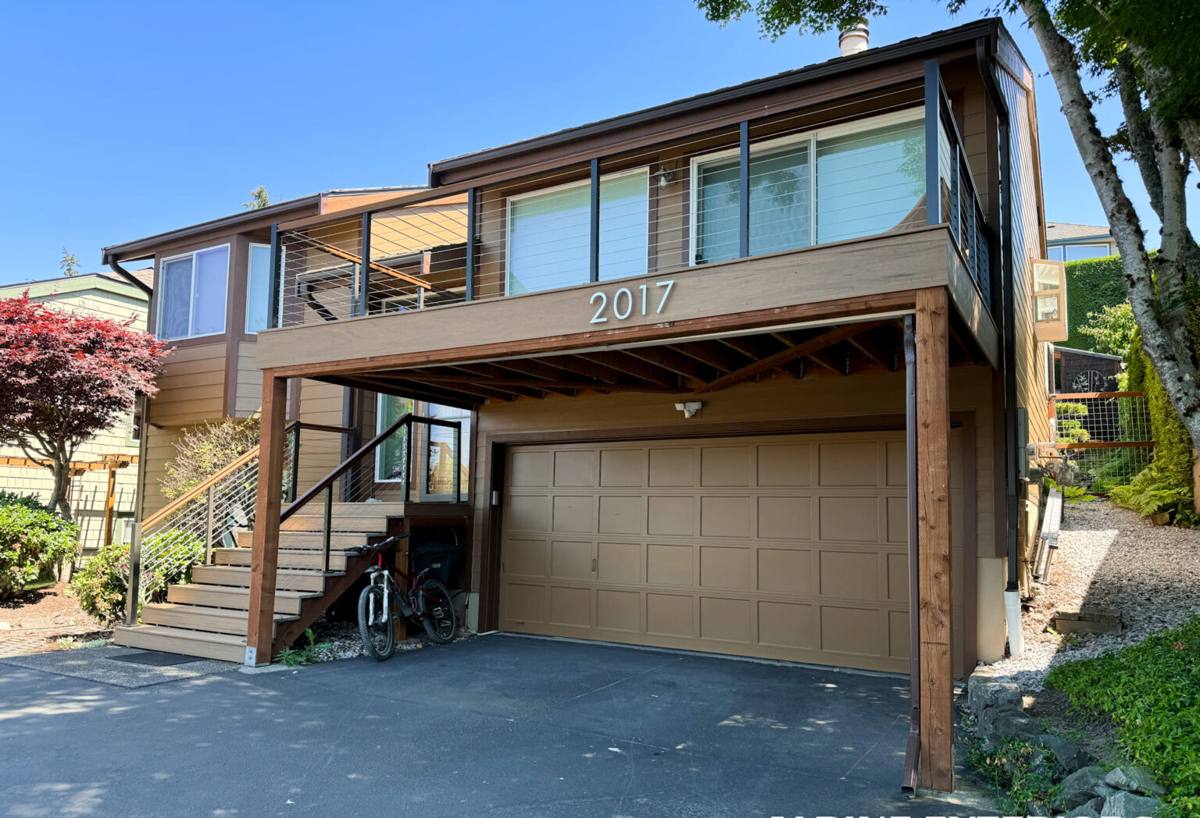
Why Repairs Happen Here More Than People Expect
Salt Air and Coating Breakdown
Proximity to saltwater accelerates the breakdown of paint films and caulk joints faster than most homeowners assume. Salt is hygroscopic — it pulls moisture out of the air and holds it against a surface — which means painted wood and lower-grade composite siding in near-coastal neighborhoods like York tend to show chalking, peeling, and edge deterioration sooner than the same products would inland. Once a coating fails, the substrate underneath is exposed to every rain event that follows.
Driving Rain and Wall Penetration
Bellingham doesn't just get a lot of rain — it gets a lot of wind-driven rain, which behaves very differently than a straight vertical downpour. Wind-driven rain gets pushed up and under lap joints, into unsealed seams, and around fasteners and trim penetrations that would stay dry in calmer weather. This is why so many of the repair calls we get in this area aren't about a big obvious hole — they're about a small point of entry that let water track behind the siding for a season or two before anyone noticed the damage.
Moss, Shade, and Moisture Retention
York's tree cover and the region's long wet season together create ideal moss and algae conditions on north-facing and shaded wall sections. Moss holds moisture directly against the siding surface for extended periods, which is a slower but very real contributor to rot in wood-based products and to premature coating failure on painted surfaces. A wall that stays damp longer than it should is a wall that ages faster than it should.
What a Correct Siding Repair Actually Involves
A repair that only addresses the visible symptom tends to fail again within a year or two. A repair done right follows a sequence:
- Find the actual water path. The damaged panel is rarely the only place water got in. We check the flashing, the seams above and below the damage, and any trim or penetration nearby before deciding what needs to come off.
- Open it up and check the sheathing. If water has been getting behind the siding, the wall sheathing and house wrap underneath need to be inspected — patching over a wet or compromised substrate just hides the problem for a while.
- Address the water source, not just the hole. That might mean re-flashing a window, resealing a joint, or correcting a clearance issue where siding is sitting too close to grade or a deck surface.
- Match the repair to the existing material correctly. Fiber cement, wood, and composite products all handle patch repairs differently — cutting, fastening, and sealing methods aren't interchangeable between them.
- Finish with the right sealants and coatings. A repair that isn't sealed and finished to the same standard as the surrounding wall will weather differently and stand out — both visually and functionally.
Repair vs. Replacement: An Honest Read
Not every damaged section needs full replacement, but not every repair is worth doing either. Here's how we actually think through it on a York-area home:
| Situation | Usually Repairable | Usually Points to Replacement |
|---|---|---|
| Damage location | Isolated to one or two panels/sections | Spread across multiple walls or the whole elevation |
| Cause | Single identifiable event (impact, one failed seal) | Systemic moisture intrusion or long-term coating failure |
| Substrate condition | Sheathing and framing still sound underneath | Soft, delaminating, or visibly rotted sheathing found on inspection |
| Siding material | Fiber cement or sound wood in otherwise good shape | Aging LP SmartSide, vinyl, or wood siding nearing the end of its service life |
| Age of siding | Well within expected service life | Already past or near the manufacturer's practical lifespan |
If we open a wall for a repair and find the damage is more extensive than expected, we'll tell you plainly — including when it makes more financial sense to plan for replacement of that wall section (or the whole exterior) rather than chase repairs on a product that's failing systemically.
A Note on Siding Materials We See in Repair Calls
We install James Hardie fiber cement siding exclusively — we don't install LP SmartSide, vinyl, Cemplank, Allura, primed spruce, or cedar. But repair calls bring us onto homes with all of those materials, and it's worth being straight about what we see:
Wood-based composite sidings like LP SmartSide can perform well when the coating and caulking are maintained on schedule, but in a climate with York's rain exposure and moss pressure, any lapse in that maintenance opens the door to moisture wicking into the engineered wood substrate — and once that starts, it tends to spread along the panel rather than stay isolated to one spot. Vinyl siding doesn't rot, but it can crack, warp, or pull away from fasteners with age and temperature cycling, and damaged sections are often discontinued colors that are hard to match. Cedar and primed spruce are attractive but demand real upkeep — repainting, caulk renewal, and moisture management — to hold up against near-coastal weather.
James Hardie fiber cement is engineered specifically to resist moisture, doesn't support rot, and is non-combustible. When we do repair work on a Hardie-sided home, the patch process is more forgiving because the material itself isn't the weak point — the failure, when there is one, is almost always at a seam, flashing detail, or fastener, not the panel itself. That's a meaningfully different repair job than patching a substrate that's already breaking down.
Our Repair Process
When you call us for a siding repair in York, here's what to expect:
- An on-site inspection where we look at the damaged area and the surrounding wall assembly — not just the spot you called about
- A plain explanation of what caused the damage, not just what it looks like
- A written scope that separates "repair now" from "keep an eye on" so you know what's urgent
- Material-appropriate repair methods matched to what's actually on your wall
- A finished repair that's sealed, coated, and blended as closely as possible to the surrounding siding
- Straight talk if a section has moved past the point where repair is the smart long-term call
Signs a York Homeowner Shouldn't Ignore
A quick self-check before you call anyone:
- Soft or spongy spots when you press on the siding with your palm
- Dark staining or streaking below seams, trim, or window flashing
- Visible gaps, cracks, or separated joints, especially after a windy rain event
- Persistent moss or algae growth that keeps coming back after cleaning
- Peeling or bubbling paint concentrated in one area rather than spread evenly
- Any musty smell near an exterior wall from inside the house
Catching any of these early is almost always cheaper and less invasive than waiting until the damage is obvious from the street.
Why Local Repair Experience Matters
Siding repair isn't a generic skill — the right approach depends heavily on what the local climate is doing to that specific wall. A crew that mostly works dry, inland jobs won't have the same instinct for wind-driven rain paths, salt-air coating failure, or moss-related moisture retention that a crew working York and the rest of Whatcom County day in and day out will have developed. We know where water tends to find its way in on homes built for this specific stretch of coastline, and that shapes how we inspect, how we scope the repair, and where we tell you to keep watching even after the visible fix is done.
Get a Straightforward Look at Your Siding
If you're seeing signs of damage on your York-area home, or you just want an honest opinion on whether a section is repairable or heading toward replacement, we're glad to take a look. Reach out for a free, no-pressure estimate — the form below gets you started.