 Bellingham
 Deck Building for Lynden Homes
Lynden sits in dairy and berry country on the edge of Whatcom County, and the decks that hold up here are built a little differently than decks in a dry climate state. We build and repair decks throughout the Bellingham area, including Lynden, and the single biggest factor in how long a deck lasts isn't the wood species or the fastener brand — it's whether the person who built it actually accounted for how much water this region sees and how long that water sits before it dries out.
A deck that looks identical to one built in Arizona will not perform the same way here. Ours are built with that difference in mind from the footings up, not patched later once moss and soft spots show up.
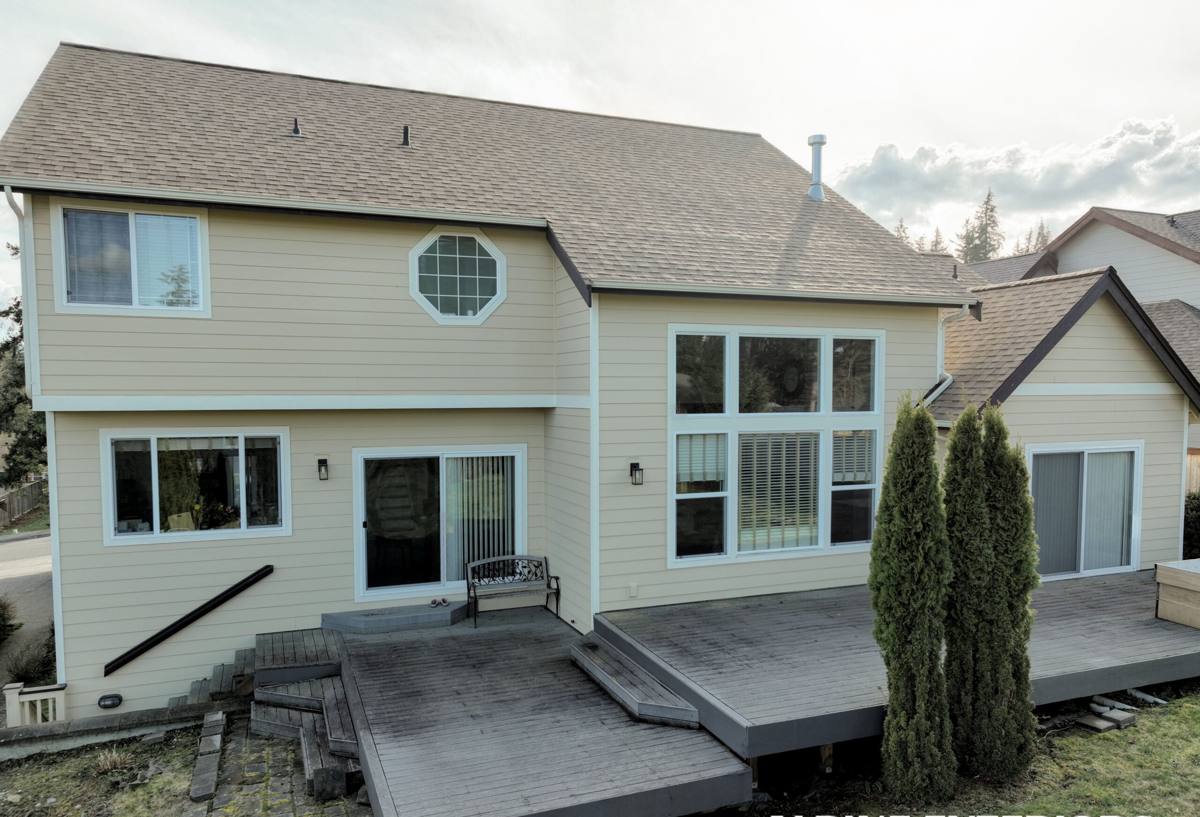
What Whatcom County Weather Does to a Deck
Northwest Washington gets long stretches of low-intensity rain punctuated by driving, wind-blown storms that push moisture sideways into places a dry-climate deck was never designed to shed. Add the region's mild temperatures and low sun angle for much of the year, and you get surfaces that stay damp for days at a time. That combination is exactly what moss, algae, and wood rot need to establish.
The Three Things Fighting Your Deck Year-Round
- Moisture retention: Long moss season means shaded boards, ledger boards, and joists can stay wet for weeks in fall and winter, not just after a single storm.
- Wind-driven rain: Rain that hits at an angle gets forced into board gaps, fastener holes, and the house-to-deck connection — areas a lot of builders treat as an afterthought.
- Salt air and coastal moisture: The broader Bellingham region sits close enough to Puget Sound that airborne moisture carries salt content, which accelerates corrosion on hardware that isn't rated for it.
None of this means a deck can't last decades here — it means the build has to treat drainage and fastener choice as structural decisions, not finishing touches.
Choosing the Right Decking Material for This Climate
There's no single "best" decking material — there's a best material for your budget, your maintenance appetite, and how much shade and moisture your specific yard holds onto. We walk every Lynden homeowner through the honest trade-offs before a single board is ordered.
| Material | Upfront Cost | Moisture & Moss Resistance | Maintenance | Typical Lifespan Here |
|---|---|---|---|---|
| Pressure-treated lumber | Lowest | Good if sealed and re-sealed regularly | Annual cleaning, re-sealing every 1-2 years | 15-20 years with upkeep |
| Cedar | Mid-range | Naturally rot-resistant, still needs sealing in shaded areas | Cleaning and oil/sealant every 1-2 years | 15-25 years with upkeep |
| Composite decking | Higher | Excellent — doesn't absorb water or feed rot | Periodic washing, no sealing or staining | 25-30+ years, manufacturer-backed |
| PVC decking | Highest | Excellent — fully synthetic, no organic material for moss | Washing only | 25-30+ years, manufacturer-backed |
Composite and PVC cost more up front but remove the maintenance cycle that wood requires in a wet climate — that's the real trade-off, not one product being "better" in every sense. For homeowners who want the look and feel of real wood and are willing to keep up with sealing, cedar and PT lumber are still solid, honest choices when detailed correctly underneath.
What We Won't Do
We don't install decking directly over unventilated, low-clearance ground contact, and we don't skip flashing at the ledger board to save time. Both shortcuts are common causes of the rot and structural failures we get called out to repair, and both are avoidable with proper planning at the framing stage.
Substructure and Drainage: Where Decks Actually Fail
Most deck failures don't start at the surface boards — they start underneath, where nobody looks until there's a soft spot or a sag. In a climate like this, the substructure is doing the real work of keeping water moving instead of pooling.
Ledger Board Flashing
The connection where a deck attaches to the house is the single most common source of hidden rot. Proper flashing — installed in the correct order relative to the house's siding or sheathing — keeps wind-driven rain from tracking behind the ledger and into the rim joist. This is the one detail we never shortcut, because it's the hardest one to fix after the fact without tearing the deck apart.
Joist Protection and Airflow
Joists and beams need a moisture barrier or protective tape on top, and enough clearance underneath for air to actually move. A deck built low to the ground with poor ventilation traps humid air against the framing all winter — a slow, steady setup for rot even if the visible boards look fine.
Footings for This Ground
Frost depth and soil drainage vary across Whatcom County depending on soil type and how well a given lot drains. Footings need to be sized and set to local code requirements, not guessed at — undersized or shallow footings are a common source of deck movement over time, especially on lots with heavier clay soils that hold water.
Fasteners and Hardware
Given the regional moisture and airborne salt content, hardware choice matters more here than in a drier inland climate. Standard galvanized fasteners can start showing corrosion streaks within a few years in exposed, damp conditions. We use stainless steel or coated fasteners rated for the level of exposure the deck will actually see, and we match structural connectors — joist hangers, post bases, ledger bolts — to the same standard. Mismatched metals at a connection point can also accelerate corrosion through galvanic reaction, which is an easy mistake to make and an easy one to avoid with the right planning up front.
Our Deck-Building Process
- On-site assessment: We look at drainage, sun exposure, shade patterns, and how the deck will tie into the house before recommending a material or layout.
- Design and material selection: We walk through the honest cost, maintenance, and lifespan trade-offs for your specific lot — not a one-size-fits-all pitch.
- Permitting: We handle the permit application and inspection scheduling with the local jurisdiction so it's built to code from the start.
- Framing and flashing: Footings, ledger flashing, joists, and structural connections go in first, built to shed water rather than trap it.
- Decking and finishing: Boards, railing, and any stairs go on last, spaced and fastened for the material you chose.
- Final walkthrough: We go over care and maintenance expectations for your specific decking material before we call the job done.
Permits and Local Code Considerations
Most decks above a certain height or attached to the primary structure require a permit in Whatcom County and within Lynden's jurisdiction, and inspections typically happen at the footing stage and again once framing is complete. Skipping this step is a real liability — an unpermitted deck can complicate a home sale down the line and won't have had an independent set of eyes confirm the footings and structural connections were done correctly. We build the permit process into the timeline from the start rather than treating it as an obstacle.
Seasonal Maintenance Checklist for Lynden Decks
Whatever material your deck is built from, a little seasonal attention goes a long way in this climate. This is the routine we recommend to homeowners after a build:
- Sweep leaves and debris off the deck regularly in fall — trapped organic matter holds moisture and feeds moss growth
- Check gaps between boards each spring and clear out any buildup that's blocking drainage
- Inspect the ledger board area yearly for any staining, soft wood, or gaps in flashing
- Wash composite or PVC decking once or twice a year to remove pollen, algae film, and grime
- Re-seal or oil wood decking every 1-2 years, sooner if boards start graying or absorbing water quickly
- Look under the deck once a year for standing water, sagging joists, or signs of pest activity
- Clear moss off railings and stair treads promptly — it's a slip hazard as much as a maintenance issue
Why a Crew That Already Works in Lynden Matters
Deck framing details that work fine in a dry climate can fail within a few years here, and a crew that hasn't built through several wet Whatcom County seasons doesn't always know that until a callback shows up. We've built and repaired decks across the Bellingham area, including Lynden, and we know which framing shortcuts show up as problems two or three winters later — because we're the ones who get the repair calls when someone else took them. That local track record shapes how we detail every ledger connection, every footing, and every fastener choice before the first board goes down, not after.
We're also familiar with the local permitting process and inspection expectations for this area, which keeps the project moving instead of stalling on paperwork we haven't dealt with before.
Get a Free, No-Pressure Estimate
If you're planning a new deck or replacing one that's showing its age, we're happy to come take a look, walk the site with you, and give you an honest read on materials and cost — no pressure, no obligation. Use the form below to get started.