 Bellingham
 Why Edgemoor Windows Wear Out Differently Than Windows Inland
Edgemoor sits close enough to the water that salt air is a real factor in how building materials age here, not just a coastal talking point. Salt-laden air accelerates corrosion on window hardware, fasteners, and metal flashing faster than the same products would wear in a drier, inland part of Whatcom County. Add in Bellingham's long stretch of driving rain — wind-driven, not just falling straight down — and you have moisture that gets pushed sideways into gaps that a typical window installation in a calmer climate might get away with ignoring.
Then there's moss season, which in this part of Washington isn't really a season so much as most of the year. Shaded, wooded lots common in Edgemoor keep siding and trim damp longer after a rain, and that moisture-friendly environment is exactly what lets rot get started around a window opening that wasn't properly flashed or sealed in the first place. None of this means Edgemoor is a bad place for windows — it means the installation has to account for conditions that a generic national playbook doesn't fully address.
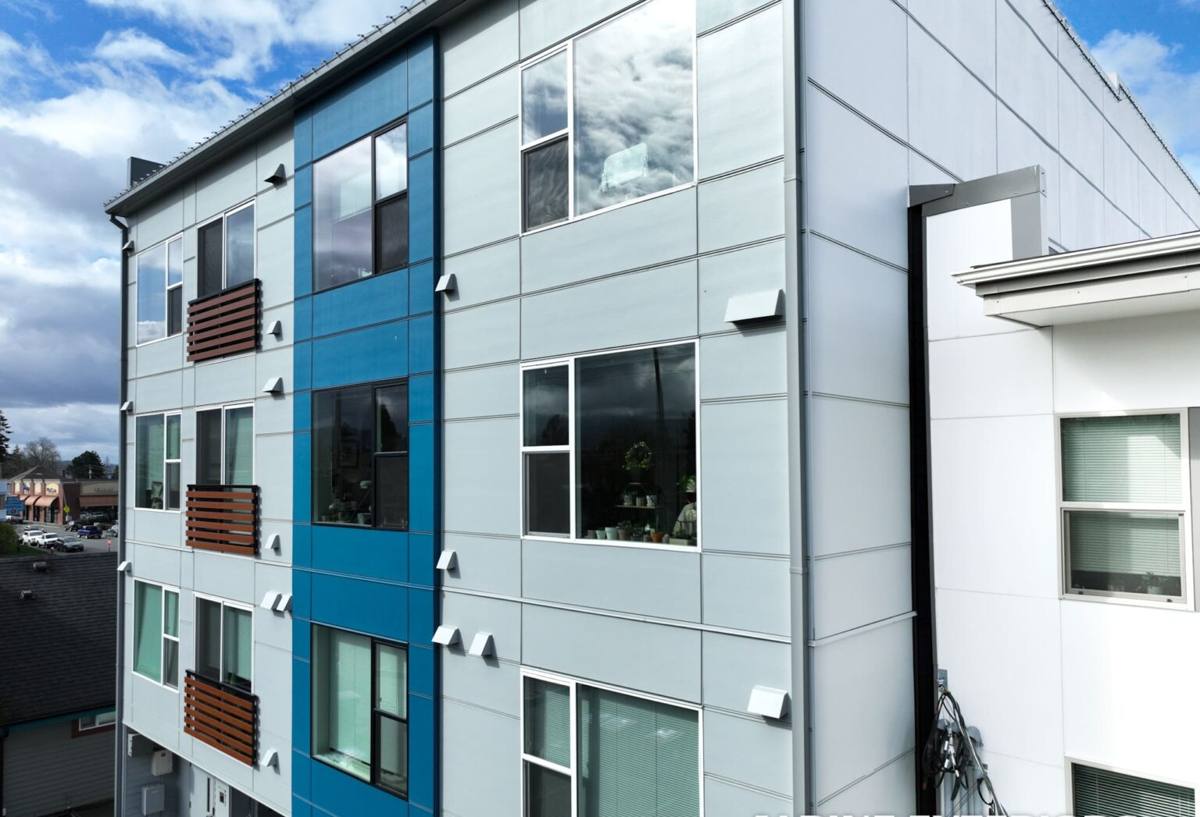
What "Correct" Actually Means for a Window Install Here
A window installation can look fine from the curb and still fail within a few years if the details underneath aren't right. In this climate, the parts that matter most are the parts you can't see once the trim goes back on.
Flashing and Water Management
Every window opening needs a drainage path so that any water that does get past the outer seal has somewhere to go besides your wall framing. That means proper sill pan flashing, correctly lapped house wrap or building paper, and head flashing that sheds water outward rather than trapping it. On a home taking driving rain off the water, skipping or shortcutting this step is the single most common cause of hidden rot we get called out to fix.
Air Sealing and Insulation
The gap between the window frame and the rough opening needs to be sealed and insulated correctly — not stuffed with fiberglass and forgotten, and not overfilled with expanding foam that can bow the frame. Done right, this step cuts drafts and helps with energy bills, but its bigger job in this climate is keeping moist air from condensing inside the wall cavity.
Fasteners and Hardware
Given the salt air exposure closer to the water, we pay attention to fastener and hardware material, favoring corrosion-resistant options over whatever is cheapest. It's a small line item that has an outsized effect on how the window operates five and ten years down the road.
Choosing a Window Type for a Salt Air, High-Rain Climate
There's no single "best" window for every Edgemoor home — it depends on your home's age, exposure, and budget. But some materials and configurations hold up more predictably than others under these specific conditions.
| Frame Material | How It Handles This Climate | Maintenance |
|---|---|---|
| Vinyl | Good moisture and corrosion resistance; performs consistently near salt air | Low |
| Fiberglass | Very stable in temperature and moisture swings; strong option for exposed sites | Low |
| Aluminum | Durable but prone to corrosion over time in salt air unless properly coated | Moderate |
| Wood (unclad) | Classic look but needs consistent upkeep to resist Bellingham's moisture and moss | High |
| Wood-clad | Wood interior with a protective exterior shell; balances appearance and durability | Moderate |
We're candid with homeowners about trade-offs rather than steering everyone toward one product. If you love the look of real wood windows, that's a legitimate choice — you just need to go in knowing the maintenance commitment that comes with it in a climate like this one. If low maintenance is the priority, vinyl or fiberglass are usually the more honest recommendation for a wooded, shaded Edgemoor lot.
Signs Your Current Windows Are Already Failing
Homeowners often call us after noticing one of these, not realizing how long the underlying problem may have been developing:
- Fogging or condensation between panes on double- or triple-glazed units — a sign the seal has failed
- Soft or discolored trim and sill areas around the window, especially on north- or west-facing walls
- Windows that are difficult to open, close, or lock — often a sign the frame has shifted or swollen
- Visible moss or dark staining building up on the exterior trim near the window opening
- Noticeable drafts or a cold band of air near the window even when it's fully closed
- Peeling or bubbling paint on interior trim, which can point to moisture working its way in from outside
Any one of these on its own isn't necessarily an emergency, but a few of them together, especially on an older window, is usually a sign that a repair patch is only buying time.
Our Installation Process
We keep the process straightforward because the value is in the details, not in complexity for its own sake.
- On-site assessment. We look at your existing windows, the surrounding siding and trim, and any signs of moisture or rot before recommending anything.
- Honest scope and options. You get a clear explanation of what's needed — full-frame replacement versus insert replacement — and why, based on the condition of your existing opening.
- Removal and opening inspection. Once the old window is out, we check the rough opening and sheathing for hidden damage before anything new goes in. This is often where problems from a past shortcut installation get discovered.
- Flashing and water management. Sill pans, house wrap integration, and head flashing are installed to shed water outward, matched to your home's existing weather-resistive barrier.
- Window installation and air sealing. The new unit is set level, plumb, and square, then properly sealed and insulated around the frame.
- Trim and finish work. Interior and exterior trim are finished to match your home, and everything is cleaned up before we walk you through the result.
What Affects the Cost of a Window Installation
Pricing varies enough by project that we don't quote firm numbers without seeing the home, but these are the factors that move the number up or down.
| Factor | Effect on Cost |
|---|---|
| Insert vs. full-frame replacement | Insert replacement is generally less costly; full-frame is needed when the opening or framing is damaged |
| Frame material chosen | Vinyl tends to be the most budget-friendly; wood-clad and fiberglass typically cost more |
| Number and size of windows | Larger openings and specialty shapes (bays, arches) add labor and material cost |
| Condition of the existing opening | Hidden rot or framing damage found during removal adds repair work before the new window goes in |
| Trim and finish scope | Matching existing trim profiles or repainting affects labor time |
As a broad range, straightforward window replacements on an Edgemoor home typically run from a few hundred dollars per window on the low end for simple inserts up into the low thousands per window for larger, full-frame, higher-end installations — with the final number depending heavily on the factors above. We'll always tell you upfront if we find something during removal that changes the scope, before we proceed.
Why a Crew That Already Works Edgemoor Matters
Window installation isn't identical from neighborhood to neighborhood, even within the same city. A crew that regularly works Edgemoor's shaded, wooded lots and closer proximity to the water already has a working sense of what to check for: where moss tends to build up fastest, which exposures take the worst of the driving rain, and how older Whatcom County homes in this area were originally built and flashed. That familiarity shows up less in what gets said during the estimate and more in what doesn't go wrong three years later.
We also know that Edgemoor has a mix of home ages and styles, so we don't treat every job as identical. An older home with original wood windows needs a different conversation than a newer home with a failed insulated glass unit. Getting that read right from the first visit saves you from paying for the wrong scope of work.
Questions to Ask Before Hiring Anyone for Window Installation
- Will you inspect and address the flashing and water management, or just swap the window itself?
- What happens if you find rot or damage in the opening once the old window is removed?
- What warranty covers the installation labor, separate from the manufacturer's product warranty?
- Are you licensed and insured to work in Washington State, and can you provide proof?
- Do you have experience with homes in this specific area and its climate exposure?
A contractor who answers these clearly and without hesitation is generally a safer bet than one who just wants to talk about the window brand.
Get a Free, No-Pressure Estimate
If your Edgemoor home has windows showing their age, or you're planning ahead before the next round of fall rain, we're happy to come take a look and give you a straight assessment — no pressure, no hard sell. Fill out the form below to schedule a free estimate.