 Bellingham
 Window Replacement Built for Sudden Valley's Setting
Sudden Valley sits in a different microclimate than a lot on open ground closer to downtown Bellingham. The tree cover is heavier, the lake air keeps humidity higher longer into the day, and a lot of homes sit on lots with more shade than sun for a good part of the year. That combination changes how windows age here compared to a house out in the open. We've replaced windows across Whatcom County long enough to know that a "standard" install spec doesn't always hold up the same way in a shaded, moisture-heavy setting like this one, and we plan the job accordingly rather than treating every house the same.
This page is specifically about window replacement for homes in and around Sudden Valley — what the local conditions do to windows over time, what a correct replacement actually involves, and what to expect when you bring us in to do the work.
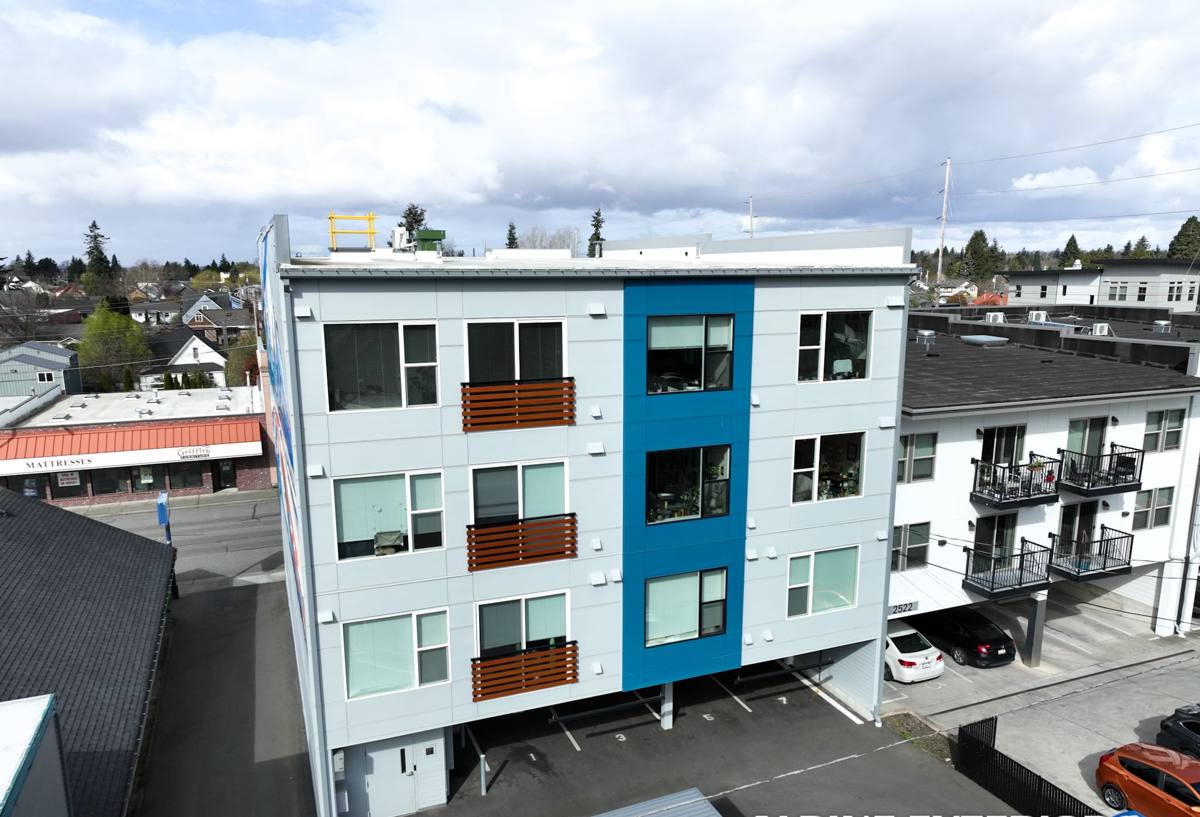
What Bellingham's Climate Does to Windows Over Time
Whatcom County sits in a marine-influenced climate — moist, salt-tinged air moves in off the Sound and combines with long stretches of driving rain for much of the year. That air doesn't stop at the water's edge; it works its way inland and settles into low, tree-shaded areas like Sudden Valley, where it lingers longer than it would on an open, sun-exposed lot. Add the lake itself, which keeps ambient humidity elevated nearby, and you get a setting where wood, seals, and frame materials are under near-constant low-grade moisture pressure.
Over years, that shows up in a few predictable ways:
- Moss and algae growth around frames and sills, especially on the shaded, north-facing sides of a house where sun never fully dries the surface
- Wood rot at sills and corners on older wood-framed windows where paint or finish has worn thin and let moisture into the grain
- Fogged or failed insulated glass units where the seal between panes has broken down and moisture has worked its way into the airspace
- Swollen sashes that stick or won't latch from repeated wet-dry cycling of the wood or old vinyl
- Soft or spongy trim and framing discovered only once a window is removed and the wall cavity behind it is exposed
None of this is unique to Sudden Valley — it's a Whatcom County story more broadly — but the tree cover and lake-adjacent humidity here tend to accelerate the moss and slow-drying side of it compared to a more open, wind-exposed lot.
Signs Your Windows Are Due for Replacement
Not every issue means a full replacement. But if you're seeing more than one or two of these, it's worth having someone look before the underlying wall structure is affected:
- Visible fog, haze, or moisture trapped between panes of double-pane glass
- Drafts you can feel near the frame even when the window is fully closed and latched
- Wood that's soft, discolored, or crumbling to the touch at the sill or corners
- Moss or dark staining that keeps coming back around the frame no matter how often it's cleaned
- Windows that are difficult to open, close, or lock — a sign the frame has swollen or shifted
- A noticeable rise in heating costs with no other explanation
- Condensation forming on the inside of the glass regularly during cooler months
If a window is original to the house and the home is more than a couple of decades old, age alone is often reason enough to have it evaluated, even if it still looks functional from the outside.
What a Correct Window Replacement Actually Involves
The window unit itself is only part of the job. In a moisture-heavy setting like Sudden Valley, the installation details matter as much as the product — a good window installed poorly will fail faster than a modest window installed correctly.
Full-Frame vs. Insert Replacement
Where the existing frame, sill, and surrounding wall are sound, an insert (or "pocket") replacement — fitting a new window into the existing frame — is often the right call and less invasive. But where we find rot, soft framing, or evidence of past water intrusion once the old window is opened up, we recommend a full-frame replacement that removes the old frame entirely and lets us address what's underneath. Covering up a compromised frame with a new window on top of it just hides the problem for a few more years.
Flashing and Water Management
Given how much driving rain this region sees, proper flashing at the head, jambs, and sill is not optional. Water needs a designed path to shed away from the wall assembly, not just a bead of caulk holding it back. This is the step most likely to be shortchanged by a rushed install, and it's the step most responsible for water damage showing up years later.
Sealing and Insulation
Low-expansion spray foam or backer rod and sealant around the perimeter, done correctly, closes the gap between the new window and the rough opening without over-compressing the frame or leaving voids. Both extremes — no insulation, or too much rigid foam — cause problems down the line.
Choosing the Right Window for a Shaded, Lake-Adjacent Lot
Frame material matters more here than on a sunnier, drier lot, because whatever you choose will spend more time damp. Here's how the common options compare for a setting like Sudden Valley:
| Frame Material | Moisture Behavior | Maintenance | Best Fit |
|---|---|---|---|
| Vinyl | Won't rot; can flex slightly with temperature swings | Low — occasional cleaning | Most homes seeking value and low upkeep |
| Fiberglass | Dimensionally stable, strong moisture resistance | Low | Larger openings or homes wanting a longer-term, lower-flex option |
| Wood | Handsome but vulnerable to rot if finish isn't maintained | High — repainting/resealing on a schedule | Homeowners committed to upkeep for a specific look |
| Wood-Clad (exterior-clad wood) | Exterior protected by cladding; interior still wood | Moderate | Wanting a wood interior with better exterior protection |
We don't push wood-frame windows for exposed or heavily shaded elevations in this area as a matter of professional standard — not because wood is a bad product, but because the maintenance schedule needed to keep it performing well in a damp, shaded lot is a real ongoing commitment, and a missed year or two of upkeep is where the rot problems described earlier tend to start. If you want a wood look, wood-clad or a quality vinyl or fiberglass unit with wood-look interior finishes is usually the more practical route for a shaded Sudden Valley lot.
Glass Package
Double-pane, low-E glass is standard and performs well for most homes here. Triple-pane adds cost and weight and is worth considering mainly on north-facing rooms, rooms over unheated space, or where road or neighbor noise is a factor — for most Sudden Valley homes it's a comfort upgrade rather than a necessity given the region's mild-to-moderate winters.
What Drives the Cost of Your Project
Every home is different, but these are the main factors that move the price of a window replacement up or down. We'll walk through each of these with you before you sign anything — general ranges only, since exact numbers depend on your specific windows and access.
| Factor | Why It Matters |
|---|---|
| Full-frame vs. insert replacement | Full-frame involves more labor and often exterior trim/siding repair |
| Frame condition found once opened up | Rot or water damage discovered during removal adds repair scope |
| Number and size of windows | Larger openings and specialty shapes cost more to fabricate and install |
| Frame material and glass package | Vinyl, fiberglass, and wood-clad price differently; triple-pane adds cost |
| Site access | Second-story windows, tight lots, or limited driveway/parking access affect labor time |
| Exterior trim and siding tie-in | Matching existing trim or siding around a resized or full-frame opening adds work |
Our Process, Start to Finish
- On-site walkthrough: we look at every window being considered, note frame condition, and check for signs of past moisture issues before quoting anything
- Written estimate: a clear breakdown of scope, materials, and price — no surprise add-ons sprung on you mid-project
- Scheduling: we plan around weather where we can, since window openings are exposed to the elements during the swap
- Removal and inspection: old windows come out and we inspect the framing before anything new goes in — if we find rot or damage, we tell you before proceeding, not after
- Installation: proper flashing, sealing, and insulation per window, not a rushed drop-in
- Final check and cleanup: operation tested on every window, job site cleaned up, old units hauled away
Why Local Experience in Sudden Valley Matters
Sudden Valley includes areas within a private, gated community, and homes here often sit on wooded, sloped, or lake-adjacent lots that aren't always straightforward for equipment access, staging materials, or getting a truck close to the house. A crew that's worked in the community before knows to plan for that ahead of time — coordinating gate access, parking, and site logistics — rather than figuring it out on the morning of the job. That familiarity also extends to knowing what tends to go wrong with windows in this specific setting: which elevations take the worst of the weather, where moss and moisture problems typically start, and what framing condition to expect once an old window comes out on a shaded, decades-old lake-area home.
It also means we're a known, reachable crew if a question comes up after the work is done — not a company that did one job in the neighborhood and moved on.
A Straightforward Next Step
If your windows are original to the house, showing fog between the panes, or you've noticed moss and staining that won't quit around the frames, it's worth getting a second set of eyes on them before the problem spreads into the wall structure. We're happy to come out, take a straightforward look, and give you a written estimate with no pressure attached — use the form below to get started.