 Bellingham
 Storm Damage in Sudden Valley: What Makes This Neighborhood Different
Sudden Valley sits back in the trees above Lake Whatcom, a few miles outside downtown Bellingham, and the roofs out there take a different kind of beating than roofs closer to open water or cleared ground. Heavy fir and cedar canopy keeps homes shaded and cool most of the year, but that same canopy drops needles, cones, and limbs onto roof surfaces year-round and holds moisture against shingles and shakes long after a storm has passed. Add in Whatcom County's driving winter rain, the salt-laden air that moves inland off Bellingham Bay during a blow, and a moss season that can run eight or nine months out of the year, and you have a roof environment that punishes anything installed or repaired without that combination in mind.
This page is about one job done right: storm damage roof repair for Sudden Valley homes specifically. Not a generic storm repair overview, and not a pitch toward a full replacement when a targeted repair will do the job. Just a straight explanation of what local storms do to roofs in this neighborhood, what a correct repair actually involves, and why it matters that the crew doing the work already knows the terrain.
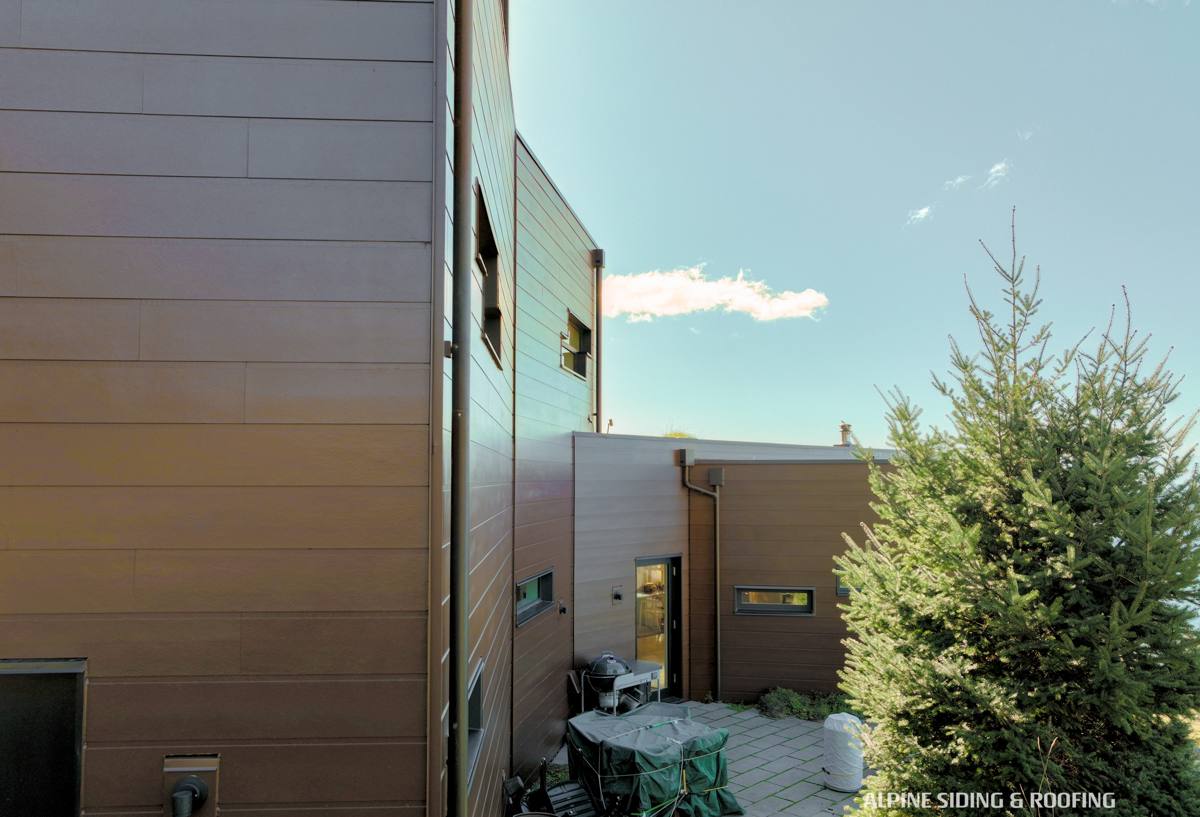
What Whatcom County Storms Actually Do to a Roof
Wind is the main actor in most Sudden Valley storm damage, and it rarely works alone. A gust that comes off the lake or funnels down through a stand of trees does two things to a roof at once: it lifts and stresses shingle edges and ridge caps, and it drives rain sideways under laps and flashing details that were never designed to shed water moving horizontally. That combination is why storm damage this far inland can still look and behave a lot like coastal wind damage.
Falling Limbs and Tree Debris
On top of wind and driving rain, Sudden Valley's tree cover adds a factor most other Bellingham neighborhoods deal with less: falling limbs and small trees coming down on roof planes during the same storms that bring the wind. A limb strike can crack a shingle, tear underlayment, or dent a vent boot without ever fully puncturing the roof deck — which is exactly why so much of this damage gets missed until it has already caused an interior leak.
Salt Air and Slow Corrosion
Salt air is a quieter contributor. It does not cause the dramatic damage that wind and falling limbs do, but it accelerates corrosion on exposed fasteners, flashing, and metal roof edges over years of exposure — one more reason a storm-damaged roof in this part of Whatcom County ages faster than the same damage would in a drier, inland climate with no coastal influence at all.
Most Sudden Valley homeowners find out about storm damage one of two ways: an obvious event, like hearing a branch come down, or a slow one, like a ceiling stain that shows up weeks after the storm that actually caused it. The damage in between those two extremes is the kind that gets missed, and it is usually the kind that costs the most to ignore.
Signs of Storm Damage Homeowners Miss
A roof does not have to be torn open to be storm damaged. Most of what we find after a wind event is smaller and far easier to repair if it is caught early, before another round of rain gets underneath it.
- Lifted or creased shingle tabs along ridges, hips, and roof edges where wind grips first
- Missing or cracked shingles in the debris field on the ground below a roof plane
- Heavy granule buildup in gutters and downspouts, a sign shingles were scoured by wind and blowing grit
- Bent, lifted, or separated flashing around chimneys, skylights, and roof-to-wall transitions
- Dented or cracked pipe boots and vent covers from limb strikes
- Soft, discolored, or bubbled ceiling patches inside the home, usually meaning water has been getting in for a while
- Moss or dark streaking concentrated on one slope, pointing to a shaded area that held moisture after the storm
- Needles, cones, or small branches packed into valleys where water is meant to flow freely
What a Correct Storm Damage Repair Involves
A correct storm damage repair starts with a full roof walk, not just a look at the spot the homeowner is worried about. Wind damage is rarely confined to one shingle or one flashing detail, and a repair that only addresses the visible symptom tends to fail again in the next storm. Our process covers the whole roof plane by plane, checks every flashing detail and penetration, and inspects the attic or interior ceiling line for any sign that water has already made it past the roof covering.
Once the damage is mapped, the repair itself generally involves:
- Replacing the specific shingles, shakes, or panels that were lifted, cracked, or torn
- Resetting or replacing damaged flashing so it sheds wind-driven rain rather than channeling it inward
- Clearing and repairing any valley, gutter, or downspout obstruction that contributed to the damage
- Confirming that underlayment beneath the affected area is intact before anything is closed back up
Skipping that last step is the most common shortcut in storm repair work, and it is the one most likely to leave a homeowner with a leak that reappears in the next season's rain. In a shaded, moisture-holding environment like Sudden Valley, underlayment condition matters even more than it does on a roof that gets full sun and dries out quickly between storms. We treat that check as a standard part of every storm repair here, not an upsell.
Repair vs. Replace: What Actually Drives the Decision
Not every storm-damaged roof needs the same response, and cost is almost always the first question a homeowner asks. The honest answer is that it depends on how much of the roof was affected, how old the roofing was before the storm, and whether the damage is isolated or spread across multiple planes.
| Factor | Points Toward Repair | Points Toward Replacement |
|---|---|---|
| Age of existing roof | Under 10-12 years, materials still sound | Near or past expected service life |
| Extent of damage | Isolated to one slope or a handful of areas | Spread across multiple planes or the ridge |
| Underlayment condition | Intact where exposed and checked | Deteriorated, saturated, or failing in several spots |
| Moss and moisture history | Manageable with cleaning and maintenance | Chronic moss damage already breaking down shingle mat |
| Prior repairs | Few or none, roof otherwise uniform | Multiple past patches, mismatched materials |
Typical storm repairs for isolated shingle, flashing, or valley damage run from a few hundred dollars up into the low thousands, depending on scope and roof access. Larger events that involve multiple planes, structural sheathing repair, or a roof already near the end of its life can move into full replacement territory. We give an honest recommendation either way rather than defaulting to the larger job.
Our Sudden Valley Storm Response Process
- We start with a phone or in-person conversation to understand what happened and what the homeowner has already noticed.
- We walk the full roof, not just the damaged section, and document what we find with photos for the homeowner's own records and for any insurance claim.
- We identify whether the fix is a targeted repair or whether the damage is extensive enough that a larger section or full replacement makes more sense, and we say so plainly either way.
- We provide a written estimate that separates the repair scope from any optional or recommended additional work, so the homeowner decides what to approve.
- We schedule the work around Sudden Valley's private roads and any community access requirements, and we clean up all storm debris and roofing material from the property when the job is done.
Insurance Claims and Storm Damage Documentation
Many Sudden Valley homeowners file an insurance claim for wind and storm damage, and the documentation from our inspection is usually what an adjuster wants to see: dated photos of the specific damage, a written description of cause and location, and a clear scope of the repair needed. We are glad to walk a homeowner through what we found and provide that documentation, but we do not represent ourselves as public adjusters and we do not promise a particular claim outcome. That decision sits with the insurance company, and homeowners are always better served going into that conversation with an honest, independent roof assessment rather than one written to maximize a claim number.
Keeping a Storm File
If your home is in Sudden Valley, it is worth keeping a simple folder — digital or paper — with dated photos after any significant windstorm, even if nothing looks obviously wrong. A slow leak that shows up months later is much easier to trace back to its cause, and to support with an insurer, when there is a timeline to point to.
Why a Crew That Already Works Sudden Valley Matters
Sudden Valley is a private community with its own road network and access patterns, and a crew that has worked there before knows how to schedule around that without it becoming the homeowner's problem to manage. More importantly, a crew that has already repaired storm damage on the tree-covered, lake-adjacent lots in this neighborhood knows where wind tends to concentrate, which roof orientations hold moss and moisture longest, and what a repair needs to look like to hold up through the next windstorm rather than just pass the current inspection. That familiarity shows up in fewer surprises during the job and fewer callbacks after it.
It also matters for smaller, practical reasons: knowing which streets are tight for a ladder truck, understanding that debris removal has to account for the amount of tree litter already on the ground, and being realistic with homeowners about how quickly moss will return in a shaded lot versus a cleared one. None of that comes from a single visit — it comes from doing this work in this specific neighborhood, season after season.
Get a Free, No-Pressure Estimate
If a recent storm has left you with missing shingles, a fallen limb on the roof, or a ceiling stain you cannot quite explain, it is worth having someone look at it before the next round of Whatcom County rain finds the gap. We offer free, no-pressure estimates for Sudden Valley homeowners — fill out the form below and we will get a time scheduled.