 Bellingham
 Why Silver Beach Siding Wears Differently Than Inland Bellingham
Silver Beach sits close enough to Bellingham Bay that the siding on these homes deals with a different combination of stresses than a house a few miles inland in Whatcom County. Salt-laden air off the water accelerates corrosion on fasteners and trim metal, driving rain off the Sound finds every gap in a wall assembly that inland homes never test, and the shade from mature trees on many lots keeps north- and west-facing walls damp long after a storm has passed. That dampness is what feeds moss and algae growth, which is its own slow-motion problem for siding that isn't built or installed to shed water fast.
None of this means Silver Beach homes need exotic repair techniques. It means the basics — proper flashing, correct fastening, water-shedding laps, and materials that actually tolerate a marine-influenced climate — matter more here than they do a few miles away. A repair that looks fine but skips those basics tends to fail again within a season or two, right in the same spot.
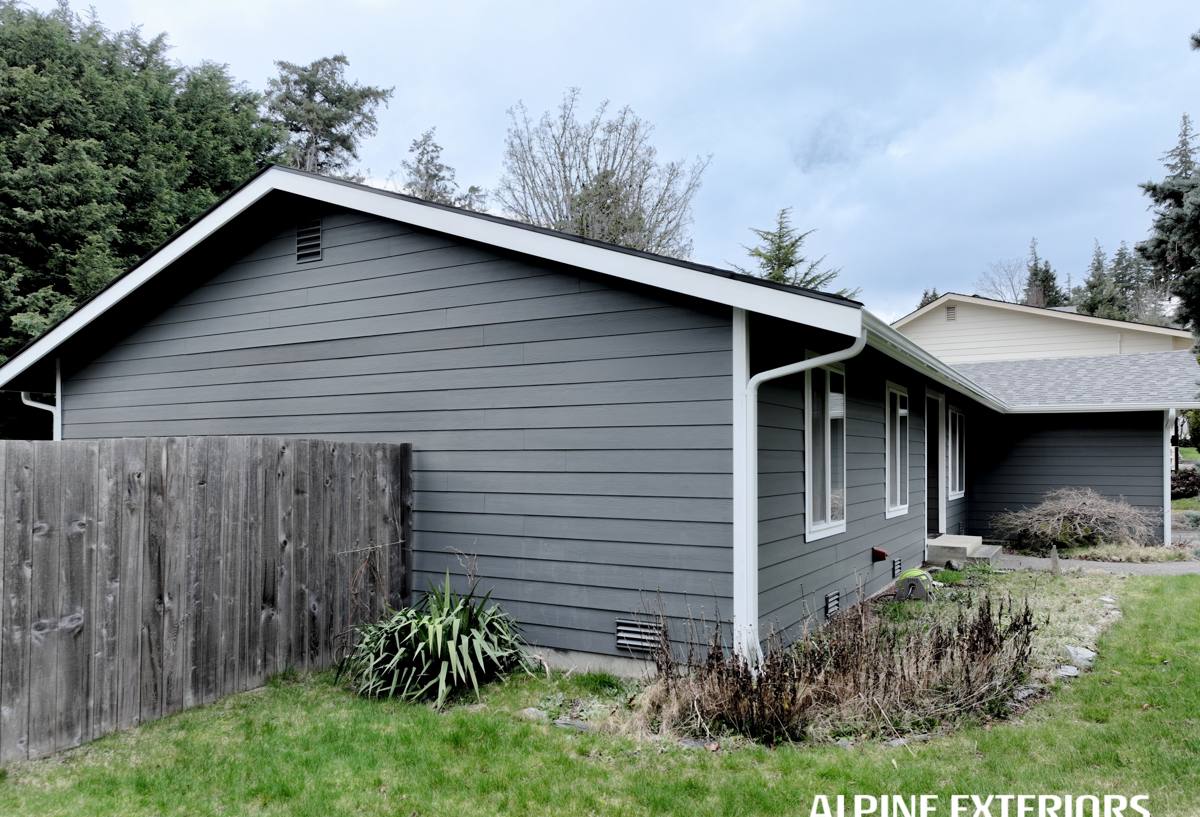
Signs Your Siding Needs Repair, Not Just a Repaint
Homeowners often reach for paint when siding looks tired, but paint doesn't fix what's happening underneath. Before you repaint, it's worth checking for the signs below — they point to a repair need, and painting over them usually just hides the problem until it's worse and more expensive.
- Soft, spongy, or crumbling sections when you press on the siding, especially near the bottom courses and around windows
- Visible cracking, splitting, or buckled boards, particularly on walls that face the water or stay shaded most of the day
- Persistent moss or dark streaking that comes back within weeks of cleaning
- Paint that bubbles or peels in the same spots year after year, even after repainting
- Rust streaks below nail heads or trim fasteners
- Gaps opening up at seams, corners, or where siding meets trim, windows, or the foundation
- Any softness or discoloration on interior walls or ceilings that lines up with an exterior wall — a sign water has already gotten past the siding
Any one of these can be isolated and minor. Several appearing together, or appearing on the same wall repeatedly, usually means water is getting behind the siding somewhere and the visible damage is just the part you can see.
What a Correct Siding Repair Actually Involves
Finding the Real Cause First
The most common mistake in siding repair is replacing the damaged board and stopping there. If a board rotted because flashing above a window was missing or installed backward, a new board in the same spot will rot too — just more slowly, because now it's new wood or fresh material sitting in the same wet conditions. A proper repair starts by tracing water back to its entry point: checking flashing at windows, doors, and roof-to-wall intersections, checking how laps are shingled, and checking whether trim and caulking are doing their job or just covering a gap.
Matching Materials and Reveal
Siding repair on an older Silver Beach home often means matching an existing product — lap width, reveal, texture, and paint sheen all need to line up, or the repaired section stands out for years. This is where experience with the specific products used in this area pays off; a mismatched patch is one of the fastest ways to make a house look repaired rather than maintained.
Fastening and Flashing Done Right
In a marine-influenced climate, fastener choice and placement matter more than they do inland. Corrosion-resistant fasteners set at the correct depth, proper head flashing over openings, and correctly lapped water-resistive barrier behind the siding are what keep a repair from becoming a repeat call. Skipping any of these to save time is exactly how a "fixed" wall fails again.
Repair vs. Replace: How to Tell Which One You Need
Not every damaged section calls for full replacement, and not every repair is worth doing if the underlying siding is at the end of its life. The table below covers the factors that usually decide it.
| Factor | Points Toward Repair | Points Toward Replacement |
|---|---|---|
| Extent of damage | Isolated to one or two boards or a small section | Recurring across multiple walls or the whole exposed side of the house |
| Cause of damage | A single identifiable flashing or fastener failure | Systemic moisture intrusion or a wall assembly that was never detailed correctly |
| Age of existing siding | Siding is mid-life and otherwise sound | Siding is near or past its expected service life |
| Material match | Matching material and reveal are available | Product is discontinued or a visible mismatch is unavoidable |
| History of repairs | First repair in this area of the house | Same spot has needed repair more than once |
When repair keeps making sense, we repair — there's no reason to replace sound siding. When the pattern points toward replacement, we say so plainly and explain why, rather than patching something that's going to keep calling us back.
Our Repair Process
- On-site assessment. We look at the damaged area and the surrounding wall, not just the spot you noticed, since related issues often show up nearby.
- Moisture and cause check. We check flashing, caulking, fastener condition, and how water is actually moving around the damaged area before deciding on a fix.
- Honest scope and estimate. You get a clear picture of what's damaged, what's causing it, and whether repair or partial replacement is the right call — with reasoning, not just a price.
- The repair itself. Damaged material comes out, the cause gets corrected (flashing, fasteners, sealant, or barrier as needed), and matching siding goes back in with proper laps and fastening.
- Final check and cleanup. We confirm the repair sheds water correctly and leave the site clean.
Why Working With a Crew That Knows Silver Beach Matters
Siding repair advice that works in a dry inland neighborhood can be the wrong advice a few blocks from the water. A crew that already repairs siding around Silver Beach and greater Bellingham knows which walls take the worst of the wind-driven rain, which lots stay shaded and damp longest into the moss season, and which older products in this area are prone to specific failure points. That local pattern recognition shortens the diagnosis and means the repair addresses the actual cause the first time, instead of the most obvious symptom.
It also means realistic expectations. A crew unfamiliar with Whatcom County's coastal microclimates might promise a fix that would hold up fine in a drier region but won't out here. We'd rather tell you upfront what a repair can and can't solve for a home this close to the water.
After the Repair: Keeping Moss and Moisture From Coming Back
A good repair buys you time, but the same conditions that caused the original damage are still present in Silver Beach's climate. A few habits make a real difference between repairs:
- Keep gutters and downspouts clear so water isn't sheeting down siding it wasn't meant to run over
- Trim back branches and vegetation that keep a wall shaded and damp longer than the rest of the house
- Rinse moss and algae off siding before it gets a foothold, rather than waiting for a heavy buildup
- Re-caulk gaps at trim and penetrations every few years — caulk is a wear item, not a one-time fix
- Walk the exterior after major windstorms off the water and after the wettest stretch of winter, looking for the early signs listed earlier in this page
When Repair Isn't the Long-Term Answer
Some Silver Beach homes come to us with siding that has been repaired more than once in the same area, or with damage spread widely enough that patching one more section doesn't solve the underlying problem. In those cases, we'll tell you honestly that replacement is the better investment rather than continuing to chase repairs.
When that conversation happens, our recommendation is James Hardie fiber cement siding — it's the only product we install, because it's built to handle exactly the conditions Silver Beach deals with: non-combustible material, a factory-applied ColorPlus finish that holds color and resists the moisture and salt exposure that wears down field-painted surfaces, and product lines engineered for specific climate demands. It's not the only siding material on the market, but it's the one we're willing to stand behind on homes this close to the water, backed by a strong transferable warranty when installed to spec.
If you're seeing damage, moss buildup, or repeated problem spots on your Silver Beach home's siding, we're glad to take a look. The estimate is free, there's no pressure to do more work than the house actually needs, and you'll get a straight answer on whether repair or replacement makes sense — just use the form below to get started.