 Bellingham
 Deck Replacement Built for Sudden Valley's Conditions
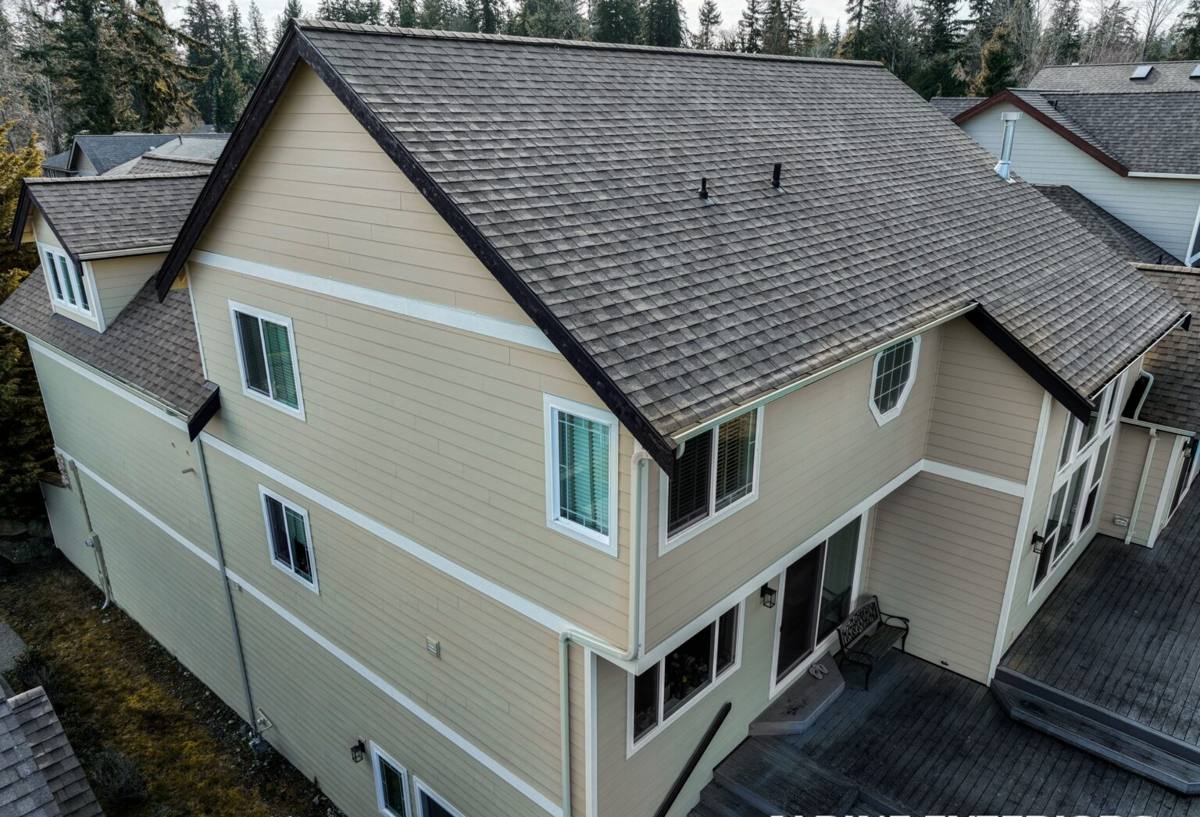
Sudden Valley sits in one of the more heavily wooded, lake-adjacent pockets of Whatcom County, and that setting is exactly why decks here wear out faster than a generic "deck replacement" checklist would suggest. Tree canopy over most lots means shade, falling debris, and slow-drying surfaces. Proximity to Lake Whatcom and the broader Bellingham weather pattern adds long stretches of driving rain and a moss season that can run from fall through spring. Add in the humidity that settles into low-lying, tree-covered yards, and you get decks that trap moisture against framing and decking boards for months at a time instead of drying out between storms like they would in a more open, sun-exposed area.
A deck built or repaired without accounting for that reality tends to fail from the inside out — soft framing under boards that still look fine on top, rusted fasteners, and moss that's doing more than staining the surface. When we replace a deck in Sudden Valley, the goal isn't just fresh boards. It's a structure that's actually set up to handle the specific way this neighborhood's climate attacks a deck year after year.
How Local Climate Shortens a Deck's Life Here
Moss and Shade
Moss needs shade and standing moisture to establish, and tree-covered Sudden Valley lots offer both in abundance. Once moss takes hold on decking boards, it holds water against the wood or composite surface far longer than open air would allow, which accelerates rot in wood decking and can stain or degrade the surface layer on composite products. Moss on stairs and walking surfaces is also a real slip hazard, not just a cosmetic issue.
Driving Rain and Moisture Cycling
Bellingham-area storms don't just add water — they drive it sideways into ledger connections, stair stringers, and any spot where two materials meet. Decks that dry slowly because of tree cover go through repeated wet-dry cycles that stress fasteners, loosen joist hangers, and swell wood fibers over time.
Salt Air Influence
While Sudden Valley isn't directly on saltwater, the broader Bellingham and Puget Sound air carries a mild salt component that, combined with constant moisture, speeds up corrosion on lower-grade fasteners, brackets, and hardware. Over years, that corrosion is often the real reason a deck starts to feel loose or unsafe before the boards themselves look bad.
Signs a Sudden Valley Deck Needs Replacement, Not Just Repair
- Soft, spongy, or bouncy spots underfoot, especially near stairs or the ledger board where the deck attaches to the house
- Persistent moss or algae that returns within weeks of cleaning
- Visible rust streaking from fasteners or metal connectors
- Gaps opening up between boards, or boards that have cupped or crowned
- A ledger board connection that looks caulked-over or patched rather than properly flashed
- Posts or footings that feel loose when the railing is pushed
- Railings that have visibly weathered, split, or no longer meet a stable, secure feel
A deck showing two or more of these signs, especially structural ones like soft framing or a compromised ledger, is usually past the point where board-by-board repair makes sense. Patching a deck with failing framing underneath just delays the real cost and adds risk in the meantime.
What a Correct Deck Replacement Actually Involves
"Replacing a deck" gets treated as a surface-level job by some crews — pull the old boards, screw down new ones. That approach skips the parts that actually determine how long the deck lasts in a climate like this one.
Framing and Structure First
Every replacement starts with an honest look at the substructure: joists, beams, posts, and footings. In a moss-and-moisture climate, framing is often the first thing to go even when the surface boards look salvageable. We check for rot, undersized or outdated framing relative to current code, and footing condition before any new decking goes down.
Ledger Flashing Done Right
The ledger board — where the deck attaches to the house — is the single most common failure point on decks in wet climates. Proper flashing keeps water from working its way behind the ledger and into the house's rim joist. This is not an area to cut corners, and it's often invisible once the job is done, which is exactly why it matters to get it right the first time.
Fastener and Hardware Grade
Given the corrosion factor from moisture and mild salt air, fastener and connector grade matters more here than in drier inland areas. Using corrosion-resistant, code-rated hardware throughout — not just on the parts that show — is standard on our replacements, not an upgrade.
Drainage and Airflow Underneath
Where the site allows it, we build in airflow and drainage consideration under the deck so moisture has somewhere to go instead of sitting against framing. On tree-shaded, low-airflow lots like many in Sudden Valley, this detail has an outsized effect on how long the structure lasts.
Decking Material Options: Honest Trade-Offs
Material choice matters, but there's no single "best" answer — it depends on budget, how much upkeep you want to do, and how shaded your specific lot is.
| Material | Moss/Moisture Behavior | Maintenance | General Cost Range |
|---|---|---|---|
| Pressure-treated wood | Absorbs moisture, needs sealing to resist moss staining | Annual cleaning and periodic re-sealing | Lowest upfront cost |
| Cedar | Naturally moderate rot resistance but still needs sealing in shaded areas | Regular sealing and moss cleaning | Mid-range |
| Composite decking | Won't rot, but can stain if moss and debris are left to sit | Periodic washing, no sealing needed | Higher upfront, lower long-term upkeep |
| PVC/capped composite | Best resistance to moisture absorption and staining | Lowest ongoing maintenance | Highest upfront cost |
On heavily shaded Sudden Valley lots, we're often more cautious about recommending raw wood decking without a real maintenance commitment from the homeowner, simply because moisture and shade work against it. That's a maintenance-burden conversation, not a knock on wood as a material — plenty of wood decks last for decades when they're sealed and cleaned on schedule.
Our Process for a Sudden Valley Deck Replacement
- On-site assessment — we walk the existing deck, check framing and footings, and look at how the specific lot's shade and drainage will affect material choice.
- Clear, written scope — what's being removed, what's being built, material selection, and a straightforward cost breakdown before work starts.
- Permitting — deck replacements typically require a permit through the applicable local jurisdiction; we handle that process rather than leaving it to the homeowner.
- Demolition and disposal — old decking and framing removed and hauled off, with the site kept reasonably clean throughout.
- Structural rebuild — framing, footings, and ledger flashing addressed before a single finish board goes down.
- Decking, railing, and stairs installed — to code, with corrosion-resistant hardware throughout.
- Final walkthrough — we go over the finished deck together before calling the job done.
Permits, Access, and Working in a Gated Community
Sudden Valley is a gated residential community, which means scheduling and site access often need a bit more coordination than a typical Bellingham street job — advance notice for gate access, adherence to any community guidelines on work hours or contractor conduct, and sometimes coordination around shared roads or narrow driveways common to hillside, tree-lined lots. A crew that's worked in the community before already knows how to plan around this instead of losing a day figuring it out on-site.
On the permitting side, deck replacements generally require a building permit, and in some cases a review tied to setbacks or drainage, particularly on sloped or tree-covered lots typical of this area. We handle the permit process as part of the job rather than treating it as the homeowner's problem to sort out separately.
After the Replacement: Keeping Moss and Moisture From Winning Again
- Sweep leaves and debris off the deck regularly, especially in fall — trapped organic matter is what feeds moss
- Rinse or lightly wash the surface a few times a year, more often in heavily shaded spots
- Check the ledger flashing area annually for any signs of water tracking or staining
- Reseal wood decking on the manufacturer's recommended schedule, not just when it looks dry
- Trim back overhanging branches where practical to increase sun exposure and airflow
- Address any loose railings or soft spots early rather than waiting for them to worsen
None of this is complicated, but skipping it is exactly how a well-built deck ends up needing early repairs in a climate like this one.
Why Hiring a Crew That Already Works in Sudden Valley Matters
A deck replacement done by a crew unfamiliar with Sudden Valley's shaded, moisture-heavy lots and gated access logistics tends to run into avoidable friction — underestimating how much the framing has already been affected by moss and standing moisture, or not planning for gate scheduling and site access on the front end. A crew that already works this specific area brings that knowledge in from the start: how the tree cover and Lake Whatcom-influenced humidity actually behave on decks here, what framing condition to expect before pulling the first board, and how to plan the job around the community's access requirements without losing time.
That local familiarity translates into fewer surprises mid-project and a deck that's actually built to hold up against Whatcom County's specific mix of rain, shade, and moss — not a generic replacement that happens to be located in Sudden Valley.
Get a Straightforward Estimate
If your Sudden Valley deck is showing soft spots, persistent moss, or rusted hardware, it's worth having it looked at before those issues spread further into the framing. We offer free, no-pressure estimates and can walk you through what your specific deck actually needs — repair or full replacement — with no guesswork. Fill out the form below to get started.