 Bellingham
 Why Silver Beach Windows Wear Out Faster Than You'd Expect
Homes in the Silver Beach area deal with a specific combination of weather that's harder on windows than people realize. Moist Pacific Northwest air, long stretches of driving rain, and salt-laden coastal winds work on window frames, seals, and glazing year-round, not just during storms. Add Whatcom County's long moss season, when shaded and north-facing walls stay damp for weeks at a time, and you have conditions that expose weak caulking, tired weatherstripping, and marginal flashing details much faster than they'd show up in a drier inland climate.
Most window failures we see in this neighborhood aren't dramatic. They're slow: a little fogging between panes, a draft that wasn't there five years ago, wood trim that's gone soft at the sill. By the time a homeowner notices, the underlying moisture intrusion has usually been happening for a while. That's the pattern Silver Beach homes follow, and it's why window replacement here needs to be treated as a moisture-management project first and an aesthetic upgrade second.
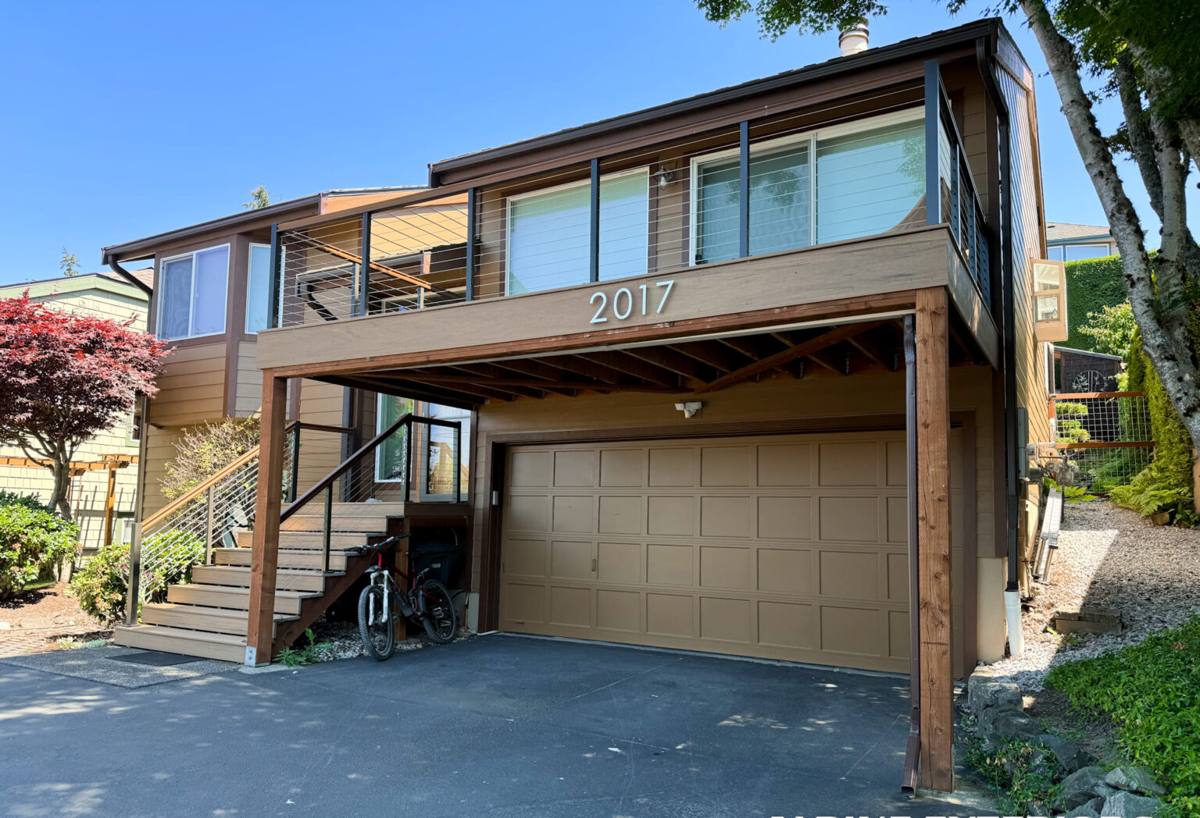
Signs a Silver Beach Home Needs Window Replacement
Not every old window needs to go. But certain signs point to a window that's no longer doing its job, especially in this climate:
- Fogging or a visible haze between panes of double-glazed units (a sign the seal has failed and the gas fill is gone)
- Soft, discolored, or crumbling wood at the sill or bottom corners of the frame
- Visible mold or a musty smell around the window trim, especially on shaded or north-facing walls
- Noticeable drafts or a cold radiating feeling near the glass even with the window closed
- Windows that are difficult to open, close, or lock, often from swelling or warping
- Paint that keeps failing on the exterior trim no matter how often it's touched up
- Rising heating bills with no other obvious cause
Any one of these on its own might just need a repair. Several together, especially combined with visible moisture staining, usually means the window assembly has been compromised and replacement is the more honest recommendation.
What a Correct Window Replacement Job Actually Involves
Swapping in a new window is the easy part. The details that determine whether that window lasts 20 years or fails again in five are mostly invisible once the trim goes back on. In a climate that sees as much driving rain as Whatcom County does, we treat these steps as non-negotiable:
Removing the old unit without hidden damage
Before a new window goes in, we pull the old one and inspect the rough opening. This is where problems that caused the original failure often get found: rotted sheathing, missing or torn house wrap, old flashing that was never properly lapped. Installing a new window over hidden rot just restarts the clock on the same failure.
Flashing and water management
Correct flashing directs any water that gets behind the siding down and out, away from the framing, rather than letting it pool at the sill. This means proper sill pan flashing, correctly lapped house wrap, and head flashing that sheds water outward. It's the single most important part of the job for long-term performance, and it's also the part that's easiest to skip if a crew is rushing.
Air sealing and insulation
The gap between the new window frame and the rough opening needs to be sealed and insulated correctly, not just stuffed with fiberglass or foam. Over-filling with expanding foam can actually bow the frame and cause operational problems down the road.
Interior and exterior finish work
Trim, caulking, and paint or stain need to be finished properly on both sides. Exterior caulk joints in particular need to be sized and placed correctly, since a poorly caulked joint in this rainfall pattern becomes a moisture entry point within a couple of seasons.
Frame Material Comparison for This Climate
| Frame Material | Moisture Performance | Maintenance | Typical Fit for Silver Beach |
|---|---|---|---|
| Vinyl | Good — won't rot, handles damp cycles well | Low — occasional cleaning | Strong all-around choice for most homes |
| Fiberglass | Excellent — very stable in wet/dry cycling | Low | Good for homes wanting a higher-end frame with minimal upkeep |
| Wood | Requires diligent upkeep to avoid moisture damage | High — regular painting/sealing | Best for owners committed to ongoing maintenance |
| Wood-clad (wood interior, metal/vinyl exterior) | Good on the exposed side; interior still needs care | Moderate | Popular where interior wood look is wanted |
| Aluminum | Prone to condensation without thermal breaks | Low | We generally steer clients away from it here unless thermally broken, due to condensation risk in our humidity |
We're not going to tell you one material is universally "the best" — each has real trade-offs in cost, appearance, and upkeep. What we will say plainly is that in a climate with this much sustained moisture exposure, we lean toward materials that don't depend on the homeowner keeping up a paint schedule to stay watertight.
Choosing the Right Glass Package
Glass selection matters as much as frame material, especially for comfort and condensation control. Most homes in this area do well with double-pane, Low-E coated glass with an argon fill, which balances cost against real performance gains in insulation and solar control. Triple-pane glass offers a further step up in insulation and sound dampening, which some homeowners want on street-facing or west-facing rooms, but it comes at a higher cost and added weight that your frame and hardware need to be rated for.
Condensation and Humidity
Interior condensation on window glass is common in this region during colder, wetter months, and it's usually a ventilation and humidity issue inside the home rather than a defect in the window itself. That said, a properly rated Low-E unit with a warm-edge spacer will resist condensation better than an older or lower-grade unit, which matters when you've got persistent damp air working against the glass from outside as well.
Our Process for a Silver Beach Window Replacement
- On-site assessment — we look at each window individually, check for hidden moisture or rot around openings, and note which windows are candidates for replacement versus repair.
- Honest scope and estimate — you get a clear breakdown of what's being replaced, what materials are recommended and why, and what it costs, with no pressure to upgrade beyond what your home actually needs.
- Measurement and ordering — precise measurements matter more than people expect; an ill-fitting window creates the exact gaps and seal problems we're trying to eliminate.
- Removal and opening inspection — old units come out carefully so we can check the rough opening before anything new goes in.
- Installation with correct flashing and sealing — this is where the job either holds up for decades or doesn't, and it's where we spend the most care.
- Finish work and cleanup — interior and exterior trim finished, site cleaned, old windows hauled away.
What Window Replacement Typically Costs
Costs vary by window size, frame material, glass package, and how much work the opening itself needs. Rather than quote a single number that won't apply to your home, here's how the major cost factors typically break down:
| Cost Factor | Why It Moves the Price |
|---|---|
| Frame material | Vinyl is generally the most affordable; fiberglass and wood-clad run higher |
| Glass package | Triple-pane and specialty coatings add cost over standard double-pane Low-E |
| Window size and style | Larger units, bay/bow configurations, and custom shapes cost more than standard sliders or double-hungs |
| Condition of the rough opening | Rot repair or resizing an opening adds labor beyond a straightforward swap |
| Number of windows | Whole-house projects typically bring a better per-window rate than single replacements |
| Access and site conditions | Second-story or hard-to-access windows can add labor time |
We'll walk your home with you, point out anything that affects cost honestly (including if a window doesn't actually need replacing yet), and give you a written estimate before any work begins.
Why Local Experience in Silver Beach Matters
A crew that works this neighborhood regularly already understands its rain exposure patterns, which sides of a house tend to hold moisture longest, and how moss and damp shade affect siding and trim around window openings. That local knowledge shows up in small decisions — where to pay extra attention during flashing, which caulk formulations hold up to our wet-dry cycling, how to sequence the job around Bellingham's weather windows. It's the difference between a crew installing a generic window and a crew installing the right window, the right way, for this specific address in this specific climate.
Simple Window Maintenance to Extend the Life of a New Install
- Inspect exterior caulk lines once a year, ideally before the wet season sets in, and touch up any cracked or missing sections
- Keep gutters and downspouts clear so water isn't overflowing near window heads
- Clear moss and debris from sills, tracks, and nearby trim before it holds moisture against the frame
- Run bathroom and kitchen exhaust fans during and after showers or cooking to reduce interior humidity and condensation
- Check operable windows each season to make sure they open, close, and lock smoothly — sticking can signal frame movement worth investigating early
- Vacuum and lubricate window tracks periodically to prevent debris buildup from wearing down weatherstripping
Getting Started
If you're noticing drafts, fogged glass, or trim trouble around your windows, it's worth having them looked at before another wet season adds to the damage. We offer free, no-pressure estimates for Silver Beach homeowners — come take a look at what your windows actually need, with straight answers and no upsell. Fill out the form below to get started.