 Bellingham
 Storm Damage Repair Built for Happy Valley's Weather
Happy Valley sits close enough to Bellingham Bay and the surrounding hills that its roofs take a particular kind of beating. Salt-laden air off the water accelerates corrosion on metal flashing and fasteners. Driving rain off Pacific storm systems finds every weak seam. And the long, damp moss season that Whatcom County is known for works year-round to lift shingles and hold moisture against your roof deck. None of this is dramatic on any given day — it's cumulative. That's exactly why storm damage here often looks minor from the ground and turns out to be more serious once someone gets up on the roof and actually inspects the decking, flashing, and underlayment.
This page is about one thing: repairing storm damage on Happy Valley homes correctly, not just patching the visible symptom. We'll walk through what local conditions do to a roof, what a proper repair actually involves, and how our process works from the first call to the finished job.
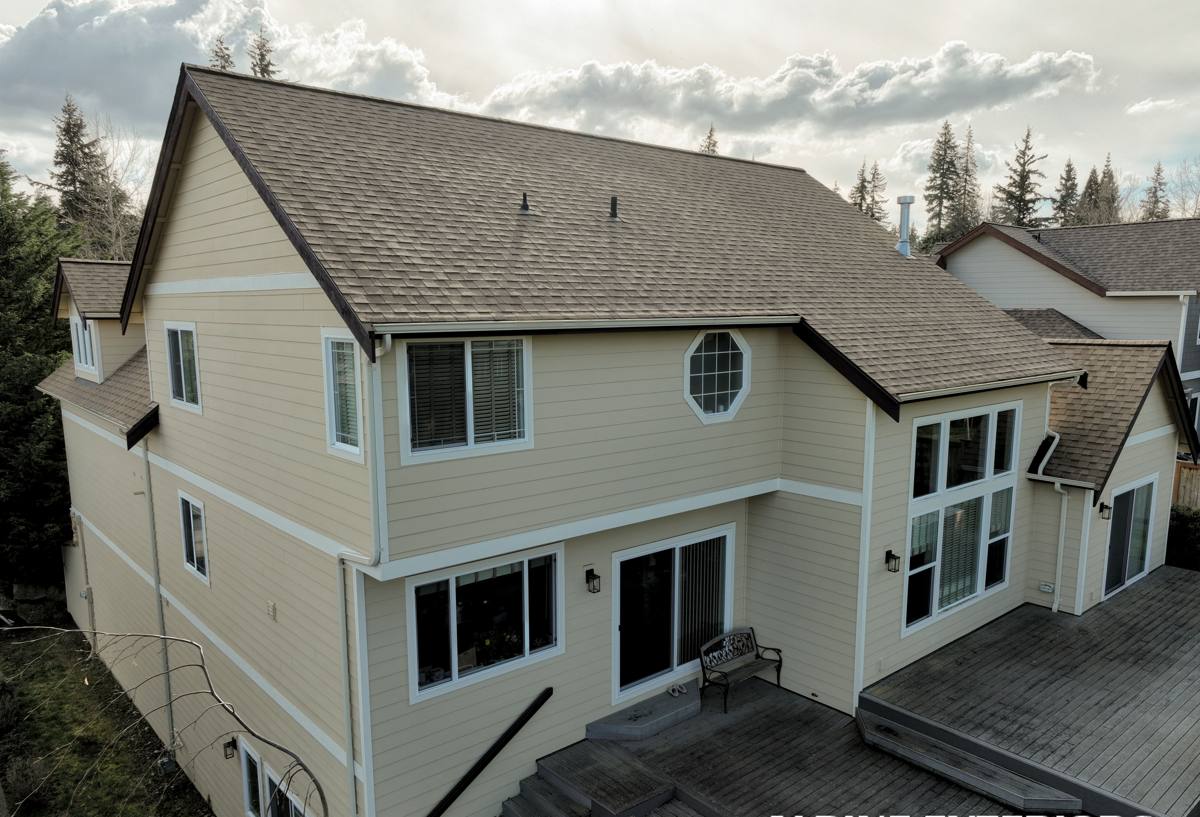
What Storms Actually Do to a Bellingham Roof
Wind and rain rarely cause a single, obvious failure. More often they expose a weakness that was already forming. Understanding the difference matters because it changes what kind of repair is appropriate.
Wind-Driven Damage
Strong gusts off the Strait and through the valley terrain can lift shingle tabs, crack ridge caps, and work fasteners loose without tearing anything off outright. A roof can look intact from the street after a windstorm and still have dozens of shingles with broken seals that will leak the next time rain comes in sideways.
Rain and Moisture Intrusion
Bellingham's rain isn't usually the heavy, short-burst kind — it's persistent and often wind-driven, which pushes water sideways under flashing, around vent boots, and into any gap a dry-climate roof detail would never see. Once water gets under the roofing material, it can travel a surprising distance before it shows up as a stain on a ceiling.
Moss and Long-Term Moisture Damage
Moss isn't storm damage on its own, but it sets the stage for it. A moss mat holds water against shingles and decking for months at a time, softening the material and lifting edges so the next windstorm has something to grab onto. Homes with mature trees or north-facing, shaded roof sections in Happy Valley tend to see this first.
Debris Impact
Falling branches and wind-blown debris cause the most visually obvious damage — cracked or missing shingles, dented flashing, punctured decking in worse cases. These are usually easy to spot but not always easy to assess for hidden damage underneath.
Why "It Looks Fine" Isn't the Same as "It's Fine"
The most common mistake we see after a storm is a homeowner checking the roof from the ground or a ladder, seeing nothing obviously wrong, and assuming there's no damage. Storm damage repair has to start with an actual inspection, because the failure points that cause leaks are rarely visible from below:
- Lifted or creased shingle tabs that broke their adhesive seal but didn't tear off
- Flashing pulled loose at chimneys, skylights, or wall intersections
- Nail heads backed out or popped through the shingle surface
- Cracked pipe boots and vent seals
- Soft or delaminating decking under moss-affected areas
- Granule loss that thins a shingle's UV and weather protection without an obvious visual sign
A repair that only addresses what's visible from the ground often leaves the actual entry point untouched, which means the same spot leaks again in the next storm.
What a Correct Storm Damage Repair Involves
A proper repair follows the same order every time, whether it's one shingle or a whole slope:
1. Full Inspection, Not a Glance
We get on the roof, not just look at it from a ladder. That means checking the field of the roof, all flashing points, valleys, and any area where moss or debris has been sitting. We're looking for both the obvious damage and the damage that's causing it — a moss mat, a clogged valley, a tree limb rubbing a section with every gust.
2. Deck Check Before Anything Goes Back On
If water has been getting under the roofing material for any length of time, the decking underneath needs to be checked for soft spots or rot. Replacing shingles over compromised decking doesn't fix the problem — it just covers it up again.
3. Matching Materials, Not Just Available Materials
Shingle repairs should match the existing roof's material, weight, and where reasonably possible, color and age, so the patch doesn't become a second problem — a mismatched section that ages differently and stands out or fails on a different timeline than the rest of the roof.
4. Flashing and Seal Points Get the Same Attention as the Shingles
Most storm-related leaks trace back to flashing and penetrations, not the shingle field itself. A repair that replaces shingles but leaves compromised flashing in place hasn't actually fixed the leak risk.
5. Clean-Up That Doesn't Set Up the Next Problem
Moss, debris, and granule buildup get cleared from the repair area and, where it affects drainage, from valleys and gutters nearby. Leaving that material in place undermines the repair before it's even finished.
Repair vs. Replacement: How We Help You Decide
Not every storm-damaged roof needs a full replacement, and not every damaged roof should just be patched. The right call depends on the roof's age, how widespread the damage is, and what condition the decking is in underneath.
| Factor | Points Toward Repair | Points Toward Replacement |
|---|---|---|
| Roof age | Under roughly 12-15 years | Near or past expected material lifespan |
| Extent of damage | Isolated to one slope or small area | Spread across multiple slopes or widespread granule loss |
| Decking condition | Solid, dry decking under damaged area | Soft, delaminated, or rotted decking found |
| Moss history | Minor, recently treated | Long-standing moss with visible shingle lift across the roof |
| Prior repairs | Well-maintained, few patches | Multiple past patches in different areas |
We'll give you a straight answer on which side of that line your roof falls, including the honest cases where a repair is genuinely the right call and a full replacement isn't necessary.
Our Process, Start to Finish
- Contact and scheduling — you describe what you're seeing (a leak, missing shingles, storm damage you spotted or suspect), and we schedule an on-roof inspection.
- On-roof inspection — we assess the damage directly, including flashing, decking, and any contributing moss or debris issues, not just the shingles.
- Clear findings and options — you get a plain explanation of what's actually wrong, what caused it, and what repair (or replacement, if warranted) makes sense.
- Free estimate — a written estimate before any work starts, no pressure to decide on the spot.
- The repair — matched materials, proper flashing work, and decking replacement if needed, done in one visit for most storm repairs.
- Final walkthrough — we show you what was done and what to keep an eye on going forward.
Why Local Experience With Happy Valley Roofs Matters
A roofing crew that regularly works in and around Bellingham knows the difference between damage caused by a single storm event and damage that's been building for a season or two under moss and persistent rain. That distinction changes the repair. It also means we're familiar with how Whatcom County's climate affects different roofing materials over time — which is useful when deciding whether a repair will genuinely hold or whether it's a short-term fix on a roof that's telling you something bigger. Working locally also means we're not guessing at how exposed a particular slope is to wind off the bay, or how much shade and moisture a north-facing section deals with through the wet months — we see these patterns across the homes we work on in the area.
What Happy Valley Homeowners Can Do Between Now and an Inspection
- Note the date and conditions of the storm or event that you think caused the damage
- Photograph any interior signs — ceiling stains, damp spots — with a phone if it's safe to do so
- Avoid walking the roof yourself, especially if it's wet or mossy; this is when most DIY roof injuries happen
- Don't ignore a small leak assuming it'll dry out — trapped moisture rarely resolves on its own
- Check attic spaces if accessible for daylight, staining, or damp insulation, which can indicate where water is getting in
Get an Honest Look at Your Roof
If a recent storm has you wondering whether your Happy Valley roof took damage — or if you've just noticed something isn't right and aren't sure how serious it is — the only way to know for certain is an actual inspection. We offer a free, no-pressure estimate: we'll get on the roof, tell you plainly what we find, and lay out your options without any obligation to move forward. Reach out using the form below to get started.