 Bellingham
 Storm Damage Roof Repair for South Hill, Bellingham
South Hill sits up above downtown Bellingham with a mix of mature tree canopy, older homes on steep lots, and enough elevation to catch weather that flatter parts of the city sometimes miss. That combination is great for the view and hard on a roof. When a windstorm rolls in off Bellingham Bay, South Hill's slopes and exposed tree lines take a direct hit, and the roofs underneath absorb it: lifted shingles, torn ridge caps, branches coming down on older asphalt, and flashing that finally gives out after one storm too many. We repair storm damage on South Hill roofs regularly, and the work here is shaped by the neighborhood's specific mix of terrain, tree cover, and housing age as much as it is by Whatcom County's weather in general.
This page is about one thing: what storm damage repair actually looks like for a South Hill roof, what correct work involves, and why it matters to hire a crew that already knows this hillside rather than one working from a generic coastal-Washington playbook.
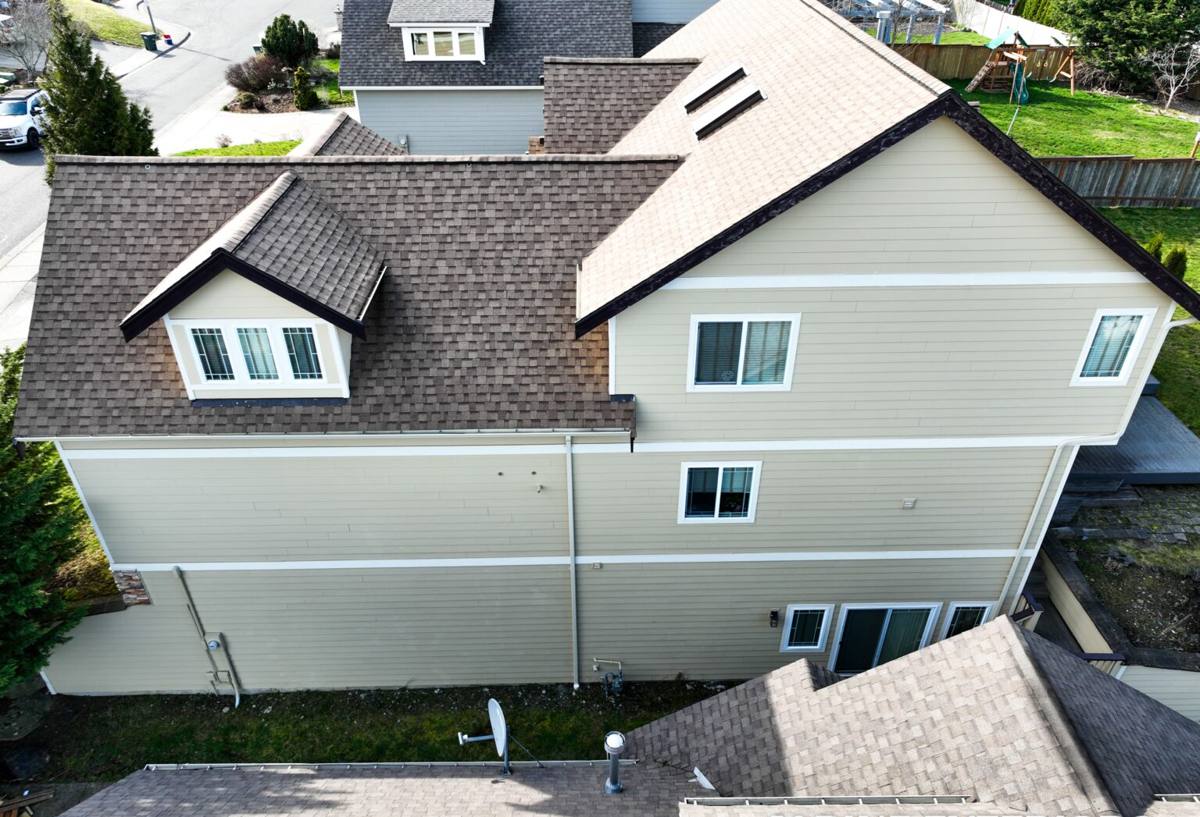
What Bellingham's Climate Does to a South Hill Roof
Wind Off the Bay, Funneled by the Hill
Storms moving in off Bellingham Bay and the Salish Sea don't hit every part of the city the same way. South Hill's elevation and terrain can accelerate and redirect wind across roof planes, which is part of why we see uplift damage along ridges and rake edges here that a similar roof at lower elevation might not show. Wind doesn't need to be dramatic to do damage over time either — repeated moderate gusts work shingle tabs and fasteners loose gradually, and the failure often shows up during the next big storm instead of the one that actually caused it.
Driving Rain and Tree Cover
Rain in this part of Whatcom County rarely falls straight down. Wind pushes it sideways into lap joints, valleys, and any spot where a shingle or flashing detail has already been compromised. South Hill's mature trees add another layer to that: overhanging limbs shed debris that clogs valleys and gutters, and storm-snapped branches are a common cause of point-impact damage on roofs in this neighborhood specifically.
A Long Moss Season That Hides Damage
Bellingham's mild, damp climate supports moss and moisture growth across most of the year, and South Hill's shaded, tree-covered lots are some of the more moss-prone terrain in the city. Moss holds water against the roof surface long after a storm has passed, which slows drying, degrades shingles from underneath, and makes it easy to miss storm damage that's sitting under a layer of green growth. A roof that looks merely mossy from the ground can have real storm damage underneath that moss is actively making worse.
Common Storm Damage We Find on South Hill Roofs
- Lifted, creased, or torn shingle tabs along ridges and rakes where wind uplift is strongest
- Cracked or displaced ridge cap shingles after sustained wind events
- Point damage from fallen branches or wind-carried debris, common under South Hill's mature tree cover
- Flashing pulled loose or bent around chimneys, skylights, and roof-to-wall transitions
- Granule loss that accelerates aging and shows up as bare, shiny patches on asphalt shingles
- Clogged or overwhelmed valleys and gutters backing water up under the roofing material
- Soft or discolored decking visible from the attic side after prolonged leaking
Not all of this is obvious from the ground, and some of it isn't obvious from a ladder either. Real storm damage assessment means getting on the roof and, when there's any sign of interior staining, checking the attic side as well.
What a Correct Storm Repair Actually Involves
Diagnosis Before Repair
The most common mistake we see corrected after another contractor's visit isn't bad workmanship, it's an incomplete diagnosis. Replacing a handful of visibly damaged shingles without checking the underlayment, decking, and surrounding flashing means the repair looks fine and still leaks the next time it storms. We inspect the full roof plane around any damage, not just the damaged spot, before deciding what the repair actually needs to include.
Matching Materials, Not Just Covering the Hole
A patch that doesn't match the existing shingle's profile, color, and age tends to fail at its edges faster than the surrounding roof, because it's a new, stiff piece tied into material that's already weathered and flexed differently. On South Hill's older homes especially, we look for the closest realistic match and integrate new material into existing courses correctly rather than just covering the visible gap.
Flashing and Underlayment Get the Same Attention as Shingles
Most of the leaks we trace back to storm damage started at a flashing detail or an underlayment gap, not a missing shingle. Chimney flashing, valley metal, and roof-to-wall transitions all need to be re-integrated correctly during a repair, sealed and lapped the way the original installation should have been, not just caulked over as a shortcut.
Repair vs. Replacement After a Storm
| Situation | Usually Points To | Why It Matters on South Hill |
|---|---|---|
| Isolated branch or debris impact on an otherwise sound roof | Targeted repair | Common after South Hill's storm-driven tree debris; a clean matched repair can hold for years if the roof underneath is otherwise healthy |
| Storm damage layered on top of an already-aging roof | Repair now, plan for replacement | Older South Hill homes often have roofs nearing the end of their service life; a repair buys time but isn't a long-term fix on a roof that's otherwise failing |
| Widespread granule loss or multiple wind-lifted areas | Full replacement more cost-effective long term | Scattered damage across a worn roof usually means more failures are coming; patching each one individually adds up faster than one full job |
| Soft decking or visible interior water staining | Replacement, with decking repair | Prolonged moisture from a hidden leak, common under South Hill's moss-prone tree cover, can compromise the substrate beyond what a surface repair addresses |
| Storm damage on a roof under 10 years old in good condition | Targeted repair | A younger roof with a single storm event usually just needs the damaged section corrected and reintegrated |
We'll tell you plainly which category your roof falls into. A repair that's genuinely enough is the right call as often as a replacement is, and we don't have a reason to push you toward the bigger job if the smaller one actually solves the problem.
Our Process for South Hill Storm Repairs
1. Inspection and Documentation
We walk the roof, check the attic side if there's any sign of interior moisture, and document what we find with photos, both for your own records and for insurance purposes if you're filing a claim.
2. A Straight Answer on Scope
You get a clear explanation of what's actually damaged, what's pre-existing wear versus storm-caused, and what repair or replacement options make sense given the roof's overall condition, not just the storm event.
3. The Repair Itself
Matched materials, correctly integrated flashing and underlayment, and attention to the surrounding roof plane, not just the damaged section, so the repair holds through the next storm rather than becoming next season's callback.
4. A Final Walkthrough
Before we call the job done, we walk the completed work with you so you know exactly what was repaired and why.
Storm Damage and Insurance Claims
Many storm repairs on South Hill roofs go through homeowners insurance, and how the damage is documented matters. Photos taken promptly after a storm, a clear written description of the damage, and an inspection that distinguishes storm damage from ordinary wear all make a claim easier to process. We provide documentation homeowners can use for their claim, and we'll give you an honest read on what genuinely looks storm-related versus what was likely already there, since insurers look closely at that distinction too.
What to Check Before Filing or Hiring After a Storm
- Get an inspection before assuming the damage is either minor or catastrophic — both assumptions lead to bad decisions
- Ask for photo documentation you can keep for your own records, separate from what goes to the insurer
- Be wary of contractors going door-to-door immediately after a storm pushing fast sign-ups; a local, established crew isn't going anywhere
- Confirm any repair estimate distinguishes storm damage from pre-existing roof condition
- Ask what the repair actually includes: shingles only, or flashing and underlayment too
Why a Local Crew Matters on South Hill
A crew that already works South Hill knows how wind behaves coming off the bay and up the hill, which roof orientations take the worst of it, and where this neighborhood's tree cover tends to cause the most debris-related damage. That's not something a contractor working from a generic Puget Sound weather model picks up on the first visit. It shows up in practical judgment calls: which flashing details are worth extra time, which older South Hill roofing systems need a different repair approach than newer construction elsewhere in Bellingham, and which damage is genuinely storm-related versus long-term moss and moisture wear that predates the storm entirely.
If a recent storm left your South Hill roof with missing shingles, a leak, or damage you're not sure how to assess, we're glad to take a look and give you a straight answer. Reach out using the form below to schedule a free, no-pressure estimate.