 Bellingham
 Why South Hill Roofs Wear Differently
South Hill sits up on the slope above downtown Bellingham, close enough to the water that salt-laden air off Bellingham Bay reaches the roofline year-round, and high enough that it catches wind-driven rain straight off the Strait. Add in the mature tree canopy that shades a lot of the older homes on the hill, and you get a roofing environment that's genuinely tougher than what a roof twenty miles inland deals with. Salt air accelerates corrosion on exposed metal fasteners and flashing. Driving rain finds the smallest gap in flashing or underlayment and pushes water sideways, not just down. And Whatcom County's long, wet moss season — realistically nine or more months of the year when conditions favor growth — means organic buildup is a constant maintenance issue, not a once-a-year chore.
None of this means a South Hill roof is doomed to fail early. It means repairs have to account for these conditions specifically, using materials and techniques suited to a marine, high-moisture climate, not generic patch jobs pulled from a drier-climate playbook.
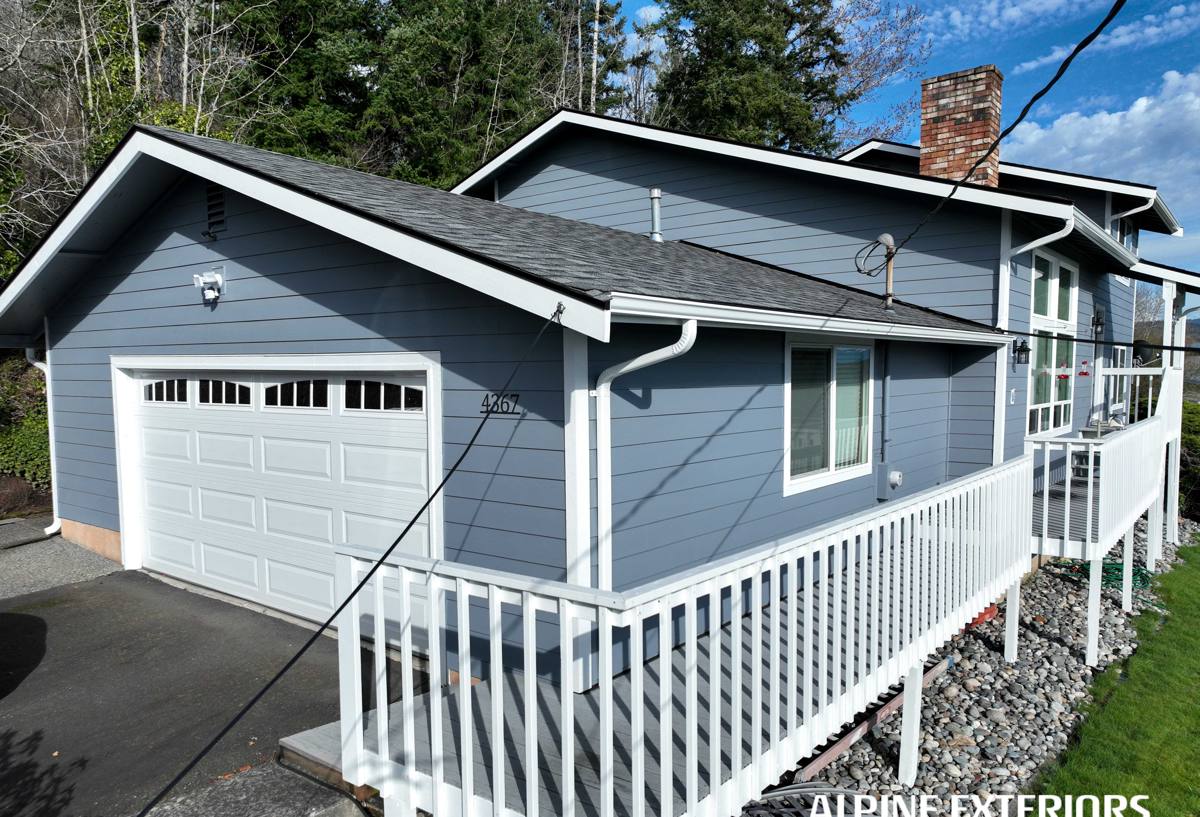
Signs a South Hill Roof Needs Repair, Not Just Cleaning
A lot of homeowners on the hill call us for "moss removal" and it turns out the moss is a symptom, not the whole problem. Here's what actually signals repair-level damage versus routine maintenance:
- Water stains on interior ceilings or upper-wall drywall, especially after a heavy rain event
- Shingles that are cupping, curling at the edges, or visibly bare of granules in patches
- Moss growing in thick mats rather than a light green film — thick moss holds moisture against the roof deck
- Rust streaks below metal flashing, vent boots, or roof-mounted fixtures
- Soft or spongy spots when the roof is walked (a sign of deck rot underneath)
- Gutters filling with granules faster than expected, or with moss debris that never fully clears
- Daylight visible through the attic roof deck, or damp insulation directly under the roofline
If you're seeing any of these, it's worth having someone look before the next round of driving rain finds the weak spot for you.
What a Correct Repair Actually Involves
Tracing the Leak to Its Real Source
Water rarely enters where it shows up inside the house. On a sloped roof, water can travel several feet under shingles or along a rafter before it drips somewhere visible. A correct repair starts with finding the actual entry point — usually a flashing seam, a cracked vent boot, a nail pop, or a valley where two roof planes meet — rather than just patching the spot above the stain and hoping.
Matching Materials, Not Just Colors
Repairing a section of roof means blending new material into old without creating a second weak point. That means matching shingle profile and weight where possible, and — just as important — using flashing and fasteners rated for coastal exposure. Standard galvanized fasteners can corrode faster this close to salt air; stainless or coated hardware holds up better over the life of the repair.
Addressing the Moss, Not Just the Symptom
If moss caused or contributed to the damage, a repair that doesn't also address moss control is a temporary fix. That usually means removing organic growth carefully (not power-washing, which can drive water under shingles and strip granules), treating the area to slow regrowth, and checking whether zinc or copper strips make sense for that specific roof to reduce future moss pressure.
Checking the Roof Deck Underneath
Any time shingles come up for a repair, we check the decking underneath. Soft or delaminated plywood needs to be replaced before new roofing goes back down — covering rotten decking with new shingles just hides the problem for another season.
Common Repair Types We See on South Hill Roofs
| Repair Type | Typical Cause on the Hill | What the Fix Involves |
|---|---|---|
| Flashing repair (chimney, wall, valley) | Wind-driven rain forcing water past aging or improperly sealed seams | Remove and reseat flashing, replace sealant, sometimes reshape or replace the flashing itself |
| Vent boot / pipe boot replacement | Rubber boots crack from UV and weather cycling over time | Swap boot, check surrounding shingles for water intrusion |
| Moss and organic growth remediation | Shade from tree cover plus long wet season | Gentle removal, treatment, drainage check, zinc/copper strip evaluation |
| Shingle patch / partial replacement | Localized wind damage or granule loss from age | Remove damaged section, replace with matched material and proper underlayment |
| Valley repair | High water volume concentrating where roof planes meet | Rebuild valley flashing and underlayment, confirm proper water shedding |
| Deck rot repair | Prolonged moisture intrusion under compromised shingles | Cut out and replace affected decking before reroofing that section |
Our Repair Process
- Inspection. We walk the roof (weather permitting) and check the attic from inside where possible, looking for the actual source of the problem, not just where it's showing up.
- Honest assessment. We tell you what's a repair and what's headed toward needing a larger fix — including if a small patch isn't the right call given the roof's overall age and condition.
- Written estimate. Scope, materials, and price before any work starts. No surprise add-ons mid-job.
- The repair. Matched materials, corrosion-resistant fasteners, proper flashing technique, and a deck check anywhere we're opening up the roof.
- Cleanup and walkthrough. We clear debris and moss buildup we removed, and walk you through what was done and what to watch going forward.
Patch, Partial Reroof, or Full Reroof?
Not every problem calls for the same scale of fix. Part of an honest assessment is telling you which category your roof is actually in.
| Factor | Points Toward a Patch/Repair | Points Toward Partial or Full Reroof |
|---|---|---|
| Roof age | Well within expected lifespan for the material | Nearing or past typical service life |
| Extent of damage | Localized — one leak, one flashing point, one section | Multiple leak sources or widespread granule loss |
| Deck condition | Solid, no rot found | Soft or rotted decking in more than one area |
| Moss/algae history | Recent, hasn't caused shingle damage yet | Long-term growth has already degraded shingles underneath |
| Remaining shingle stock | Matching material still available | Discontinued profile/color, hard to blend a patch |
Cost for a straightforward repair is usually a small fraction of a full reroof — but if the deck is compromised in several spots or the roof is already near end of life, we'll say so rather than stack repairs on a roof that needs replacing.
Why It Matters to Hire a Crew That Already Works South Hill
Hillside lots often mean steeper driveway access, mature landscaping close to the house, and older homes with roof framing and ventilation details that don't always match newer construction. A crew that regularly works this neighborhood knows what to expect before the ladder goes up — how to stage equipment on a sloped lot, how to work around established trees without damaging them, and what Bellingham's permitting and building department expect for repair versus reroof work. That local familiarity translates into fewer surprises and a faster, cleaner job.
It also matters for moss control specifically. A crew unfamiliar with Whatcom County's growing season might treat moss once and consider it handled. On South Hill, moss management is closer to an ongoing relationship with the roof — knowing which parts of a given roof stay shaded and damp longest, and checking those spots more closely at each visit, comes from doing this work in this exact neighborhood repeatedly.
Maintenance Between Repairs
A repair holds up longer with basic upkeep in between. On South Hill roofs specifically, we recommend:
- Clearing gutters and downspouts at least twice a year — more often under heavy tree cover
- Trimming back branches that overhang the roofline to reduce shade and debris buildup
- A visual check after major windstorms for lifted or missing shingles
- Gentle moss removal before it forms thick mats, rather than waiting for a heavy growth season
- Having a professional look at flashing points every couple of years, since these are usually the first thing to fail
Let's Take a Look
If you're dealing with a leak, moss buildup, or a roof that's just due for a check after another Bellingham winter, we're happy to come out, look at the actual condition of your roof, and give you a straight answer about what it needs. The estimate is free, there's no pressure to book anything on the spot, and you'll get a clear breakdown of what we found and what we'd recommend — use the form below to get started.