 Bellingham
 Roofing in a Marine-Influenced Corner of Bellingham
Silver Beach sits close enough to the water that homes here take a different kind of weathering than roofs a few miles inland. Salt-laden air off Bellingham Bay works on metal fasteners and flashing over time. Driving rain, pushed sideways by wind off the water, finds the weak points in a roof system that a straight-down rain never would. And because the neighborhood keeps enough tree cover to shade roof slopes for long stretches of the year, moss gets a real head start every fall and doesn't fully let go until late spring. None of this means a Silver Beach roof is doomed to fail early — it means the roof has to be built and maintained with those specific stresses in mind, not installed the same way you'd install one in a dry inland climate.
We work Silver Beach regularly, along with the rest of Bellingham and Whatcom County, so this isn't a generic write-up of asphalt shingle roofing. It's what we've learned about what holds up here and what doesn't.
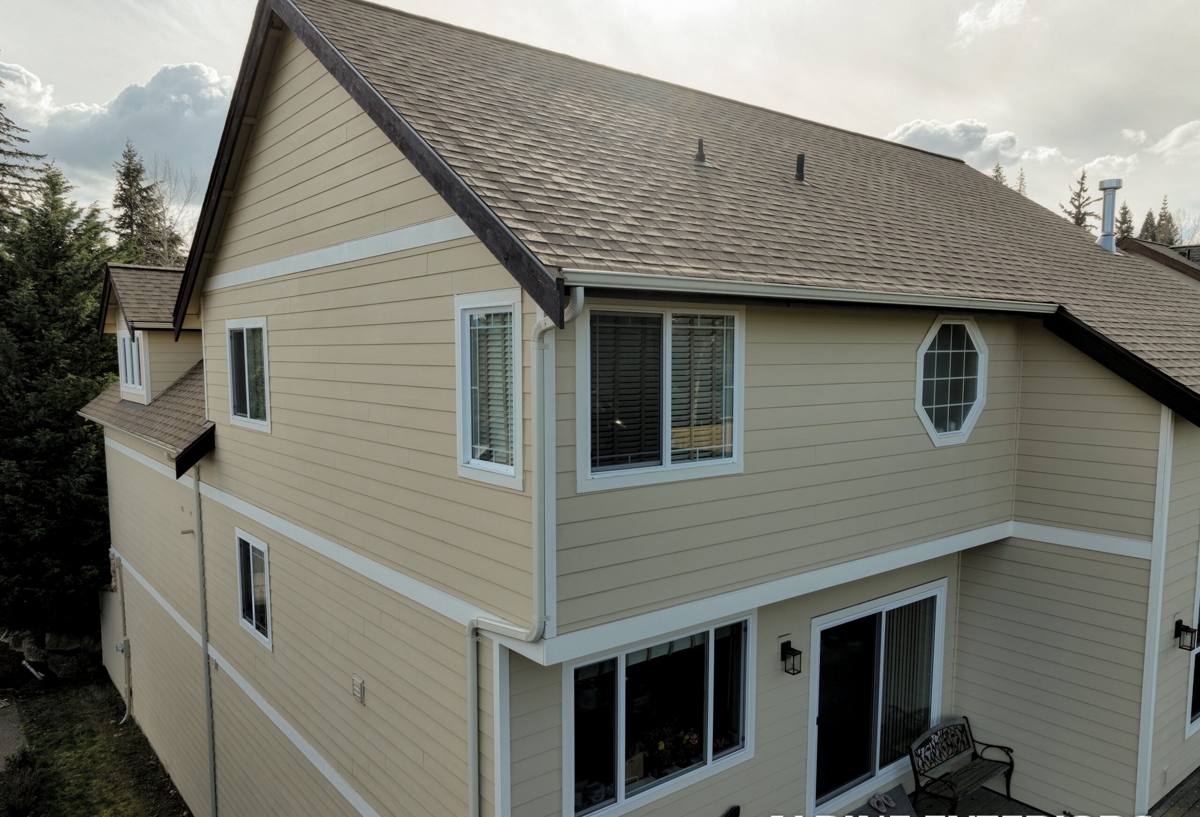
What Salt Air, Rain, and Moss Actually Do to a Shingle Roof
Salt Air
Salt-carrying moisture accelerates corrosion on any exposed metal — nail heads, drip edge, flashing around chimneys and vents, and gutter hardware. On a well-built roof this is a slow, manageable process. On a roof where corrosion-resistant fasteners and flashing weren't used to begin with, it shortens the life of the parts that keep water out long before the shingles themselves wear out.
Driving Rain and Wind
Wind-driven rain doesn't just run downhill off a roof — it can be pushed uphill under shingle tabs, into exposed nail heads, and along poorly sealed valleys and edges. This is why proper overlap, sealant strips that have actually activated, and correctly installed underlayment matter more here than they would in a calmer climate. A roof that would be fine with average workmanship somewhere drier can leak in Silver Beach if those details are cut short.
Moss and Shade
Moss doesn't just look bad — it holds moisture against the shingle surface, works its way under tab edges, and can lift shingles enough for wind and rain to get underneath. On shaded slopes in Silver Beach, moss can establish itself within a couple of seasons if it isn't kept in check. Left long enough, it degrades the granule surface that protects shingles from UV and physical wear.
What a Correctly Built Roof Looks Like Here
A shingle roof that's going to hold up in this specific environment isn't just "shingles nailed to plywood." The system underneath and around the shingles matters as much as the shingles themselves.
- Corrosion-resistant flashing and fasteners at chimneys, valleys, vent pipes, and roof-to-wall transitions
- Ice-and-water shield or equivalent self-adhered membrane at eaves, valleys, and other vulnerable points, not just where code minimums require it
- Synthetic underlayment installed with proper overlap for wind-driven rain, not the cheapest felt available
- Balanced attic ventilation so moisture from inside the home doesn't condense against the roof deck
- Shingles rated for the wind exposure the property actually sees, installed with the nailing pattern the manufacturer specifies — not a faster pattern that voids the warranty
- Drip edge and gutter apron sized and sealed to shed wind-blown rain instead of letting it wick back under the roof edge
Skip any one of these and the roof might look fine for a few years. The problems show up later, usually as a slow leak that's hard to trace back to its source.
Signs a Silver Beach Roof Needs a Look
Most roof failures in this climate don't start with a dramatic leak. They start small and get ignored because nothing is visibly dripping yet.
- Granules collecting in gutters or at downspout outlets
- Dark streaking or green-black moss growth on shaded slopes or north-facing sections
- Curling, cupping, or cracked shingle tabs, especially on slopes that get direct afternoon sun
- Rust staining below metal flashing or around vent pipes
- Soft spots or discoloration on interior ceilings near exterior walls after a heavy storm
- Shingles that look "fuzzy" or lifted along the edges, which usually means the sealant strip has failed
- Visible daylight or gaps around flashing when viewed from the attic
Any one of these on its own isn't necessarily an emergency, but they're worth a professional look before the next round of driving rain finds the gap.
Our Asphalt Shingle Roofing Process
Inspection and Honest Assessment
We start by getting on the roof and in the attic, not just looking from the ground. We check the deck for soft spots, look at how the current system was flashed and vented, and note where moss or salt exposure has done real damage versus cosmetic wear. If a repair genuinely makes more sense than a full replacement, we'll say so.
Tear-Off and Deck Inspection
Where replacement is the right call, we remove the old roofing down to the deck rather than layering over it. This lets us inspect and repair any damaged sheathing before it's covered again — a step that matters more here, since a deck that's been sitting under moss and trapped moisture can have soft spots that aren't visible until the old layer comes off.
Installation
Underlayment, flashing, and shingles go in following manufacturer specifications for nailing pattern, overlap, and fastener type, with corrosion-resistant materials used at flashing points given the proximity to the bay. Valleys, eaves, and any roof-to-wall transitions get extra attention, since those are the spots wind-driven rain exploits first.
Cleanup and Walkthrough
We clean the property of old materials and debris, do a final walkthrough, and go over the maintenance basics that keep the new roof performing — particularly moss control, given the shade many Silver Beach lots have.
Choosing a Shingle for This Environment
Not every asphalt shingle product is built the same way, and the right choice depends on the home's exposure, budget, and how long the owner plans to stay in the house.
| Shingle Type | Typical Lifespan | Best Fit For |
|---|---|---|
| 3-tab | 15–20 years | Budget-focused projects, rental or transitional properties |
| Architectural / dimensional | 25–30+ years | Most Silver Beach homes — better wind rating and a heavier profile that holds up to driving rain |
| Impact-resistant | Comparable to architectural, often with insurance discounts | Homes wanting extra durability against debris and hail, where available from the manufacturer |
We don't install lower-grade products on homes with this kind of wind and rain exposure just to hit a lower price point — it tends to shift the cost to the homeowner a few years later in the form of premature repairs. We'll walk through the honest trade-offs of each option, including warranty terms, so the decision is yours with full information.
Repair or Full Replacement?
This is one of the most common questions we get, and the honest answer is "it depends," but there are consistent factors that point one way or the other.
| Factor | Leans Repair | Leans Replacement |
|---|---|---|
| Roof age | Under 12–15 years | Approaching or past expected lifespan |
| Extent of damage | Isolated to one section or flashing point | Widespread granule loss, multiple leak points |
| Deck condition | Solid, no soft spots | Rot or moisture damage found in more than one area |
| Moss/salt history | Recent, caught early | Long-term neglect with visible shingle lifting |
A roof with isolated damage and a sound deck is usually a repair candidate. A roof with widespread wear, a deck that's absorbed moisture in multiple spots, or flashing that's corroded through is generally past the point where repairs are the economical choice.
Maintenance That Actually Extends Roof Life Here
The single biggest difference between a Silver Beach shingle roof that lasts its full rated lifespan and one that doesn't is usually moss and debris control, not the shingle brand.
- Keep gutters and downspouts clear, especially after fall leaf drop
- Have moss treated or removed before it spreads across a full slope — don't wait until it's visible from the street
- Trim back overhanging branches where practical to reduce shade and debris buildup
- Schedule a roof check after any significant windstorm, since lifted or missing shingles aren't always visible from the ground
- Avoid pressure washing shingles — it strips granules and shortens roof life rather than protecting it
Why a Crew That Already Works Silver Beach Matters
Roofing crews who mostly work drier, inland areas sometimes bring habits that don't hold up here — lighter flashing, standard nailing patterns instead of high-wind patterns, or underlayment choices that are fine elsewhere but marginal against wind-driven rain off the bay. We work this neighborhood and the rest of Bellingham and Whatcom County regularly enough to know which details matter on a bay-adjacent, shade-heavy lot versus a roof a few miles inland. That's not a sales pitch — it's the difference between a roof that needs attention again in five years and one that goes the distance.
If you're dealing with a roof that's showing its age, planning ahead for a replacement, or just want an honest read on what condition your roof is actually in, we're glad to come take a look. There's no pressure and no obligation — just a straight assessment and, if you want it, a written estimate you can take your time with.