 Bellingham
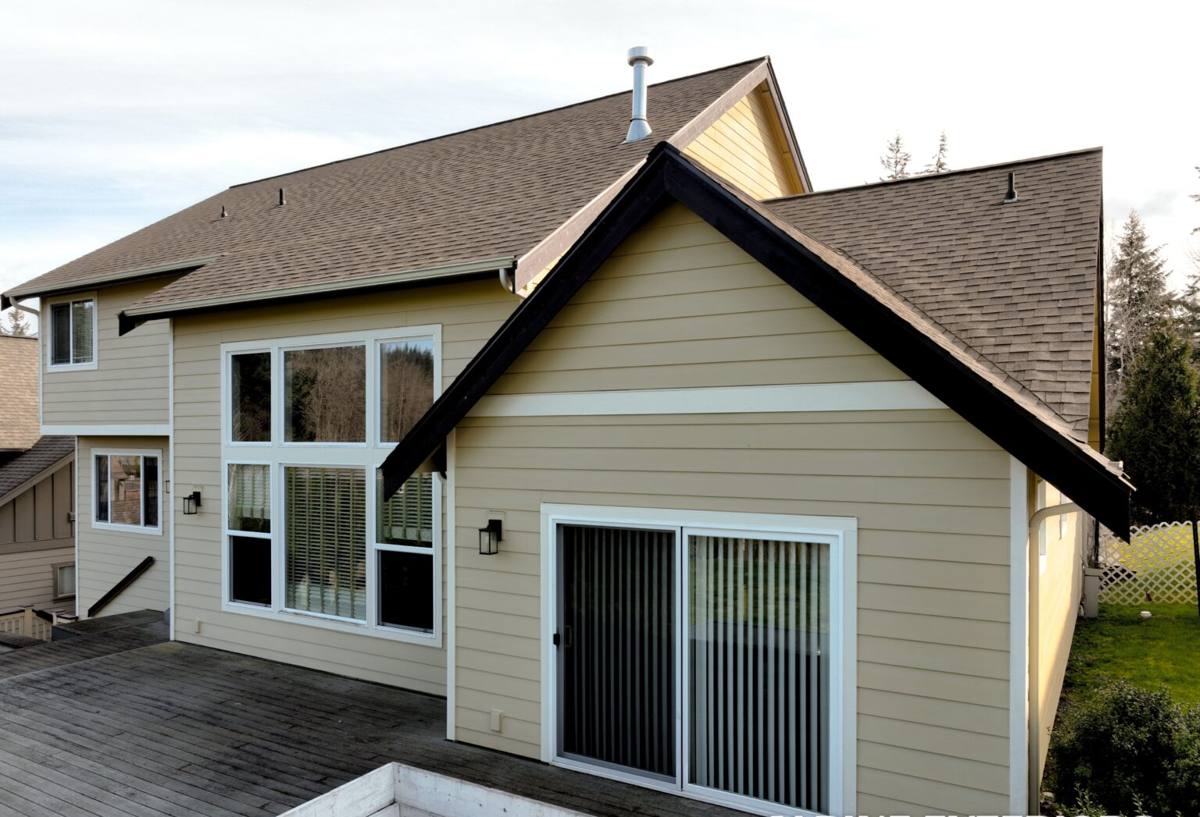
 Siding Replacement Built for Blaine's Coastal Exposure
Blaine sits about as close to saltwater and the Canadian border as a Whatcom County home can get, and that location shapes what siding actually needs to do here. Homes near Semiahmoo Bay and Drayton Harbor take a steady diet of salt-laden air, wind-driven rain off the Strait of Georgia, and a moss season that can run from October through April. Add in the marine humidity that never fully lets up, and you have a climate that finds every weak point in a siding system faster than almost anywhere else in the county. A siding replacement in Blaine isn't just a cosmetic upgrade — it's a chance to correct whatever the original siding got wrong for this specific environment.
We work Blaine regularly alongside our Bellingham base, and the pattern repeats: siding that looked fine for a decade starts failing in specific, predictable ways once salt air and moisture get into the wood fiber, seams, or fastener points. Understanding those failure points before you replace anything is what separates a repair that lasts from one that needs redoing in five years.
Why Coastal Whatcom County Is Hard on Siding
Salt Air and Corrosion
Airborne salt from the Strait and the bay doesn't just affect metal — it accelerates the breakdown of paint films and finishes on wood and composite siding, and it corrodes fasteners and trim flashing faster than inland exposure would. Once a fastener starts corroding, the hole around it widens, and that's a direct path for water intrusion.
Driving Rain
Blaine's exposure to weather coming off the water means rain frequently arrives sideways, not straight down. That matters enormously for siding performance, because wind-driven rain gets pushed up under laps, into butt joints, and behind trim in ways that a standard rain event never would. Siding systems and installation details that work fine in a sheltered inland yard can leak in Blaine within a few storm seasons if they weren't built with driving rain in mind.
Extended Moss and Moisture Season
The same conditions that make Whatcom County green make its siding a target for moss, algae, and mildew growth for a good chunk of the year. On absorbent or poorly finished siding materials, that sustained moisture exposure feeds rot from the outside in, especially at grade level, under decks, and on north-facing walls that don't get much sun to dry out between rain events.
What Blaine Homes Are Dealing With When They Call Us
- Paint or finish failure well before the manufacturer's stated lifespan, often on the west- and north-facing walls that take the brunt of the weather
- Soft or spongy siding at the bottom courses, near hose bibs, or below window sills where water collects and lingers
- Persistent moss and green staining that keeps returning within a season or two of cleaning
- Corroded or backed-out fasteners, especially on older installations using standard (non-coated) nails
- Gaps at butt joints and trim that have opened up as the material has moved with moisture cycles
- Visible cupping, warping, or delamination on engineered wood or older composite products
None of these are unusual for the area — they're the expected result of ordinary siding materials meeting an environment that's tougher than most manufacturers design for. The fix isn't just patching the symptom; it's replacing with a material and installation approach built to hold up to salt air and driving rain in the first place.
Why We Install James Hardie Fiber Cement — and Only That
We standardized on James Hardie fiber cement siding for every home we side, including in Blaine, and we don't install vinyl, LP SmartSide, primed spruce, cedar, Cemplank, or Allura. That's a deliberate call, not a default. Fiber cement is non-combustible, dimensionally stable across wet-dry cycles, and doesn't feed rot the way wood-based products can when moisture gets past the surface. Hardie's ColorPlus factory finish is baked on and warranted separately from the substrate, which matters directly in a place like Blaine where UV, salt, and moisture all work together to break down field-applied paint faster than inland exposure would.
James Hardie also makes climate-specific product lines (HZ5 and HZ10) engineered for different moisture and freeze-thaw conditions, so the product going on a Blaine home isn't a generic national spec — it's matched to Pacific Northwest coastal exposure. Combined with a strong transferable warranty, that gives homeowners a siding system built around the actual conditions their house faces, not just a lower sticker price.
What a Correct Siding Replacement Involves
Full Tear-Off and Substrate Inspection
We remove the old siding down to the sheathing rather than siding over it. That's the only way to actually see what's underneath — soft sheathing, hidden rot around windows and penetrations, or old moisture damage that's been quietly spreading behind the old material. In a coastal exposure like Blaine's, skipping this step means guessing at problems instead of fixing them.
Weather-Resistive Barrier and Flashing
A correctly installed water-resistive barrier, properly lapped and taped, along with new flashing at every window, door, and penetration, is what actually keeps driving rain out — the siding itself is the second line of defense, not the first. Given how much wind-driven rain Blaine sees, we treat this layer as non-negotiable, not an afterthought.
Rainscreen Considerations
On exposures that take the worst of the weather — typically west- and north-facing walls close to the water — a rainscreen gap behind the siding gives any moisture that does get past the cladding a way to drain and dry instead of sitting against the sheathing. We evaluate this wall by wall rather than applying a blanket approach to every elevation.
Fastening and Fastener Selection
Corrosion-resistant fasteners, installed to Hardie's specific fastening pattern and edge-distance requirements, matter more in salt air than almost anywhere else. Under-driven or over-driven nails, wrong fastener spacing, or the wrong fastener material are common ways an otherwise good siding job starts failing early in a coastal environment.
Trim, Caulking, and Sealant Details
Butt joints, trim intersections, and penetrations get sealed with products rated for the exposure, not whatever's fastest. In driving rain, these small details are frequently where water actually gets in — the field of the siding rarely fails first.
Cost Factors for a Blaine Siding Replacement
| Factor | Why It Matters Here |
|---|---|
| Home size and wall complexity | More corners, dormers, and trim details mean more labor and flashing points |
| Substrate condition | Rot or soft sheathing found during tear-off adds repair scope before new siding goes on |
| Siding profile and accessories | Lap, shingle, or panel Hardie profiles, plus trim and soffit work, affect material cost |
| Rainscreen application | Exposures facing the water may warrant a drainage gap, adding a modest labor step |
| Access and site conditions | Waterfront lots, retaining walls, or tight setbacks can affect staging and labor time |
| Color and finish selection | Standard ColorPlus colors versus custom options can shift material pricing |
We don't quote a job without seeing the house — every Blaine property has its own mix of exposure, existing damage, and layout, and an honest number only comes from a walkthrough.
Our Process for a Blaine Siding Replacement
- On-site inspection of the existing siding, trim, and any visible moisture damage
- Assessment of wall exposure to determine where rainscreen or extra flashing detail is warranted
- A written scope and estimate covering tear-off, substrate repair allowances, materials, and finish
- Full removal of old siding and inspection of sheathing before anything new goes on
- Installation of weather-resistive barrier, flashing, and (where applicable) rainscreen furring
- James Hardie fiber cement installation to manufacturer fastening and clearance specifications
- Final trim, caulking, and cleanup walkthrough with the homeowner
Why Hiring a Crew That Already Works Blaine Matters
Siding installation isn't one-size-fits-all across Whatcom County. A crew that mostly works sheltered inland neighborhoods can do a technically fine install and still miss the details that matter on a home exposed to Semiahmoo Bay or the Strait — where the rainscreen gap should go, which walls need extra flashing attention, how much of a margin to leave for material movement in a marine climate. Working Blaine and Bellingham together means we see this exposure pattern often enough to plan for it up front, not discover it as a callback two winters later.
It also means we're familiar with the practical side of working near the border — site access on waterfront and semi-rural lots, seasonal weather windows for tear-off work, and sequencing a job so the home isn't left exposed to Blaine's rain longer than necessary.
Maintaining Your New Siding in a Salt-Air Climate
- Rinse salt residue and grime off exterior walls periodically, especially on water-facing elevations
- Keep gutters clear so overflow doesn't run down the siding face and feed moss growth
- Trim back vegetation and tree cover that keeps walls shaded and slow to dry
- Inspect caulking at trim and penetrations every year or two and re-seal as needed
- Address any impact damage or fastener issues promptly rather than letting water find a way in
Fiber cement demands far less of this than wood-based siding, but no material in a coastal Whatcom County climate is entirely maintenance-free.
If your Blaine home's siding is showing moss that won't quit, soft spots near the bottom courses, or finish failure ahead of schedule, we're happy to take a look. Reach out for a free, no-pressure estimate using the form below.