 Bellingham
 Siding Repair for Edgemoor: A Bayfront Neighborhood With Its Own Weather Problem
Edgemoor sits close enough to Bellingham Bay that the water is part of the deal, in good ways and hard ones. The views are part of why people live there, but that same exposure means homes take a steadier dose of salt-tinged marine air, wind that drives rain sideways instead of straight down, and a moss and mildew season that can run most of the year on shaded and tree-covered walls. Siding damage in Edgemoor rarely comes from one dramatic event. It usually builds slowly, in the same spots, until a homeowner notices a soft patch, a stain that keeps coming back, or a seam that's been open longer than anyone realized.
A siding repair here isn't just a patch job. Done right, it means understanding why that section failed in the first place, so the fix actually holds instead of failing again in the same spot two winters later. That's the difference between a repair that lasts and one that's really just a temporary cover-up.
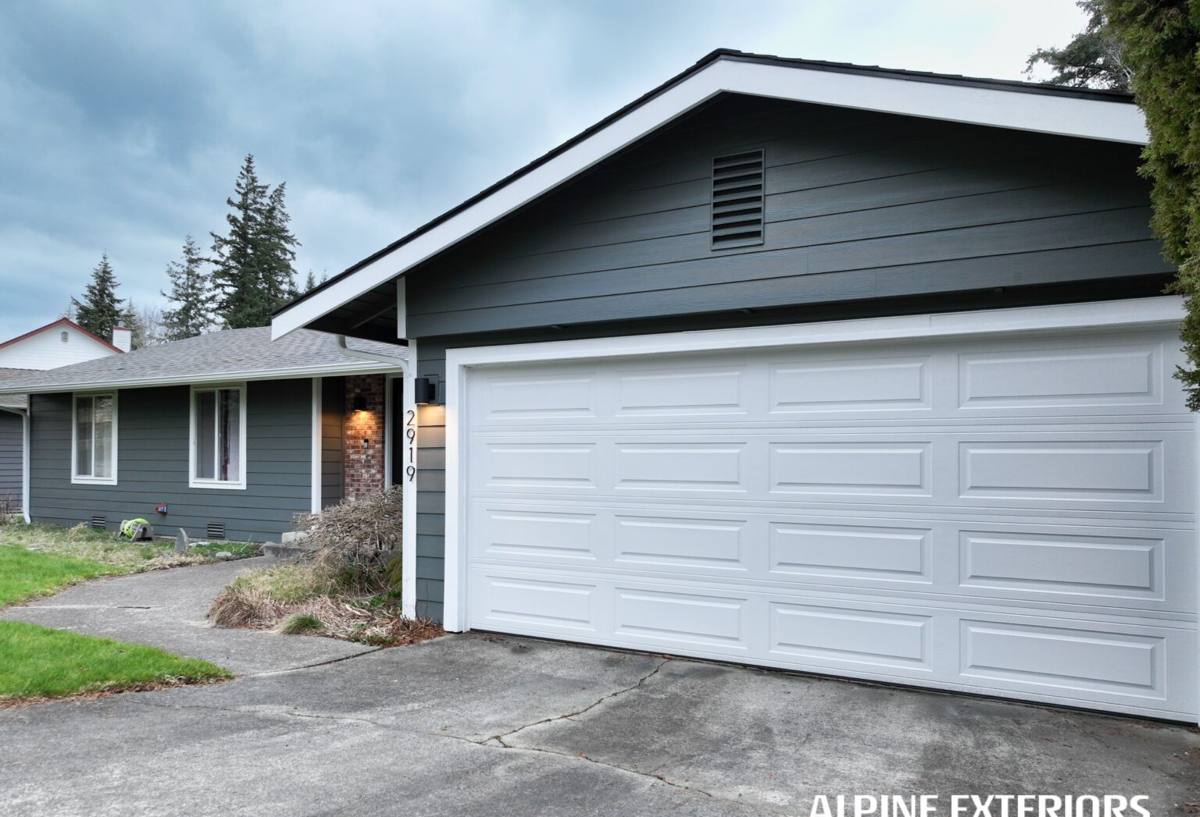
Why Edgemoor's Location Puts Extra Stress on Siding
Bay-Adjacent Salt Air
Being this close to the water means a steady, quiet exposure to salt-laden moisture in the air, not just on stormy days. Over years, that kind of exposure works on fasteners, trim, and lower-grade finishes in ways that aren't dramatic day to day but add up. It's a slow type of wear, and it's often well underway before it's visible from the street.
Wind-Driven Rain Off the Water
Like the rest of coastal Whatcom County, Edgemoor gets rain pushed by wind coming off the bay, hitting walls at an angle rather than falling straight. That matters for repairs specifically, because a patch that only addresses the visible damage and not the flashing or house wrap behind it can let water keep tracking in from an angle a simple surface fix never accounted for.
Tree Cover and a Long Moss Season
Edgemoor's mature landscaping and tree canopy are part of the neighborhood's character, but they also mean shaded walls stay damp longer after every rain. Moss and mildew take hold fastest on north-facing sections and anywhere airflow is blocked by hedges or overhangs, and any siding with even slight porosity becomes a growth surface in those conditions.
What a Correct Siding Repair Actually Involves
A siding repair isn't just swapping out the board that looks damaged. Done properly, it starts with figuring out how water got in and how far it traveled before it showed up as visible damage on the surface.
- Diagnose before cutting: We check the extent of moisture intrusion, including sheathing and framing behind the visible damage, before deciding on repair scope.
- Match the material correctly: Replacement sections need to match existing James Hardie profile, thickness, and factory finish so the repair doesn't stand out or create a mismatched moisture path.
- Reseal and reflash properly: Any repair that disturbs house wrap or flashing has to put those layers back correctly, lapped and sealed the way they were designed to work, not just caulked over.
- Check the fastening pattern: Replacement boards need correct nailing patterns and clearances, the same as new installation, or the repair becomes the next weak point.
- Confirm the source is actually fixed: If the damage traces back to a roof, window, or deck detail rather than the siding itself, patching the siding without addressing that source just delays the same failure.
Skipping any of those steps is how a repair turns into a callback. It's also how a small, affordable fix in year one becomes a much bigger, more expensive job by year three.
Repair vs. Replacement: How We Tell the Difference
Not every siding problem in Edgemoor means a full re-side. Isolated impact damage, a section that failed around a window or trim detail, or boards loosened by wind can usually be repaired and matched into the existing wall without touching the rest of the house. But when moisture has clearly been tracking behind the wall assembly for a while, or the existing siding is an older product nearing the end of its service life, a repair usually just buys a little time before a bigger job becomes unavoidable. We'll walk the property and tell you plainly which situation you're actually in, rather than defaulting to whichever answer is easier to sell.
Why We Only Repair and Install James Hardie Siding
We don't offer a menu of siding brands to choose from. We install and repair James Hardie fiber cement, and the reason comes from what we've consistently seen on tear-offs and repair calls in this exact climate.
- Non-combustible core: Fiber cement doesn't feed a fire the way wood-based siding can, which matters for household safety.
- Factory-applied ColorPlus finish: The color coat is cured under controlled factory conditions, so it resists fading and moisture intrusion far longer than field-applied paint, which matters when you're trying to match an existing wall years later.
- Climate-engineered HZ product lines: Hardie's HZ5 formulation is built for regions with heavy sustained moisture and freeze-thaw cycling, which fits Edgemoor's bay-exposed setting better than a generic national spec.
- Dimensional stability: Fiber cement doesn't swell, cup, or warp the way engineered wood products can after repeated wet-season moisture cycles, which keeps repaired sections sitting flush with the rest of the wall.
- Strong transferable warranty: Hardie backs its products with one of the more substantial warranty structures in the industry, provided the installation follows spec.
We don't install or repair LP SmartSide, vinyl siding, Cemplank, Allura, primed spruce, or cedar. Those are legitimate products, and other contractors work with them. But in a climate this consistently wet and salt-exposed, we made a professional decision to stand behind one system we trust completely rather than stretch our repair work across products with trade-offs we'd have to explain away later.
That standard cuts both ways on repair calls. If a home in Edgemoor currently has vinyl, engineered wood, or cedar siding, we'll still assess the damage honestly and tell you what's actually going on, even if the long-term recommendation is a conversation about replacement rather than a like-for-like patch.
Signs an Edgemoor Home Needs Siding Repair
- Moss or dark staining that returns quickly after cleaning, especially on shaded or bay-facing walls
- Soft or spongy siding near the base of the wall or around window and door trim
- Visible gaps at seams, corners, or trim joints where wind-driven rain can track in
- Peeling paint, bubbling, or warping on individual boards while the rest of the wall looks fine
- Cracked or missing sections after a windstorm off the bay
- A musty smell or slightly damp feel to interior walls that back onto an exterior section
Siding Repair Cost Factors in Edgemoor
| Factor | What It Affects | Why It Matters Here |
|---|---|---|
| Extent of hidden moisture damage | Whether repair also involves sheathing or framing | Bay-adjacent wind-driven rain can push water further behind the wall than the visible damage suggests |
| Number and location of affected sections | Labor time and material matching | Scattered damage on shaded, tree-covered walls is common where moss holds moisture longest |
| Age and profile match of existing siding | Whether repair sections blend in visually | Older Hardie profiles and colors sometimes need close matching to avoid a patchwork look |
| Flashing and house wrap condition | Whether the repair addresses the actual water path | A patch that ignores compromised flashing tends to fail again in the same spot |
| Site access and landscaping | Labor time and equipment needs | Mature trees and tighter lot setups common in Edgemoor can add setup and staging time |
Real numbers depend on what we actually find once a section is opened up, which is why we walk the property and assess the damage in person rather than quoting sight unseen.
Roofing, Windows, and Decks Alongside Siding Repair
Siding damage often isn't caused by the siding itself. A roof valley shedding water onto a wall below, a window flashed incorrectly during a past remodel, or a deck ledger trapping moisture against the house can all show up as siding failure even though the siding is just where the water finally surfaced. Because we also handle roofing, windows, and decks, we can look at an Edgemoor property as one connected exterior system and trace a repair back to its real cause instead of patching over a leak that's still active underneath.
Why a Crew That Already Works Edgemoor Matters
A crew that repairs siding in this neighborhood regularly knows how bay exposure, wind-driven rain, and moss actually behave here across a full year, not just in theory. That shows up in small but real decisions on repair day: which wall orientations to check more carefully for hidden moisture, where a quick caulk fix isn't enough and full reflashing is worth the extra time, and how to match an aging Hardie profile so a repaired section doesn't stand out from the rest of the wall. Edgemoor's mix of bayfront exposure, mature tree cover, and established housing stock isn't identical to inland Bellingham neighborhoods, and a crew with real experience here accounts for that instead of treating every repair the same way.
If you're seeing moss that won't stay gone, a soft spot near a window, or damage from a recent windstorm off the bay, we're glad to take a look. Reach out using the form below to schedule a free, no-pressure estimate.