 Bellingham
 Siding Installation for York Homes in Bellingham
York is one of Bellingham's older, established residential neighborhoods, and that shows up in its housing stock — a mix of early-to-mid-century homes alongside more recent updates and additions, many of them due or overdue for new siding. When a siding installation is done right in a neighborhood like this, it's not just a cosmetic refresh. It's a chance to correct decades of accumulated moisture problems that older wall assemblies tend to hide until someone opens them up. In a city like Bellingham, where salt air off the bay, wind-driven rain, and a moss season that runs most of the year all work against a wall year-round, that correction matters as much as the finished look.
We install James Hardie fiber cement siding exclusively — not LP SmartSide, not vinyl, not Cemplank, Allura, primed spruce, or cedar. That's a professional standard we hold across every job, and it shapes how we approach an installation in York specifically: what we look for during tear-off, how we detail the assembly behind the new siding, and what we tell homeowners to expect from the finished product over the next few decades.
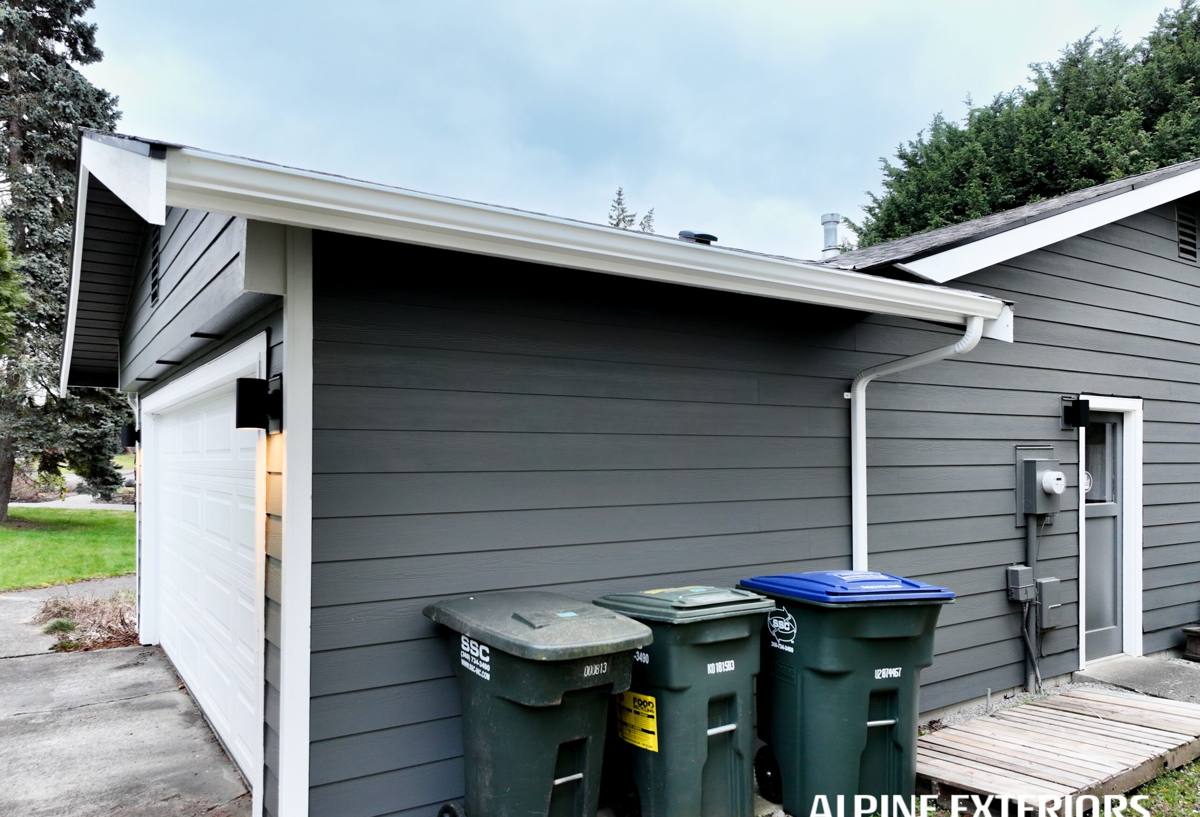
What Bellingham's Climate Asks of New Siding
Wind-Driven Rain and Water Management
Rain in Bellingham rarely falls straight down. Wind off the Salish Sea and the bay pushes it sideways into walls, which means siding here has to shed water that's actively being driven up under laps and into corners, not just water running down a flat surface. A wall assembly built for calmer inland weather — thin house wrap, minimal flashing, tight caulk joints instead of proper laps — tends to fall short here within a handful of wet seasons.
Salt Air and Long-Term Corrosion
York's proximity to the bay means homes there see a steady dose of salt-laden air, which is hard on any exposed metal — fasteners, flashing, trim. Corrosion-resistant fastener specs and properly lapped flashing aren't optional upgrades in this environment; they're the difference between siding that holds up for 30 years and one that starts showing rust streaks and loosening fasteners well before that.
A Moss Season That Runs Most of the Year
Shaded and north-facing walls in Bellingham stay damp longer than sun-exposed ones, and that dampness is what moss, algae, and mildew need to take hold. Mature trees are common in older neighborhoods like York, which means more shaded wall area and a longer window each year where a poorly finished or poorly ventilated siding surface can hold moisture instead of shedding it.
Older Housing Stock Means Installation Starts With What's Underneath
What Tear-Off Reveals
On an older home, removing the existing siding is often the first time in decades anyone gets a real look at the sheathing, framing, and window flashing underneath. It's common to find soft or water-damaged sheathing near old window openings, house wrap that's torn or missing in sections, and flashing details that were never quite right to begin with — sometimes made worse by additions or remodels that weren't tied into the original water management plan. A correct installation deals with these issues before a single course of new siding goes up, not after.
Matching Proportions on an Established Home
Older homes in neighborhoods like York often have specific trim proportions, window casing details, and reveal heights that were standard when they were built. Reinstalling siding without paying attention to those details can leave a home looking noticeably "redone" in a way that clashes with its age and style. Part of a good installation plan is deciding, with the homeowner, how closely to match the existing look versus updating it — and making sure trim, corner details, and reveal spacing are consistent with that decision.
What a Correct Siding Installation Actually Involves
The visible result of a siding job — clean, straight lines and a good color — depends entirely on work that isn't visible once the project is done. A correct installation includes:
- Removal of the old siding and a full inspection of the sheathing and framing underneath, with repairs made before anything new goes on
- A continuous, correctly lapped weather-resistive barrier (house wrap) with no gaps, tears, or reverse laps
- Properly flashed and sealed window and door openings, built to shed water down and out rather than trap it behind the siding
- Corrosion-resistant fasteners, sized and spaced to the manufacturer's specification for the climate and exposure
- Correct starter strip installation and consistent reveal spacing on every course
- Clearance gaps at grade, decks, patios, and roof lines so siding isn't sitting in standing water or trapped debris
- A final inspection of caulking, trim, and touch-up painting at every cut edge before the crew leaves
Skipping or rushing any one of these steps doesn't usually show up as a problem in year one. It shows up in year five or ten, as staining, soft spots, or paint failure at the exact points where the shortcut was taken.
Why We Install Only James Hardie Fiber Cement
We made a deliberate decision to stop offering a menu of siding materials and instead standardize on one system we trust completely. James Hardie's fiber cement is non-combustible, dimensionally stable in wet climates, and comes with a factory-applied ColorPlus finish that holds color and resists moisture better than most field-painted materials. Hardie also engineers specific product lines (its HZ5 line, for instance) for exactly the kind of wet, marine-influenced climate Bellingham sits in.
| Material | Moisture Behavior | Maintenance in This Climate | Realistic Lifespan |
|---|---|---|---|
| James Hardie fiber cement | Dimensionally stable; doesn't swell, cup, or rot | Low; factory finish resists moss and fading | 30+ years with proper install |
| LP SmartSide (engineered wood) | More sensitive to moisture at cut edges and fastener penetrations | Moderate; edge sealing needs ongoing upkeep | 15-25 years, climate-dependent |
| Vinyl | Sheds bulk water but can warp, gap, or trap moisture behind it undetected | Low visible upkeep, but hidden issues are hard to catch | 20-30 years, variable |
| Cedar | Absorbs moisture readily without consistent sealing and re-finishing | High; recurring staining or painting cycle | 15-25 years with consistent upkeep |
Those other materials aren't bad products, and other contractors install them competently. We simply concluded that on homes facing Bellingham's combination of salt air, driving rain, and near-constant shaded-wall moisture, one proven system with a strong transferable warranty serves our customers better than offering a lower-cost option that shifts maintenance risk onto them down the road.
Our Installation Process
Every siding installation we run in York follows the same sequence, adjusted for what we find once we're into the walls:
- Walkthrough and assessment — we look at the home's age, exposure, existing siding condition, and any visible signs of moisture damage before writing up a scope of work.
- Detailed plan — trim details, reveal spacing, color, and flashing plan are worked out with the homeowner before any material is ordered.
- Tear-off and inspection — old siding comes off, sheathing and framing are inspected, and any needed repairs are addressed and documented before moving forward.
- Weather barrier and flashing — house wrap, window and door flashing, and all penetrations are installed and lapped correctly before the first piece of siding goes up.
- Installation — Hardie siding is installed to manufacturer fastening and clearance specs, course by course, with trim and corners detailed to match the plan.
- Final walkthrough — caulking, touch-up, and cleanup are checked against the original scope with the homeowner before we consider the job done.
What Affects the Cost of a Siding Installation in York
Two homes of similar size in York can land at very different price points depending on what the project actually involves:
| Factor | Why It Matters |
|---|---|
| Condition of existing sheathing and framing | Rot or water damage found at tear-off needs repair before new siding goes up |
| Wall complexity | More corners, dormers, and roof transitions mean more cuts, trim, and flashing detail |
| Number and size of window and door openings | Each opening needs its own flashing and trim work |
| Siding profile chosen | Lap, board and batten, and shingle-style profiles differ in material use and labor |
| Site access | Tight lots, mature landscaping, or limited staging area can add labor time |
We'll walk your specific home and give you real numbers rather than a rough per-square-foot estimate — the condition behind the old siding drives cost as much as the size of the house does.
Why Hiring a Crew That Already Works in York Matters
A crew that's worked on other homes in York and similar Bellingham neighborhoods already has a sense of what these houses tend to hide — the era-typical framing quirks, the additions that weren't tied into the original wall assembly correctly, the shaded walls that need extra attention to ventilation and drainage. That familiarity shows up in fewer surprises during tear-off and a more accurate estimate up front, rather than change orders once the walls are open. It also means the crew understands the specific weather this neighborhood deals with — the salt air, the wind-driven rain, the long moss season — and details every flashing point and fastener spec accordingly, instead of building to a generic spec sheet.
If you're considering new siding for a home in York, we're happy to walk the property, talk through what your walls specifically need given their age, orientation, and exposure, and give you a straightforward, no-pressure estimate. There's a form below — reach out and we'll set up a time to take a look.