 Bellingham
 Why Siding in Sehome Faces a Harder Job Than Most
Sehome sits on one of Bellingham's more heavily wooded hillsides, close enough to the bay to pick up salt-laden air and open enough to Whatcom County's marine weather patterns to take the full brunt of driving rain off the Pacific. That combination is tougher on exterior siding than a lot of homeowners realize. Salt air accelerates corrosion on fasteners and metal trim. Wind-driven rain doesn't just fall on siding, it gets pushed sideways into laps, seams, and butt joints. And the tree canopy that gives Sehome its character also keeps siding shaded and damp longer after every storm, which is exactly the environment moss and algae need to take hold.
None of that is unique to any one street or block in the neighborhood — it's a function of Sehome's elevation, tree cover, and proximity to the water, and it applies whether a home is an older bungalow-style build or a newer infill house. What it means practically is that siding here has to manage moisture correctly, resist the freeze-thaw and wet-dry cycling that comes with a long moss season, and hold up to salt exposure without the paint chalking out or the fasteners rusting through in under a decade.
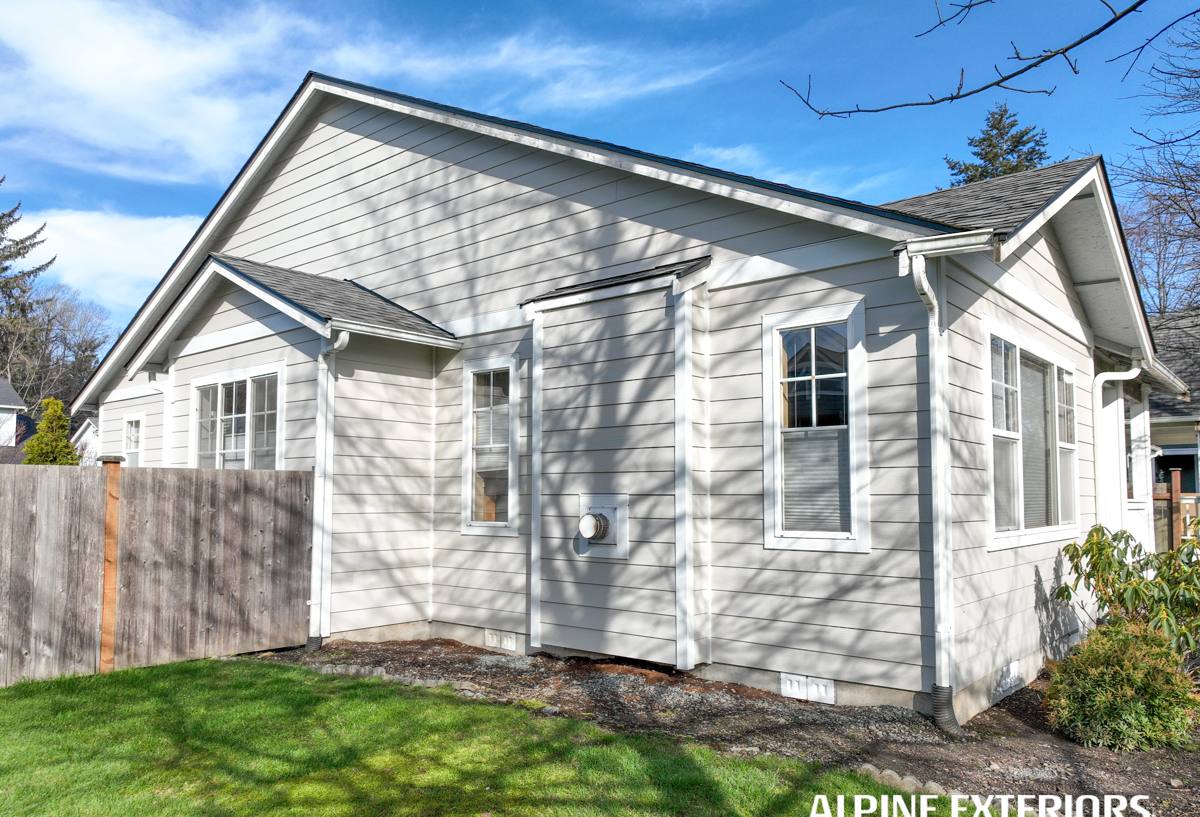
Signs Your Sehome Home's Siding Has Reached the End of Its Service Life
Because moisture problems in siding tend to develop behind the surface before they're visible on it, it pays to know what to look for early. A lot of the damage we find during estimates in this part of Bellingham started as something small that got ignored through a few wet winters.
- Soft or spongy spots when you press on the siding, especially near the bottom courses and around windows
- Paint that's peeling, bubbling, or chalking heavily rather than just fading
- Persistent moss or black-green streaking that comes back within weeks of cleaning
- Visible gaps, cracking, or warping at panel seams and butt joints
- Rust staining running down from nail heads or trim fasteners
- A musty smell or visible staining on interior walls that share an exterior wall with affected siding
- Siding that was installed directly against soil, decking, or hardscape without a gap
Any one of these on its own might be a minor repair. Several at once, especially combined with a home over 15–20 years old, usually means the siding system itself — not just the surface — has reached the point where replacement is more cost-effective than patching.
What a Correct Siding Replacement Actually Involves
Siding replacement done right is a moisture-management project first and a cosmetic upgrade second. In a climate like Bellingham's, cutting corners on the parts you can't see after the job is finished is what causes the same failure to show up again in eight or ten years instead of twenty-five or thirty.
Tear-Off and Sheathing Inspection
Old siding comes off down to the sheathing, and the sheathing gets inspected panel by panel. This is the step that matters most and gets skipped most often by crews trying to move fast. Any soft, delaminated, or water-damaged sheathing gets cut out and replaced before anything new goes back up — installing new siding over compromised sheathing just locks the problem behind a new surface.
Water-Resistive Barrier and Rainscreen Gap
A properly lapped water-resistive barrier goes over the sheathing, with all seams and penetrations sealed. On most Sehome homes we also install a rainscreen gap — a small vertical air space between the barrier and the new siding — so any moisture that does get past the outer layer can drain and dry out instead of sitting against the wall. That gap is one of the biggest differences between a siding job that lasts and one that doesn't in a wet marine climate.
Flashing at Every Penetration
Windows, doors, hose bibs, vents, and light fixtures are all places water tries to get in. Correct flashing at each of these, installed in the right order relative to the barrier and siding, is what actually keeps wind-driven rain out — caulk alone is not a substitute for flashing, it's a backup.
Fastening and Finish
Fastener type, spacing, and depth all follow the manufacturer's specification, not a generic rule of thumb, because under- or over-driven fasteners are a common cause of premature siding failure. The finish coat — factory-applied on the products we install — goes on before any field touch-up, since factory finishes are baked on under controlled conditions and hold color and adhesion far longer than anything applied on-site.
Why We Install Only James Hardie Fiber Cement
We install James Hardie fiber cement siding exclusively. We don't install vinyl, LP SmartSide, Cemplank, Allura, primed spruce, or cedar, and that's a deliberate standard, not a lack of options. In a climate that combines salt air, sustained wet weather, and a long moss season, the trade-offs of those other products — vinyl's tendency to warp and fade, engineered wood's vulnerability to moisture at cut edges, cedar's ongoing maintenance demands, and the thinner factory finishes on some fiber cement alternatives — show up faster here than they would in a drier climate.
The HZ5 Climate Engineering
James Hardie manufactures its siding in climate-specific HZ formulations, and the Pacific Northwest falls under the HZ5 line, engineered for regions with sustained moisture exposure. That's a meaningfully different product than a version built for a hot, dry climate, and it matters for how the material performs against Whatcom County's rain totals over the life of the siding.
ColorPlus Factory Finish
Hardie's ColorPlus finish is baked on in a controlled factory environment rather than field-applied, which gives it better fade and moisture resistance than a site-painted finish and comes with its own finish warranty on top of the product warranty. For homeowners tired of repainting siding every five to seven years, that finish durability is often the single biggest reason they switch.
Fiber cement is also non-combustible, which matters in a state where wildfire risk and insurance underwriting are both getting more attention, and it holds paint and caulk lines straight over time in a way that wood and vinyl products in this climate generally do not.
Our Process From Estimate to Finished Job
The estimate itself starts with a walk-around of the exterior, checking for the soft spots, staining, and moss patterns described above, plus a look at trim, flashing, and any past repair work. We're straightforward about what we find — if a section of siding still has useful life left, we'll say so rather than push a full replacement that isn't needed yet.
Once a job is scheduled, we sequence tear-off and sheathing repair before ordering final material, since the condition underneath sometimes changes the scope. Installation follows the manufacturer's fastening and clearance specifications throughout, including the rainscreen gap and flashing details covered above. We handle daily cleanup as we go rather than leaving debris and cut-offs to pile up, and a final walkthrough happens before we call the job done — not after.
What Drives Siding Replacement Cost in Sehome
| Factor | Why It Matters | Typical Impact |
|---|---|---|
| Sheathing condition | Hidden water damage found during tear-off needs repair before new siding goes on | Can add cost once walls are opened up; varies by extent |
| Home size and wall complexity | More corners, dormers, and trim details mean more cutting and labor | Higher labor cost per square foot on complex facades |
| Site access and tree cover | Wooded, sloped lots common in Sehome can limit staging and require extra protection for landscaping | Moderate impact on labor time and setup |
| Trim and accessory scope | Fascia, soffit, and trim replacement alongside siding adds material and labor | Increases total project cost |
| Siding profile and color | Lap width, shingle-style panels, and custom ColorPlus colors vary in material cost | Modest to moderate difference in material price |
Every one of these varies enough by property that broad online estimates rarely hold up once someone actually looks at the home. A written, itemized estimate after an on-site walk-through is the only reliable way to know real cost for a specific house.
Why Hiring a Crew That Already Works in Sehome Matters
Sehome's tree-covered lots and hillside grades create real logistical constraints that a crew unfamiliar with the neighborhood has to figure out on the fly — where to stage material and dumpsters on a tight or sloped lot, how to protect mature trees and landscaping during tear-off, and how to sequence work around the shade and dampness that lingers longer here than on more open, sunnier lots elsewhere in Bellingham. A crew that already works this area also knows what City of Bellingham permitting and inspection expects, which keeps a project from stalling on paperwork.
Just as important is knowing the climate pattern itself: how much of the year is realistically workable for tear-off without risking exposed sheathing to a sudden rain event, and how long moss and algae take to return on a shaded wall so maintenance expectations are set correctly from day one. That local knowledge doesn't show up on an estimate line item, but it shows up in how smoothly the job actually goes.
If your Sehome home's siding is showing any of the signs above, or you're simply due for a replacement and want a straight answer on what it involves and what it costs, we're glad to walk the property with you. The estimate is free, there's no pressure, and you'll get a clear, itemized picture of the work before you decide anything — just use the form below to get started.