 Bellingham
 Metal Roofing Built for Sehome's Weather, Not Against It
Sehome sits close enough to Bellingham Bay that salt-laden air is a constant, and close enough to the hillside tree cover near Western Washington University that shade, moisture, and moss are a fact of life on most roofs. A roof in this neighborhood isn't just shedding rain during a storm — it's dealing with a slow, year-round combination of dampness, shade, and airborne salt that never really lets up. That combination is hard on asphalt shingles and unforgiving of a rushed installation. Metal roofing, installed correctly, handles all three of those pressures better than most other roofing materials available today.
This page is specific to metal roofing for homes in Sehome. We're not going to give you a generic rundown of metal roofing benefits that could apply to any city in the Pacific Northwest. We're going to walk through what this neighborhood's climate actually does to a roof, what a correct metal roof installation looks like in response, and why it matters that the crew doing the work already understands Whatcom County weather.
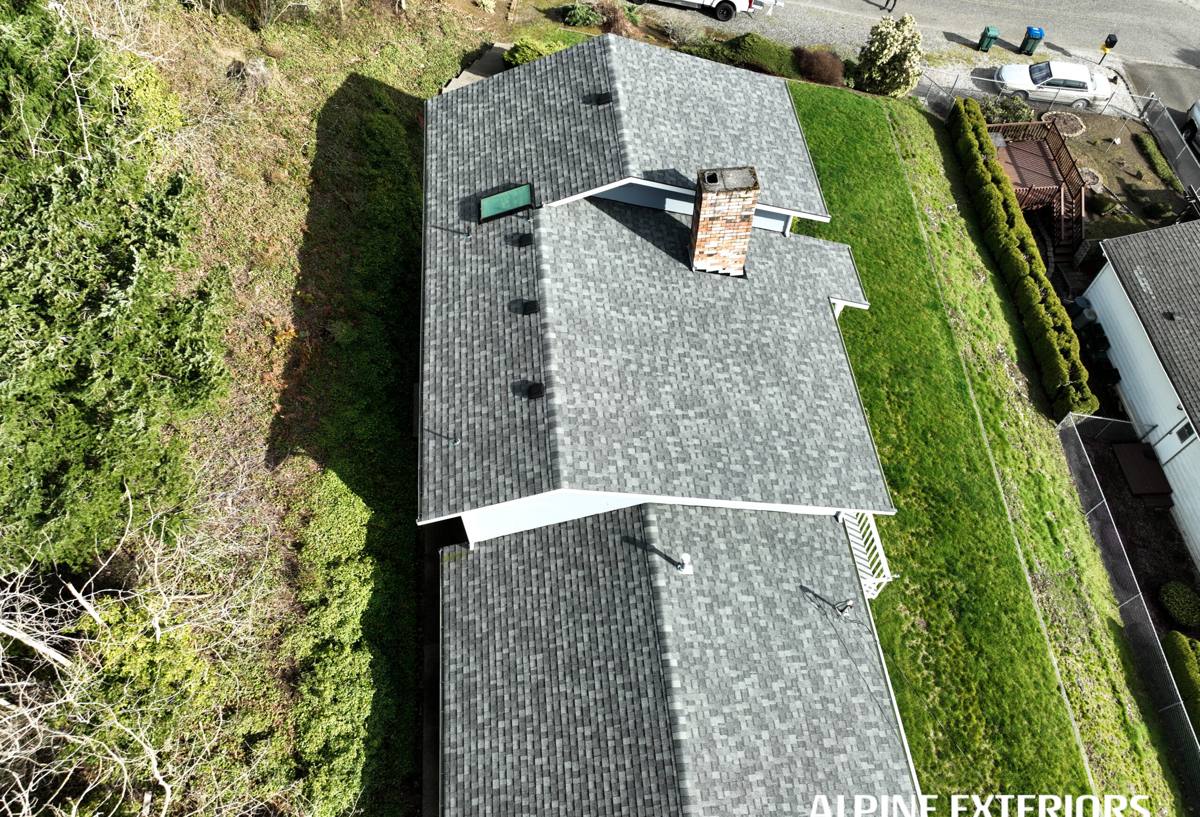
What Bellingham's Climate Does to a Roof Over Time
Three things define roofing conditions in Sehome, and they compound each other.
Salt Air
Proximity to Bellingham Bay means airborne salt settles on every exterior surface, roofs included. Over years, salt exposure accelerates corrosion on unprotected or poorly coated metal fasteners, flashing, and trim. It's not dramatic — it's slow, and it's the kind of damage that shows up as rust streaks and failed seams a decade in, long after the original installer is out of the picture.
Driving Rain
Bellingham doesn't get the heaviest rainfall totals in Washington, but it gets a lot of sustained, wind-driven rain, especially in fall and winter. Wind-driven rain finds weaknesses that straight-down rain never would — under lifted shingle tabs, around poorly sealed penetrations, at valleys and transitions where two roof planes meet. A roof that performs fine in a light drizzle can still leak under a sideways November storm.
A Long Moss Season
Shade, moisture, and mild temperatures add up to a moss season that runs most of the year in tree-covered parts of Sehome. Moss isn't just cosmetic. It holds moisture against roofing material, works its way under shingle edges and fastener heads, and on some materials it can lift and separate layers over time. A roofing material that resists moss attachment in the first place is doing a lot of the maintenance work for you.
Why Metal Roofing Makes Sense for This Neighborhood
Metal roofing addresses all three of those pressures directly, which is why we recommend it often for Sehome homes specifically — not as a universal answer for every property, but as a strong fit for this particular set of conditions.
- Smooth, hard surface: Moss and moss spores have a much harder time gripping and holding onto a smooth metal panel than they do a textured shingle surface, which means less moss buildup between cleanings.
- Fast water shedding: Steep-shed panel profiles move driving rain off the roof quickly instead of giving wind-driven water time to work under an edge or lap.
- Corrosion-resistant coatings: Quality metal roofing systems use factory-applied coatings specifically engineered to resist salt-air corrosion, when the correct panel and fastener materials are matched to each other.
- Long service life: A correctly installed metal roof is designed to outlast several cycles of asphalt shingle replacement, which matters when you're weighing upfront cost against decades of maintenance and reroofing.
None of that is automatic, though. Metal roofing only delivers on these advantages when the panel type, fastener hardware, underlayment, and flashing details are chosen and installed correctly for this specific climate. A metal roof installed with the wrong fastener alloy or without proper moisture management can develop problems just as easily as a poorly installed shingle roof — sometimes in ways that are more expensive to fix.
Choosing the Right Metal Roofing System
Not all metal roofing is the same, and the right choice depends on your roof's pitch, your budget, and how much you value a fully concealed fastener system. Here's how the two most common approaches compare for a Sehome home:
| Factor | Standing Seam | Exposed-Fastener Panel |
|---|---|---|
| Fastener exposure | Concealed beneath interlocking seams | Fasteners penetrate the panel face |
| Long-term seal performance | Very strong — no exposed penetrations to fail | Depends on gasket condition at each fastener over time |
| Salt-air resistance | Excellent, since fasteners aren't exposed to weather | Good, but exposed fasteners need periodic inspection |
| Typical upfront cost | Higher | More moderate |
| Best fit | Primary roofs, longer ownership horizons | Outbuildings, additions, budget-conscious projects |
For a primary home in Sehome, we generally steer clients toward standing seam when the budget allows, specifically because it removes the long-term maintenance question of exposed fastener gaskets in a salt-air environment. Exposed-fastener panels are still a legitimate, durable option — they just carry a different maintenance profile that's worth understanding upfront rather than discovering later.
A Note on Panel Gauge and Coating
Two roofs can look identical and perform very differently based on panel thickness (gauge) and coating quality. Thinner, lower-cost panels can oil-can (show visible waviness) more easily and may not hold up as well to the region's freeze-thaw and wind-load cycles. We only install panel systems with coatings rated for coastal or near-coastal salt exposure, because a coating rated for a dry inland climate isn't doing its job here.
What a Correct Metal Roof Installation Involves
The panels themselves get most of the attention, but the details underneath and around them are what actually determine whether a metal roof performs well in Sehome's conditions for the long haul.
- Full synthetic underlayment as a secondary moisture barrier beneath every panel, not a cost-cutting partial layer.
- Ice-and-water shield at valleys and eaves — the spots where wind-driven rain and moss buildup put the most pressure on the roof system.
- Matched fastener metallurgy so the fasteners and panels don't set up galvanic corrosion against each other over years of salt exposure.
- Proper panel expansion allowance so metal panels can move with temperature swings without buckling or pulling fasteners loose.
- Correctly formed flashing at every chimney, vent, skylight, and wall transition — these are the highest-risk leak points on any roof, metal or otherwise.
- Kickout flashing at roof-to-wall intersections to direct water away from siding and framing instead of behind it.
- Balanced ridge and soffit ventilation to manage attic moisture, which matters as much for the structure underneath as the roofing on top.
Skip any one of these and you can end up with a roof that looks right from the ground but develops moisture problems, corrosion, or panel movement issues well before it should. This is where installation quality matters more than the brand name on the panel.
Our Process for a Sehome Metal Roof
1. On-Site Assessment
We look at your existing roof structure, pitch, decking condition, and any moss or moisture damage already present before recommending a panel type or profile.
2. Straightforward Proposal
You get a clear breakdown of panel system, gauge, coating, and the flashing and ventilation work included — no vague line items.
3. Tear-Off and Deck Inspection
Old roofing comes off and we inspect the decking underneath for rot or moisture damage before anything new goes down. This step gets skipped by crews trying to move fast, and it's the step most likely to cause problems later if it's skipped.
4. Installation
Underlayment, flashing, and panels go in following the details above, matched to your roof's specific pitch, valleys, and penetrations.
5. Final Walkthrough
We walk the finished roof with you, explain what was done, and cover the basic maintenance rhythm that fits your property's tree cover and exposure.
Maintenance in a Moss-Prone, Salt-Air Neighborhood
Metal roofing cuts down on maintenance significantly compared to shingles, but "low maintenance" isn't "no maintenance," especially under mature tree cover.
- Clear debris (needles, leaves, branches) from valleys and gutters a couple of times a year — trapped debris holds moisture against any roofing material, including metal.
- Do a visual check after major windstorms for any lifted trim or loose fasteners on exposed-fastener systems.
- Keep an eye on moss growth at shaded north-facing slopes or under overhanging branches — even moss-resistant surfaces can accumulate buildup if debris sits long enough to create its own growing medium.
- Have gutters and downspouts checked to confirm they're still moving water away from the foundation, not just off the roof edge.
Why It Matters That We Already Work in Sehome
A roofing crew that mostly works drier climates can install a technically correct roof on paper and still get the details wrong for this specific environment — the wrong coating spec, the wrong fastener alloy, underlayment choices that don't account for a long moss season. Working regularly in Bellingham and Whatcom County means we're specifying materials and flashing details based on what actually holds up here, not what holds up somewhere with a different climate profile. That local track record is worth asking about directly when you're comparing contractors, and we're glad to talk through the specifics of your roof and this neighborhood's conditions.
If you're weighing a metal roof for your Sehome home, we're happy to take a look and walk you through your options with no pressure and no obligation. Use the form below to request a free estimate.