 Bellingham
 Windows Built for Sehome's Weather, Not Just Its Style
Sehome sits close enough to Bellingham Bay that salt-laden air is a daily fact of life, and close enough to Sehome Hill and the surrounding tree canopy that shade, moisture, and moss are constant companions. Homes in this neighborhood run from older bungalows and craftsman-era houses near the hill to newer infill construction closer to the commercial corridors. What they share is exposure to the same wet, mild, marine climate that defines Whatcom County — long stretches of driving rain in fall and winter, persistent humidity, and short, cool summers that never quite dry a house out the way a hot inland summer would.
Windows take more abuse from this climate than almost any other part of a house. They're the first place moisture finds a gap, the first place wood rot shows up, and the first place a homeowner notices when a seal has failed and cold air is creeping in. A custom window job in Sehome isn't just about picking a style that matches the house — it's about choosing materials, flashing details, and installation methods that hold up to year-round dampness without babying the homeowner with constant maintenance.
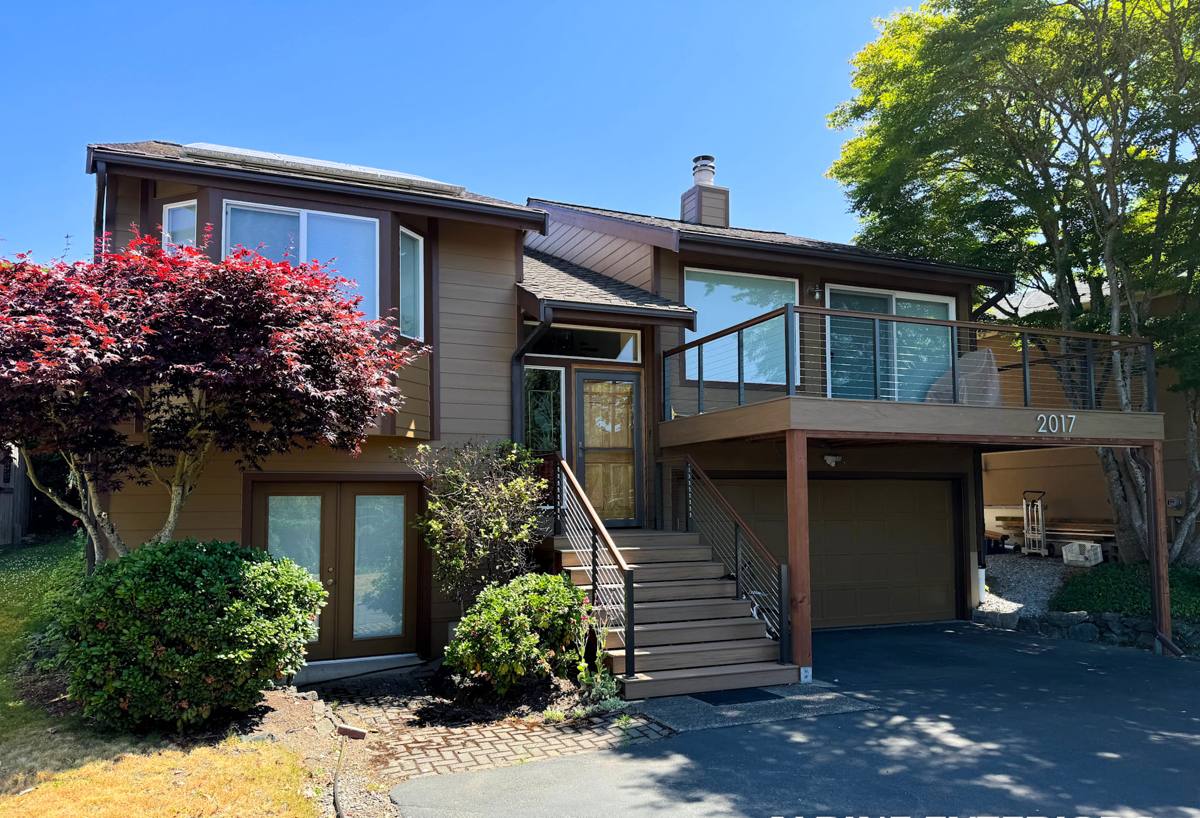
What "Custom" Actually Means Here
Custom windows aren't necessarily unusual shapes or high-end finishes, though we do plenty of that. More often, custom means the window is sized, configured, and detailed to fit an opening that doesn't match a stock size — common in older Sehome homes where openings were framed by hand decades ago — or that solves a specific problem the original window created, like poor ventilation, a rot-prone sill, or a sightline that never let in enough light.
Common reasons Sehome homeowners go custom instead of stock replacement
- Original openings are slightly out of square or non-standard size, common in homes built before modern framing tolerances were standard
- Existing wood sills or jambs have moisture damage that needs to be addressed as part of the install, not papered over
- Homeowners want better ventilation control for humid months without sacrificing security
- Matching a specific architectural detail on a craftsman or period home rather than installing a generic replacement
- Combining or resizing openings during a remodel to change light and airflow in a room
Why Whatcom County's Climate Changes the Job
A window installed correctly in a dry climate can still fail fast here if the details are wrong. Three things drive most of what we do differently in Bellingham:
Driving rain
Wind off the bay and through the county pushes rain sideways during winter storms, which means water hits window assemblies at angles that vertical-only flashing doesn't handle. Head flashing, proper pan flashing at the sill, and correctly lapped house wrap matter more here than in a climate where rain mostly falls straight down.
Salt air
Proximity to Bellingham Bay means airborne salt reaches Sehome on windy days, which accelerates corrosion on hardware, fasteners, and lower-grade metal components. It's a slow process, but it's why we pay attention to the corrosion resistance of hinges, locks, and cladding fasteners, not just the glass and frame.
Moss and prolonged dampness
Shade from mature trees around Sehome Hill and the general lack of drying sun for much of the year means any surface that stays damp — a horizontal sill, a poorly sloped trim board, a shaded north-facing wall — is a candidate for moss and eventual wood softening. Window details need to shed water fast and dry out between rain events, which is a bigger factor in trim and sill design than most homeowners expect.
Choosing Materials for This Climate
There's no single "best" window material — the right choice depends on the house, the budget, and how much maintenance the homeowner wants to take on. Here's how the common options actually perform in Bellingham's marine climate:
| Material | Moisture Performance | Maintenance | Best Fit |
|---|---|---|---|
| Vinyl | Won't rot; seams and seals are the main long-term concern | Low — occasional cleaning | Budget-conscious replacements, rental properties, newer construction |
| Fiberglass | Excellent — dimensionally stable in wet/dry cycling, resists warping | Low | Homeowners wanting long-term durability without wood upkeep |
| Wood (clad exterior) | Good if cladding and flashing are correct; exposed wood is a liability here | Moderate — interior finish upkeep, exterior is protected by cladding | Craftsman and period homes where interior wood trim matters |
| Aluminum | Weak — thermal and moisture performance suffers unless thermally broken | Low, but corrosion risk near the bay without proper coatings | Specific architectural or commercial-style applications only |
We steer most Sehome homeowners away from bare or minimally clad wood exteriors and uncoated aluminum, not because those products are inherently bad, but because this specific climate — sustained dampness plus salt air — punishes any material that depends on a perfect, unbroken finish to stay protected. A cladding or coating failure that would be a cosmetic nuisance in a dry climate becomes a moisture entry point here.
Our Process for a Sehome Window Project
1. On-site assessment
We look at the actual opening, not just the window itself — checking for existing rot, settling, air sealing gaps, and how water currently sheds off the wall above and around the window.
2. Measuring and custom fitting
Older Sehome homes rarely have perfectly square, standard-size openings. We measure each opening individually rather than assuming uniformity across a house, which is often the difference between a window that seals properly for decades and one that needs recaulking every couple of years.
3. Addressing what's behind the window
If there's sill or framing damage from years of moisture exposure, we address it before the new window goes in. Installing a new window over a compromised opening just hides a problem that will resurface.
4. Flashing and water management
This is where a correct install earns its keep in this climate. Proper pan flashing at the sill, correctly lapped weather-resistant barrier, and head flashing designed for wind-driven rain are non-negotiable details, not upsells.
5. Installation and air sealing
The window is set, shimmed level and plumb, fastened per manufacturer specification, and air-sealed with appropriate materials — not just caulked around the trim as a finishing step.
6. Interior and exterior finish work
Trim, sills, and any siding tie-ins are completed to shed water away from the new window, with attention to slope and drainage so surfaces dry out between storms instead of holding moisture.
Signs a Sehome Home Needs Window Attention
- Soft or spongy wood at the sill or lower window frame
- Visible moss, black staining, or persistent dampness on trim or siding near windows
- Drafts or noticeable temperature difference near windows on windy days
- Condensation forming between panes, indicating a failed seal
- Windows that are difficult to open, close, or lock — often a sign of frame movement or swelling
- Visible daylight or gaps around the frame from outside
- Rising heating bills without another clear cause
Cost Factors Homeowners Should Understand
We don't publish flat pricing because every Sehome home and every opening is different, but the factors that move the price are consistent and worth understanding before you start comparing quotes.
| Factor | Why It Matters |
|---|---|
| Window material and glass package | Fiberglass and higher-performance glass cost more upfront but reduce long-term maintenance and energy loss |
| Opening condition | Hidden rot or framing damage discovered during removal adds labor and material cost, but skipping repair costs more later |
| Custom sizing vs. stock | Non-standard openings require custom-manufactured units, which cost more than stock sizes but fit correctly the first time |
| Number and complexity of openings | Multiple windows in one project typically reduce per-unit labor cost compared to single replacements |
| Trim and exterior finish work | Matching existing craftsman or period trim details takes more time than standard trim replacement |
Why Local Experience with Sehome Homes Matters
A crew that's worked windows across Bellingham and Whatcom County knows what to expect before they open up an old sill — where rot tends to hide on homes near the hill, how wind-driven rain behaves on exposed elevations closer to the bay, and which older construction methods common in this neighborhood need extra attention during removal. That experience shortens the assessment phase and reduces surprises mid-project, because the problems this climate causes are familiar rather than novel.
It also means the flashing and water management details aren't generic — they're built around how rain actually moves through this specific area's wind patterns and how long dampness tends to linger on shaded elevations. A window installer used to drier climates can install a technically correct window that still underperforms here simply because the water management assumptions don't match Bellingham's conditions.
Get a Free, No-Pressure Estimate
If you're noticing drafts, moisture damage, or windows that just don't perform the way they should through a Bellingham winter, we're happy to take a look. Fill out the form below for a free estimate on custom window work for your Sehome home — no pressure, just an honest assessment of what your windows need.