 Bellingham
 Roof Repair for Cordata Homes: What This Climate Actually Does to a Roof
Cordata is one of Bellingham's newer growth areas, and a lot of its housing stock is younger on average than what you'll find in the city's older core neighborhoods. That newer average age matters for roofing, because it means many Cordata roofs are now sitting in that middle stretch of their service life where small problems either get caught early or start compounding quietly. A roof that's fifteen to twenty-five years into a typical asphalt shingle lifespan is exactly the kind of roof where a targeted repair can add years of real service, or where a missed problem can turn into a much bigger job if it sits too long.
Whatcom County's marine climate doesn't skip Cordata just because it's set back from the water compared to some of Bellingham's bay-facing neighborhoods. Salt-tinged air still moves through the region, driving rain still gets pushed into roof details from an angle, and the long moss season that defines this part of Washington settles onto shaded roof planes here the same way it does everywhere else in the city. This page is about what a correct roof repair looks like for a Cordata home specifically — what the climate does to a roof over time, what we actually find when we get up there, and how our repair process works from first inspection to final cleanup.
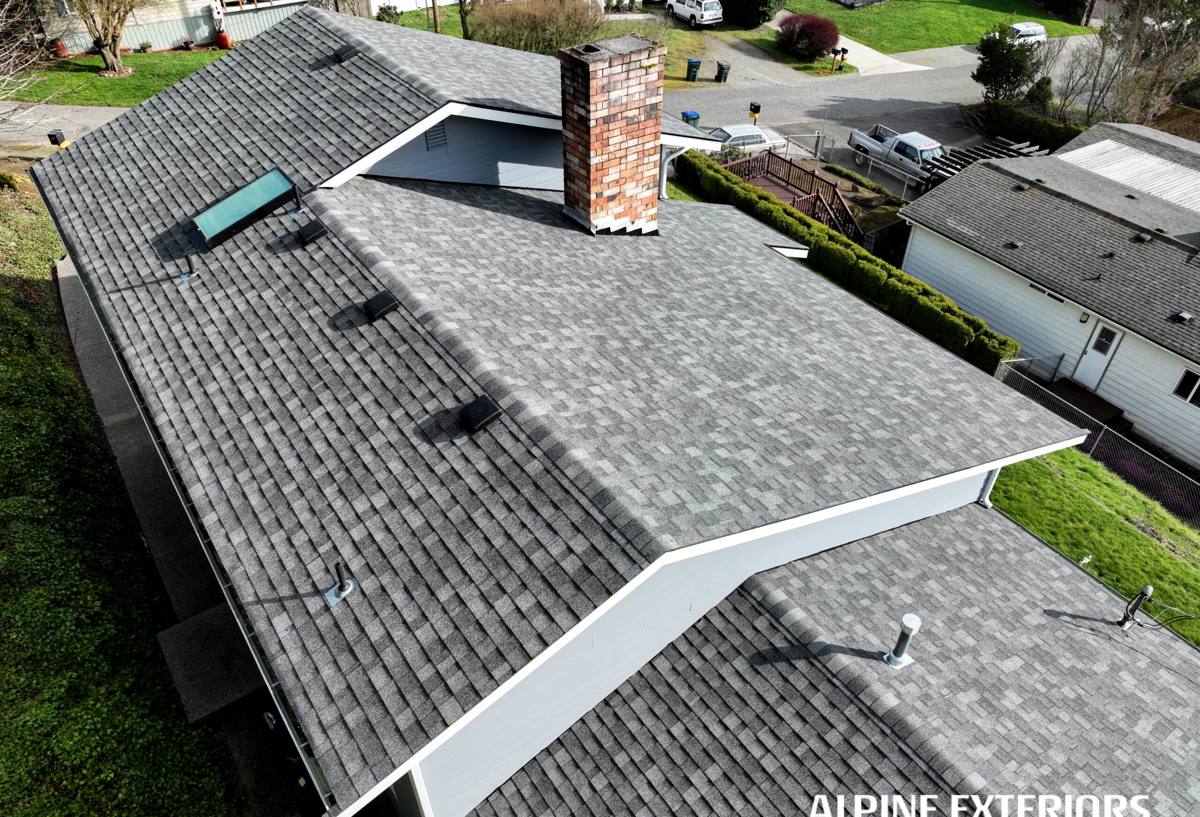
How Bellingham's Climate Shows Up on a Cordata Roof
Salt Air and Slow Corrosion
Even at a distance from the immediate shoreline, the marine air that moves through Bellingham carries enough salt content to accelerate corrosion on unprotected or lower-grade metal over years of exposure. Flashing, fasteners, and vent boots are usually where this shows up first, and it's a slow process — a roof can look fine from the ground for years while the metal underneath is quietly losing its integrity.
Driving Rain and Wind-Pushed Water
Rain in this part of Washington doesn't always fall straight down. Wind pushes it sideways and sometimes upward under shingle tabs and along flashing edges, which is a different stress than a roof built for a drier, calmer climate has to handle. A repair that only addresses the visible gap or crack, without accounting for how water actually moves across the roof under wind, tends to fail again within a season or two.
A Long Moss Season
Mild temperatures and consistent dampness give moss a long window to establish itself on shaded and north-facing roof planes, and Cordata's mix of mature landscaping and tree cover in parts of the neighborhood gives it plenty of shaded surface to work with. Moss isn't just a cosmetic issue — its root structure holds moisture against the shingle surface and can lift edges over time, which is one of the more common early causes of a slow leak we get called out to look at.
The Repair Issues We See Most Often on Cordata Roofs
Because so many Cordata roofs share a similar age range, we tend to see the same handful of problems repeat from house to house. None of these are unusual or a sign of a poorly built home — they're what any roof in this climate develops over time if it hasn't had regular attention.
- Flashing failures at valleys, chimneys, and wall intersections: the most common source of leaks we trace, usually where flashing was sealed with caulk instead of properly integrated with the underlayment.
- Nail pops and lifted fasteners: temperature swings and wind load work fasteners loose over time, creating small gaps that let water in gradually rather than all at once.
- Moss-related shingle damage: lifted or cracked shingle edges on shaded roof planes where moss has been left to grow unchecked.
- Vent boot deterioration: rubber pipe boots are one of the shorter-lived roof components, and a cracked boot is a common, easy-to-miss leak source around plumbing and exhaust vents.
- Deteriorated sealant at penetrations: skylights, satellite mounts, and other roof penetrations where old sealant has dried out and cracked.
- Gutter and edge metal issues: clogged or undersized gutters that back water up under the first course of shingles at the eave.
What a Correct Roof Repair Actually Involves
A repair is only as good as the diagnosis behind it. Roofing repair has a reputation problem in part because it's easy to patch the spot where water is showing up inside the house without ever finding where it's actually getting in on the roof — and those two points are often several feet apart.
Finding the Real Source of a Leak
Water travels along the underside of the roof deck and down framing members before it ever drips through a ceiling, so the stain you see inside is a clue, not a location marker. A proper repair starts with tracing that path from the interior sign of trouble back up to the actual failure point on the roof, which usually means a physical inspection of the roof surface and, when needed, the attic space underneath.
Matching Materials and Technique
A repair needs to integrate with what's already there, not just sit on top of it. That means matching shingle profile and, where possible, color; tying new flashing into existing underlayment correctly instead of overlapping it carelessly; and using fasteners and sealants rated for exterior, marine-climate exposure rather than whatever's fastest to grab. A repair that doesn't integrate cleanly with the surrounding roof often creates a new weak point right at the edge of the patch.
Why Quick Fixes Backfire in This Climate
Caulk-over-crack repairs and surface-level patches are common shortcuts, and they can look like a fix for a season or two. In a climate with this much sustained rain and wind-driven water, sealant-only repairs tend to fail faster here than they would in a drier region, because they're being tested by moving water far more often. We build repairs to shed water the way the original roofing system was designed to, not to plug a hole and hope it holds.
Repair or Replace? How We Make the Call
Not every roof problem in Cordata calls for a full replacement, and not every leak can be permanently solved with a patch. The honest answer depends on the roof's age, how widespread the damage is, and what condition the deck underneath is actually in.
| Situation | Repair Usually Makes Sense | Replacement Usually Makes Sense |
|---|---|---|
| Roof age | Roof is well within its expected lifespan and otherwise in good shape | Roof is near or past the end of its expected shingle life |
| Damage extent | Damage is isolated to one area — a valley, a penetration, a section of shingles | Damage or wear is spread across multiple roof planes |
| Deck condition | Decking underneath is solid once exposed and inspected | Decking shows rot or soft spots from long-term moisture intrusion |
| History of repairs | This is a first or infrequent repair on this section | The same area has needed repeated repairs over recent years |
We won't recommend a full replacement when a repair will genuinely hold, and we won't recommend a patch when the deck or shingle field is too far gone to make a repair a responsible long-term fix. We'll walk you through exactly what we find and why we're recommending one over the other.
How Our Repair Process Works
- In-person inspection: We get on the roof and, when relevant, check the attic from the inside, rather than estimating from photos or a drive-by look.
- Source diagnosis: We trace the leak or damage back to its actual point of origin before writing up any scope of work.
- Written repair scope: You get a clear explanation of what failed, what needs to be done to fix it correctly, and what it will cost — not a vague line item.
- Material matching: We source shingles, flashing, and sealants that integrate properly with your existing roofing system and hold up to this region's exposure.
- Repair work: The affected section is opened up as needed, any hidden damage is addressed, and the repair is tied back into the surrounding roofing correctly.
- Final check and cleanup: We confirm the repair is sound, clean the site including a magnetic sweep for stray fasteners, and walk you through what was done.
What Affects the Cost of a Roof Repair
Roof repair costs vary more than people expect, because "repair" covers everything from a single vent boot swap to a multi-section flashing rebuild. Knowing what drives the number helps you evaluate a written estimate instead of just comparing two totals side by side.
| Factor | What It Affects |
|---|---|
| Size and location of the affected area | Labor time and how much of the existing roof needs to be opened up |
| Hidden deck or framing damage | Whether repair costs include rebuilding rotted or moisture-damaged structure underneath |
| Flashing complexity | Valleys, chimneys, and wall intersections take more time and skill than open field shingle repair |
| Roof pitch and access | Steeper or harder-to-reach roof sections add staging time and safety requirements |
| Material matching | Sourcing a close shingle color or profile match can affect cost and lead time on older roofs |
| Number of penetrations involved | Each vent, pipe boot, or skylight in the repair area adds its own sealing and flashing work |
A written estimate that breaks these factors out gives you a much clearer picture than a single lump number, and it's worth asking any contractor to explain what's driving their price line by line.
A Homeowner's Checklist Before Hiring a Roof Repair Contractor
- Do they physically inspect the roof (and attic, if relevant) before quoting, rather than pricing sight unseen?
- Does the estimate explain what actually failed, not just what will be done to it?
- Do they carry current Washington contractor licensing, liability insurance, and workers' compensation coverage?
- Will they tell you honestly if a repair won't hold and a replacement is the more responsible option?
- Do they specify the materials being used, rather than just saying "matching shingles" with no detail?
- Is there a workmanship warranty on the repair itself, separate from any manufacturer material warranty?
Signs Your Cordata Roof Needs Repair Now
Roof problems in this climate rarely announce themselves loudly at first. Catching these signs early is usually the difference between a straightforward repair and a much larger job.
- A water stain on a ceiling or in the attic that appears or spreads after a storm
- Visible moss buildup on shaded roof planes, especially where it's thick enough to hold shingle edges up
- Granules collecting in gutters or downspouts, signaling shingles wearing thin ahead of schedule
- Curling, cracking, or missing shingles after a windy stretch of weather
- Daylight visible through the roof deck from inside the attic
- A musty smell in the attic that points to trapped moisture, even without an obvious visible leak
If any of this sounds familiar, it's worth having the roof looked at before the next heavy rain rather than waiting for the problem to force the decision on its own.
Why a Crew That Already Works in Cordata Matters
A roofing crew with regular, hands-on experience across Bellingham neighborhoods like Cordata has already seen how this specific combination of salt air, driving rain, and a long moss season plays out on real roofs year after year. That shows up in the small, practical calls made on repair day — which flashing details deserve extra attention, how long a moss-covered section has likely been trapping moisture, and where a quick patch would just be delaying the same call a year or two down the road. It also matters after the work is finished. A workmanship warranty only means something if the company behind it has an established, ongoing presence in the area you can actually reach later, not one that's moved on.
If you're dealing with a leak, storm damage, or just want an honest opinion on what shape your Cordata roof is really in, we're glad to take a look. Use the form below to request a free, no-pressure estimate.