 Bellingham
 Why Windows Take a Beating in the Puget Area
Homes in the Puget area near Bellingham sit in a spot where the climate doesn't let up. Salt-laden air off the water works into metal hardware and vinyl seals over time. Driving rain, pushed sideways by wind off the Sound, tests every seam and joint a window has. And Whatcom County's long moss season keeps siding, trim, and window sills damp for months at a stretch, which is exactly the kind of environment that turns a small installation flaw into a rot problem a few years down the road.
Windows are one of the most failure-prone parts of a house's building envelope precisely because they're a hole in the wall with moving parts. Get the product and the installation right and a window will handle decades of Pacific Northwest weather without complaint. Get either one wrong and you're looking at fogged glass, soft framing, and higher heating bills within a few winters.
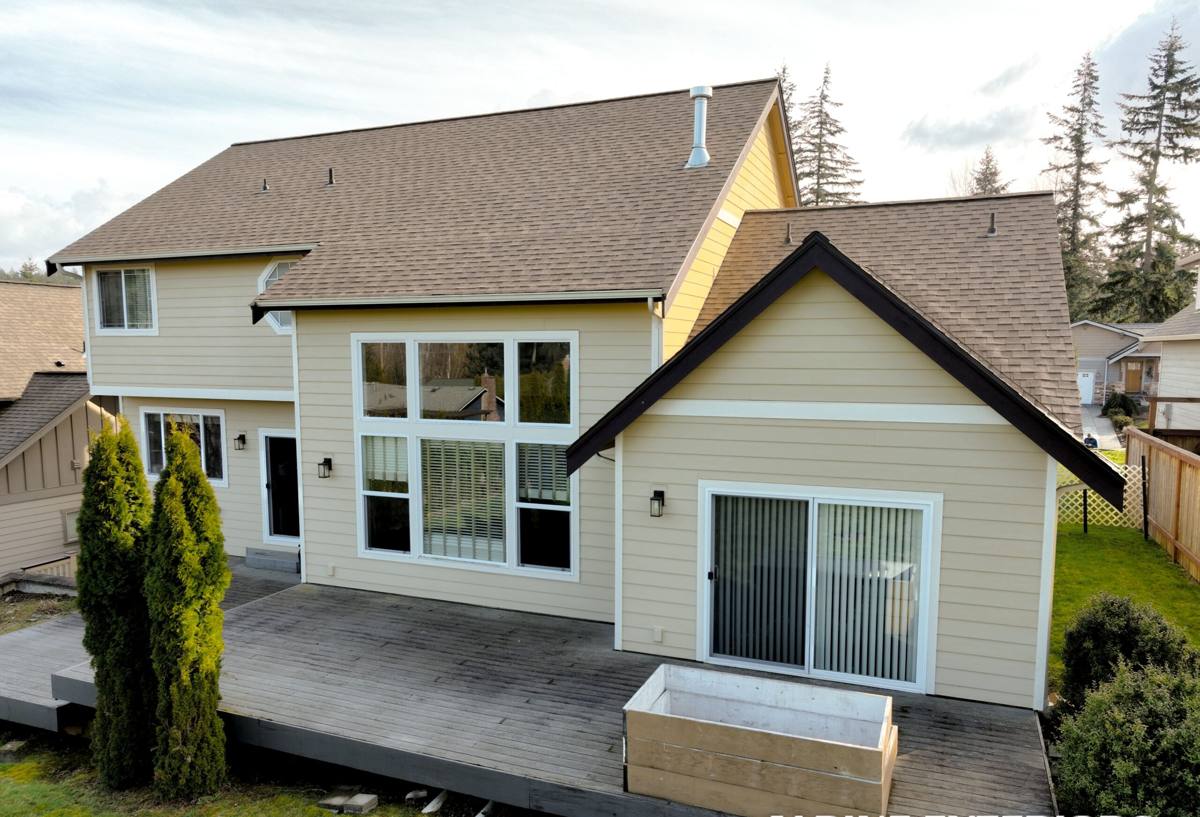
Signs a Puget-Area Home Needs Window Replacement
Most homeowners don't wake up one day and decide they need new windows — they notice small things that add up. Here's what we look for, and what you should watch for too:
- Fog or moisture trapped between panes (a failed seal on double- or triple-pane glass)
- Windows that are hard to open, close, or lock — often a sign the frame has shifted or swollen
- Visible gaps, cracked caulk, or daylight around the frame
- Soft or discolored wood at the sill or lower corners, a common spot for water to sit
- Noticeable drafts or a cold zone near the window even with it closed
- Rising energy bills without a clear other cause
- Persistent condensation on the inside of the glass during colder months
Any one of these can be a minor fix. Several together, especially on an older single-pane or early-generation vinyl window, usually mean replacement is the more honest recommendation than another round of caulk and weatherstripping.
What a Correct Window Replacement Actually Involves
Swapping the sash or slipping a new unit into an old frame is not the same as a proper replacement, and in a climate like this the difference shows up fast. A correct job includes:
Removing down to the rough opening when needed
On older homes, especially where we suspect water has already gotten behind the old window, we prefer to pull it down to the rough opening rather than doing an insert-style replacement over compromised material. This lets us actually see and address any hidden rot before it's sealed back up behind a new window for another 20 years.
Sill pan flashing
A sill pan gives any water that does get past the window a sloped path back outside instead of a place to pool. With the amount of driving rain this area sees, skipping this step is one of the more common causes of slow, hidden water damage in older installations.
Proper flashing sequence
Flashing tape and building paper have to be layered in the right order — bottom to top, like shingles — so water sheds outward at every layer. Done backward, it actually channels water into the wall instead of away from it.
Insulation and air sealing around the frame
The gap between the new window frame and the rough opening needs to be filled with a low-expansion foam or backer rod and sealant, not just caulked over on the surface. This is what actually stops drafts and reduces the cold-spot feeling near windows in winter.
Exterior sealant and trim work
The final bead of sealant and any trim or cladding detail around the window is the last line of defense against wind-driven rain. It needs to be a product rated for exterior exposure and applied to a clean, dry surface — not just smeared over old caulk.
Choosing Frame Material and Glass for This Climate
There's no single "best" window for every home — it depends on your budget, your home's age and style, and how much maintenance you want to take on. Here's how the common options compare for a coastal, high-moisture climate like Bellingham's:
| Frame Material | How It Handles This Climate | Maintenance | Typical Lifespan |
|---|---|---|---|
| Vinyl | Good moisture resistance, won't rot or corrode; quality varies a lot by manufacturer | Low — occasional cleaning | 20-30 years |
| Fiberglass | Excellent stability in temperature and moisture swings; handles salt air well | Low | 30-40+ years |
| Wood-clad | Good insulation and look, but the wood core is vulnerable if the exterior cladding is ever breached | Moderate to high — watch cladding seams | 20-30 years with upkeep |
| Aluminum | Strong but conducts cold and is prone to condensation without a thermal break; salt air accelerates corrosion on lower-grade products | Moderate | Varies widely by grade |
On the glass side, most homes here do well with a double-pane, low-E coated unit with an argon gas fill — it balances cost against real-world performance in our mild-but-wet climate. Triple-pane glass adds more insulation value and can help with street noise, but the added cost doesn't always pay for itself unless you're dealing with a particularly exposed or noisy location. We'll walk through the tradeoff honestly rather than upselling glass you don't need.
Our Process, Start to Finish
- On-site assessment — we look at every window being considered, not just the ones you've flagged, and check for hidden moisture or framing issues.
- Honest recommendation — repair, insert replacement, or full frame replacement, based on what we actually find, not what's easiest to sell.
- Written estimate — clear line items for materials, labor, and any additional carpentry if rot repair is needed.
- Scheduling around weather — we plan installation days with a dry window in mind whenever possible, since an open rough opening and a sudden downpour don't mix.
- Installation with proper flashing and sealing — following the sequence described above, not shortcuts.
- Final walkthrough — we test operation, check seals, and confirm the finish work meets your standards before we consider the job done.
Why a Crew That Already Works in Puget Matters
Window replacement done wrong doesn't usually fail on day one — it fails two or three winters later, when nobody's watching. That's why local experience matters more than it might seem. A crew that regularly works homes in and around the Puget area already knows what the housing stock in this part of Whatcom County tends to need: older single-pane units in original frames, additions with mismatched window ages, and the particular way salt air and moss-season moisture show up in this specific pocket of the county.
There's also a practical side. A local crew isn't guessing at permitting requirements, isn't unfamiliar with typical lot setbacks or older construction methods common in this area, and can get back out for a warranty check or a follow-up adjustment without it being a special trip. That responsiveness matters when a seal needs a second look after the first hard rain of the season.
What Affects the Cost of a Window Replacement Project
Every home is different, but the same handful of factors drive most of the price difference between jobs. We'll always give you specifics for your home in a written estimate, but here's the general shape of it:
| Factor | Why It Matters |
|---|---|
| Number and size of windows | More glass and larger openings mean more material and labor per unit |
| Frame material chosen | Vinyl, fiberglass, and wood-clad all sit at different price points |
| Insert vs. full-frame replacement | Full-frame work takes longer but is often the right call when there's hidden rot or an out-of-square opening |
| Condition of the existing rough opening | Rot repair or reframing adds carpentry time beyond the window install itself |
| Access and height | Second-story or hard-to-reach windows take more time and equipment |
| Glass upgrades | Triple-pane, specialty tints, or upgraded Low-E coatings add cost for specific performance gains |
Keeping New Windows Performing in a Wet Climate
A well-installed window still benefits from a little attention, especially through a Whatcom County winter and moss season. A short annual routine goes a long way:
- Wipe down and inspect exterior caulk lines each fall before the rainy season sets in
- Clear moss, leaves, and debris from sills and any nearby gutters that drain near window openings
- Check that weep holes on vinyl and fiberglass frames are clear so water can drain out
- Operate each window through its full range a few times a year so hardware doesn't seize
- Watch for any new condensation between panes, which signals a seal failure worth addressing early
- Rinse salt residue off exterior frames periodically if the home is closer to open water
If your windows in the Puget area are drafty, fogged, or just past their working life, we're happy to take a look and give you a straight answer — no pressure, no upsell. Use the form below to request a free estimate and we'll schedule a time to come out and assess your home in person.