 Bellingham
 Building Decks That Actually Hold Up in Puget's Marine Climate
A deck in Puget lives a different life than a deck built forty miles inland. Between the salt-laden air coming off the water, the long stretches of driving rain that define a Whatcom County winter, and the moss and algae that creep into anything left damp for more than a few days, this area is genuinely hard on outdoor structures. A custom deck built here isn't just about layout and looks — it's about material choices, fastener selection, and drainage details that keep the structure sound for decades instead of years.
We build and repair decks throughout the Puget area and we've seen what happens when a deck is built to a generic spec instead of a local one: rusted fasteners bleeding rust streaks down composite boards, ledger boards rotting from behind because flashing was skipped, and joists going soft under decking that never had a chance to dry out between storms. This page walks through what a correctly built deck looks like for this specific stretch of coastline and climate.
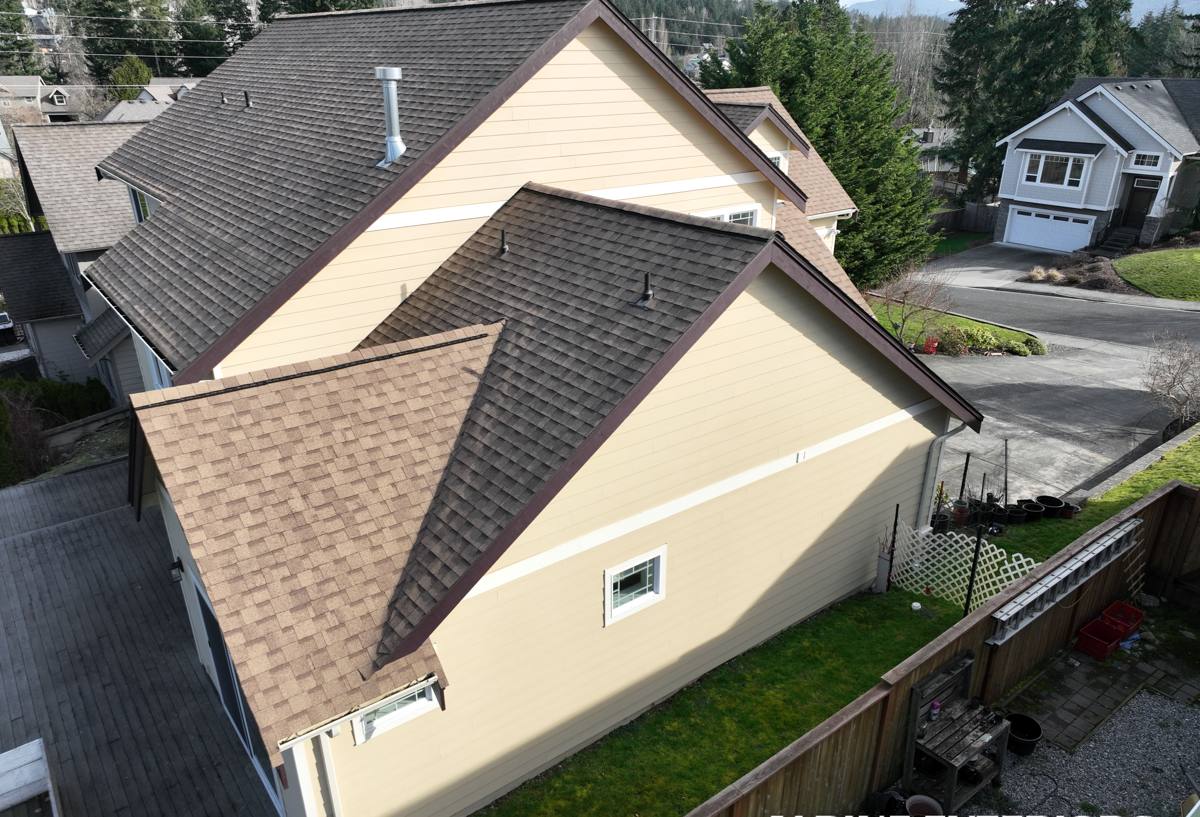
What Puget's Weather Does to a Deck Over Time
Salt Air and Metal Fatigue
Proximity to salt water accelerates corrosion on anything metal — screws, joist hangers, post bases, and railing hardware. Standard zinc-coated fasteners that would last a normal service life inland can start showing rust bleed within a few seasons this close to the water. That rust doesn't just look bad; it weakens the connection it's holding, and a corroded joist hanger is a structural problem, not a cosmetic one.
Rain Volume and Standing Water
Whatcom County gets a lot of rain, and a lot of it falls in long, low-intensity storms rather than short downpours — which means wood and composite surfaces stay wet for extended periods. Any spot on a deck where water can pool, even briefly, becomes a spot where rot, mold, or moss gets a foothold. Deck pitch, gap spacing between boards, and joist drainage all matter more here than they would in a drier climate.
Moss Season
Shaded decks, north-facing decks, and decks under tree cover in and around Puget can develop moss and algae within a single wet season if the surface material and airflow underneath aren't accounted for. Moss holds moisture against the deck surface, which speeds up rot on wood decking and can make composite and even some capped boards slick and slippery underfoot.
Choosing the Right Decking Material for This Location
There's no single "best" decking material — the right choice depends on your budget, how much upkeep you want to do, and how exposed the deck is to salt air and shade. Here's how the common options actually perform in a Puget-area setting.
| Material | How it handles this climate | Maintenance |
|---|---|---|
| Cedar | Naturally rot- and insect-resistant, but needs regular sealing to keep moisture and salt spray from breaking down the finish | Sealing/staining every 1-2 years |
| Pressure-treated fir/pine | Budget-friendly and structurally solid for framing; as a surface board it needs consistent sealing to resist moss and checking | Sealing every 1-2 years |
| Composite (capped) | Resists moisture and moss growth well; some uncapped or older composite products can still absorb water at cut edges | Periodic washing, minimal sealing |
| PVC decking | Fully moisture-resistant surface, handles salt air and standing water better than wood-based products | Occasional washing |
We're honest with clients about trade-offs rather than pushing one product line. Composite and PVC cost more up front but save on maintenance over time; cedar and treated wood cost less initially but require someone to actually keep up with sealing on schedule. If a homeowner tells us they won't realistically re-seal a deck every year or two, we'll steer the conversation toward a capped composite or PVC product instead of setting them up for a wood deck that degrades early from neglect.
Structural Basics We Never Skip
The parts of a deck nobody sees are the parts that determine whether it lasts. In a wet, salt-influenced climate like this one, cutting corners on structure shows up faster than it would elsewhere.
- Ledger flashing — where the deck attaches to the house, proper flashing keeps water from tracking behind the siding and rotting the rim joist. This is one of the most common failure points we find on older decks.
- Footings below frost and grade — footings sized and set to local code, not just "deep enough to look right."
- Joist spacing matched to the decking — composite and PVC often require tighter joist spacing than solid wood; using wood-spec framing under composite boards leads to bounce and premature sagging.
- Corrosion-resistant hardware throughout — hot-dip galvanized or stainless joist hangers, post bases, and structural screws, not standard zinc-coated fasteners.
- Airflow underneath — enough clearance and ventilation below the deck surface so wood framing can actually dry out between rain events instead of staying damp for weeks.
Railings, Fasteners, and Hardware Choices for Coastal Exposure
Railings and hardware take the most direct hit from salt air because they're often metal and fully exposed. We use fasteners and connectors rated for coastal or high-moisture exposure — typically stainless steel or hot-dip galvanized, depending on the component — rather than the standard-grade hardware that's fine for a drier, inland build. It costs a little more up front, but replacing rusted railing brackets or hanger hardware five years into a deck's life costs far more, both in materials and in the labor to tear into finished decking to get at them.
For railing material itself, we walk clients through wood, metal, and composite/cable options based on how exposed the deck is to wind and spray off the water, how much upkeep they want to commit to, and the look they're after. There's no universally correct answer here — it's a real trade-off conversation, not a sales pitch for one product.
Our Custom Deck Process in Puget
1. Site Visit and Design
We walk the property, look at sun and shade exposure, drainage patterns, and how close the site sits to prevailing weather and salt spray. Design decisions — decking material, railing type, fastener grade, footing layout — get made based on what that specific site actually needs, not a one-size-fits-all template.
2. Permitting
Most new decks and many deck replacements in Whatcom County require a permit, and requirements can vary depending on deck height, size, and attachment to the house. We handle the permitting process as part of the job so the finished deck is built to code and won't cause problems later with insurance or resale.
3. Build
Framing, flashing, and footings go in first and get inspected before decking goes down — this is the stage where corners get cut on rushed jobs, and it's the stage that determines whether the deck lasts. Decking, railing, and finish work follow once the structure is confirmed solid.
4. Final Walkthrough
We walk the finished deck with the homeowner, cover basic care for whatever material was installed, and make sure everything meets the plan that was agreed to before work started.
Maintenance Checklist for Puget Homeowners
Whatever material your deck uses, a few habits go a long way toward keeping it solid in this climate:
- Sweep debris and standing leaves off the deck surface regularly, especially in fall and winter, so moisture doesn't sit trapped against the boards
- Rinse or wash the surface a couple of times a year to knock back early moss and algae growth before it takes hold
- Check railing hardware and fasteners annually for rust streaks or loosening, particularly if the deck faces open water or prevailing wind
- Reseal wood decking on schedule rather than waiting until it's visibly gray or checking
- Keep an eye on the area where the deck meets the house — any staining, soft wood, or gaps in flashing there should get looked at promptly
- Trim back overhanging branches or shrubs that keep sections of the deck shaded and damp
Why Hire a Crew That Already Works in Puget
A deck built to a generic regional spec can look identical to one built for this specific climate — right up until the fasteners start rusting or moss takes over a shaded corner two winters in. Crews who work regularly in and around Bellingham and along the water in Whatcom County already know which fastener grades hold up, which decking products actually resist moss in shaded, damp spots, and where flashing details need extra attention because of how much rain this area gets. That local knowledge shows up in fewer callbacks and a deck that still looks and performs well well past the first few wet seasons.
If you're planning a new deck or replacing one that's showing its age, we're happy to come take a look and talk through honest options for your specific site — no pressure, no upsell, just a straight assessment of what your home and this climate actually call for. Fill out the form below for a free estimate.