 Bellingham
 Puget sits close enough to Bellingham Bay that the weather here works on a roof a little differently than it does a few miles inland. Salt-carrying air off the water, rain that comes in sideways as often as it falls straight down, and a moss season that can stretch across most of the year all add up to real, measurable wear on asphalt shingles. A roof that's installed correctly for this specific stretch of Whatcom County will hold up for decades. One that's installed using generic, one-size-fits-all methods tends to show problems early — granule loss, lifted tabs, moss bridging the shingle edges, and soft spots in the decking underneath.
What Puget's Climate Actually Does to a Shingle Roof
Three things drive most of the roofing problems we see on homes in this area, and they're worth understanding before you plan a replacement or repair.
Salt Air
Homes closer to Bellingham Bay deal with airborne salt that settles on metal components over time — nail heads, flashing, gutter hangers, and vent stacks. Standard fasteners and thin-gauge flashing corrode faster in this environment than they would inland. It doesn't ruin a roof overnight, but it shortens the life of the metal parts of the system unless corrosion-resistant materials are used from the start.
Driving Rain
Wind-driven rain doesn't just fall on a roof, it pushes sideways and works its way up under shingle tabs and around penetrations if the install isn't tight. This is why nailing pattern, shingle overlap, and hand-sealing matter more here than they would in a drier climate. It's also why flashing at valleys, chimneys, and roof-to-wall transitions has to be done right the first time — a marginal flashing job might not leak for a year or two in a mild climate, but it won't last that long here.
Moss and Algae
Whatcom County's tree cover and persistent moisture give moss and algae a long growing window, especially on north-facing slopes and shaded sections of roof. Moss holds water against the shingle surface, works its way under tabs, and lifts them over time. Left unaddressed, it accelerates granule loss and can eventually contribute to decking rot underneath. This is the single most common issue we're called out for on older roofs in this area.
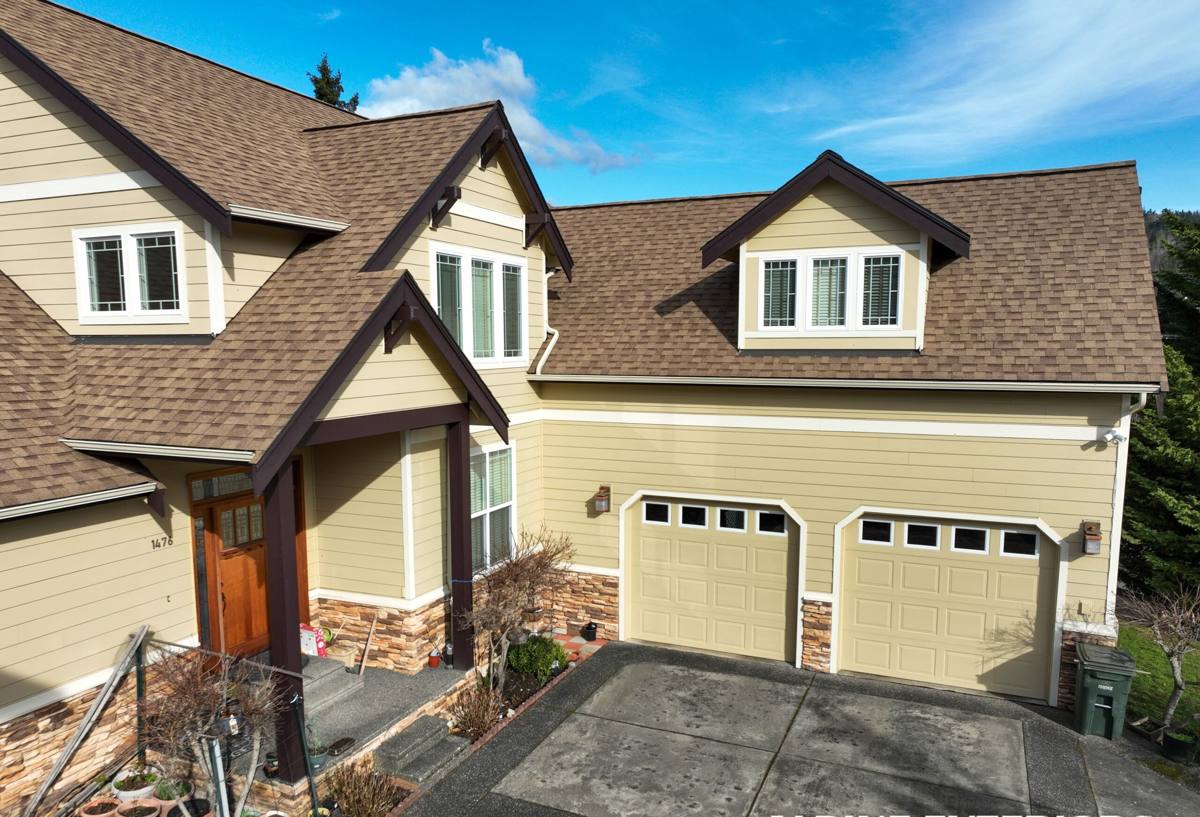
What a Correctly Installed Roof Needs in This Area
A shingle roof built for Puget isn't dramatically different from a shingle roof anywhere else, but a handful of details matter more here and get skipped more often than they should.
- A full synthetic underlayment across the whole roof, not just felt paper, for a tighter secondary water barrier under wind-driven rain.
- Ice-and-water shield at eaves, valleys, and penetrations — the areas most exposed to pooling and wind-forced water intrusion.
- Balanced intake and exhaust ventilation so moisture from inside the attic doesn't condense against the underside of the decking, which speeds up rot in a damp climate.
- Algae-resistant (AR) shingles on roofs with shade exposure or tree cover, since standard shingles have no defense against the algae that causes those dark streaks and moss anchor points.
- Corrosion-resistant flashing and fasteners on homes closer to the water, where salt air is a real factor.
- Correct nailing pattern and hand-sealing during cooler, wetter installs, since factory sealant strips rely on heat to bond and don't always activate fully during a Bellingham fall or winter install.
Choosing the Right Shingle for a Puget Home
Not every shingle line is built the same way, and the right choice depends on the roof's exposure, pitch, and how long you plan to stay in the home. Here's how the common tiers compare for this climate specifically.
| Shingle Tier | Wind Rating | Algae Resistance | Typical Lifespan Here | Best For |
|---|---|---|---|---|
| 3-Tab (economy) | Lower | Usually none standard | 12–18 years | Budget-limited projects, short-term ownership |
| Architectural / Dimensional | Higher, better for driving rain | Available with AR granules | 20–30 years | Most Puget homes — the standard recommendation |
| Premium / Designer | Highest | Available with AR granules | 30+ years | Steep-slope, high-visibility, or long-term-ownership homes |
For most homes in this area, an architectural shingle with algae resistance and a solid wind rating is the right balance of cost and performance. 3-tab shingles are still available and cheaper up front, but their lower wind rating and lack of built-in algae protection tend to show their age faster in this climate.
Our Process, Start to Finish
The process itself isn't complicated, but doing each step carefully is what keeps a roof performing for its full expected lifespan.
- Inspection and estimate — we look at the existing roof, the decking condition where accessible, ventilation, and any problem areas like valleys or shaded slopes prone to moss, then give a written estimate.
- Tear-off — full removal of old roofing material so the decking can actually be inspected, not just the top layer.
- Decking repair — any soft, delaminated, or rotted decking is replaced before anything new goes down. This is a step that gets skipped by crews trying to move fast, and it's the one that causes problems five years later.
- Underlayment and water barrier — synthetic underlayment plus ice-and-water shield at the vulnerable areas.
- Flashing — new flashing at valleys, chimneys, skylights, and wall transitions, using corrosion-resistant materials.
- Shingle installation — correct nailing pattern, proper overlap, and hand-sealing where needed for the season.
- Ventilation check — confirming intake and exhaust are balanced before we close out the job.
- Cleanup — magnetic sweep for nails and full debris removal from the property.
Keeping Moss and Algae From Coming Back
Installing algae-resistant shingles helps, but it doesn't make a roof moss-proof on its own, especially under heavy tree cover. A few habits go a long way toward protecting the investment:
- Keep overhanging branches trimmed back so shaded sections of roof get more sun and airflow.
- Clear gutters and valleys of debris at least twice a year — trapped organic material is what gives moss a place to start.
- Have a professional treat visible moss growth rather than power-washing it, which can strip granules and shorten shingle life.
- Consider zinc or copper strips near the ridge on shaded roofs, which release trace metals that discourage regrowth as rain washes over the shingles below.
- Schedule a roof check after major storms, since driving rain and wind are what expose weak spots in flashing and sealant first.
Signs a Puget Roof Needs Attention
Most shingle roof failures in this area don't happen suddenly — they show warning signs for months or years before a leak actually shows up inside the house. Worth watching for:
- Dark streaking or visible moss patches, particularly on north-facing or shaded slopes.
- Granules collecting in gutters or at downspout outlets.
- Shingle tabs that look curled, lifted, or cupped, especially after a windy stretch.
- Soft or spongy spots underfoot if you're on the roof for another reason, which usually points to decking damage below.
- Rust staining around flashing, vent stacks, or gutter hangers, which signals corrosion has started.
- Daylight visible through the roof deck from inside the attic, or damp insulation near the eaves.
Why It Matters to Hire a Crew That Already Works in Puget
A roofing crew that works this specific area regularly already knows which slopes tend to hold moss, how much wind exposure a given elevation typically sees, and which flashing details fail first when driving rain and salt air are both in play. That's not something a crew from outside the region picks up on the first job. It shows up in smaller decisions — where to add extra ice-and-water shield, whether a shaded valley needs a different flashing detail, how tight the nailing pattern needs to be on an exposed gable — that don't show up on a basic estimate but matter for how the roof performs over the next 20 to 30 years.
What to Expect Long-Term
A correctly installed architectural asphalt shingle roof in this climate should reasonably last in the 20 to 30 year range, with premium products going longer. That range assumes the ventilation is balanced, moss and debris are kept in check, and any storm damage gets addressed before it turns into a bigger repair. Roofs that fall short of that range almost always trace back to one of a few causes: inadequate ventilation trapping moisture against the decking, standard shingles without algae resistance on a shaded slope, or flashing and fasteners that weren't rated for a salt-air environment. None of those are exotic problems — they're just details that need to be handled correctly the first time.
If you're weighing a repair against a full replacement, or just want an honest read on where your roof currently stands, we're happy to take a look and put together a straightforward, no-pressure estimate. Use the form below to get in touch.