 Bellingham
 Cordata's Climate Puts a Roof to Work Every Single Day
Cordata sits in north Bellingham, close enough to the water and the lowland forest edge that a roof up here deals with a mix of stresses most drier climates never see. Salt-laden air drifts in off Bellingham Bay and the Strait, driving rain comes in sideways during fall and winter storms, and the shaded, moisture-heavy lots that make this part of Whatcom County so green also make it a prime environment for moss, moss again, and more moss. A roof that's merely "installed" — nailed on to code and left alone — will survive here for a while. A roof that's installed correctly for this specific climate lasts years longer with a lot less maintenance drama.
That distinction matters more in Cordata than it does in a lot of other neighborhoods, because the combination of tree cover, humidity, and salt air is unusually hard on roofing materials. Fasteners corrode faster in salt air. Shaded north- and west-facing slopes stay damp long after the rest of the roof has dried, which is exactly where moss and lichen colonies get their start. And driving rain finds every weak seam, lap, and flashing detail a rushed installation leaves behind. A new roof installation here isn't just a cosmetic upgrade — it's a chance to correct for all of that from day one.
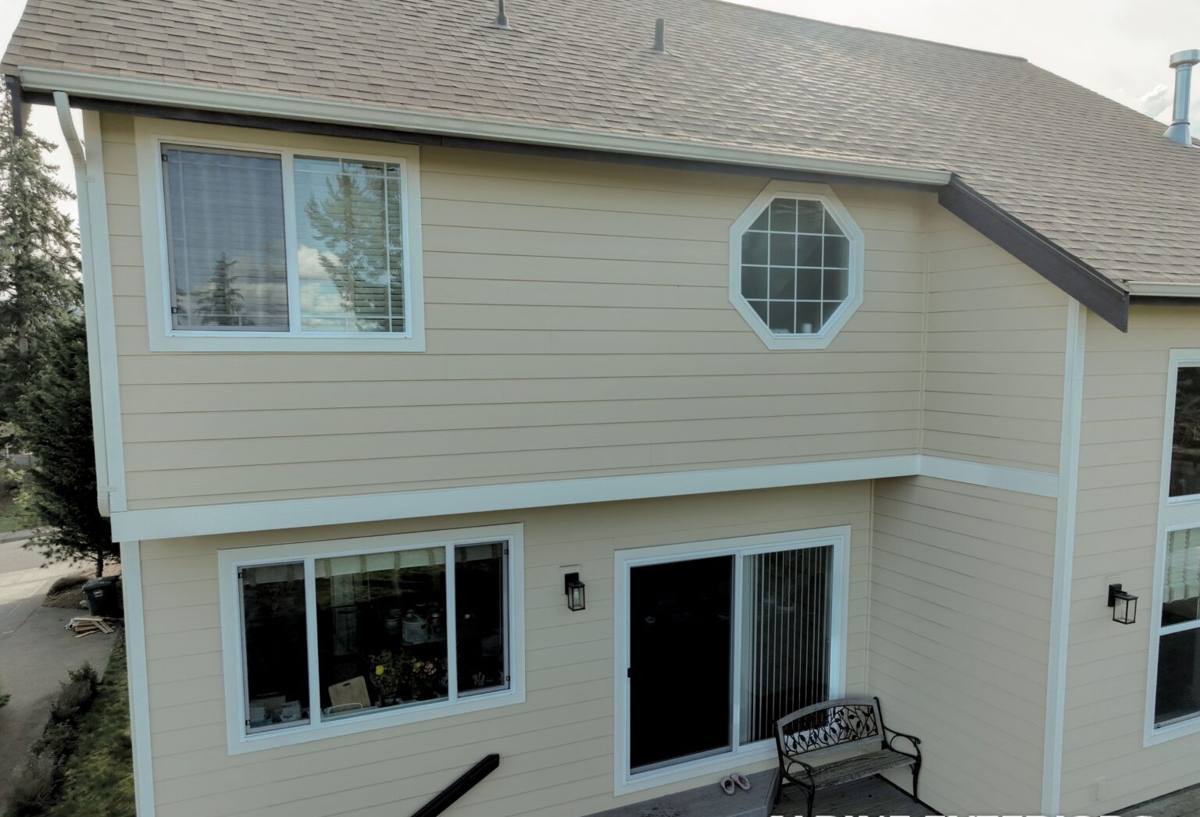
What "New Roof Installation" Actually Involves
A lot of homeowners assume a new roof is mostly about the shingles on top. In reality, the shingles are the last and least important layer for keeping water out. The real work — and the real difference between a roof that lasts and one that doesn't — happens underneath.
Tear-Off and Deck Inspection
We remove the old roofing down to bare decking rather than layering over it. That's not just a code preference — it's the only way to actually see what's underneath. In a wet climate like ours, plywood or board decking can hide soft spots, delaminated layers, or old leak damage that's invisible from above. Any compromised decking gets replaced before anything else goes down. Skipping this step is the single most common shortcut that leads to premature roof failure.
Underlayment as the Real Waterproofing Layer
Shingles shed the majority of water, but underlayment is the layer that actually keeps a roof dry during wind-driven rain, ice damming, or shingle damage down the road. For Cordata homes, we pay particular attention to synthetic or self-adhered underlayment at eaves, valleys, and low-slope transitions — the spots where standing water and driving rain are most likely to find a way in.
Choosing a Roofing System for North Bellingham Weather
There's no single "best" roofing material for every home — the right choice depends on your roof's slope, sun exposure, tree cover, and budget. What we can say honestly is how the common options perform under Whatcom County conditions specifically.
| Material | Moss & Moisture Behavior | Maintenance | Typical Lifespan Here |
|---|---|---|---|
| Standard 3-tab asphalt | Flat profile traps less debris but offers less algae/moss resistance without added granule treatment | Low, but shorter-lived | 15–20 years in shaded, damp settings |
| Architectural (laminate) asphalt | Thicker mat and often algae-resistant granules; better in shaded, damp exposures | Low | 20–30 years with proper ventilation |
| Standing seam metal | Sheds moss and standing water extremely well due to slick, low-friction surface | Very low | 40–60 years, less affected by salt air when properly coated |
| Cedar shake | Attractive but holds moisture and is highly moss-prone in shaded PNW lots without diligent upkeep | High — regular treatment needed | Highly variable; shortest lifespan of the group in wet shade |
For most Cordata properties with mature tree cover, we steer homeowners toward architectural asphalt or standing seam metal — not because other materials can't work, but because they demand less ongoing maintenance to perform well in a climate that stays damp for months at a time. We're happy to talk through cedar or other specialty materials too; we just want you going in with a clear picture of the upkeep involved before you commit.
Our Installation Process, Start to Finish
Homeowners generally want to know two things: what actually happens, and how much disruption to expect. Here's the sequence we follow on a typical Cordata reroof.
- On-site assessment — we inspect the existing roof, decking condition (where visible), attic ventilation, and any problem areas you've noticed, like interior stains or drafty rooms.
- Written estimate — material options, scope, and timeline, explained plainly so you know what you're paying for and why.
- Scheduling around weather — in Whatcom County, we plan tear-off days around forecasted dry windows whenever possible, and we dry-in exposed sections the same day to limit rain exposure.
- Tear-off and deck repair — old roofing removed, decking inspected and repaired as needed.
- Underlayment, flashing, and ventilation work — the layers that actually determine how the roof performs over time.
- Roofing material installation — installed to manufacturer specification, which matters for both performance and warranty coverage.
- Site cleanup and magnetic nail sweep — yard and driveway cleared of debris and fasteners.
- Final walkthrough — we go over the finished roof with you before calling the job done.
Ventilation and Moisture Control Matter as Much as the Shingles
An underventilated attic traps warm, moist air against the underside of the roof deck, which accelerates rot, encourages mold, and can quietly shorten the life of an otherwise good roofing job. This is especially relevant in Cordata's damp, shaded lots, where the roof deck rarely gets a chance to fully dry out on its own between rain events.
Part of a proper new roof installation is checking that intake (soffit) and exhaust (ridge or roof-mounted) ventilation are balanced for the size of the attic. Where we find a roof that's been closed up with insufficient airflow — a common issue on older homes in this area — we address it as part of the install rather than leaving it for a future problem.
Flashing, Valleys, and Penetrations — Where Roofs Actually Fail
Most roof leaks don't happen through the shingle field. They happen at the details: chimney flashing, valleys, skylight curbs, plumbing vent boots, and the transitions where a roof meets a wall or a lower-pitched section. In a climate that gets sustained driving rain off the water, those details take a real beating over the life of a roof.
We install new flashing at every penetration and transition as part of a reroof rather than reusing old flashing to save time — corroded or improperly lapped flashing is one of the most common causes of a "mystery leak" that shows up two or three years after a supposedly new roof goes on. Valleys, in particular, get extra attention, since they concentrate more water volume than any other part of the roof during a heavy Pacific storm.
Moss, Debris, and Long-Term Roof Care in Cordata
Even a well-installed roof needs some homeowner attention in a climate like this one. Moss season here isn't really a season — on shaded slopes it's closer to a year-round low hum that flares up hardest in the wetter months. A few habits go a long way toward protecting the investment in a new roof.
- Keep gutters clear of needles and leaf litter so water isn't backing up under the shingle edge
- Have overhanging branches trimmed back to cut down on shade and debris buildup on north- and west-facing slopes
- Have moss physically removed (not just chemically treated) if it establishes on the roof surface, since moss holds moisture against the material
- Schedule a roof check after major windstorms, which are common in Whatcom County in fall and winter
- Watch for granule buildup in gutters or downspouts, which can signal accelerated shingle wear
Permits, Codes, and Neighborhood Considerations
A full roof replacement in Bellingham typically requires a building permit, and inspections are tied to specific stages of the work. We handle the permitting process as part of the job so you're not the one tracking down paperwork or scheduling inspections. If your property is part of an HOA or has design covenants around roofing color or material, it's worth checking those before finalizing a material choice — we're glad to help you find that information if you're not sure where to look.
Why Hire a Crew That Already Works in Cordata
Roofing is roofing anywhere, but a crew that regularly works this specific pocket of Bellingham has already seen how the local conditions play out over time — which slopes hold moss longest, which older subdivisions tend to have underventilated attics, and how fast salt air corrodes exposed fasteners on homes closer to the water. That local pattern recognition shapes small decisions throughout the job: which underlayment gets extra attention, where ventilation typically needs correcting, and which flashing details are worth reinforcing rather than just matching to code minimums.
It also means faster response if something needs a look after a big storm, and a crew that isn't guessing at how Whatcom County's inspection process works. None of that replaces a careful, honest installation — but it does mean fewer surprises along the way.
If you're weighing a new roof for a Cordata home, we're happy to take a look and walk you through your options with no pressure and no obligation. A free estimate gets you a clear, honest read on your roof's condition and what it would actually take to do the job right — just fill out the form below.