 Bellingham
 Metal Roofing Built for Silver Beach's Conditions
Silver Beach sits in one of Bellingham's more wooded, tree-covered pockets, and that changes what a roof has to deal with year-round compared to a house out in the open. Overhanging trees mean more shade, more debris, and slower drying after every rain. Add in the driving rain that comes off the water through the fall and winter, the salt-laden air that moves through Whatcom County from Bellingham Bay, and a moss season that can run eight months or longer, and you've got a roofing environment that punishes anything installed with shortcuts.
Metal roofing holds up well here when it's specified and installed correctly, but "metal roof" isn't one product — panel type, coating, fastening method, and underlayment all matter, and getting any of them wrong shows up as a leak, a rust streak, or a moss mat within a few years instead of decades. This page walks through what a metal roof needs to do on a Silver Beach home specifically, what we check for during installation, and how our process works from first call to final walkthrough.
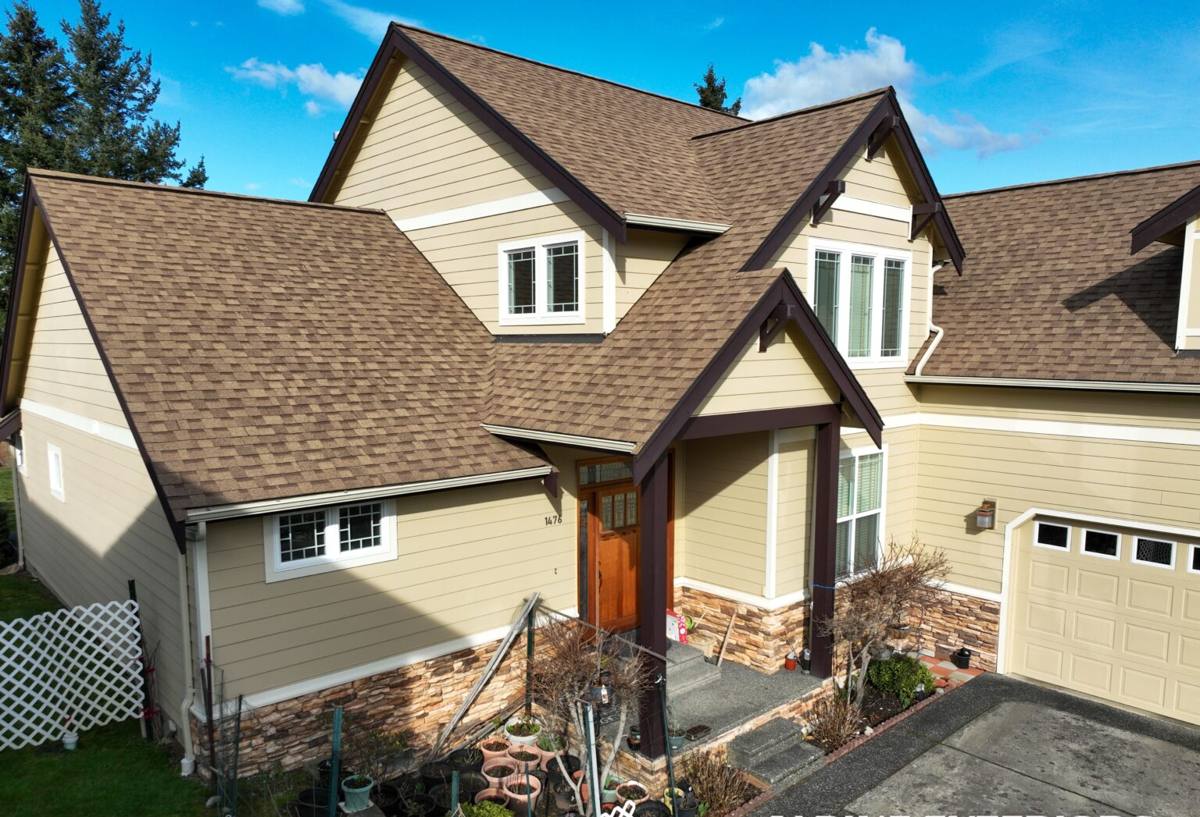
What This Climate Actually Does to a Roof
Shade and Moss
Roofs under tree canopy stay damp longer after every rain event, which is most of them here. That moisture, combined with organic debris — needles, leaf litter, pollen — is exactly what moss and lichen need to establish. On composition shingle roofs, moss roots into the granules and lifts them, shortening the roof's life. Metal doesn't give moss the same foothold, but it still needs debris cleared and valleys kept open, or organic buildup will hold moisture against the panels regardless of material.
Driving Rain and Wind-Driven Water
Storms coming off the water don't just drop rain straight down — wind pushes it sideways and up under laps, seams, and flashing that weren't detailed for that kind of pressure. This is where the difference between a roof that's "basically metal" and one that's actually engineered for the exposure shows up. Fastener placement, seam type, and underlayment all need to account for wind-driven water, not just gravity.
Salt Air and Corrosion
Whatcom County's proximity to Bellingham Bay puts a mild but steady salt content in the air across the region, and it's a factor we account for on every metal roofing job in this area. Salt exposure accelerates corrosion at cut edges, exposed fasteners, and any point where a coating gets scratched during installation. It's a slow process, but it's cumulative, which is why coating quality and installation care matter more here than they would somewhere landlocked.
What a Correct Metal Roofing Installation Involves
Underlayment and Moisture Barrier
The panels are the visible layer, but the underlayment is what protects the deck if wind-driven rain gets past a seam or a fastener works loose over time. On shaded, moisture-prone lots like much of Silver Beach, we use a synthetic or self-adhered underlayment rated for the exposure rather than the minimum the manufacturer allows, and we pay particular attention to eaves and valleys where water concentrates.
Fastening and Panel Seams
How the panels attach to the roof determines both how long the roof lasts and how it looks. Exposed-fastener systems use screws driven through the panel face, each one a potential leak point once its rubber washer ages and hardens. Standing seam systems interlock panel edges vertically with no fasteners penetrating the exposed surface, which removes that failure point entirely. We'll walk through both options honestly, including cost, below — the right choice depends on the roof's slope, budget, and how long the homeowner plans to own the home.
Flashing Details That Actually Matter
Most metal roof leaks don't happen in the field of the panels — they happen at penetrations: chimneys, vent stacks, skylights, and where the roof meets a wall or a lower roofline. These transitions need custom-formed flashing, not a generic boot or a bead of caulk standing in for proper metalwork. Caulk fails; correctly lapped and fastened flashing doesn't need to.
Ventilation
A roof deck that can't breathe traps moisture underneath the panels, which leads to deck rot and condensation issues regardless of how good the metal itself is. On homes with significant tree cover and limited direct sun to dry things out, balanced intake and exhaust ventilation is not optional — it's part of what makes the whole system work as designed.
Choosing a Panel System for a Silver Beach Roof
There isn't a single "best" metal roof — there's a best fit for a given roof's slope, budget, and how long the fasteners and finish need to perform under this area's rain and salt exposure. Here's an honest comparison of the two systems we install most often:
| Factor | Standing Seam (Concealed Fastener) | Exposed-Fastener Panel |
|---|---|---|
| Leak risk over time | Low — no fastener penetrations in the panel face | Moderate — washers age and require future maintenance |
| Upfront cost | Higher | Lower |
| Best suited for | Low-slope sections, long-term ownership, homes with heavy tree/moisture exposure | Steeper roofs, budget-conscious projects, outbuildings |
| Maintenance | Minimal | Periodic fastener inspection recommended |
| Typical lifespan with correct install | 40+ years | 25-35 years |
For a shaded, damp lot, we generally lean toward recommending standing seam wherever the budget allows, simply because it removes the one component — exposed fasteners — that salt air and repeated wet-dry cycling wear out fastest. That said, exposed-fastener panels installed correctly, with quality fasteners and attentive flashing, are a legitimate and durable option, especially on secondary structures or steeper roof planes where wind-driven water is less of a factor.
Moss, Debris, and Tree Cover: What to Plan For
Metal roofing resists moss far better than composition shingles because there's no granule surface for roots to grip, but a roof under a heavy canopy still needs a plan for debris management. Needles and leaves that collect in valleys and at the eaves hold moisture against the panel surface and gutters, and over years that can lead to staining, gutter overflow, or localized corrosion at contact points even on a well-installed metal roof.
We factor this into the design where possible — wider valleys, properly sized gutters with leaf protection, and panel profiles that shed debris rather than trap it. It's a smaller consideration on a sunny, open lot, but on a shaded property it's part of getting the roof right the first time.
Our Process, Start to Finish
Every roof starts with an honest look at what's actually there before we talk about what to install. Here's what that looks like:
- On-site inspection of the existing roof, deck condition, ventilation, and any moisture or moss issues already present
- Straightforward walkthrough of panel and system options with real pricing — no pressure, no inflated "limited time" offers
- Written estimate that spells out materials, underlayment, flashing scope, and timeline
- Deck repair as needed before any panel goes down — metal over a compromised deck just hides a bigger problem
- Installation following manufacturer specifications for fastener spacing, seam engagement, and flashing details
- Final walkthrough where we show you the completed work and go over care and maintenance expectations
We don't skip the deck-condition step. A new metal roof over a soft, rotted, or improperly vented deck will fail early no matter how good the panels are, and that inspection is where problems get caught before they're covered up.
Cost Factors on a Job Like This
Every roof is priced individually after inspection, but the factors that move the number up or down are consistent. This isn't a quote — it's what to expect the estimate to weigh:
| Factor | Effect on Cost |
|---|---|
| Panel system (exposed-fastener vs. standing seam) | Standing seam typically costs more per square due to labor and material |
| Roof complexity (valleys, dormers, penetrations) | More cuts and flashing detail increases labor time |
| Deck condition | Any rot or soft decking found during tear-off adds repair cost |
| Existing roof removal | Tear-off and disposal of old roofing material adds to the total |
| Access and tree cover | Limited access or heavy overhead branches can slow staging and increase labor time |
We'd rather walk a homeowner through these factors honestly during the estimate than quote a number over the phone that doesn't hold up once we're actually on the roof.
Why Local Experience in This Neighborhood Matters
A crew that already knows how Silver Beach lots sit — the shade patterns, the drainage challenges, the way moss builds up under a canopy differently than it does on an open lot a mile away — makes fewer assumptions and catches more during the initial inspection. That's not unique to any one company, but it is a real difference between a contractor who works this part of Bellingham regularly and one who's never seen how a particular neighborhood's terrain and tree cover behave through a wet Whatcom County winter.
It also means straightforward answers about permitting, typical timelines for this area, and what other homes nearby have needed, instead of generic answers pulled from a national playbook.
Maintenance After Installation
A correctly installed metal roof is low-maintenance, not no-maintenance. We recommend a periodic check — especially after major storms — to clear debris from valleys and gutters, confirm flashing and fasteners (on exposed-fastener systems) are holding up, and catch anything early. Under heavy tree cover, that check matters more than it would on an open roof, simply because debris accumulates faster.
If you're weighing a metal roof for a home in Silver Beach, or you've got moss, staining, or drainage issues on your current roof that need a straight answer, we're happy to take a look. The estimate is free, there's no pressure, and you'll get a clear explanation of what your roof actually needs — just use the form below to get started.