 Bellingham
 Roof Repair Built for Edgemoor's Bay-Side Conditions
Edgemoor sits close to Bellingham Bay, under heavy tree cover, with a mix of older homes and newer builds tucked into wooded lots. That combination — salt-carrying air off the water, shade from mature evergreens, and long stretches of wet weather — puts a specific kind of stress on a roof that a generic repair approach doesn't always account for. A patch that holds up fine on a dry, open lot across town can fail fast here if it wasn't installed with this microclimate in mind.
Roof repair in this part of Bellingham isn't just about fixing a leak. It's about understanding why the leak started, whether the surrounding materials are still doing their job, and what will actually hold up through another wet Whatcom County winter.
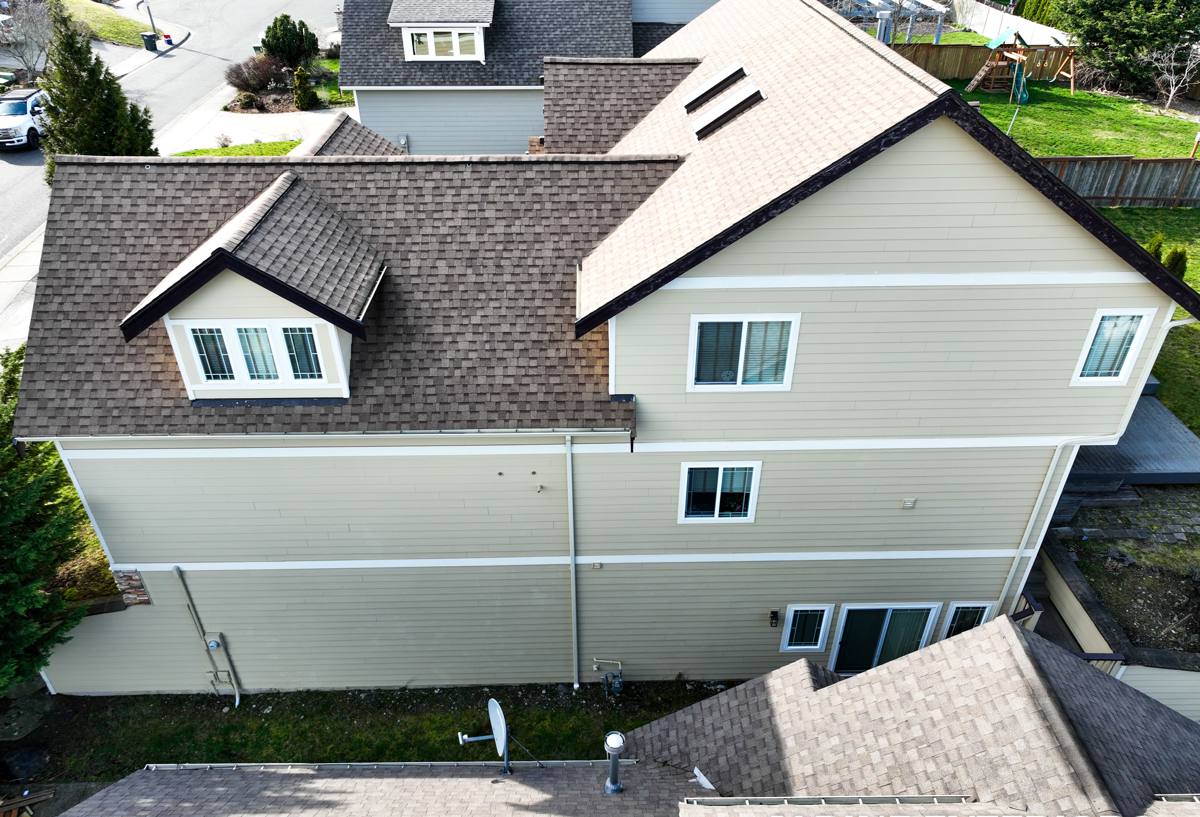
Why This Corner of Bellingham Is Hard on a Roof
Salt Air and Metal Components
Homes closer to the bay deal with airborne salt that settles on roofing metal — flashing, fasteners, gutters, vent caps — and speeds up corrosion compared to inland properties. It's usually slow and easy to miss until a fastener head rusts through or a flashing seam starts weeping. Standard hardware isn't always built for this exposure, and using the wrong grade of metal or fastener is one of the most common reasons a "repaired" spot fails again within a year or two.
Tree Cover and Moss
The wooded character that makes Edgemoor appealing also means more shade, more falling debris, and more moisture that lingers on the roof surface instead of drying out between rain events. That's a recipe for moss and algae growth, which holds water against shingles and shortens their working life. Moss isn't just cosmetic — where it gets established, it lifts shingle edges and channels water sideways instead of down and off the roof.
Driving Rain and Wind-Driven Water
Storms coming off the Salish Sea often bring wind-driven rain rather than straight-down rain, which pushes water sideways under shingle edges, around flashing, and into any gap that a calm-weather repair might not reveal. A fix that only addresses the visible symptom — without checking how water moves across that section of roof during a real storm — tends not to last.
Common Repair Calls We Get in Edgemoor
- Moss-related shingle lifting and granule loss, especially on north-facing or heavily shaded slopes
- Corroded or failing flashing around chimneys, skylights, and roof-to-wall transitions
- Leaks that show up well away from the actual entry point, having traveled along the deck or underlayment
- Clogged or overflowing gutters caused by tree debris, leading to fascia and edge rot
- Wind-lifted or cracked shingles along ridges and exposed edges after a storm system
- Soft spots or staining in ceilings below valleys, where water volume concentrates during heavy rain
What a Proper Roof Repair Involves
A correct repair starts with figuring out the real path water is taking, not just patching the spot where it appeared inside the house. Water often enters at one point and travels along the roof deck or underlayment before showing up somewhere else entirely — so an honest repair means tracing that path, not just sealing the visible symptom.
From there, it means matching materials to what's already on the roof — or explaining clearly why a different product makes more sense for that specific spot — and rebuilding the layered system correctly: underlayment, flashing, and shingle or panel work integrated the way it was designed to work, not just caulked over. Any exposed fasteners, flashing, or trim in a salt-air zone should be corrosion-resistant hardware, not whatever happens to be on the truck. And the repair should account for how that section actually drains, especially around valleys, chimneys, and anywhere moss has previously taken hold.
A repair that skips any of these steps might look fine for a season, then reopen at the next heavy rain.
Repair or Replacement? How We Tell the Difference
Not every roof problem calls for a full replacement, and not every leak can be permanently solved with a patch. Here's the general way we sort it out during an inspection:
| Sign | Usually Points to Repair | Usually Points to Replacement |
|---|---|---|
| Age of roofing material | Well within expected service life | At or past the end of its typical lifespan |
| Extent of moss/algae | Isolated patches, shingles still intact underneath | Widespread, with granule loss or lifted shingles across large areas |
| Leak pattern | Single, identifiable source | Multiple unrelated leak points appearing over time |
| Flashing condition | Localized corrosion or a failed seal | Flashing failing broadly across chimneys, valleys, and edges |
| Roof deck condition | Solid, no soft spots | Soft, spongy, or visibly rotted decking |
When a roof is on the fence between the two, we'll tell you honestly rather than push the more expensive option. Sometimes a targeted repair buys several more good years; sometimes it just delays a bigger bill.
Our Process, Start to Finish
- Inspection. We walk the roof (or use a drone/ladder where pitch or access makes that safer) and check attic space where possible, since interior moisture signs often tell as much as the surface does.
- Diagnosis. We trace the actual water path and identify every contributing factor — not just the first thing we see.
- Written estimate. A clear explanation of what's wrong, what we recommend, and why — including whether repair or replacement makes more sense.
- The repair itself. Materials matched appropriately, corrosion-resistant hardware where salt exposure is a factor, and flashing or underlayment rebuilt properly rather than surface-sealed.
- Cleanup and check. Debris cleared, gutters checked while we're up there, and a final look to confirm the fix addresses the root cause.
Materials and Methods We Rely On
In a salt-air, high-moss environment, material choice matters more than it does on a drier, more exposed lot elsewhere in Whatcom County. We use corrosion-resistant fasteners and flashing metals appropriate to bay-adjacent exposure rather than standard-grade hardware that looks fine on day one but fails early here. Underlayment gets selected for how well it handles prolonged dampness under shade, not just for cost.
On moss control, we're upfront about trade-offs: chemical treatments and manual removal help in the short term but need to be repeated, while zinc or copper strips near the ridge offer longer-term suppression as rain washes trace metal down the roof surface — though they work gradually and won't clear existing heavy growth on their own. We'll walk you through what fits your roof's exposure and your maintenance preferences rather than defaulting to one method for every job.
We also pay close attention to ventilation. A roof that traps moisture underneath — from poor attic airflow — stays damper longer on the surface too, which feeds the exact moss and algae problem this area already fights. Fixing ventilation is sometimes the quieter half of a repair that actually lasts.
Simple Maintenance Between Repairs
Most of what shortens a roof's life in Edgemoor is preventable with a bit of regular attention. A simple seasonal routine goes a long way:
- Clear gutters and downspouts at least twice a year, more often under heavy tree cover
- Trim back branches that overhang or brush against the roof surface
- Look for moss or dark streaking on shaded slopes each fall before the wet season sets in
- Check attic ventilation isn't blocked by insulation or debris
- After any major windstorm, do a visual check for lifted or missing shingles
- Address small leaks immediately rather than waiting for the next dry spell to deal with it
Why Hire a Crew That Already Works Edgemoor
Edgemoor's mix of steep, wooded driveways, mature tree canopy, and proximity to the bay means access and staging alone can be different from a job across town. A crew that's already worked this neighborhood knows how to set up safely on these lots, what kind of wear to expect from the salt-and-shade combination, and how to sequence a repair around Bellingham's wetter months instead of getting caught mid-job by a storm system.
That local familiarity also means fewer surprises once the work starts — no guessing at material choices, no generic fix that ignores what this specific stretch of coastline does to a roof over time. It's the difference between a repair that's engineered for local conditions and one that just happens to be done in Edgemoor.
If you're dealing with a leak, visible moss, or storm damage on an Edgemoor roof, we're happy to take a look and give you a straight answer on what it needs. Use the form below to request a free, no-pressure estimate.