 Bellingham
 Building New in Sudden Valley: What the Windows Have to Handle
Sudden Valley sits in the forested hills above Lake Whatcom, southeast of Bellingham, and that setting shapes what a new home's windows have to deal with from day one. Lots are often shaded by second-growth timber, close to the lake's humidity, and exposed to the same driving rain and long, low winter light that defines Whatcom County generally. Add in the broader marine climate of the Bellingham area — the salt air drifting in off the Sound on a south wind, the rain that comes sideways more often than straight down, and a moss season that can run eight or nine months of the year — and it's clear that windows here need to be selected and installed with moisture management as the top priority, not an afterthought.
On a new build, you get one real chance to do this right. Retrofit work has to compromise around what's already there; new construction doesn't. That's the opportunity, and it's also why the install sequence matters as much as the window itself.
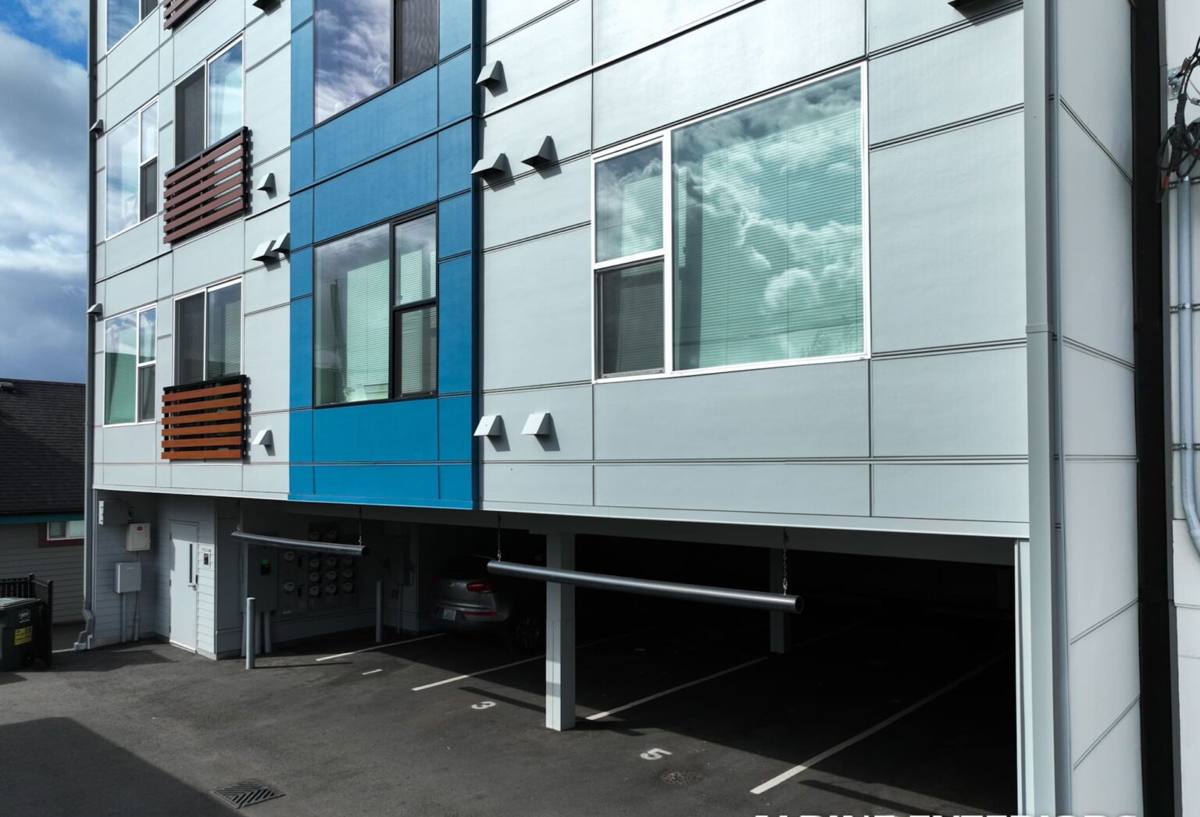
What "New-Construction" Windows Actually Means
New-construction windows are built with a nailing flange (also called a nail fin) around the perimeter of the frame. That flange gets fastened directly to the wall sheathing and integrated into the water-resistive barrier (WRB) and flashing system before siding goes on. This is different from a "replacement" or "pocket" window, which is designed to slide into an existing opening without disturbing the exterior wall.
For a home under construction, nail-fin windows are almost always the right call — they give you a continuous, layered drainage plane from the top of the window down past the sill, which is the single biggest factor in whether a window leaks in five years or twenty-five. Getting this sequence right requires coordination with whoever is doing the WRB and siding, which is one reason window installation on a new build shouldn't be treated as an isolated trade.
Why Sequencing Matters More Than the Window Itself
We've seen good windows fail because of poor flashing order, and mid-grade windows perform fine for decades because the water management around them was done correctly. Sill pan flashing, back-dam details, head flashing that laps correctly under the WRB, and jamb flashing that ties into the drainage plane — these details determine whether incidental water (and on a wooded, damp lot, there's always some) drains back out or works its way into the wall assembly.
Choosing the Right Window for a Sudden Valley Lot
Sun Exposure and Orientation
Lots in Sudden Valley vary a lot in how much direct sun they get depending on tree cover and which side of the ridge they're on. South- and west-facing glass benefits from a lower solar heat gain coefficient (SHGC) to manage summer heat and UV exposure; north-facing rooms under heavy canopy don't need to fight the same battle and can prioritize U-factor and daylighting instead.
Forest Canopy, Moss, and Standing Moisture
Homes tucked under trees hold moisture longer than homes in the open — less direct sun and wind to dry surfaces out after rain. That means sills, exterior trim, and any horizontal surface near a window need real attention to drainage and material selection, since moss and mildew will find any spot that stays damp. It also means gutters, roof overhangs, and window placement relative to rooflines deserve to be thought through together, not window by window.
Lake-Effect Humidity
Proximity to Lake Whatcom adds ambient humidity on top of the region's typical marine air. Interior condensation on window glass and frames is a common complaint in homes that don't have adequate ventilation paired with good U-factor glass — worth planning for at the design stage rather than troubleshooting after move-in.
Frame Materials and Glass Packages
There's no single "correct" frame material for every new build — it depends on budget, maintenance appetite, and how the window will be used. Here's how the common options stack up for a Whatcom County new-construction project:
| Frame Material | Moisture Performance | Maintenance | Typical Fit |
|---|---|---|---|
| Vinyl | Good — won't rot, low water absorption | Low | Best value for most new builds |
| Fiberglass | Excellent — very stable, low expansion/contraction | Low | Larger openings, higher-end spec homes |
| Wood-Clad | Good on exterior, but exposed wood/joints need upkeep | Moderate to high | Interior wood look with a durable exterior clad |
| Aluminum | Poor thermal performance, prone to condensation | Low | Rare in residential new construction here |
For glass, double-pane with a low-E coating and argon fill is standard for new homes in this climate. We generally recommend a moderate SHGC and a U-factor on the lower end of what Washington's energy code allows, since the goal is comfort and low condensation risk more than chasing the lowest possible number on paper.
Getting the Installation Right the First Time
A correct new-construction window install, in order, generally looks like this:
- Rough opening checked for square, level, and correct dimensions before the window ever arrives on site
- Sill pan flashing installed with a back dam and end dams to direct any water outward, not into the wall
- Window set, shimmed level and plumb, and fastened per the manufacturer's schedule — not just "close enough"
- Jamb and head flashing integrated with the WRB in the correct shingle-lap order
- Interior air sealing with backer rod and sealant, separate from exterior sealant, to manage both air leakage and moisture
- Exterior trim and siding tied in cleanly with proper reveals and drainage gaps
Skipping or reordering any of these steps is where most window failures on new builds actually originate — not from a bad product, but from a rushed or out-of-sequence install.
Our Process for a Sudden Valley New-Construction Project
We work directly with homeowners and builders throughout the build, not just for a single day of installation:
Plan Review and Window Schedule
We go through the architectural plans and window schedule before ordering anything, checking that sizes, egress requirements, and performance ratings match the home's orientation and the local energy code.
Coordination With Your Builder or GC
Window installation has to land at the right point in the build sequence — after sheathing and WRB, before siding. We coordinate directly with the general contractor or builder's schedule so there's no gap where the house sits open to weather longer than it needs to, which matters on a site that gets as much rain as this one does.
Installation and Documentation
Each window is installed per manufacturer instructions with flashing details documented as we go, so there's a clear record of how the water management was done — useful for the builder, for any inspection, and for you as the homeowner down the road.
Final Walkthrough
Before we leave the site, we check operation, seals, and trim on every window with you or your builder present, and flag anything that needs follow-up before drywall or siding closes it in.
Working With Your Builder or GC
Most new-construction window work happens as a sub to a general contractor, and that's a relationship we're comfortable in. We'll work off the builder's schedule, communicate directly with the site super, and flag any conflicts between the window schedule and field conditions early — before they turn into a delay. If you're owner-building or acting as your own GC, we can also work directly with you and coordinate the trades on either side of the window install (WRB/siding crew on one side, interior finish on the other).
Cost Factors to Plan For
New-construction window costs vary by opening size, frame material, glass package, and how many custom or oversized units are in the plan. Broad factors that move the number:
| Factor | Why It Matters |
|---|---|
| Frame material | Vinyl is the most economical; fiberglass and wood-clad cost more per unit |
| Glass package | Low-E coatings, argon fill, and triple-pane options add cost but improve comfort |
| Size and configuration | Large picture windows, sliders, and custom shapes cost more than standard sizes |
| Site access | Wooded, sloped, or hard-to-reach Sudden Valley lots can affect delivery and staging |
| Number of openings | Total window count on the plan is the biggest single driver of overall cost |
We give straightforward, itemized numbers based on your actual plan set rather than a rough per-window estimate, since the variables above shift the total more than people expect.
What to Look for When Hiring for This Kind of Work
- Experience specifically with new-construction (nail-fin) installs, not just replacement work
- Willingness to review your architectural plans and window schedule before quoting
- A clear, described flashing and WRB integration process — not just "we'll seal it up"
- Comfort coordinating directly with your builder or GC's schedule
- Manufacturer-specific installation training or certification for the products they're installing
- Local experience in Whatcom County's climate, not just general window installation elsewhere
Why a Local Bellingham Crew Matters for a Sudden Valley Build
A crew that regularly works Whatcom County new-construction sites already knows how this climate behaves — how much rain a house can sit open to before it's a problem, how moss and shade affect material choices on wooded lots, and what inspectors in this area are looking for on flashing details. That local pattern recognition is worth more than it sounds like on paper: it's the difference between a window install that's technically correct and one that's actually built for how Sudden Valley homes weather over the next twenty years. We're not traveling in from out of the area to hit a single job and move on — this is the climate and the kind of lot we build in regularly.
If you're planning a new build in Sudden Valley and want a straightforward look at your window plan, we're happy to walk through it with you. Use the form below to request a free, no-pressure estimate.