 Bellingham
 Siding Built for Birchwood's Specific Climate
Birchwood homes sit in a part of Bellingham that takes a steady beating from three things at once: salt-laden air drifting in off Bellingham Bay, driving rain that comes in sideways during fall and winter storms, and a moss season that, in Whatcom County, can stretch nearly nine months out of the year. None of these factors is dramatic on its own. Together, over ten or fifteen years, they're exactly what separates a siding job that still looks sharp from one that's chalking, cupping, or rotting at the seams.
When we install siding in Birchwood, we're not treating it as a generic exterior upgrade. We're treating it as a system that has to shed wind-driven water, resist moisture intrusion at every seam and penetration, and hold its finish against salt air and UV without babying it every summer. That's the lens this entire page is written through.
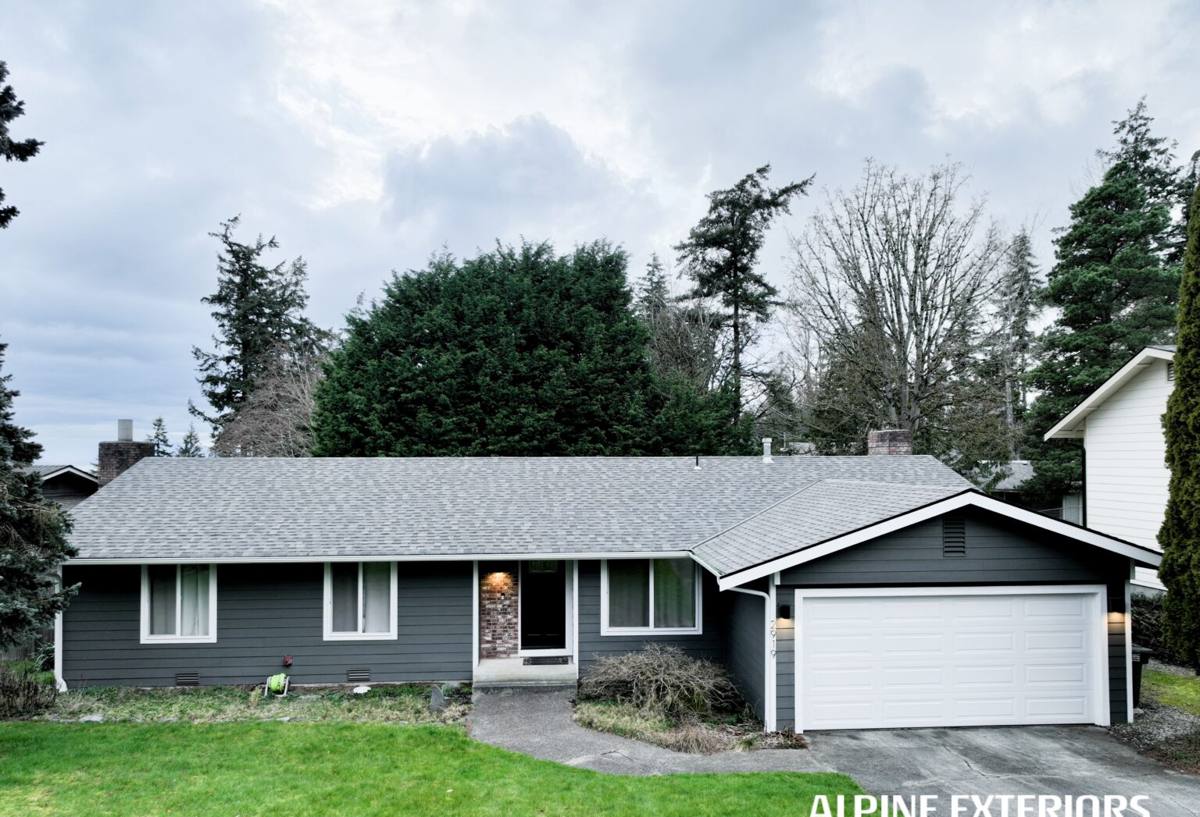
What Bellingham's Climate Actually Does to Siding Over Time
Salt Air
Bellingham Bay isn't oceanfront exposure, but it's close enough that homes in and around Birchwood get a real dose of salt-carrying air, especially on west and south-facing walls. Salt air accelerates corrosion on fasteners, hardware, and any metal flashing that isn't properly rated or protected. It also breaks down cheaper paint films and coatings faster than inland exposure would.
Driving Rain
Whatcom County doesn't just get a lot of rain — a good portion of it arrives horizontally during winter storms, pushed by wind off the water. That matters because driving rain doesn't just wet the surface of your siding; it tests every lap, joint, and penetration for water intrusion. Siding that's fine in a light vertical drizzle can still leak behind driving rain if the laps, flashing, and house wrap aren't installed correctly.
The Long Moss Season
Cool, damp, shaded conditions for most of the year mean moss and algae get a long runway to establish themselves on north-facing walls, under eaves, and anywhere airflow is restricted. Moss holds moisture against the siding surface far longer than open air would, which is a slow but real threat to any material that isn't dimensionally stable or that swells when it stays wet.
Why We Install Only James Hardie Fiber Cement in Birchwood
We install James Hardie fiber cement siding exclusively — not vinyl, not LP SmartSide, not Cemplank, not Allura, not primed spruce or cedar. That's a deliberate standard, not a sales preference, and it matters even more in a climate like Birchwood's.
Fiber cement doesn't rot, and it doesn't feed the organic growth that thrives in a long moss season the way wood-based products can. It's dimensionally stable, so it doesn't swell, cup, or telegraph fastener lines the way engineered wood siding can when it takes on repeated moisture cycles. It's non-combustible, which matters more each year as wildfire smoke and dry-season risk become a bigger part of Pacific Northwest summers. And James Hardie's ColorPlus factory finish is baked on and warrantied against fading, which holds up better against sustained salt-air and UV exposure than field-applied paint.
We're not going to tell you cedar looks bad or that vinyl is junk — both have real upsides and real customers who are happy with them elsewhere. But in Birchwood's specific mix of salt air, driving rain, and moss, we've made a professional call: Hardie is the product we're willing to put our installation standards behind, and it's the only one we install.
What a Correct Installation Actually Involves
Fiber cement siding is only as good as the installation underneath it. A rushed or by-the-book-minimum install can still leak, crack, or fail early — even with a premium product. Here's what we hold every Birchwood job to:
- A continuous water-resistive barrier (house wrap) installed shingle-style so every layer drains outward and down, never inward
- Properly flashed windows, doors, and any wall penetrations, integrated with the house wrap rather than just caulked over it
- Correct starter strip and first-course setup so the bottom edge sheds water instead of wicking it
- Manufacturer-specified fastener spacing, type, and embedment — including corrosion-resistant fasteners appropriate for salt-air exposure
- Minimum required gaps at butt joints, trim, and dissimilar materials, sealed with a high-quality, paintable sealant rated for exterior movement
- Clearance from grade, decks, and roof lines per Hardie's installation instructions, so siding isn't sitting in a moisture trap
- Careful cutting and edge-sealing on any field-cut panels to protect the factory finish at exposed edges
Every one of these steps exists because it fails a specific way if skipped — usually water intrusion, premature paint or finish failure, or fastener corrosion. In a climate that tests all three constantly, there's no shortcut that doesn't show up early.
How Siding Materials Actually Perform in Birchwood's Conditions
| Material | Salt air exposure | Driving rain / moisture | Moss & algae resistance | Long-term finish |
|---|---|---|---|---|
| James Hardie fiber cement | Strong — non-corroding substrate, factory finish resists salt breakdown | Strong when installed to spec — dimensionally stable, won't swell | Strong — doesn't feed organic growth like wood-based products | ColorPlus factory finish, warrantied |
| Vinyl | Fair — can chalk and become brittle faster near salt air over time | Fair — depends heavily on correct lap and flashing detail | Fair — surface growth is common, needs regular washing | Color molded in but can fade; not repaintable easily |
| LP SmartSide / engineered wood | Fair — coating protects the wood substrate but edges are vulnerable | Moderate — swelling risk if moisture reaches cut edges or seams | Moderate — wood-based core is more susceptible if finish is compromised | Field or factory finish, needs edge maintenance |
| Cedar / primed spruce | Moderate — natural rot resistance varies, finish needs upkeep | Weaker — most vulnerable to prolonged wet exposure without diligent maintenance | Weaker — organic material, most susceptible to moss and algae over time | Requires periodic refinishing/staining |
This isn't a claim that the other materials are unusable — plenty of homes around Bellingham have them and manage fine with regular upkeep. It's a picture of why, given Birchwood's specific mix of stressors, fiber cement is the material we're comfortable standing behind without an asterisk about maintenance.
Our Installation Process
1. On-Site Assessment
We walk the property and look at wall orientation, existing moisture damage, roofline and grade clearance issues, and any trim, window, or penetration details that need special attention. Birchwood's tree cover and lot layouts vary block to block, so we assess sun and shade exposure per wall — it changes where moss risk and finish wear will concentrate.
2. Tear-Off and Substrate Check
Once old siding comes off, we inspect the sheathing underneath for rot, water staining, or soft spots before anything new goes up. Covering a compromised substrate with premium siding just hides the problem — we fix what's underneath first.
3. Water-Resistive Barrier and Flashing
This is the step that determines whether the wall stays dry for the next 30 years, not the visible siding. We install house wrap and flashing as an integrated drainage system, with particular attention to window and door openings, which are the most common leak points in any siding job.
4. Hardie Panel Installation
Panels or lap siding go up per James Hardie's published installation instructions — fastener type, spacing, gaps, and clearances included. We don't treat the manufacturer's install guide as a suggestion; it's what keeps the product warranty valid and the wall performing as designed.
5. Trim, Caulking, and Final Detail
Trim work, joint sealing, and touch-up of any field-cut edges happen last, followed by a walk-through so you can see the finished work and ask questions before we call it done.
Signs a Birchwood Home's Siding May Need Attention
- Persistent moss or dark streaking on north- or shade-facing walls that comes back quickly after cleaning
- Cupping, warping, or visible swelling at panel seams or bottom edges
- Paint that's peeling, bubbling, or chalking heavily rather than just fading evenly
- Soft spots, staining, or a hollow sound when you tap near window sills and bottom courses
- Visible gaps, cracked caulk lines, or fastener heads working loose at trim and corners
- Rising energy bills alongside drafts near exterior walls, which can point to a compromised weather barrier
Any one of these on its own might just need a repair. Several at once, especially combined with the age of the current siding, usually means the underlying system — not just the surface — is due for a real look.
Why a Crew That Already Works Birchwood Matters
Siding installation isn't one-size-fits-all across Bellingham. A crew that already works in Birchwood knows the practical realities of the neighborhood — the wall exposures that take the worst of the driving rain, the shaded sides that need extra moss-resistant detailing, and the permitting and inspection expectations that apply within the city. That local familiarity shows up in fewer surprises mid-project and a finished install that's actually calibrated to the conditions your specific walls face, not a generic install pulled from a manual written for a drier climate.
It also means accountability. A contractor who works Birchwood regularly has a reputation in the neighborhood to maintain, and a much easier time coming back if something needs adjustment after the fact.
Cost Factors for a Birchwood Siding Project
| Factor | Why it affects cost |
|---|---|
| Home size and wall complexity | More square footage, corners, and dormers mean more material and labor time |
| Substrate condition | Rot or water damage found during tear-off requires repair before new siding goes up |
| Siding profile chosen | Lap, panel, and shingle-style Hardie products vary in material and installation cost |
| Trim and detail work | Window casings, corner boards, and fascia detail add labor beyond flat wall area |
| Access and site conditions | Tree cover, tight lot lines, or multi-story walls affect staging and labor time |
We don't quote a job without seeing the walls in person — anything else is a guess. What we can tell you honestly is that fiber cement typically costs more up front than vinyl and is competitive with or less than a well-finished cedar or engineered wood job once you account for the maintenance those materials demand over time in this climate.
If your Birchwood home's siding is showing its age, or you're planning ahead of a renovation, we're happy to take a look and give you a straightforward, no-pressure estimate — use the form below to get started.